
A patio that looks perfect on day one can become a structural disaster by day thirty if you ignore what's happening underneath the surface. Proper grading for patio installation isn't just a preliminary step. It's the most critical engineering phase of your entire project. You aren't just laying stone; you're designing a predictable path for water to exit your property and stay away from your home.
It's frustrating to watch puddles form on your lawn or worry about basement dampness after every heavy rain. You want a stable, dry outdoor space that protects your home foundation rather than putting it at risk. This article explains how to achieve a professional-grade slope and why surface preparation is the secret to preventing shifting over time. We'll walk through the 2% slope standard, Pennsylvania building code requirements, and the specific drainage challenges posed by our local clay soil. By the end, you'll have the knowledge to vet a contractor or tackle a DIY project with total confidence.
Understanding Grading for Patio Installation: More Than Just a Flat Surface
Think of grading as the engineering phase of your project. It is the intentional manipulation of the ground's slope to control water movement. While a finished patio looks like a static feature, it actually functions as a vital drainage system. Without proper grading for patio installation , water becomes an invasive force. It finds the path of least resistance, which is often right back toward your foundation. This "invisible foundation" is what separates a professional build from a DIY failure.
The Difference Between Flat and Level
Homeowners often ask for a "flat" patio, but that is actually the last thing you want. A perfectly flat surface allows water to pool in the center or sit in the joints between pavers. This leads to moss growth, slippery surfaces, and structural failure. Instead, professionals aim for a surface that is level but sloped. This means the patio is a consistent, smooth plane, but that plane is tilted slightly to guide runoff away from structures.
Yard geography can be deceptive. Optical illusions often make a dangerous slope look perfectly safe to the naked eye. You might think your yard is even, but a transit level might show a significant dip toward your basement. Using professional Grading (earthworks) techniques ensures that the math, not your eyes, dictates the final result. We verify every inch of the slope to ensure water has a clear, unobstructed exit path.
Why Grading is the First Step in Hardscaping
Successful custom patio installations always start with the soil, not the stone. If the subsoil isn't compacted and sloped correctly, the pavers on top don't stand a chance. Improper grading for patio installation is the leading cause of settling. When soil moves or holds moisture, it creates dips and heaving. This ruins the aesthetic of your pavers and creates dangerous trip hazards for your family.
The stakes are higher than just aesthetics. When water pools near your home, it builds hydrostatic pressure. This is the force exerted by stagnant water against your basement walls. Over time, this pressure forces moisture through concrete pores and eventually causes structural cracks. A properly graded patio acts as a shield. It achieves three primary goals:
- Directing water at least 10 feet away from the home foundation.
- Eliminating standing water that attracts pests and ruins lawns.
- Creating a stable, compacted base that prevents pavers from shifting.
By addressing these issues before the first paver is laid, you solve property headaches before they even begin. It is about restoration of order and long term peace of mind.
The Math of Movement: Calculating Slope and the 1-Inch Rule
Water doesn't move on a flat surface without help. You need a specific pitch to force runoff toward your yard instead of your basement. The industry standard for grading for patio installation is a 1% to 2% slope. This is the precise "sweet spot" where gravity does the work for you, yet the tilt remains imperceptible to people sitting in chairs. If you get the math wrong, you aren't just building a patio; you're building a pond.
You can calculate your needs with a simple formula: (Length of Patio in Feet) x (Desired Slope) = Total Drop. For most residential projects, we aim for a 2% slope, which translates to a 1/4-inch drop for every linear foot of distance. This ensures that even during a heavy Lancaster County downpour, water moves fast enough to prevent pooling but slow enough to avoid eroding your lawn at the edge of the stone.
Slope Standards by Material
Not all surfaces handle water the same way. Smooth concrete allows water to glide quickly, so a 1% slope (1/8-inch per foot) is often sufficient. Textured pavers are different. The joints between stones and the natural variations in the material create friction that slows water down. For paver systems, we strictly follow the 2% rule to overcome this resistance. Use the table below to determine the total drop required for your project size.
| Patio Length (Feet) | Recommended Drop (at 2% Grade) |
|---|---|
| 10 Feet | 2.5 Inches |
| 15 Feet | 3.75 Inches |
| 20 Feet | 5.0 Inches |
Tools for Measuring Grade
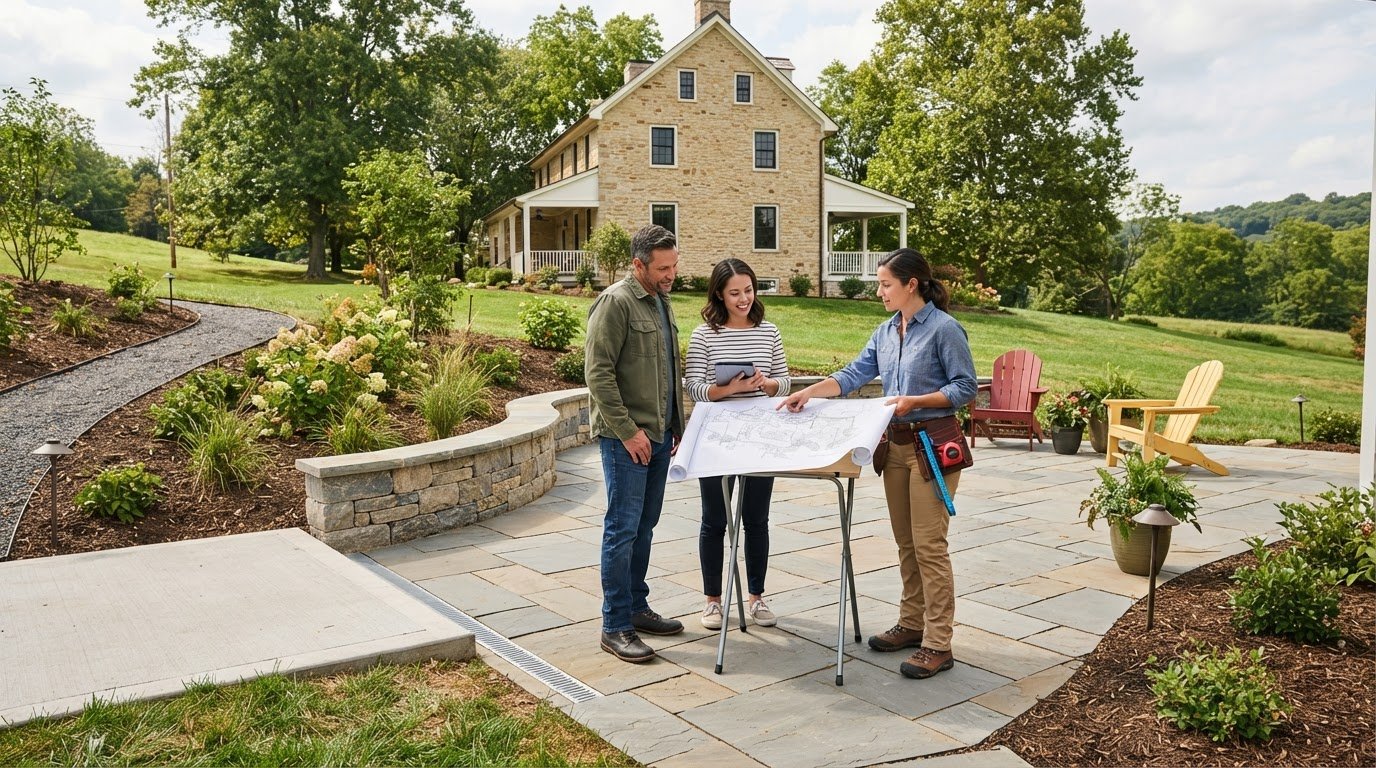
Precision isn't optional when you're protecting a home foundation. While DIY guides suggest using string levels, these are prone to sagging and wind interference. Professional hardscaping contractors rely on laser levels to establish "transit points" across the entire site. A transit is a tool for measuring vertical distance between two points. By using a laser, we can verify the grading for patio installation remains consistent across 20 or 30 feet without the margin of error found in hand tools. If your site plan feels overly complicated, reach out for a professional assessment to ensure your measurements are accurate before you dig.
Soil, Slopes, and Lancaster County: Local Challenges in Site Prep
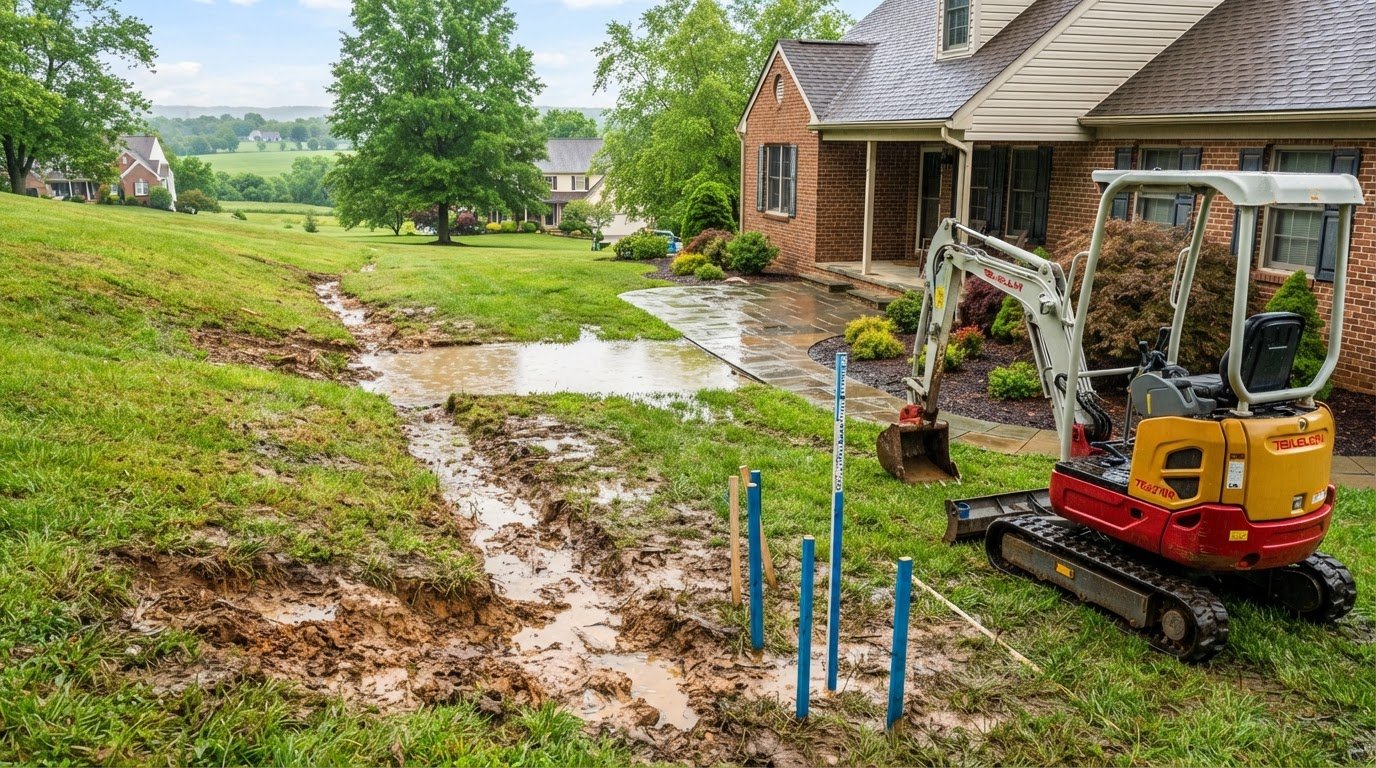
Lancaster and Columbia are famous for their rich, heavy clay. While great for farming, this soil presents a significant challenge for hardscaping. Clay is non-porous. It traps moisture instead of letting it percolate. This characteristic makes grading for patio installation the most important phase of local site prep. If you don't move water away quickly, the clay beneath your patio becomes a saturated mess that compromises everything above it.
This saturation is especially dangerous during the Pennsylvania freeze-thaw cycle. When trapped water freezes, it expands with incredible force. This causes the ground to "heave," pushing pavers upward and cracking concrete joints. In hilly areas like Mountville, the risk is even higher. Steep slopes can turn a standard rainstorm into a torrent that washes out your patio base or floods your basement. We design every grade to counteract these specific local conditions and soil behaviors.
Compaction and the Sub-Grade
Many DIY guides focus on grading the stone base, but the real work happens on the raw dirt. We grade the sub-grade, the soil itself, to match the final slope of the pavers. If you grade the stone but leave the dirt flat, water will simply seep through the joints and sit on the clay. This eventually washes away the bedding sand and causes the patio to sink or shift. Stability requires mechanical force. We use heavy-duty plate compactors to reach a 95% compaction standard. This density is essential for Lancaster hardscapes because it removes air pockets where water could settle. A properly compacted sub-grade ensures your patio stays exactly where we put it, regardless of the season.
Managing Runoff in High-Density Areas
Grading isn't just about your own backyard. In high-density developments across Lancaster County, your drainage plan affects everyone around you. You cannot legally or ethically dump your patio runoff onto a neighbor's property or into a shared common area. This "neighborly" aspect of grading requires precise engineering to guide water toward established storm drains or natural swales rather than the next lot. Proper management is especially vital for community managers and boards. We provide HOA maintenance services that address these large-scale drainage issues across entire neighborhoods. Whether it's a single townhome patio or a community-wide project, the goal remains the same: restore order and prevent water from becoming a liability.
The Step-by-Step Process of Professional Yard Grading
Moving from a blueprint to a finished outdoor space requires a methodical approach to the earth itself. Professional grading for patio installation isn't a single event; it is a sequence of precision movements designed to reshape your property. We start by clearing the site and transition through rough and fine grading phases. Each step ensures that the final result is stable, dry, and perfectly pitched away from your home.
Step 1: Establishing the Zero Point
Precision begins at the house. We first identify the "Zero Point" to determine where the patio will sit in relation to your home's threshold. The Zero Point is the fixed elevation from which all other measurements descend. We strictly follow the "6-inch rule," ensuring there is at least six inches of clearance between the final soil grade and your siding. This gap is vital to prevent moisture from wicking into your wall plates and causing rot or pest infestations. Once this point is marked, every other measurement on the job site is calculated as a "drop" from this height.
Step 2: Excavation and Rough Grading
After the math is set, the heavy lifting begins. We calculate the total excavation depth by adding the thickness of the gravel base, the bedding sand, and the paver itself. For a standard residential patio, this often means digging 7 to 11 inches into the ground. We use skid steers and mini-excavators to remove excess "spoils," which is the industry term for the soil being hauled away. If your lot is currently overgrown, professional brush clearing is a necessary precursor to this phase. You cannot achieve an accurate grade through thick weeds or old stumps; the ground must be stripped to clean subsoil before rough grading can occur.
Step 3: Verification and Compaction
The final phase is where many DIY projects fail. We use laser levels and screed pipes to verify the slope is consistent across the entire footprint. Don't rely on a single measurement at the far edge. We check the grade every 2 to 4 feet to identify "birdbaths" or high spots that could trap water. Once the grading for patio installation is verified, we run heavy plate compactors over the raw dirt. This creates a rock-solid foundation that is ready for stone. A professional sub-grade checklist includes:
- Verification of the 2% slope away from all structures.
- Removal of all organic debris and loose topsoil.
- Uniform compaction across the entire excavated area.
- Clear drainage paths toward the yard's exit points.
If you're ready to start your project with a foundation that won't fail, contact our team for a professional grading estimate today.
Beyond the Slope: Integrating Drainage Solutions for Total Protection
Standard grading for patio installation handles surface runoff effectively, but gravity sometimes needs a partner. If your property sits at the base of a steep hill or deals with a high water table, a 2% slope won't be enough to keep your stones dry. In these scenarios, we integrate mechanical drainage solutions to reinforce the work done during the grading phase. We don't just move dirt; we engineer a comprehensive water management system that shields your home from every angle. It's about creating a permanent solution rather than a temporary fix.
Using Retaining Walls to Level a Slope
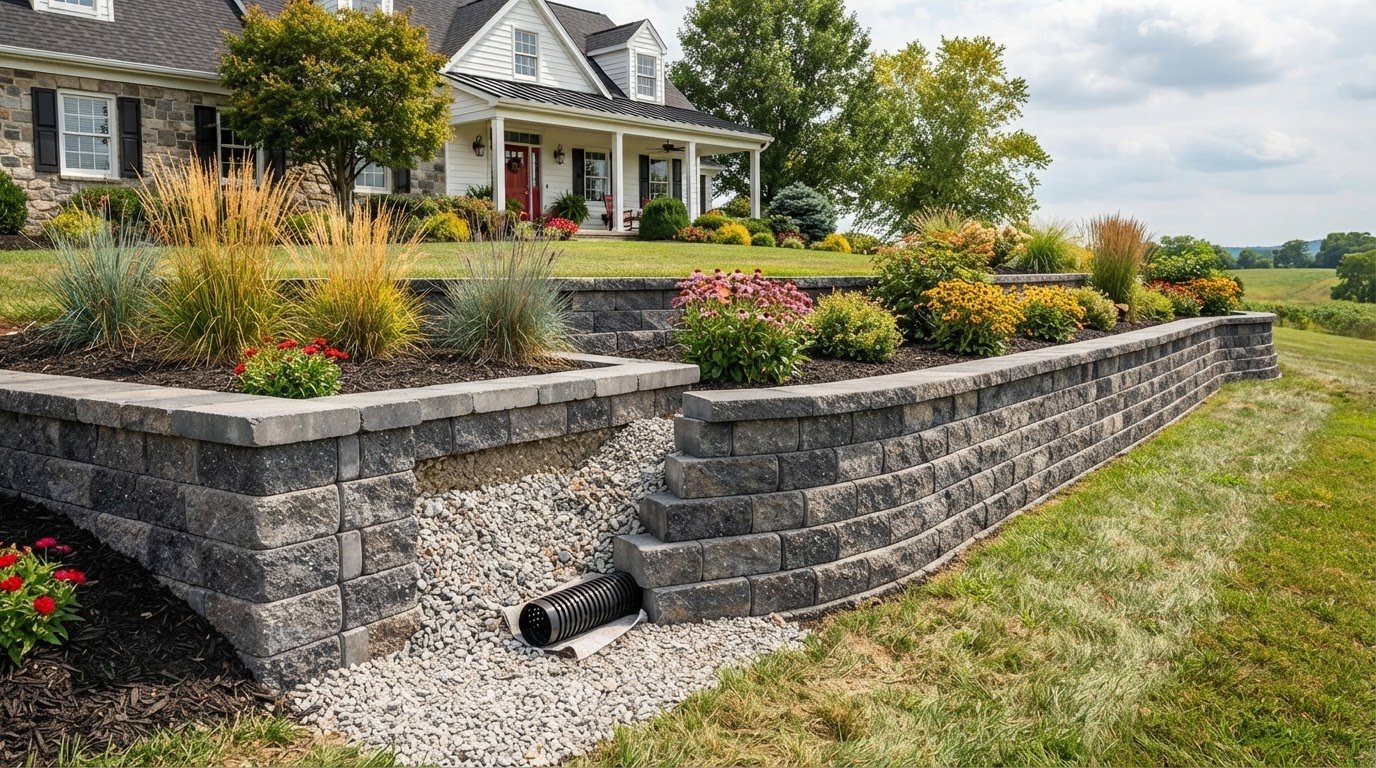
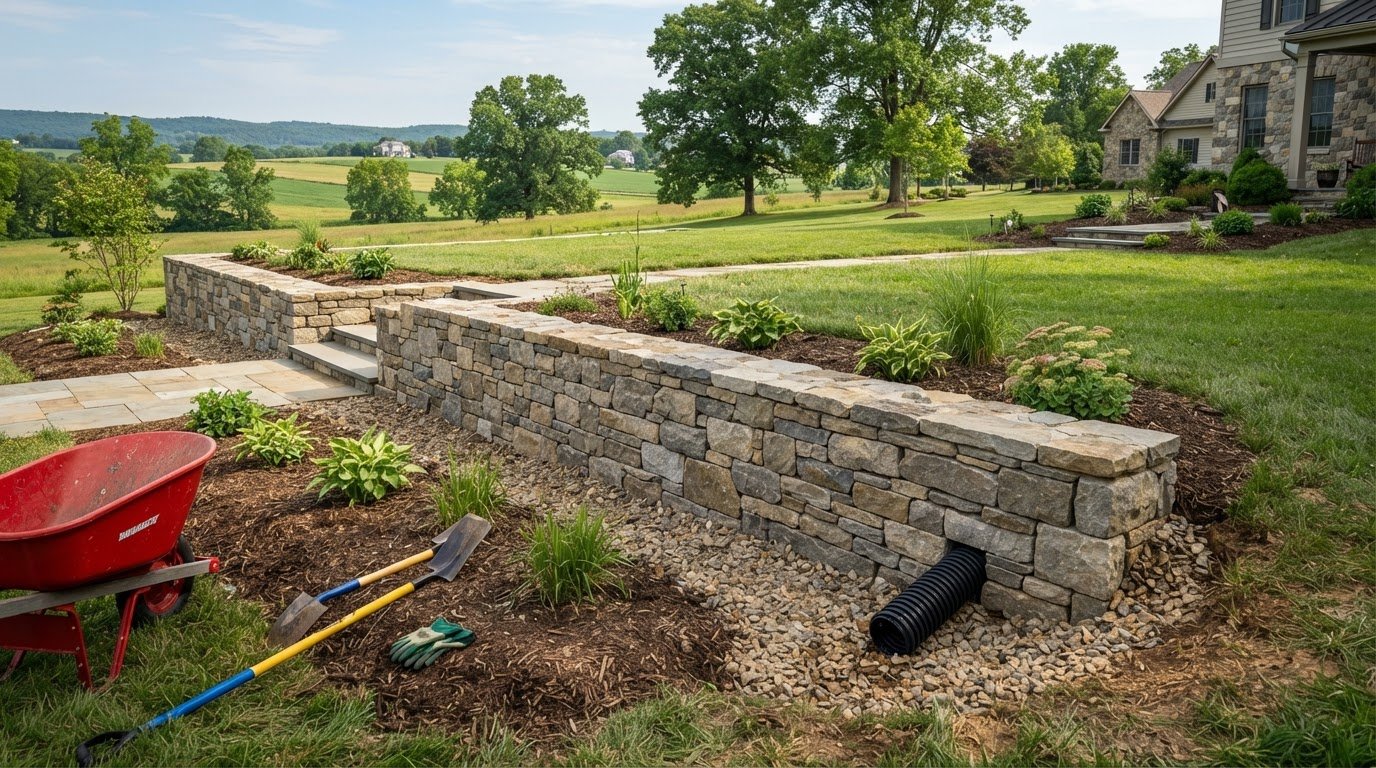
Steep backyards in Lancaster County often require more than simple excavation. We utilize the "Cut and Fill" method to create usable space on significant inclines. This process involves cutting into the uphill side of your yard and using that soil to fill the lower side, which is then held in place by a structural barrier. By using retaining wall installation services, we can build a perfectly level patio even on a 20-degree hill. These walls do more than just hold back earth. They act as a primary defense against mudslides and erosion that would otherwise overwhelm a standard grade. Proper retaining wall drainage is essential here to prevent hydrostatic pressure from collapsing the new structure over time.
Sub-Surface Drainage Integration
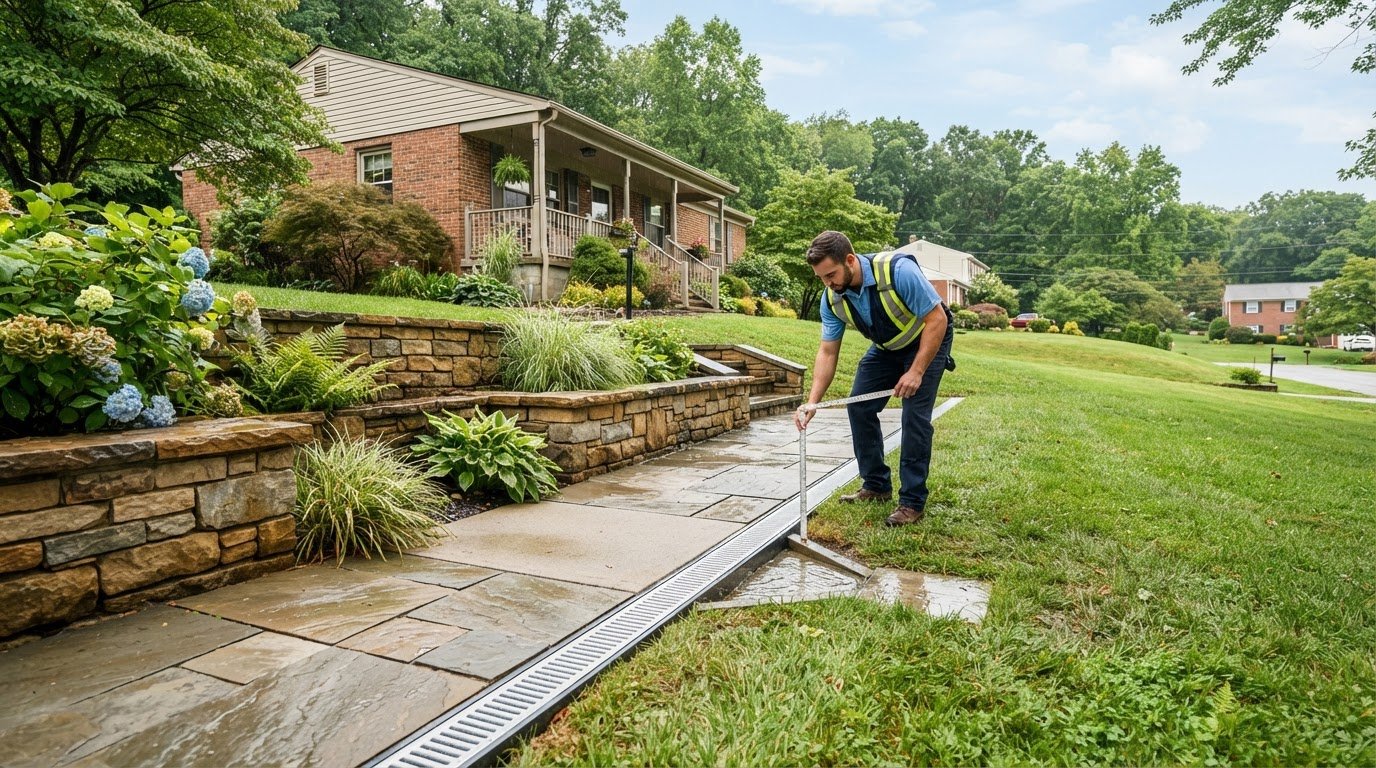
When surface grading for patio installation hits its limit, we look underground. A French drain is a highly effective tool for "catching" water before it ever reaches your patio footprint. We install these gravel-filled trenches uphill of the site to intercept groundwater and redirect it toward a safe exit point. For patios that must slope toward a wall or a house due to site constraints, we install channel drains. These long, narrow grates sit flush with the pavers to collect water at the edge and pipe it away through a closed system. While sloping toward a structure is never the first choice, these hardware solutions provide a fail-safe when the landscape offers no other option.
We specialize in these complex "grading plus drainage" projects where standard solutions fall short. Don't let a difficult lot stop you from enjoying a functional outdoor space. We bring the expertise and the heavy equipment needed to restore order to your property and protect your investment. Contact Snappy for a professional site evaluation to ensure your new patio is protected for the long haul.
Secure Your Investment with Professional Grading
Proper grading for patio installation isn't just a recommendation. It's a structural requirement for a dry basement and a stable outdoor space. You now understand that a successful project requires more than laying stone; it requires the precise 2% slope math and sub-grade compaction needed to handle Lancaster County's heavy clay soil. Whether you're navigating a steep Mountville hillside or a tight lot in Columbia, the engineering beneath your pavers determines the longevity of your investment.
Snappy Landscaping is locally owned and operated right here in Lancaster County. We are specialists in complex drainage and hardscape design, bringing a pragmatic, no-nonsense approach to every property we manage. We handle the "invisible" problems so you can focus on enjoying your new patio without the fear of settling or flooding. Get a Professional Grading and Patio Quote Today and secure the future of your home foundation. We're ready to help you restore order to your landscape.
Frequently Asked Questions
Can I grade my yard myself for a small paver patio?
You can attempt DIY grading, but it is risky without professional-grade equipment. Achieving a 95% compaction rate on Lancaster's heavy clay soil requires a heavy plate compactor that most homeowners don't own. If your measurements are off by even a fraction of an inch, you risk water pooling or pavers shifting. Professionals use laser levels to ensure the grading for patio installation is precise across the entire footprint.
How much slope does a patio need to drain properly?
A standard patio requires a minimum 2% slope to function correctly. This translates to a 1/4-inch drop for every linear foot of distance away from your home. This specific pitch is the industry "sweet spot" because it moves water effectively during heavy rain but remains imperceptible when you are sitting in a chair. While smooth concrete can sometimes function at a 1% grade, textured pavers always require the full 2% for safety.
What happens if my patio is graded toward my house?
Grading toward a structure is a recipe for disaster. Water will accumulate against your foundation, creating hydrostatic pressure that eventually forces moisture through concrete pores and causes basement leaks. Over time, this stagnant water can also rot your home's wooden sill plates and attract pests. Correcting a reverse grade usually requires a complete excavation and a total restart of the grading for patio installation process to protect the home.
Do I need a permit for yard grading in Lancaster County?
In most Lancaster County municipalities, a building permit isn't required for ground-level patios, but a zoning permit is common. This permit ensures your project follows local rules regarding property setbacks and total lot coverage. Some townships also require a stormwater management plan if you are adding a significant amount of impervious surface. Always check with your local borough or township office in Columbia or Mountville before you start digging.
How do I tell if my yard is already graded correctly?
You can check your current grade by observing water flow during a heavy rainstorm or by using a line level and string. If you see water pooling within 10 feet of your foundation, your yard has a drainage issue that must be addressed. Professionals in the Lancaster area use transits to get exact elevation readings. Visible "birdbaths" on your lawn are another clear indicator that your sub-soil is uneven and requires professional attention.
What is the best type of soil for grading under a patio?
You should never use topsoil for the final grade under a patio because it contains organic matter that decomposes and causes settling. Instead, you grade the existing inorganic subsoil, which is typically clay in our region. Once the sub-grade is sloped and compacted, you install a base of crushed aggregate. This material provides the structural stability needed to support heavy pavers without shifting or sinking over time as organic materials would.
How much does professional yard grading cost for a typical patio?
The cost of professional grading depends on the volume of soil being moved and the equipment needed for the job. Factors like site accessibility in Lancaster City or the need to haul away "spoils" will influence the final investment. While a simple leveling project is less intensive, a full excavation with laser verification ensures a foundation that won't fail. We provide custom estimates based on your property's specific topography and long term drainage requirements.
Can grading fix an existing patio that is pooling water?
Grading issues cannot be fixed by simply adding more stone or sand on top of an existing patio. To fix pooling water, you must remove the pavers and the base material to regrade the raw sub-soil underneath. This process is labor-intensive because it involves careful demolition and the removal of old base layers. Once the sub-grade is corrected with a 2% slope and properly compacted, the patio can be rebuilt to professional standards.