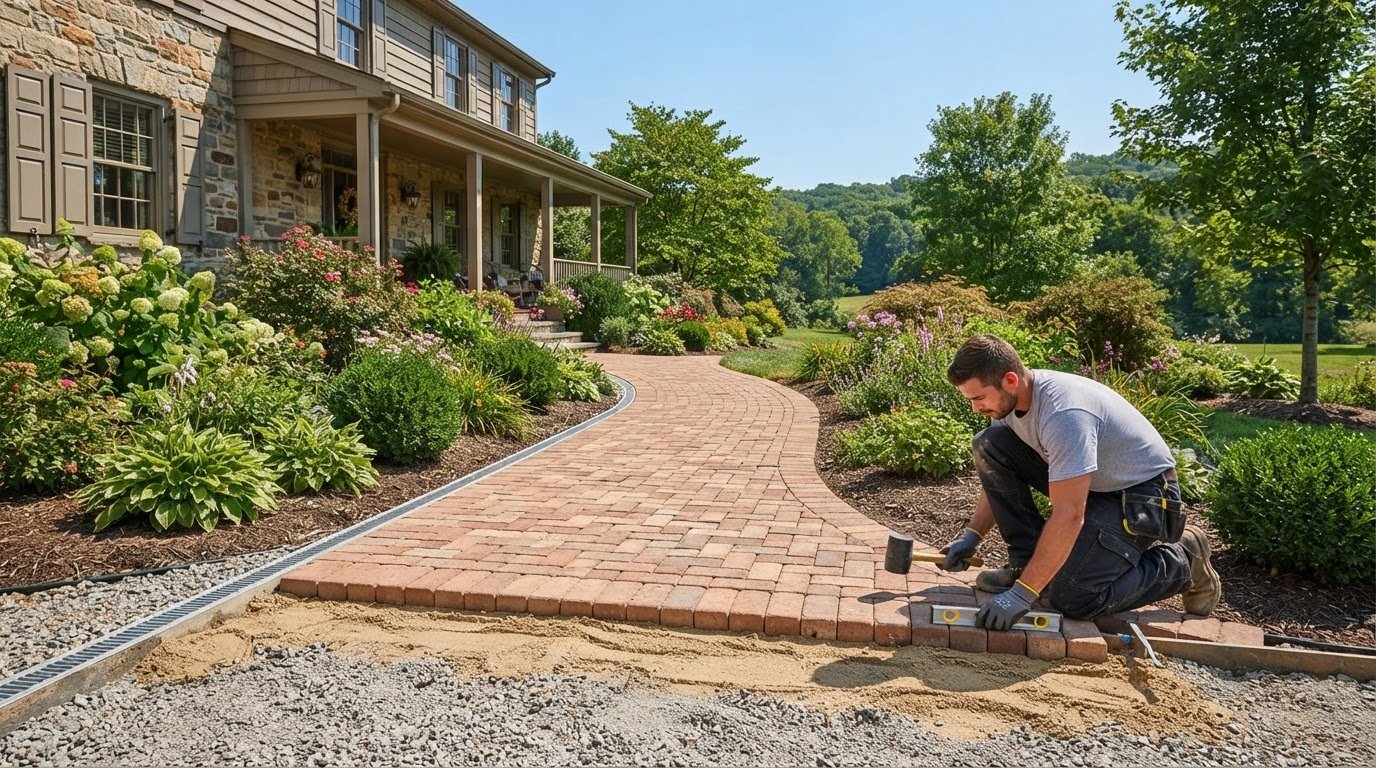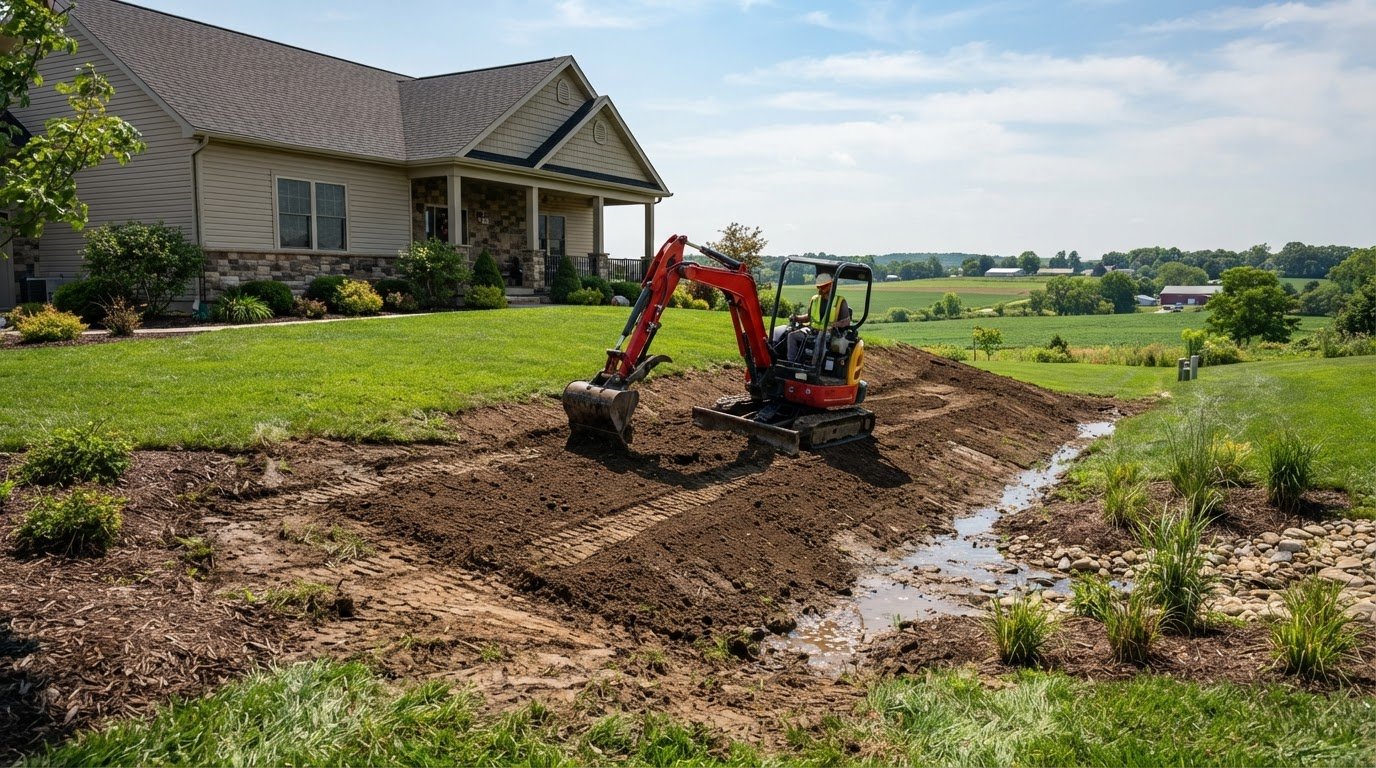

A drain that clears a puddle can still send water to the wrong place. Standing water can make lawn, patio, and walkway areas difficult to use, but choosing a drain by appearance alone may leave the underlying routing problem unresolved. Choosing surface drainage systems Columbia PA property owners can rely on starts with three questions: where does the water come from, where does it need to go, and what lies along the route?
The right solution depends on the property. A channel drain may suit a paved area, while grading or another approach may be needed to manage water across a broader section of a yard. Nearby patios, retaining walls, lawns, and walkways all affect the plan. Snappy Landscaping provides drainage solutions and grading, coordinating the work with surrounding hardscape and site conditions.
This guide compares common surface drainage options, explains the site factors that shape system selection in Columbia, PA, and shows why a suitable outlet matters as much as the drain itself. You’ll be better prepared to plan a solution around how water moves across your property, not just where it pools.
Surface Drainage Systems in Columbia, PA
A surface drainage system collects water moving across the ground and redirects it toward a suitable discharge point. It may use grading, collection features, or a combination of approaches to guide runoff away from problem areas. A complete plan accounts for three connected factors: where water gathers, the route it can follow, and where it can be released without creating another drainage issue.
Choosing a drain by appearance alone can miss the underlying problem. A channel drain may capture runoff along a paved area, for example, but the plan also needs a workable route and outlet. Grading can shape the direction water travels across a lawn or around hardscape. For surface drainage systems Columbia PA properties may need, site-specific planning connects collection and routing instead of treating each puddle as an isolated issue. You can explore an overview of different types of drainage systems to see how drainage methods vary.
What problems can surface drainage address?
Look for visible signs: water standing after rainfall, runoff crossing a patio or walkway, or a low area that repeatedly holds water. Persistent surface water can make parts of a lawn difficult to use and leave patios or paths inconvenient to cross. These signs show where water collects, but they don’t automatically explain why it gathers there or where it should go.
A surface approach may help manage water that moves over the ground. Water near a foundation, repeated saturation, erosion, or drainage problems affecting several parts of the property may need a broader site assessment. The source, direction, and pattern of flow matter. Treating only the visible puddle could leave the water’s route unchanged or shift the problem elsewhere.
Surface drainage versus subsurface drainage
Surface systems collect water at or above ground level, using features such as shaped grades or surface inlets to guide runoff. Subsurface systems manage water below ground, often through buried drainage components. Neither method is automatically right for every property. The choice depends on where water is moving and what condition the project needs to address.
Some sites benefit from coordinated grading and drainage, or from more than one water-management method. Runoff crossing a paved area and water that remains below the ground surface, for instance, may require different responses. A project plan should consider nearby lawns, patios, retaining walls, and walkways together. Snappy Landscaping coordinates drainage and grading plans with site conditions and surrounding hardscape.
Which Surface Drainage System Fits Your Columbia Property?
Match the drainage method to the water’s starting point and path. A low spot in a lawn, runoff crossing a patio, and water leaving a downspout are different conditions, so they may call for different collection and routing choices. When considering surface drainage systems Columbia PA property owners should focus less on the system’s name and more on whether the complete route works for the site, including a suitable discharge point and practical maintenance access.
Use this comparison as a starting point. The best fit depends on your property’s layout and how water behaves across it.
| Option | Collection point and typical fit | Route and maintenance considerations |
|---|---|---|
| Channel drain | Collects runoff along a line, often at a targeted paved or hardscape area. | Needs a planned outlet; keep the channel accessible for clearing debris. |
| Catch basin | Collects runoff at a specific low or gathering point. | Connect it to a workable route, and preserve access to remove leaves and sediment. |
| Swale | Uses a shaped landscape channel to guide surface flow where site conditions allow. | Needs a continuous path and space to direct water; keep its flow area clear. |
| Grading-based flow path | Uses adjusted ground contours to guide water across a lawn or landscape area. | Must lead toward an intended collection or discharge route without creating a new problem elsewhere. |
Choose by collection point and access
A channel drain can suit a defined paved edge where runoff crosses, while a catch basin may fit a concentrated low point. A swale needs room for a shaped route through the landscape. In each case, consider what could collect in or around the system. Leaves, soil, and other debris can obstruct flow, so include maintenance access in the plan from the start.
Downspouts also need deliberate routing. Discharging water beside a foundation or onto a walkway may simply move the problem to a new spot. The right route depends on the property layout and suitable discharge conditions. Identify where the water will go before choosing how to collect it.
Use grading to connect the route
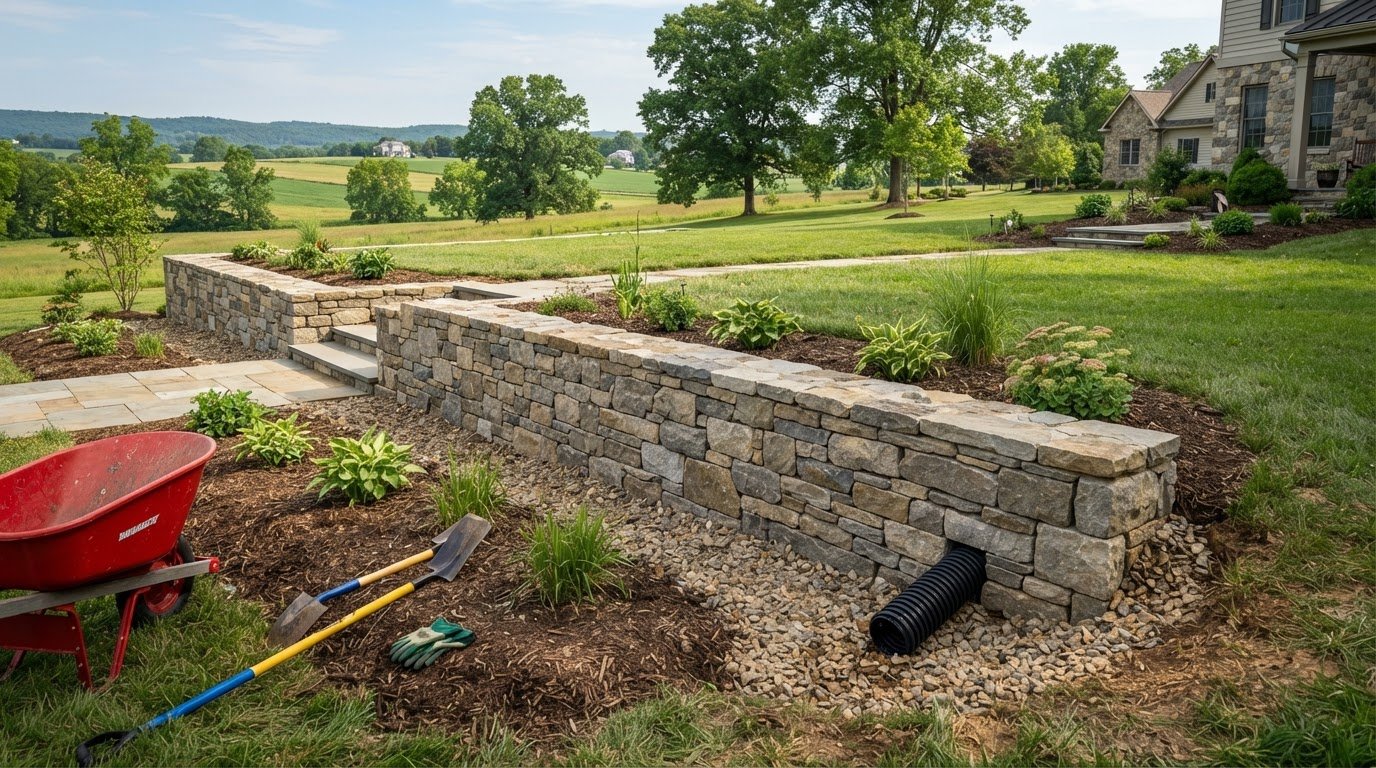
Grading can guide surface water toward an intended inlet, swale, or discharge path. It may work alongside a drain rather than replace every collection component. Nearby patios, lawns, walkways, and retaining walls affect how the route can be shaped. If a wall is part of the site plan, retaining wall drainage guidance can help you consider how the features relate.
Snappy Landscaping coordinates grading and drainage planning around site conditions. Start by identifying the source, tracing the route, and then locating the outlet. That sequence helps distinguish a drain that collects water from a complete plan that directs it where it needs to go.
How Columbia Site Conditions Change the Drainage-System Choice
A drain can collect water and still fail to solve the problem if there’s no workable route to a suitable outlet. Plan the complete path before choosing equipment or changing the grade. A surface inlet, for example, won’t resolve a recurring low spot if runoff has nowhere appropriate to go after collection. The goal is a coordinated plan for managing water across the property, not a single feature selected in isolation.
For surface drainage systems Columbia PA property owners are considering, assess the site as a whole. Slope, paved areas, low points, access, and nearby structures influence where water can travel and which options fit. Discharge planning must also respect property boundaries and applicable local requirements. Requirements can depend on the project and location, so verify the specifics before work begins rather than assuming a route is acceptable.
Assess slopes, low points, and collection areas
Start with a simple site map. Mark where runoff appears to begin, where it gathers, and which lawn, patio, or walkway areas you want to protect. If it’s safe, observe the flow during or after rain. Note paved surfaces that shed water, low areas where it collects, and changes in grade that may redirect it.
Nearby features shape the available route. A patio may send water toward a lawn; a walkway or retaining wall may interrupt the natural flow. If a wall affects the layout, review the relevant retaining wall installation details as part of planning. This assessment helps distinguish a local collection issue from a broader grading concern.
Check the route, outlet, and maintenance access
Trace the proposed path from the collection point to the discharge point before settling on a system. Consider boundaries, structures, existing utilities, and whether the route can be accessed for installation and future upkeep. A plan should avoid transferring runoff to another problem area or directing it across a property line. Confirm applicable local requirements for the proposed discharge and grading; don’t assume an available outlet is automatically suitable.
Maintenance needs matter, too. Leaves and sediment can collect around inlets or within accessible drainage components. Place collection points where debris can be removed and any needed cleanout can be reached without obstructing a walkway or disrupting the intended route. These practical details affect how the system functions over time.
- Map: Identify sources, flow paths, low points, and areas to protect.
- Trace: Follow water from collection to a suitable outlet.
- Plan: Account for structures, boundaries, access, and upkeep.
No single system should be expected to resolve every drainage concern before the site has been assessed. Snappy Landscaping plans drainage and grading around site conditions and coordinates them with nearby hardscape. For a site-specific drainage discussion, connect with Snappy Landscaping.
How to Plan a Surface Drainage Project in Columbia, PA
A useful project plan starts with evidence from your property, not a guess about which drain to install. Track what happens during wet weather, identify the areas you want to protect, then review how the proposed work will collect and route water. These observations make a site assessment more focused and give you a clearer basis for understanding the project scope.
Use this sequence to organize what you observe. You don’t need to calculate slopes or design a drainage system yourself.
Prepare useful observations before a site assessment
Record where water appears, what conditions bring it on, and how it moves. Note nearby patios, walkways, retaining walls, lawns, and structures that may affect the flow. If it’s safe, take photos after rainfall to show ponding and visible runoff paths. Also note how you use the affected space and which areas the project should keep usable.
- 1. Mark the trouble spots. Identify recurring puddles, wet areas, and places where runoff crosses a path or paved space.
- 2. Note the conditions. Record when you see water, such as during rainfall or after it ends, and whether the same areas are affected each time.
- 3. Capture the flow. Take photos from useful angles after rainfall, if conditions are safe. Include nearby hardscape or structures to show the setting.
- 4. Describe the impact. Note whether water limits access to a walkway, affects patio use, or leaves part of the lawn difficult to use.
- 5. Share the context. List other property features or work to consider, such as a nearby patio, wall, or planned landscape change.
These records help explain the problem without requiring you to make technical judgments. Snappy Landscaping uses site-specific observations to plan drainage and grading around the property’s layout.
Review the proposed scope and ongoing care
Before moving forward, make sure the project scope describes where water will be collected, how grading may guide it, what route it will follow, and where it is intended to discharge. Drainage planning should account for the complete route, not just the inlet. A clear scope connects each part of the work to the water-management goal.
- Collection: Identify the areas or points where runoff enters the system.
- Grading and routing: Understand how surface contours and drainage components work together to direct water.
- Outlet: Confirm the planned discharge point and account for applicable local requirements.
- Access and care: Consider how inlets or other accessible components can be inspected and cleared of debris.
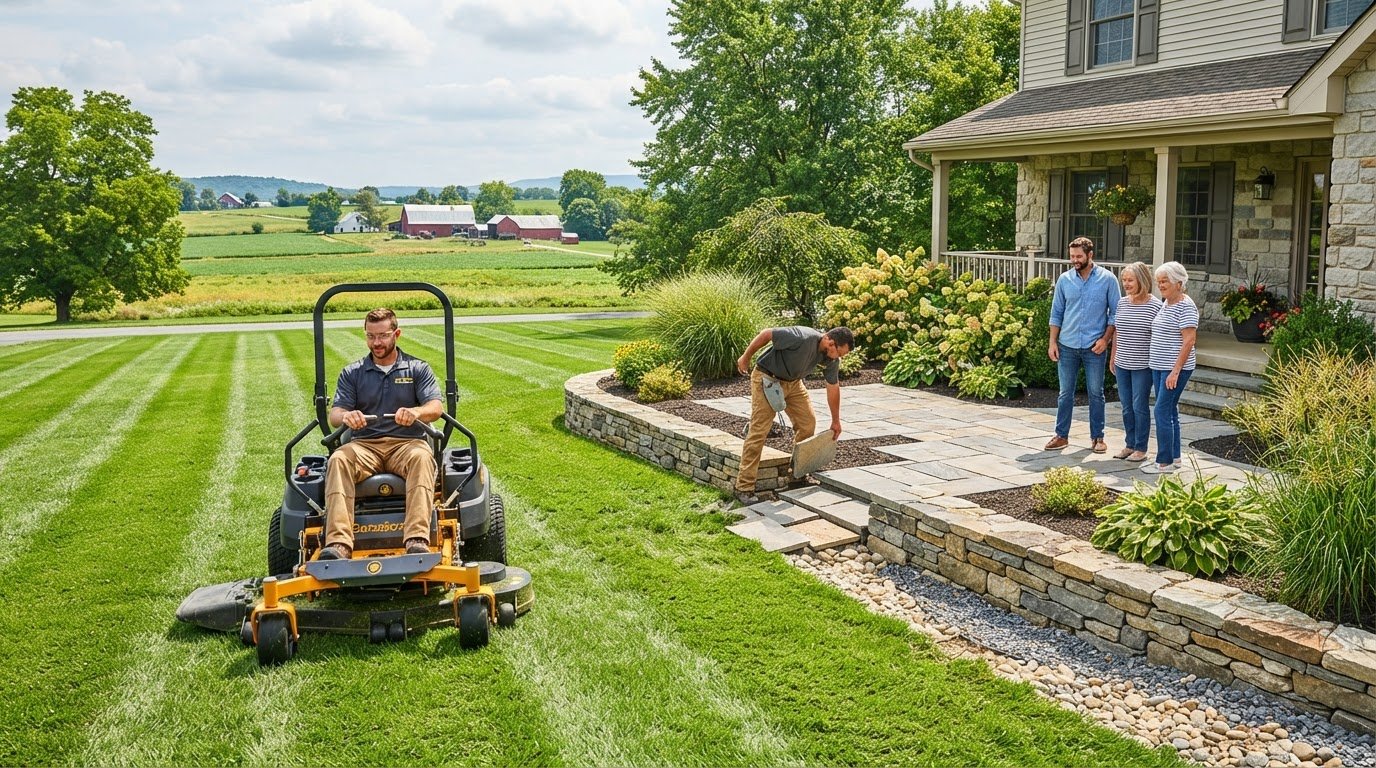
Good planning also considers how the finished work fits the rest of the property. Snappy Landscaping’s hardscaping services include custom patios, retaining walls, concrete pads, and walkways, features that can affect how water moves across a site. For a drainage project tailored to your property, discuss your drainage project with Snappy Landscaping.
Get a Site-Specific Surface Drainage Plan from Snappy Landscaping
Drainage problems rarely stop at the edge of a puddle. Water may cross a lawn, collect beside a walkway, or interact with a patio or retaining wall. Snappy Landscaping provides drainage solutions and grading for residential and commercial properties in Columbia and the wider Lancaster County region. Planning surface drainage systems Columbia PA properties can use starts with understanding the water issue and the surrounding site, then developing a route suited to those conditions.
The goal is to connect the parts of the project. Collection, grading, routing, and the intended outlet need to work together. The right approach depends on the property, so planning is tailored to its drainage needs rather than based on a one-size-fits-all system or an assumed result.
How drainage and grading work together
Grading can shape how water moves across a property and guide it toward a planned collection or discharge route. It may be coordinated with drainage components as part of a broader site plan. Nearby patios, walkways, retaining walls, and lawn areas can affect where water travels and how the work fits around existing hardscape.
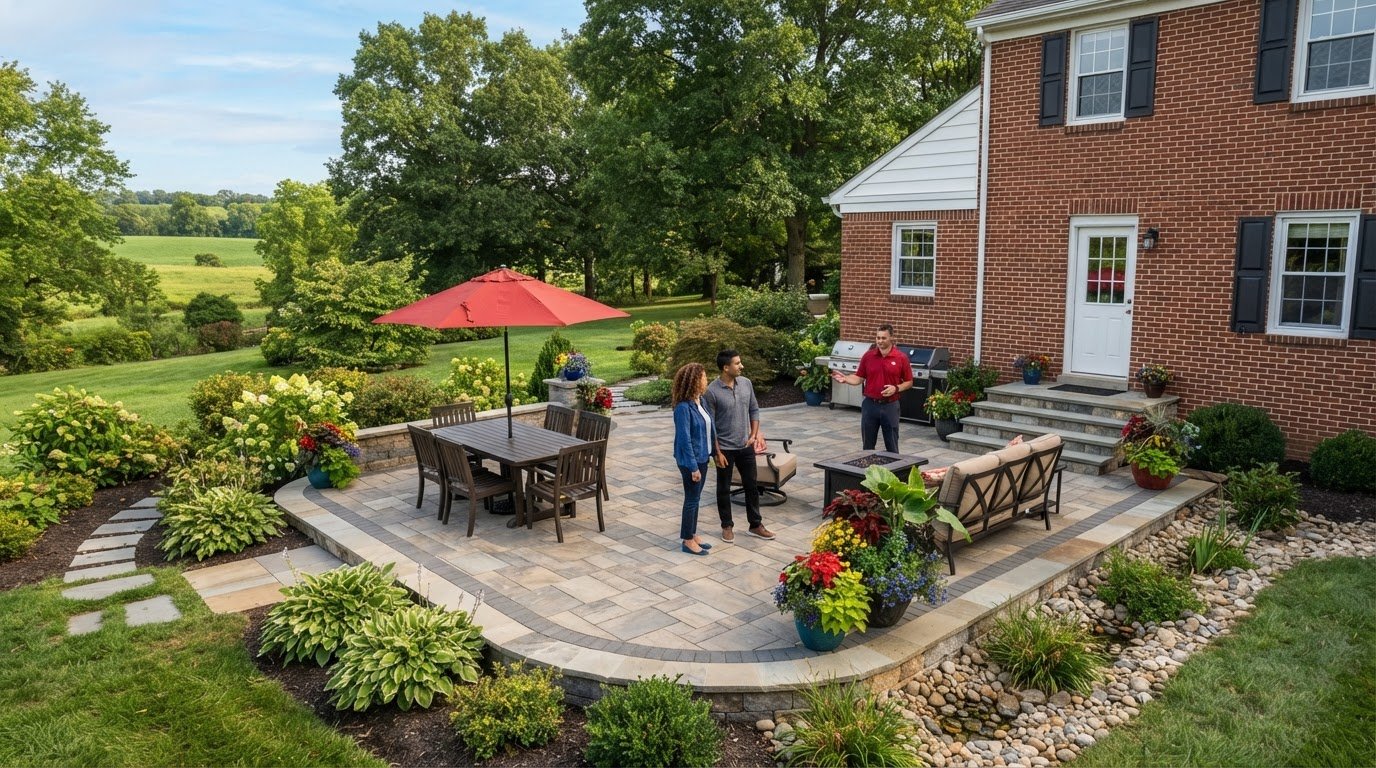
When drainage is part of a larger outdoor improvement, consider how the pieces relate. Snappy Landscaping’s hardscaping services include patios, paths, retaining walls, concrete pads, and walkways, which can all be considered alongside drainage and grading. The surrounding site features help shape a plan suited to the property.
Take the next step for a Columbia property
Start with a clear description of the problem. Share which areas are affected, when water appears, and what you’ve observed about its movement. Mention nearby features that may shape the work, such as a patio, retaining wall, walkway, lawn, or structure. Photos taken after rainfall can help illustrate visible ponding and flow paths, provided it’s safe to take them.
- Affected area: Identify where water collects or disrupts use.
- Visible pattern: Describe where water seems to come from and where it moves.
- Nearby features: Note hardscape, structures, and areas you want the plan to account for.
Snappy Landscaping uses property-specific planning to consider drainage alongside grading and nearby hardscape. A clear starting description helps focus the discussion on the site and the project’s needs. Contact Snappy Landscaping to discuss a site-specific drainage project for your Columbia property.
Make Your Next Step a Clear One
Before the next stretch of wet weather, turn what you’ve noticed into a practical starting point. Consider which outdoor areas you want to use comfortably, what water patterns you’ve observed, and which nearby features a plan needs to account for. Those details help shape a drainage project around the property instead of relying on guesswork.
For surface drainage systems Columbia PA property owners can plan with confidence, a site-specific approach matters. Snappy Landscaping is locally owned and operated in the Lancaster County region, with drainage and grading services for residential and commercial properties. Bring your observations and priorities to the conversation to start planning an approach suited to your site in Columbia, Lancaster, or Mountville.
Contact Snappy Landscaping to plan your drainage project. A clear plan can help you move forward with greater confidence in how your property manages water.
Frequently Asked Questions
What is the best surface drainage system for a yard in Columbia, PA?
There isn’t one best system for every yard; the right choice depends on the water pattern and property layout. A defined paved edge, a lawn depression, and runoff spread across a broad area may call for different approaches. For surface drainage systems Columbia PA homeowners are considering, note where water appears and which spaces it affects. That gives a site assessment a practical starting point, whether the property is in Columbia, Lancaster, or Mountville.
Are channel drains or catch basins better for standing water?
Choose based on the shape of the collection area. A channel drain collects runoff along a line, which can suit a narrow paved edge where water crosses. A catch basin gathers water at a point, which may fit a localized low spot. Neither automatically addresses the route beyond the inlet. A basin in a lawn, for example, won’t be a complete solution if the collected water has no planned path away from that area.
Can grading alone solve a surface drainage problem?
Sometimes, if water is spreading over the surface and the site can be shaped to guide it appropriately. But grading alone may not be enough where runoff concentrates quickly, a hardscape edge interrupts flow, or a specific collection point is needed. If a lawn slopes toward a patio, adjusting the grade may help redirect flow, but the site layout and discharge route still need consideration. A site assessment helps determine the project scope.
How do I know whether I need surface drainage or a French drain?
Visible runoff and ponding at ground level may point toward a surface-drainage approach; persistent water below the surface may require assessment for subsurface drainage, such as a French drain. The signs can overlap, so don’t choose by the system name alone. A soggy lawn, for example, could reflect surface water collecting in a low area or water moving through the ground. Identifying the source helps guide the next step.
What happens if a drainage system has no suitable outlet?
Collected water may back up, overflow, or remain near the area the system was meant to protect. An improvised outlet can also shift runoff toward a walkway, structure, or neighboring property. That’s why an outlet needs consideration before installation, not as an afterthought. If no suitable discharge route is clear, the project needs further planning before the collection method is selected.
Do surface drainage systems need regular maintenance?
Yes. Leaves, soil, and other debris can reduce flow through inlets or channels, so inspect accessible components and clear visible buildup as needed. Check after debris has fallen or when you notice water draining more slowly than usual. Keep maintenance access in mind during planning, especially if an inlet sits beside planting or paving. Routine observation can help you spot a blockage or change in flow before it becomes a larger concern.
Can drainage work be planned around an existing patio or retaining wall?
Yes. Existing hardscape should be treated as part of the site layout because it can affect where water travels and where project work can fit. A patio may direct runoff toward a lawn, while a retaining wall can constrain the available route. A plan can account for those relationships alongside walkways and lawn areas. The goal is to coordinate drainage and grading with existing features, not assess the collection point in isolation.
Do I need to check local requirements before redirecting stormwater in Columbia, PA?
Yes. Check with Columbia Borough or the relevant municipality before changing grading or directing runoff to a new location. Requirements can depend on the work, property, and proposed discharge, so don’t assume a route is acceptable simply because it is on your land. Larger earth-disturbance projects may involve additional review. Confirm the applicable requirements for your project before work begins, particularly if the plan changes where water flows.