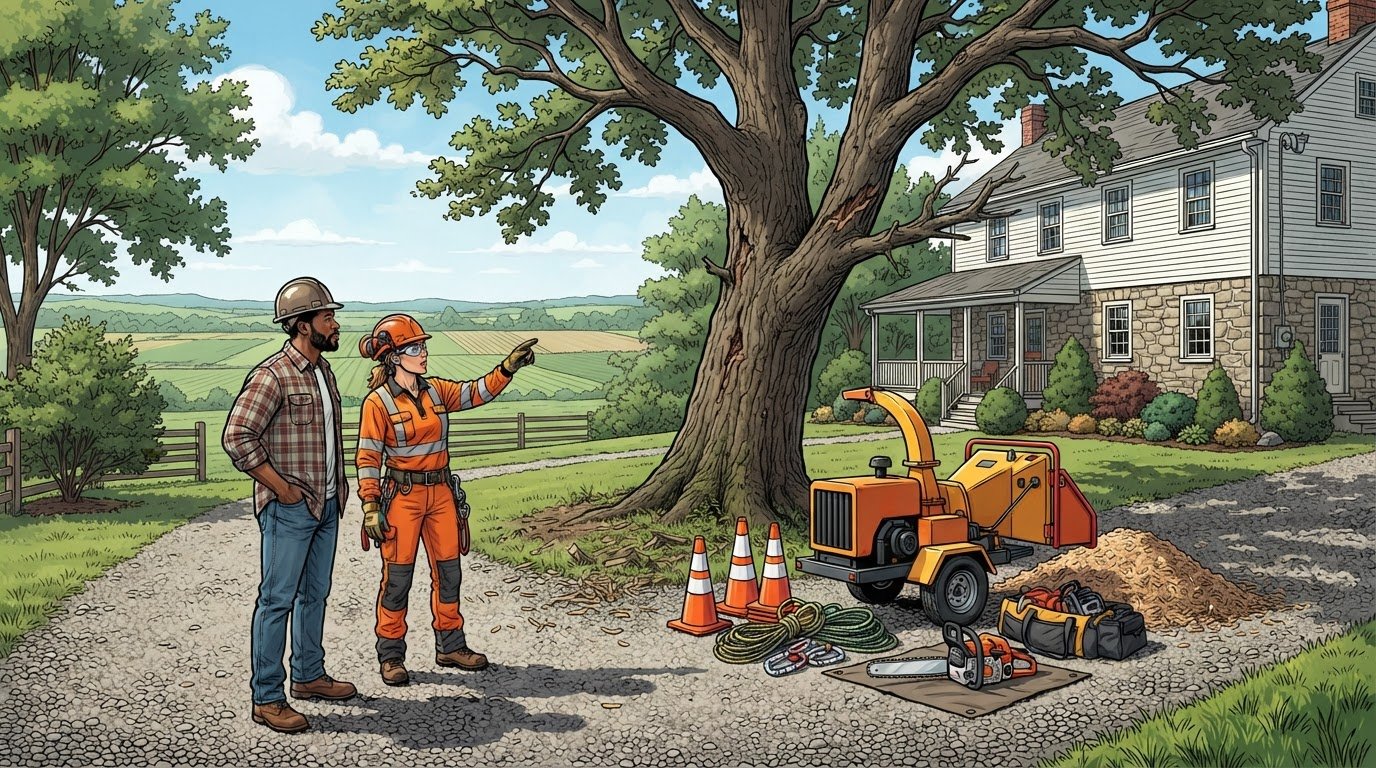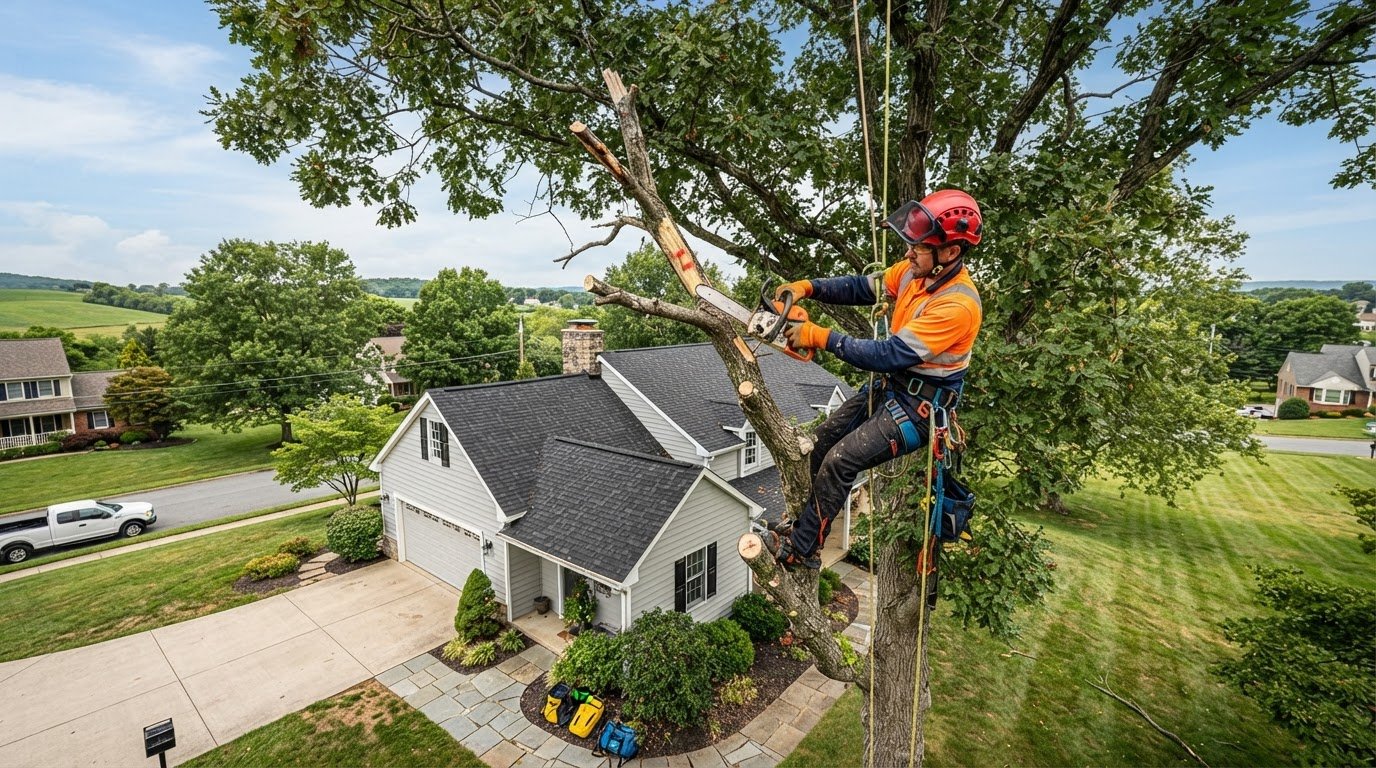

Does a damaged tree automatically need to come down? Not necessarily. A cracked limb or leaning trunk deserves attention, but the right next step depends on the tree’s condition and what could be affected if it fails. If you’re considering hazardous tree removal Columbia PA, a site-specific assessment can help distinguish warning signs from a definite removal recommendation.
It’s reasonable to worry about a tree near your home, vehicle, or a neighbor’s property. Tight access, gardens, fences, and nearby structures can also affect how tree work is planned. This guide explains signs that call for a professional assessment, factors that shape a removal decision, and how trimming may differ from removal.
You’ll also learn what to share when discussing a project, from visible damage and the tree’s location to access concerns. Because local requirements may apply to certain trees in Columbia, check with the Borough before work begins. Snappy Landscaping provides tree trimming and removal for residential and commercial properties in Columbia, Lancaster, and Mountville, as well as the wider Lancaster County area.
Hazardous Tree Removal in Columbia, PA: Which Warning Signs Deserve Attention?
A damaged or leaning tree beside your Columbia home, driveway, or walkway can make every gust of wind feel like a warning. But one visible flaw doesn’t automatically mean the tree must be removed. The decision depends on the tree’s condition, its location, and what could be hit if a branch or trunk failed. If you’re researching hazardous tree removal Columbia PA, start by noting signs that deserve a closer look, rather than deciding on removal from the ground.
A hazardous tree is one whose condition and location together create a credible risk to people, buildings, vehicles, or other property. Risk depends on the site. A compromised limb over an empty part of the yard presents a different concern from one over a frequently used entrance.
What signs can suggest a tree may be hazardous?
Look for changes that may indicate structural weakness or instability. These signs warrant attention, but none alone confirms that removal is necessary:
- Major dead limbs: Large, leafless branches or branches caught in the canopy may fall, especially if they extend over a roof, driveway, or path.
- Visible trunk cracks: A deep split or crack may signal weakness. Note where it is and whether it appears to be changing.
- Extensive decay: Hollow areas, soft or crumbling wood, fungal growth, or missing bark can be clues to internal damage. A visual check can’t establish how much sound wood remains.
- A sudden change in lean: A tree that recently tilted, particularly after strong wind or heavy rain, needs prompt assessment. A long-standing lean may have a different risk profile.
- Root upheaval or soil movement: Lifted soil, exposed roots, or a new mound near the base can indicate that the root plate has shifted. Keep clear and arrange a professional assessment promptly.
Observe from a safe distance. Don’t climb the tree, approach unstable limbs, or try to cut or pull anything down. Tree care can include pruning, trimming, and felling, as this overview of tree care practices explains. Choosing the right work depends on the tree and its surroundings.
When should a tree concern become a priority?
Arrange an assessment promptly if you notice recent movement, fresh storm damage, or a large limb hanging over an area people use often. A branch above a regularly parked vehicle or a well-used walkway deserves closer attention than one over an unoccupied section of yard. That doesn’t mean removal is inevitable. The tree’s condition and the potential targets around it both matter.
Share useful details with the assessor: what changed, when you noticed it, whether the issue followed a storm, and which areas sit beneath the affected branches. Photos taken from a safe distance can help explain the concern. An on-site assessment can account for factors a photo may miss, including the tree’s position relative to buildings and access routes.
If a tree has fallen onto a power line, or there’s immediate danger, stay well clear and contact emergency services or the utility. For other concerns, Snappy Landscaping provides tree trimming and removal in Columbia, Lancaster, Mountville, and the surrounding Lancaster County area. Its tree removal services address property concerns through assessment and planning.
How a Hazardous Tree Removal Assessment Accounts for the Columbia Property
A tree doesn’t stand alone. A removal assessment considers its condition alongside the surrounding property, available work area, and your specific concern. In Columbia, lot layouts and access vary, so the assessment should be based on the actual site, not assumptions about typical yards, tree species, or property size.
Distance matters, but it isn’t the only factor. A tree near a house may call for a different work plan from one near a driveway, fence, or walkway. Utility lines also affect planning. Share known concerns about overhead or underground utilities, and don’t approach or touch a line near a tree. Purdue University Extension explains why understanding tree risk assessment matters to property owners, including how defects and surrounding conditions inform risk.
Which site conditions can change the removal plan?
Start with access. A narrow side yard, limited entry, slope, fence, garden beds, or nearby structure may affect where people can work and how cut material can be handled. The tree’s position and condition, along with nearby obstacles, also shape the approach. No single removal method or equipment choice fits every property, so the plan should reflect the tree and the available work area.
Point out features that may be easy to overlook from the street, such as a gate that doesn’t open fully, a retaining wall, planted areas, or a section of lawn you want protected. These details help make the discussion practical and give the assessment a fuller picture of possible access limits and impacts around the work area.
Local requirements are another planning item. Before arranging work, contact Columbia Borough to ask whether a local permit or other requirement applies to the tree’s location or status. Don’t assume that a tree is entirely a private-property matter if it may be near public land or a right-of-way.
What should a property owner share during an assessment?
Give clear, factual details. Explain when you first noticed the damage or change, whether it has progressed, and whether a storm or other event preceded it. Identify nearby buildings, parked vehicles, walkways, play or seating areas, fences, and landscaping. Mention gates, narrow paths, slopes, or other access restrictions, along with any known utility concerns.
Photos from a safe location can show how the tree sits in relation to the property. Include more than a close-up of the damage: a wider view can reveal nearby targets and access conditions. Don’t climb, move debris, or enter an area beneath unstable branches to get a better angle. Leave that space clear for assessment.
These details keep the discussion focused on both the tree and the property. Snappy Landscaping provides tree trimming and removal for Columbia and Lancaster County properties, including those in Mountville. Its tree removal services address tree-related property concerns through site-specific evaluation and planning.
Tree Removal or Pruning: How to Think Through the Options
Seeing damage doesn’t settle whether a tree should be pruned or removed. The useful question is what work, if any, addresses the specific concern without treating one visible symptom as a diagnosis. Pruning removes selected branches; removal takes down the whole tree. A professional assessment considers the tree’s condition, location, and risk to nearby people and property to help determine whether full removal is warranted.
Use this comparison to organize the conversation, not to make a decision from a distance. The USDA Forest Service’s guidance on identifying hazardous trees offers general context, but it can’t replace an assessment of an individual tree and site.
| Concern | What an assessment considers | Possible next step |
|---|---|---|
| A problem appears limited to one or more branches | Branch condition, position, and what lies below | Pruning may be considered if it addresses the concern |
| The tree has visible damage or a structural concern | Extent of the issue, the tree’s overall condition, and nearby targets | Further evaluation, pruning, or removal may be discussed |
| The tree itself may threaten an area or property | Whether the concern involves the whole tree and the site’s exposure | Removal may be considered if it’s the appropriate response |
When might tree trimming be part of the discussion?
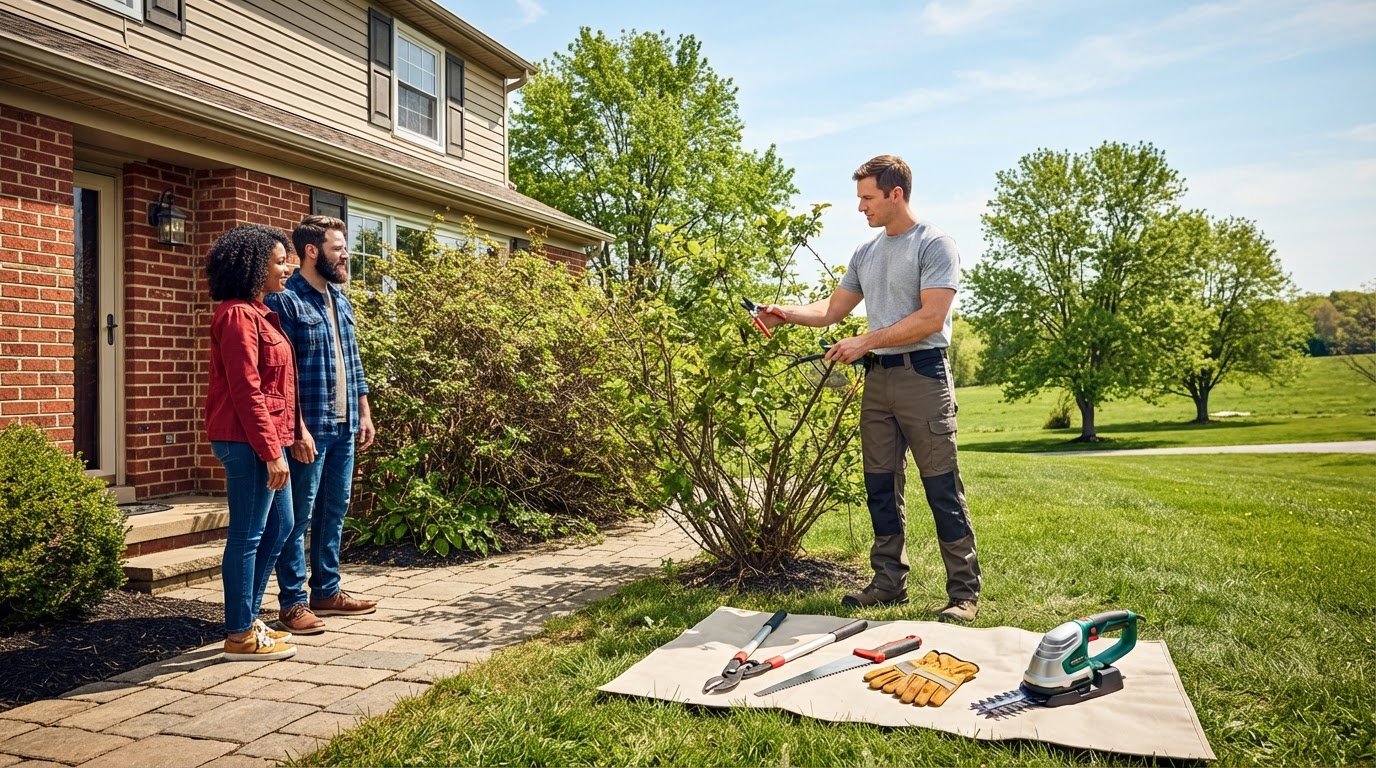
Pruning may be an option when the concern involves particular branches or when tree maintenance is appropriate. It isn’t a universal fix: suitability depends on the tree’s condition, location, and the specific safety concern. Explain which branch worries you and what’s beneath it. Snappy Landscaping provides tree trimming services for property owners in Columbia, Lancaster, and Mountville.
When might removal be considered instead?
Removal may enter the discussion when an assessment indicates that the tree itself presents an unacceptable risk to the property. Severe structural damage or a compromised condition are relevant factors to evaluate, not automatic proof that the tree must come down. A recommendation should connect the proposed work to the tree’s condition and the potential consequences of failure at that location.
The choice between pruning and removal depends on the tree’s condition and the risks at its specific site. For hazardous tree removal Columbia PA, a responsible recommendation should explain why the proposed work fits the concern, rather than assuming every damaged tree needs the same outcome.
Ask what issue the proposed work is meant to address and whether the assessment points to a branch-level concern or a whole-tree risk. That gives you a clear basis for understanding the recommendation and deciding on the next step. No photo or checklist can determine the right treatment on its own; the tree and its surroundings need to be considered together.
Preparing for Hazardous Tree Work at a Columbia Property
Good preparation helps the assessment and work plan account for the actual property. Start by recording what you’ve noticed, then make access details and nearby features clear. Don’t approach an unstable tree or enter an area beneath damaged limbs to gather information. Your safety comes first.
- Document the concern from a safe location. Take clear photos that show the tree and its surroundings. Note when you first noticed the issue and whether it has changed, such as a lean that appears more pronounced or new damage after a storm.
- Explain how the crew can reach the site. Identify gates, narrow paths, parking limits, slopes, and areas that can’t be used for access. Mention if a vehicle or other obstruction may need to be moved.
- Point out what’s near the tree. Identify buildings, vehicles, outdoor furniture, fences, gardens, walkways, and other features that could affect planning or need to stay clear.
- Flag people, pets, and restricted areas. Share where children or pets usually spend time and note any areas you want kept off-limits. Tell the crew about known utility concerns rather than approaching lines yourself.
- Raise boundary or public-space questions. If the tree’s ownership or location near a property line is uncertain, explain that before work is planned. If it may affect a sidewalk, street, or other public space, contact Columbia Borough to verify applicable requirements.
What information helps plan the work?
Pair close views of the damage with wider photos that show access and nearby property features. Describe what changed and when, without trying to diagnose the cause. Mention parking constraints and any gate or access instructions. If you’re unsure where a boundary falls, share that concern so it can be addressed during planning instead of making assumptions about ownership.
What should you expect around the work area?
The work zone and property-protection steps depend on the tree, available space, and agreed plan. Before work begins, make sure the crew knows about vehicles, outdoor furniture, pets, and areas that should remain undisturbed. Move items if requested and keep people and pets away from the work area during active tree work. Follow the crew’s site-specific instructions; don’t cross into a restricted area to watch or retrieve belongings.
For hazardous tree removal Columbia PA, clear communication helps the team plan around the property’s layout and your concerns. Snappy Landscaping provides tree trimming and removal for residential and commercial properties in Columbia, Lancaster, and Mountville. If you’re ready to discuss the site and your tree concern, contact Snappy Landscaping about your property.
Arrange Hazardous Tree Removal in Columbia, PA with Snappy Landscaping
Take the next step with a clear picture of the concern, not an assumption about the outcome. Note the warning signs, consider what’s around the tree, and discuss whether the issue may call for pruning or full removal. For hazardous tree removal Columbia PA, the appropriate plan depends on the tree’s condition and the specific property, including nearby structures and access.
Snappy Landscaping serves residential and commercial properties in Columbia, Lancaster, and Mountville with tree trimming and removal. A focused request helps start a useful conversation about the tree and the site, so the concern can be understood before next steps are discussed.
What details should you include in a tree-removal request?
Describe the tree’s location and condition, along with the reason you’re concerned. You don’t need to diagnose the problem. Share what you’ve observed and what may be affected if a branch or the tree fails.
- Describe visible damage, such as a split, dead limbs, or a change in the tree’s position.
- Say when you first noticed the concern and whether it has changed since then.
- Identify nearby buildings, vehicles, walkways, fences, or other property features.
- Explain access limitations, such as a narrow gate, parking restrictions, or a sloped work area.
- Include clear photos taken from a safe distance, if they help show the tree’s condition and surroundings.
Keep your distance while taking photos. Don’t walk beneath a damaged limb, climb the tree, or enter an area that feels unsafe to get a closer view. If ownership or a property boundary is uncertain, mention that question in your request rather than assuming where the tree stands.
How does a local tree-service conversation help?
A property-specific discussion makes room for details a close-up photo may not show: how the tree sits beside a building, whether a driveway or path affects access, and which areas need consideration during the work. It also helps frame the question clearly. Is the concern limited to particular branches, or does it involve the tree as a whole? The answer depends on assessment, not a one-size-fits-all rule.
Snappy Landscaping’s tree trimming and removal services address tree-related concerns for properties in Columbia, Lancaster, and Mountville. Share what you’ve seen, where the tree is located, and any access or surrounding-property details that may shape the work. The recommended next step depends on the tree and the site, so don’t assume a removal outcome before they’re considered.
Ready to discuss a tree concern at your property? Contact Snappy Landscaping about tree removal.
Take the Next Step Toward a Safer Property
A tree concern doesn’t have to leave you guessing about what to do next. A focused conversation can turn uncertainty into a practical plan for your property. Share what prompted your concern and what you’d like assessed, then discuss which next step fits the site.
Snappy Landscaping provides tree trimming and removal for residential and commercial properties in Columbia, Lancaster, and Mountville, as well as the wider Lancaster County area. If you’re considering hazardous tree removal Columbia PA , describe the situation and the property conditions that matter. The right plan should reflect the tree and its surroundings, not push you toward a one-size-fits-all decision.
Contact Snappy Landscaping about hazardous tree removal to discuss your property and the next step.
Frequently Asked Questions
What are the warning signs of a hazardous tree?
Possible warning signs include dead or damaged limbs, cracks in the trunk, a sudden change in lean, and soil or roots shifting near the base. Their significance depends partly on what lies within reach, such as a home, parked vehicle, or frequently used path. A sign alone can’t confirm that a tree is hazardous or must be removed. Keep your distance and arrange a professional assessment rather than trying to diagnose it yourself.
Does a leaning tree always need to be removed?
No. A lean by itself doesn’t determine whether removal is appropriate. An assessment should consider whether the tree’s angle has changed, whether soil or roots show movement, and whether the trunk or major limbs have structural concerns. It also matters what the tree could strike if it failed. For example, a new lean toward a regularly used entrance deserves prompt attention, but an on-site evaluation is needed to determine the next step.
Can a hazardous tree be pruned instead of removed?
Sometimes. Pruning removes selected branches, so it may be considered if the concern is limited to particular limbs and the tree’s overall condition supports that option. Removal takes down the whole tree and may be discussed if the tree itself presents a property risk. Neither visible damage nor a single symptom settles the choice. A site-specific assessment helps determine whether pruning addresses the concern or whether removal should be considered.
How is hazardous tree removal planned near a house or utility line?
Planning considers the tree’s position, nearby structures, potential targets, and the space available to access the work area. Share details such as narrow gates, parked vehicles, and known utility concerns so they can inform the site plan. The approach depends on the property and tree, not a fixed method. If a tree is down on a power line, stay well clear and contact the utility or emergency services as appropriate.
Do I need a permit to remove a tree in Columbia, PA?
Permit requirements can depend on the tree’s location and status, so verify them with Columbia Borough before arranging removal. Ask whether the tree may be classified as a shade tree or affect a sidewalk, street, right-of-way, or other public space. Also clarify any property or boundary questions that could affect who has authority over the tree. Don’t assume a private yard automatically means no local requirement applies.
What should I do if a tree is damaged during a storm?
Stay away from the tree and any hanging or broken limbs. Don’t climb, cut, or move damaged branches, and never approach a downed power line. If there’s immediate danger, contact emergency services; for a line hazard, contact the utility and keep others away. Once you can observe safely, document the damage with photos from a distance and note what changed. Share those details when seeking an assessment.
How do I prepare my property for tree removal?
Explain access details such as gates, narrow paths, and parking limits, and identify nearby vehicles, outdoor furniture, or other items that may need attention. Tell the crew where pets will be and point out any restricted areas or property features relevant to the work. Follow the site-specific instructions before and during tree work. Keep children, visitors, and pets away from the active work area, even if they’re watching from nearby.