
Most homeowners think a retaining wall is built to hold back dirt, but in reality, it's a vertical drainage system that happens to look like a wall. You've likely noticed standing water pooling behind your hardscaping or, worse, fine cracks beginning to spiderweb across the stone after a heavy Pennsylvania rain. It's a stressful sight. You've made a significant investment in your property, and seeing signs of instability is frustrating.
This guide explains why proper retaining wall drainage Lancaster County is the single most important factor in ensuring your wall stands for decades rather than failing in five years. You'll learn how to neutralize hydrostatic pressure and why the difference between a "cheap" wall and a "correct" wall always comes down to what you can't see behind the block. We'll break down the mechanics of water pressure, the essential components of a professional drainage system, and how to safeguard your backyard against the unique terrain challenges of Lancaster, Columbia, and Mountville.
Why Retaining Wall Drainage in Lancaster County is Non-Negotiable
A retaining wall without a drainage system is just a dam waiting to fail. Many homeowners focus on the color of the stone or the shape of the blocks, but the most critical part of the project is what happens behind the wall. The primary enemy of any hardscaping project is hydrostatic pressure. This is the weight of water trapped in the soil pushing directly against your structure. In Lancaster County, our soil is predominantly clay-heavy. Unlike sandy soils that allow water to percolate quickly, clay acts like a dense sponge. It absorbs moisture and holds it tight, significantly increasing the load your wall must support. The goal of professional retaining wall construction is simple: move that water away before it can push the wall forward.
Consider the difference between a "dry" wall and a "wet" one. A dry wall supports the weight of stable earth. A wet wall, however, must resist the weight of that same earth plus the weight of the water filling every air pocket in the soil. This extra weight can double or triple the force exerted on your hardscaping. Once the soil reaches saturation, the wall is no longer holding back earth; it's holding back a heavy, semi-liquid mass.
The Science of Hydrostatic Pressure
Physics doesn't take days off. Water is incredibly heavy, weighing 62.4 pounds per cubic foot. When soil becomes saturated, the pressure builds. As the height of a wall increases, this pressure doesn't just grow steadily; it builds exponentially. A four-foot wall faces significantly more stress than a two-foot wall. Eventually, the pressure reaches a tipping point where it exceeds the structural resistance of the blocks. Without proper retaining wall drainage Lancaster County , the wall will inevitably bow, lean, or collapse entirely. We design systems that neutralize this pressure by providing a clear path for water to exit the backfill zone.
Lancaster's Climate: The Freeze-Thaw Factor
Our local weather patterns add another layer of risk to your investment. Pennsylvania winters are famous for the freeze-thaw cycle. When water is trapped behind your wall and temperatures drop, that water expands. This expansion exerts massive force, often referred to as ice heaving. It can literally lift heavy stones or push individual blocks out of alignment. This isn't just about aesthetics. When ice heaves a block, it creates new gaps. These gaps allow even more water to enter the system during the next thaw, creating a destructive feedback loop. Over several seasons, these repeated cycles of freezing and thawing weaken the entire structure. In our region, professional retaining wall drainage Lancaster County isn't an optional upgrade; it's the foundation of structural longevity.
Anatomy of a Properly Drained Retaining Wall
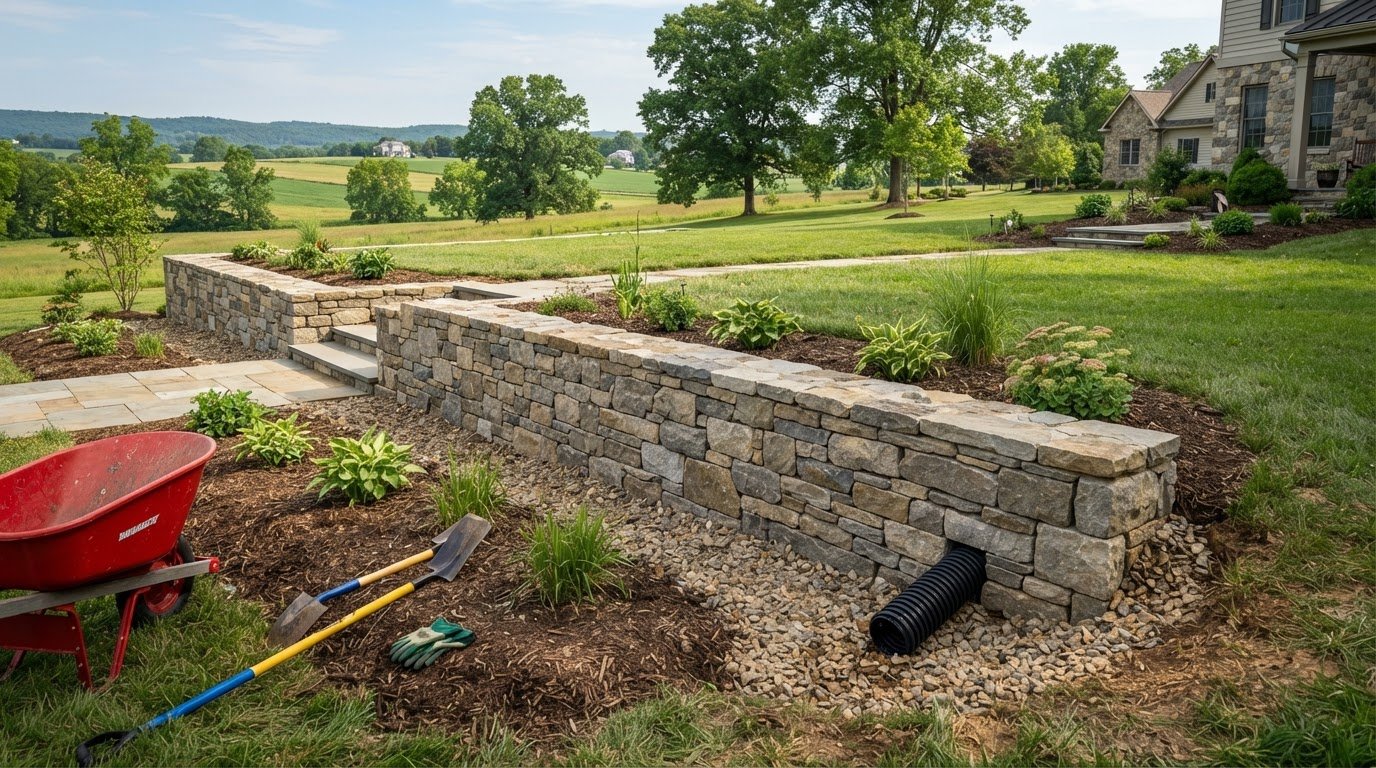
A professional retaining wall is a layered system where every component serves a specific functional purpose. It starts with the footing. We excavate a trench and fill it with compacted modified stone to create a level, stable base. If the footing isn't perfectly prepared, the wall will settle unevenly. This leads to water pooling at the base and eventual structural shifting. Above the footing, we install a perforated drainage pipe. This is the highway that allows water to exit the system before it can build up pressure. Every component must work in harmony to protect your property.
Why Aggregate Choice Matters
The material you place behind the wall blocks determines how well the system breathes. We use #57 clean, angular stone for the backfill, often called a drainage chimney. This stone has large voids between the pieces, allowing water to fall straight down to the drainage pipe. Never use native soil as immediate backfill. Lancaster's clay soil is too dense and will trap water against the blocks, leading to the hydrostatic pressure issues we discussed earlier. A proper drainage chimney should be at least 12 inches thick to ensure maximum efficiency. If you aren't sure if your current wall has the right materials, it's worth consulting with a specialist to evaluate your site.
The Role of Geotextiles and Geogrid
To keep the drainage stone clean, we use non-woven filter fabric. This geotextile acts as a barrier between the clean #57 stone and the native soil. It allows water to pass through but stops fine silt and clay from migrating into the stone and clogging the system. Without this fabric, your expensive drainage stone eventually turns into a muddy mess that can't move water. This is a common failure point in "cheap" wall installations.
For taller walls, we integrate geogrid. This is a high-strength synthetic mesh that extends back into the soil behind the wall. It locks the wall blocks and the backfill together into one massive, reinforced structure. We install geogrid in layers, creating a mechanical bond that resists the outward push of the earth. This combination of clean stone, filter fabric, and geogrid creates a retaining wall drainage Lancaster County system that remains stable for decades. By reinforcing the soil, we ensure the wall isn't just standing against the earth, but is actually part of it.
Subsurface vs. Surface Drainage Solutions
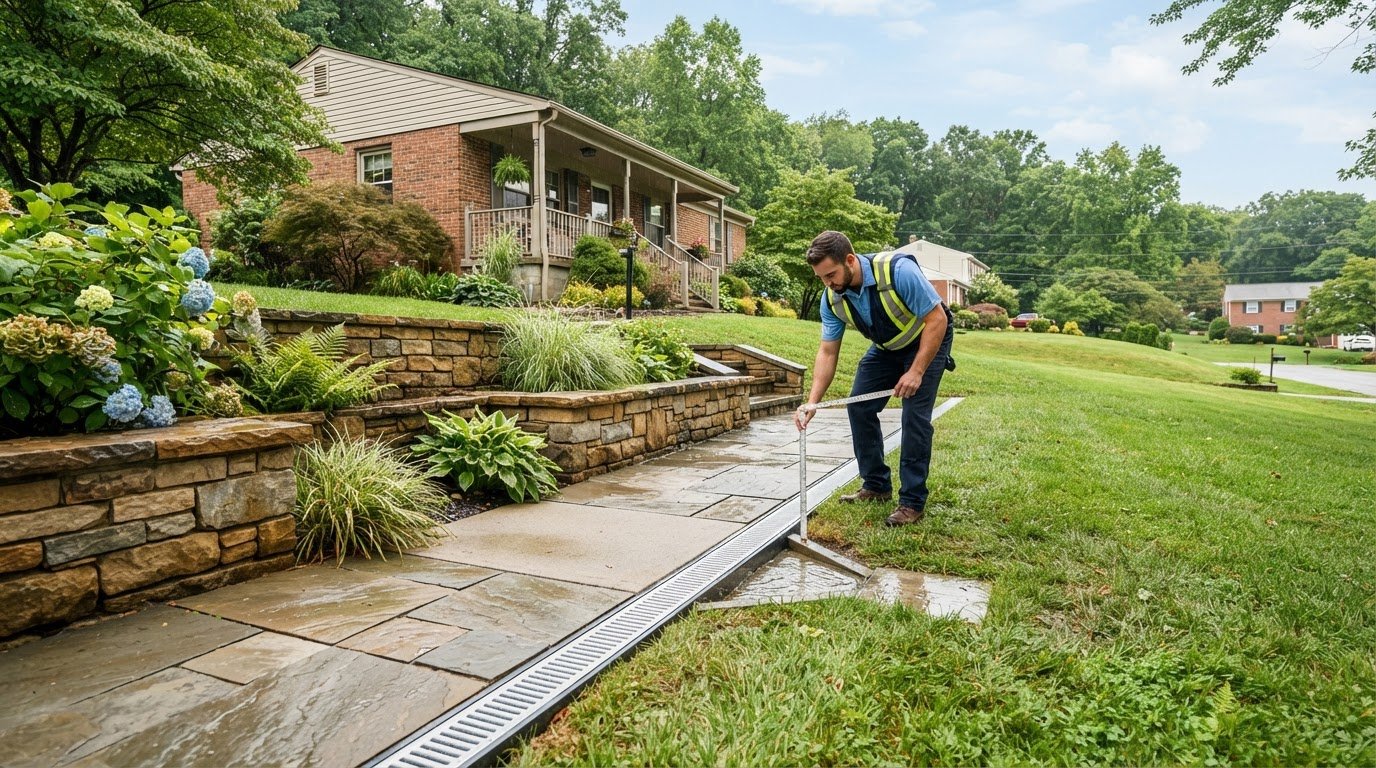
Managing water requires a two-front defense. You must address surface runoff before it hits the wall and handle the subsurface moisture that eventually soaks into the earth. Surface drainage utilizes swales and strategic grading to direct rainwater away from the top of the structure. Subsurface drainage manages the water that makes it through the soil. Without both, your retaining wall drainage Lancaster County system is incomplete. It's the difference between a wall that remains bone-dry and one that stays perpetually saturated.
Weep holes and daylighting pipes serve as the primary exit points for trapped moisture. Weep holes are small gaps left in the wall face to relieve pressure. While useful, we prefer "daylighting" the main drainage pipe. This involves extending the internal line through the wall or around the side to an open outlet at a lower elevation. This provides a clear, gravity-fed exit for all collected water, ensuring it doesn't just sit behind the blocks but actively leaves your property.
French Drains and Perforated Pipes
The perforated pipe is the engine of your drainage system. We install this pipe at the base of the drainage stone, ensuring it has a consistent downward pitch to move water toward the exit. We never use flexible corrugated pipe for this task. It's too flimsy and can easily crush or clog under the weight of the aggregate. Instead, we use rigid PVC. It maintains its shape and slope, providing a reliable path for water to travel for decades. This ensures that even during the heaviest Pennsylvania downpours, the water has a fast, unobstructed route out of the structural zone.
Grading and Slope Correction Near Walls
The best way to protect a wall is to keep water away from it in the first place. We often integrate Yard Grading Services to ensure the surrounding land slopes away from the wall's backfill zone. This prevents the backyard from becoming a funnel for storm runoff. We also look at roof drainage. A single downspout can saturate the soil behind a wall in minutes. We install buried extensions to carry that water to a safe discharge point, significantly reducing the workload on your wall's internal drainage. This comprehensive approach to retaining wall drainage Lancaster County is what separates a professional installation from a temporary fix.
4 Signs Your Lancaster Retaining Wall Has a Drainage Problem
You shouldn't ignore subtle changes in your hardscaping. In Lancaster County, heavy rains test the limits of your wall every season. If your wall wasn't built with a robust drainage system, the evidence will eventually surface. Recognizing these red flags early prevents a total collapse and protects your property value. Watch for these four primary indicators of failure:
- Efflorescence: Look for white, powdery residue on the face of the stone. This occurs when water seeps through the porous blocks, carrying minerals to the surface.
- Bulging or 'Belly': A visible curve in the wall indicates active hydrostatic pressure. The soil behind the wall is saturated and pushing the structure forward.
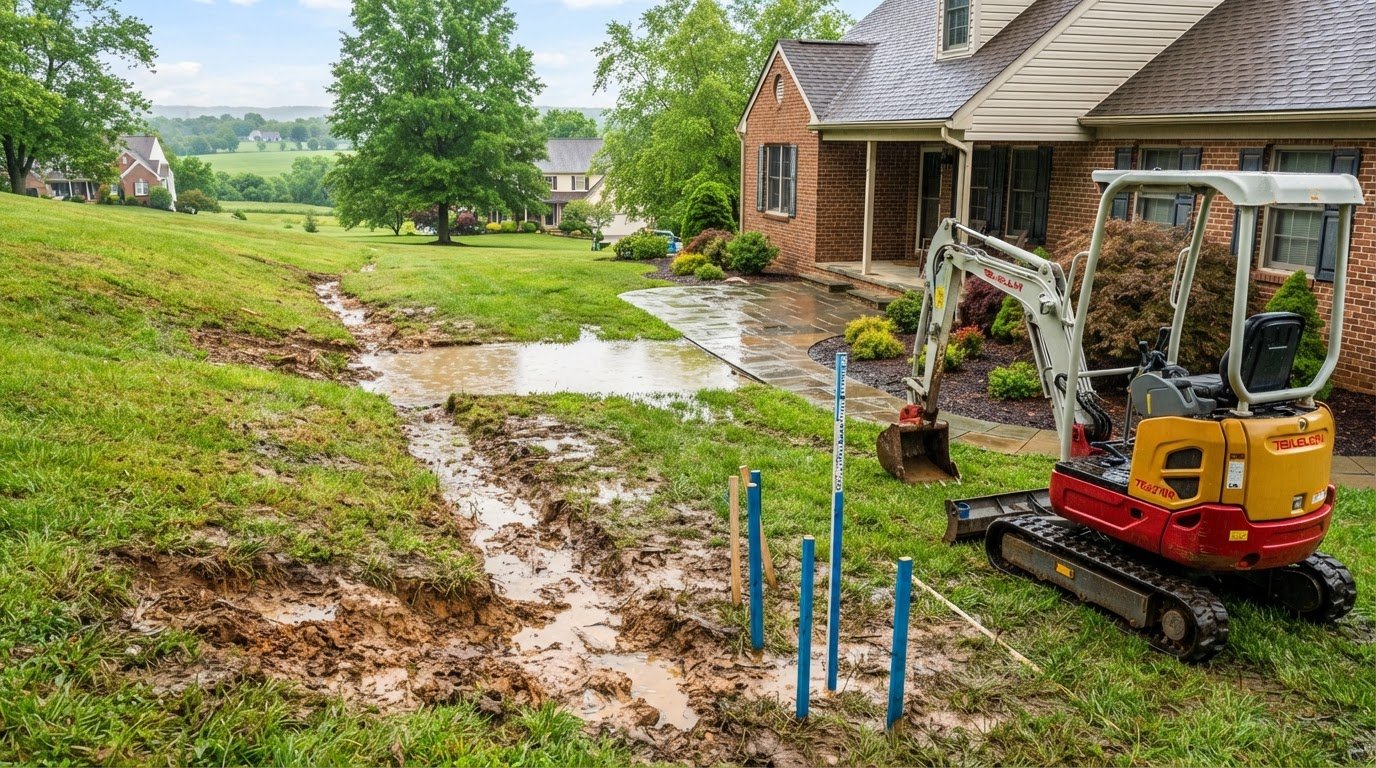
- Soil Erosion: If you see channels forming or soil washing away at the base, water is undermining the footing. This leads to settling and instability.
- Standing Water: Puddles that remain for more than 24 hours after a storm are a clear sign of poor retaining wall drainage Lancaster County . The water has nowhere to go, so it sits and saturates the foundation.
Identifying Efflorescence and Seepage
Efflorescence isn't just a cosmetic issue. It's a structural warning. While some minor staining is normal over decades, heavy white crusting means water is trapped inside the wall system. This trapped moisture weakens the bond between blocks and accelerates the freeze-thaw damage we discussed earlier. It's a sign that your drainage chimney is either clogged or non-existent. If you notice significant seepage or persistent dampness on the wall face, it's time to look into Retaining Wall Repair options before the damage becomes irreversible.
When to Call a Professional for Wall Failure
Every wall has a tipping point. If your wall is leaning, grab a level and a tape measure. A lean of more than one inch is an urgent structural concern. At this stage, the wall is no longer reliably holding back the earth. A sudden collapse poses a serious safety risk to your family and can destroy adjacent patios or landscaping. Don't wait for the next heavy storm to act. If you see a "belly" in your wall or a significant lean, contact us for a professional site evaluation immediately. We can determine if the wall can be reinforced or if a full reconstruction is necessary to restore order to your property.
Snappy Landscaping: Expert Drainage & Wall Solutions
Solving complex slope issues requires more than just stacking blocks. At Snappy Landscaping, we approach every project as a unique engineering challenge. We understand the specific demands of the environment in Lancaster, Columbia, and Mountville. Our team doesn't settle for "industry standard" because local clay soils and heavy precipitation demand better. We over-engineer every retaining wall drainage Lancaster County system to ensure your investment remains stable for decades, not just a few seasons. This commitment to structural integrity is what defines our reputation as a dependable local partner.
Our process is methodical and transparent. It begins with a comprehensive site assessment where we analyze your property's existing grade and water flow patterns. We don't just look at where the wall goes; we look at where the water comes from and where it needs to end up. From the initial excavation to the final daylighting of the drainage pipes, we manage every detail. We use rigid PVC and high-performance geotextiles because we know that cutting corners on materials leads to expensive failures later. Our goal is to remove the burden of property management from your shoulders by doing the job right the first time.
Integrated Water Management
A successful retaining wall is often part of a larger outdoor living transformation. We specialize in combining Patio Installation with sophisticated wall drainage to create functional, dry backyards. By integrating these services, we ensure that your new patio doesn't contribute to wall saturation. Our Grading Services serve as the foundation for this work. We correct the slope of your entire yard to divert water away from your home and hardscaping. This holistic approach eliminates the common headaches of standing water and soil erosion, providing a total solution rather than a temporary patch.
- Expert grading to correct difficult slopes and runoff patterns
- Custom-designed drainage chimneys using clean, angular aggregate
- Rigid pipe systems for maximum flow and long-term durability
- Seamless integration with existing landscaping and new patio features
Start Your Project Today
Stop worrying about the next heavy rain. A wall built correctly is a wall you can trust. We provide the expertise needed to turn a failing slope into a stable, usable asset for your property. Whether you're dealing with a leaning wall or planning a new landscape feature, professional intervention is the only way to guarantee longevity. Choosing a specialist means choosing peace of mind and long-term savings. Don't risk the safety of your property on a "cheap" wall that lacks the necessary infrastructure to handle Pennsylvania's climate. We focus on results that stand the test of time.
Take the first step toward a permanent solution for your landscape. Contact Snappy Landscaping for a Drainage Consultation. We'll evaluate your site, identify potential failure points, and design a retaining wall drainage Lancaster County system that works. Secure your backyard and protect your home with a wall that's engineered to last.
Protect Your Investment with Professional Engineering
A retaining wall is a significant investment that should last for decades. Managing hydrostatic pressure through a robust retaining wall drainage Lancaster County system is the only way to prevent structural failure. Remember that the components you can't see behind the blocks are what actually hold the earth in place. By using clean aggregate, rigid PVC pipes, and non-woven filter fabric, you neutralize the destructive power of trapped water and the inevitable Pennsylvania freeze-thaw cycles.
Snappy Landscaping is locally owned and operated in Mountville, PA. We bring specialized expertise to Lancaster's unique clay soil challenges. We don't just stack stone; we provide comprehensive hardscape and drainage integration to ensure your property stays dry and stable. Whether you're noticing the first signs of efflorescence or planning a new grade change, we provide the pragmatic solutions you need. Don't wait for the next heavy rain to test a failing structure. Our team is ready to help you restore order to your landscape with a wall built to stand the test of time.
Secure Your Property-Schedule a Drainage Assessment Today. We look forward to providing the peace of mind that comes with professional craftsmanship.
Frequently Asked Questions
Do all retaining walls in Lancaster need a drainage pipe?
Yes, almost every wall in our region requires a dedicated drainage pipe. Lancaster’s dense clay soil traps moisture more effectively than sandy alternatives found in other regions. Without a pipe to channel that water away, hydrostatic pressure will eventually bow even a small garden wall. We install perforated pipes at the base of every project to ensure long-term stability. This is a standard requirement for professional retaining wall drainage Lancaster County installations that stand the test of time.
How much does it cost to add drainage to an existing retaining wall?
Retrofitting drainage into an existing wall is a complex process that usually involves excavating the soil behind the structure. In many cases, we must disassemble a portion of the wall to install a proper stone chimney and perforated pipe. Because every site has different access challenges and soil conditions, we provide custom evaluations rather than flat-rate estimates. Addressing these issues early prevents the much higher expense of a total structural collapse in the future.
Can I use gravel instead of a perforated pipe for drainage?
You cannot rely on gravel alone to manage water. While clean stone is essential for allowing water to fall, the perforated pipe is the "highway" that carries that water to a safe exit point. Without the pipe, the gravel eventually becomes saturated, and the water stays trapped against the wall. A functional retaining wall drainage Lancaster County system requires both clean #57 stone and a rigid PVC pipe to work effectively without clogging or slowing down.
What is the best material for a retaining wall in Pennsylvania's wet climate?
Segmental concrete blocks are often the best choice for Pennsylvania's fluctuating climate. These engineered systems allow for slight movement during freeze-thaw cycles without cracking like poured concrete might. When paired with a professional drainage system, these blocks provide the best defense against Lancaster's wet weather. They are durable, easy to reinforce with geogrid, and offer a wide variety of aesthetic options for any home. We prefer these for their reliability and structural consistency.
How do I know if my retaining wall weep holes are working?
You can verify your weep holes are working by observing them during a heavy rainstorm. You should see a steady trickle of water exiting the holes or the daylighted pipe. If the wall face appears damp or shows white salt stains while the outlets remain dry, the internal system is likely clogged with silt or clay. This indicates that the filter fabric has failed or was never installed. Regular inspection ensures your drainage remains clear and functional.
Does a 3-foot wall need the same drainage as a 6-foot wall?
Both walls require the same basic components, but the volume of water and pressure increases significantly with height. A 6-foot wall manages a much larger area of soil, meaning it needs a wider drainage chimney and potentially multiple layers of reinforcement. While a 3-foot wall might seem simple, the clay-heavy terrain in Lancaster County still creates enough pressure to cause failure if the drainage is neglected. Higher walls always demand more rigorous engineering and site preparation.
Will proper drainage prevent my retaining wall from cracking in the winter?
Proper drainage is your best defense against winter damage. Cracks in retaining walls often occur when trapped water freezes and expands, a process known as ice heaving. By removing moisture from the backfill zone before temperatures drop, you eliminate the material that causes this expansion. A dry wall doesn't have to fight against the massive internal forces of expanding ice, which keeps your blocks and stones perfectly aligned year after year. This prevents costly structural repairs.
Can Snappy Landscaping fix a wall that is already leaning?
We can often repair leaning walls, but the solution depends on the severity of the lean. If the wall has moved more than an inch, it often requires us to remove the blocks, correct the footing, and reinstall the system with proper drainage. We focus on fixing the root cause of the lean, which is almost always poor water management. Our team provides site assessments to determine the most cost-effective path forward for your property.