
Well-installed bark mulch does more than make a landscape bed look orderly. For bark mulch installation in Mountville, PA, the right coverage helps suppress weeds, retain soil moisture, and limit erosion without smothering plants. The U.S. Environmental Protection Agency advises keeping mulch to no more than 3 inches in landscaping beds and about an inch away from stems and tree trunks.
That balance matters in residential yards and commercial landscapes. Mulch type, bed condition, coverage area, and installation method all affect how well the finished layer performs and what the estimate needs to include.
This guide explains how bark mulch and installation options influence weeds, erosion, and moisture, and what to expect when planning the work. You’ll also learn which details shape an estimate and how to think about scheduling and response times, so you can plan the next step with a clearer picture of the project.
What Are the Benefits of Mulching?
Bark mulch installation in Mountville, PA, includes preparing planting beds, spreading mulch evenly, and keeping it clear of plants. It can help manage weeds, runoff, and moisture loss in residential gardens and commercial landscapes.
Mulch helps block sunlight from weed seeds, protects exposed soil from weather, and slows moisture loss. Stauffers of Kissel Hill identifies weed control, soil nutrients, moisture retention, root protection, erosion limitation, and a uniform appearance among mulching’s benefits. These gains depend on choosing suitable coverage and applying it correctly.
Proper installation avoids over-mulching and poor placement, which can interfere with plant bases and create an uneven finish. According to the U.S. Environmental Protection Agency, landscaping beds should have no more than three inches of mulch, kept about an inch away from stems and tree trunks. That clearance helps prevent mulch from piling against living plant tissue.
On a slope, mulch covers bare ground and can help limit soil movement during rain. Around shrubs, an even layer reduces the soil’s direct exposure to sun and wind. In commercial landscapes, consistent coverage gives planting beds a neat, uniform appearance. Mulch does not replace drainage work where water regularly pools.
- For weed control: Cover exposed soil evenly, especially around established plants, while leaving stems clear.
- For moisture retention: Use a consistent layer to reduce evaporation from the soil surface.
- For erosion limitation: Cover bare areas where rain can wash loose soil from planting beds.
- For a finished appearance: Keep the depth and distribution consistent across connected beds.
Preparation matters as much as spreading. Define bed edges and remove loose debris. Check the existing mulch so the new material does not make the layer too deep. Then spread it evenly, keeping it away from stems and trunks. This helps prevent deep piles near plants and thin, exposed patches elsewhere.
To estimate garden-bed volume, measure the area in square feet and choose the intended depth. At two inches, divide the area by 162; at three inches, divide it by 108 to estimate cubic yards. For example, a 324-square-foot bed needs two cubic yards at two inches, or three cubic yards at three inches.
For irregular beds, measure smaller sections and add their areas to estimate the total. If mulch is already present, account for the remaining layer instead of automatically adding a full new depth. This helps bark mulch installation in Mountville, PA, provide even coverage while keeping plant bases clear.
Mulch varieties and installation options
Choose bark for the bed’s needs, not just its color. Coarse bark nuggets have a more open texture and can suit broad beds. Shredded bark creates a finer, more continuous surface around closely spaced plants. Compare how each looks beside nearby paths, shrubs, and building materials before choosing.
Bagged and bulk mulch serve different project sizes. Bags are easy to carry through narrow access points and distribute across a small garden. Bulk delivery can cost less than retail bagged mulch, making it a practical option for larger areas. Measure the beds first, then compare the amount needed with how easily material can reach each planting area.
The U.S. Environmental Protection Agency recommends no more than three inches of mulch in landscaping beds, kept about an inch away from stems and tree trunks. Use this as guidance for coverage, not as a Mountville municipal rule. Keep the layer even and avoid piling mulch against plant bases.
The installation method depends on site access and bed condition. Bags may be easier to carry into a narrow side garden, while bulk material can suit an open commercial planting area. Before spreading, clear loose debris and check the existing surface. This helps prevent fresh mulch from hiding weeds or creating excessive depth.
The best time to install bark mulch in Pennsylvania depends on ground conditions and the bed’s needs. Prepare the area when the soil is neither frozen nor saturated, and spread mulch before exposed soil faces prolonged drying or runoff. Leave clear space around stems and trunks as you work around established plants.
Use this sequence to narrow mulch options:
- Map the bed: Note its shape, access route, plants, and nearby hard surfaces.
- Choose the texture: Match coarse nuggets or shredded bark to the desired appearance and planting layout.
- Select delivery: Compare bagged material for small or restricted beds with bulk for larger, accessible areas.
- Plan placement: Spread in sections, keep coverage consistent, and preserve clearance around plants.
When assessing mulch installation services for a Mountville property, look for examples involving beds similar to yours, whether residential or commercial. Consider the project scope, site access, and location served to judge how relevant the example is to your property.
For a Mountville landscape, match the material quantity and delivery method to the bed area, site access, and existing coverage. This helps avoid excess material, uneven spreading, and unnecessary handling.
Weed growth, erosion, and soil moisture
A bark layer changes how rain, sunlight, and air reach the soil. Stauffers of Kissel Hill identifies weed control, moisture retention, root protection, erosion limitation, soil nutrients, and a uniform appearance as mulching benefits. Each benefit depends on even coverage and placement that leaves plants room to grow.
Mulch shades the soil surface, making it harder for weed seeds to establish. It will not remove established weeds beneath the bed, so clear visible growth before spreading. Cover open soil between shrubs while keeping bark off their stems. This reduces exposed patches where new weeds can take hold.
Mulch also cushions soil from rain and wind. On a sloped bed, this surface cover can help limit soil movement during rainfall. After storms, check for bare patches or washed-out edges at the foot of the slope. Restore thin spots so runoff does not carry exposed soil toward walkways or drains.
Mulch retains moisture by shading the soil. Bark reduces direct exposure to sun and wind, slowing surface drying between watering or rainfall. For example, mulch covering the soil around a young tree can reduce exposure. It cannot correct standing water, however. Persistent pooling may indicate a drainage issue that a surface layer will not solve.
Surface cover also affects soil temperature. Mulch can limit rapid heating and cooling at the soil surface, helping roots avoid abrupt changes. The effect varies with sunlight, wind, soil moisture, and bark texture. A sunny bed beside a paved walkway, for example, has different exposure from a shaded garden beneath mature trees.
- Protect plants: Spread mulch evenly, not in mounds against stems.
- Reduce erosion: Cover exposed soil on slopes and inspect runoff paths after rain.
- Support soil: As organic bark breaks down, it contributes organic matter to the soil.
- Manage moisture: Keep surface coverage consistent, and address pooling separately.
Bark mulch can create damp, sheltered conditions that termites may use. Keep it away from siding and other wood, and do not pile it against plant stems. The U.S. Environmental Protection Agency recommends no more than three inches of mulch in landscaping beds, kept about an inch away from stems and tree trunks. This spacing also helps avoid pressing mulch against living plant tissue.
Check the bed as the bark settles and breaks down. Look for uncovered soil, plants crowded by material, or water pooling after rain. Adjust the surface where needed instead of automatically adding a fresh layer everywhere. Regular inspection helps mulch support the soil and plants without burying bed edges or plant bases.
Estimates and response times
A useful mulch estimate starts with a defined work area, not a guess from a photo. Measure each bed in square feet, then note its shape, existing coverage, and access. A straight rectangular bed is simple to map; a curved bed may need measuring in smaller sections. Those details help define the material volume and labor involved.
Depth affects the quantity estimate. For a 2-inch layer, divide the bed’s area in square feet by 162 to estimate cubic yards. For a 3-inch layer, divide by 108. These calculations estimate material volume; the final plan also accounts for existing mulch and the bed’s condition.
The scope affects the work. An estimate may account for clearing debris, shifting old material, defining edges, spreading fresh bark, and cleaning nearby surfaces. A bed with exposed soil needs different preparation from one with an existing layer. Plant spacing, slopes, and nearby walkways also affect how carefully the mulch must be placed.
Delivery access matters, too. Bulk material needs a suitable drop-off point and a clear route to the beds. Bagged mulch may suit restricted access, while larger open areas can accommodate bulk delivery. A narrow side garden beside a house, for example, may take more handling than an open front bed with direct access.
The time needed to respond depends on the information required to scope the work, project size, delivery logistics, and current schedule. Help clarify the scope by sharing approximate bed dimensions, current conditions, preferred bark texture, and access constraints. Photos can show slopes, plant spacing, and nearby hard surfaces.
A project estimate should explain the included work, how material delivery fits the site, and which preparation steps apply. Compare the scope, not just the final figure. One proposal may include clearing and edge cleanup, while another may focus on spreading. Comparing these details gives you a clearer basis for evaluating the work.
Pricing varies based on property size, service frequency, and maintenance requirements. Bed area, mulch depth, preparation, material choice, and delivery access also shape the estimate. Share these details to help Snappy Landscaping prepare a free estimate based on your property’s needs.
Before work begins, confirm the agreed scope and delivery sequence. Keep vehicles, gates, and walkways clear along the planned route. This helps the crew move material efficiently and protect the surrounding landscape during installation.
At a 4-inch mulch depth, divide the total area in square feet by 81 to estimate the cubic yards of mulch needed. At a 5-inch mulch depth, divide the total area in square feet by 65 to estimate the cubic yards of mulch needed. At a 6-inch mulch depth, divide the total area in square feet by 54 to estimate the cubic yards of mulch needed. Use the calculation that matches the planned depth, and keep the area measurement consistent when checking the resulting volume.
Residential and commercial mulching
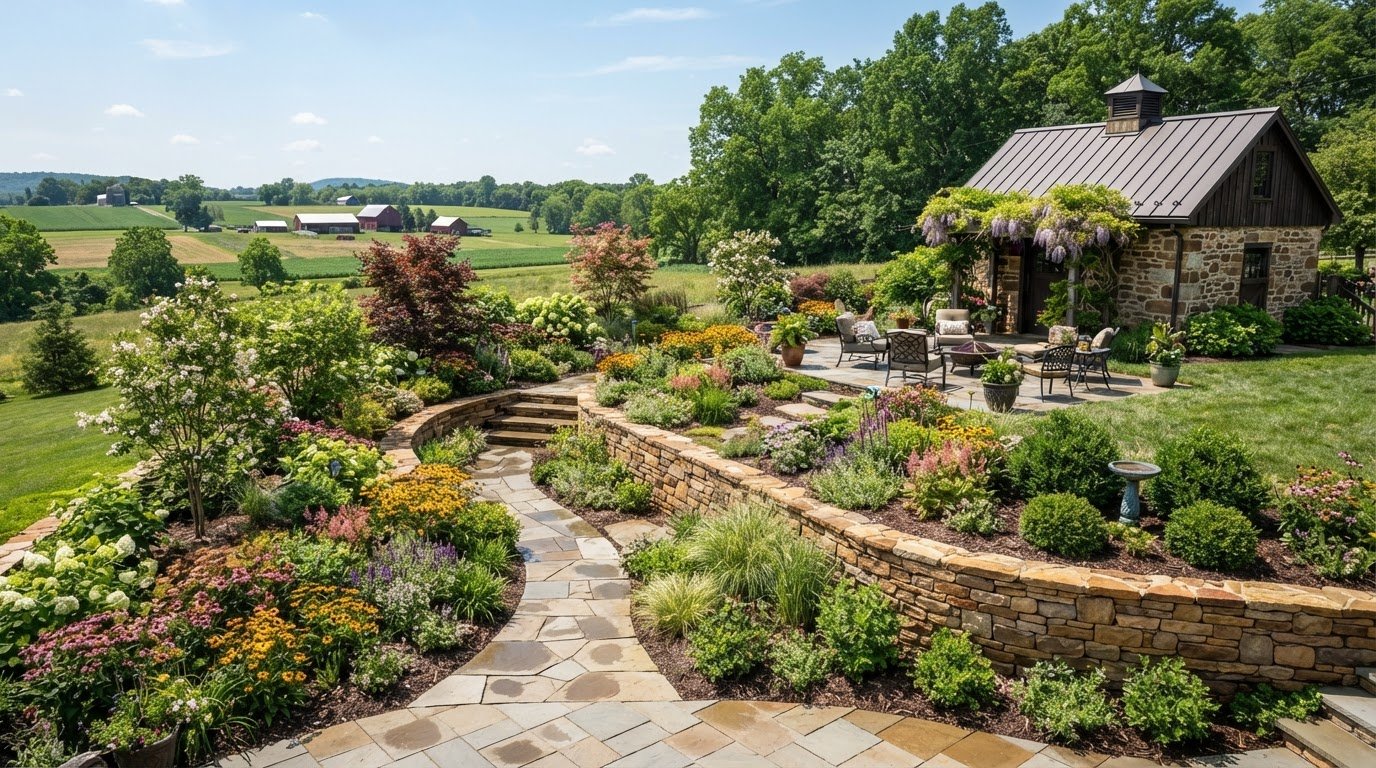
Residential and commercial beds need different work plans. A homeowner may focus on one front garden, while a property manager coordinates beds around entrances, walkways, and shared outdoor areas. In Lancaster County, map each planting zone separately to organize material quantities, access routes, and finished coverage for your bark mulch installation Mountville PA project.
At a home, plant variety and bed shape guide the installation. A curved bed around a mailbox needs careful edging and placement near flowers. A long foundation bed may need consistent coverage beside several shrubs. Record each bed’s dimensions and obstacles, then group areas with similar access and planting conditions.
Commercial properties benefit from a consistent standard across visible areas. List each bed by location, such as the main entrance, parking islands, and building perimeter. Note where pedestrians, deliveries, and maintenance equipment pass. This helps plan material staging and keep bark off paved surfaces during spreading.
Coverage should also protect plants. The U.S. Environmental Protection Agency advises no more than three inches of mulch in landscaping beds, kept about an inch away from stems and tree trunks. Apply that guidance consistently across both residential and commercial sites. On woody plants, leave space around trunks so damp organic material doesn’t rest against bark.
A clear site plan can make installation more orderly:
- Map the beds: Separate residential planting areas or commercial zones by location.
- Mark access: Identify gates, walkways, delivery points, and areas where equipment must avoid plants.
- Record conditions: Note existing mulch, exposed soil, slopes, and established plantings.
- Set a finish standard: Define consistent coverage while preserving clearance around stems and trunks.
For commercial properties, choose a representative bed to set expectations for the bark’s appearance, edge definition, and clearance around plants. Apply the same standard to the remaining beds. At home, review how the mulch will meet lawn edges, paths, and nearby planting groups.
Separate work zones also help organize material delivery. A residential driveway may offer a convenient staging point, while a busy commercial entrance may need a different route. Keep pedestrian paths clear and plan the work so completed beds do not become passageways for wheelbarrows or equipment.
Plan by site function, not just total area. Residential work focuses on individual bed details; commercial work also needs consistent standards and clear movement through shared spaces. A site map, access notes, and a defined finish help keep installation organized across every bed.
Plan by site function, not just to calculate material. Keep the installation sequence aligned with access and the agreed finish standard, then check each bed as it is completed. A consistent mulch depth can protect soil without harming plant bases. Apply mulch at a depth of 2-3 inches and review coverage across the planting zones during a final walk-through. This check can also confirm that edges look orderly and pedestrian paths remain clear. Treat residential beds and commercial areas according to their function, while maintaining the same care with plant bases and finished coverage.
Snappy Landscaping: Lawn Mowing & Maintenance
Snappy Landscaping provides dependable landscaping and lawn maintenance in Lancaster County, including Mountville, Columbia, and Lancaster. Its lawn care and maintenance services support orderly grounds, while custom patios, retaining walls, and drainage solutions address other property needs.
These services may be useful when lawn care is part of a broader project, such as a patio installation, retaining wall, or drainage solution. For example, runoff affecting a planting bed may call for drainage work, while a planned outdoor gathering area may benefit from a custom patio. Matching the work to the property need keeps the next step focused.
Contact Snappy Landscaping to discuss your property, or visit snappylandscaping.com.
Plan Your Next Landscape Improvement
Before arranging bark mulch installation in Mountville, PA, decide which beds need attention first and what you want them to do. A simple site plan can identify areas needing fresh coverage, improved drainage, or clearer edges. This gives the project a practical starting point and keeps the work focused on your priorities.
Snappy Landscaping also handles broader outdoor improvements, including lawn mowing and maintenance, custom patio installation, and retaining wall construction. These services can help when planting beds are part of a larger plan to improve how your yard looks and functions.
Share your priorities and property details to discuss the right next step. Contact Snappy Landscaping about your mulch project, and move forward with a landscape plan that feels manageable.
Frequently Asked Questions
What is the bark mulch installation cost per yard in Lancaster County, PA?
Pricing varies based on property size, service frequency, and maintenance requirements. Bed area, existing material, site access, and preparation needs also shape the scope. Snappy Landscaping provides a free estimate for each property. Share bed dimensions and delivery access so the estimate reflects your site’s needs. For a small residential bed, note whether existing mulch needs attention.
What is the recommended mulch depth for landscaping beds?
According to the U.S. Before adding material, inspect the bed’s current depth, especially beneath shrubs and around tree bases. If old mulch remains, account for that layer rather than simply covering the entire bed again. Keeping plant bases clear helps prevent damp mulch from resting directly against them.
How should I prepare garden beds before installing bark mulch?
Remove leaves, loose branches, and visible weeds so the new surface sits cleanly. Check the bed edge and trim back grass that has spread into the planting area. Locate irrigation heads or low landscape lights before moving material through the garden. If the soil is dry, water it before spreading mulch. Keep the finished surface clear of walkways and avoid burying plant crowns or edging.
Should I install bark mulch myself or hire a landscaper?
DIY installation may suit a small, accessible bed. Larger sites, sloped ground, or multiple planting areas require more handling and consistent coverage. Snappy Landscaping provides mulch installation with a licensed and insured, background-checked team. Its service areas are: Lancaster, PA; Mountville, PA; and Columbia, PA.