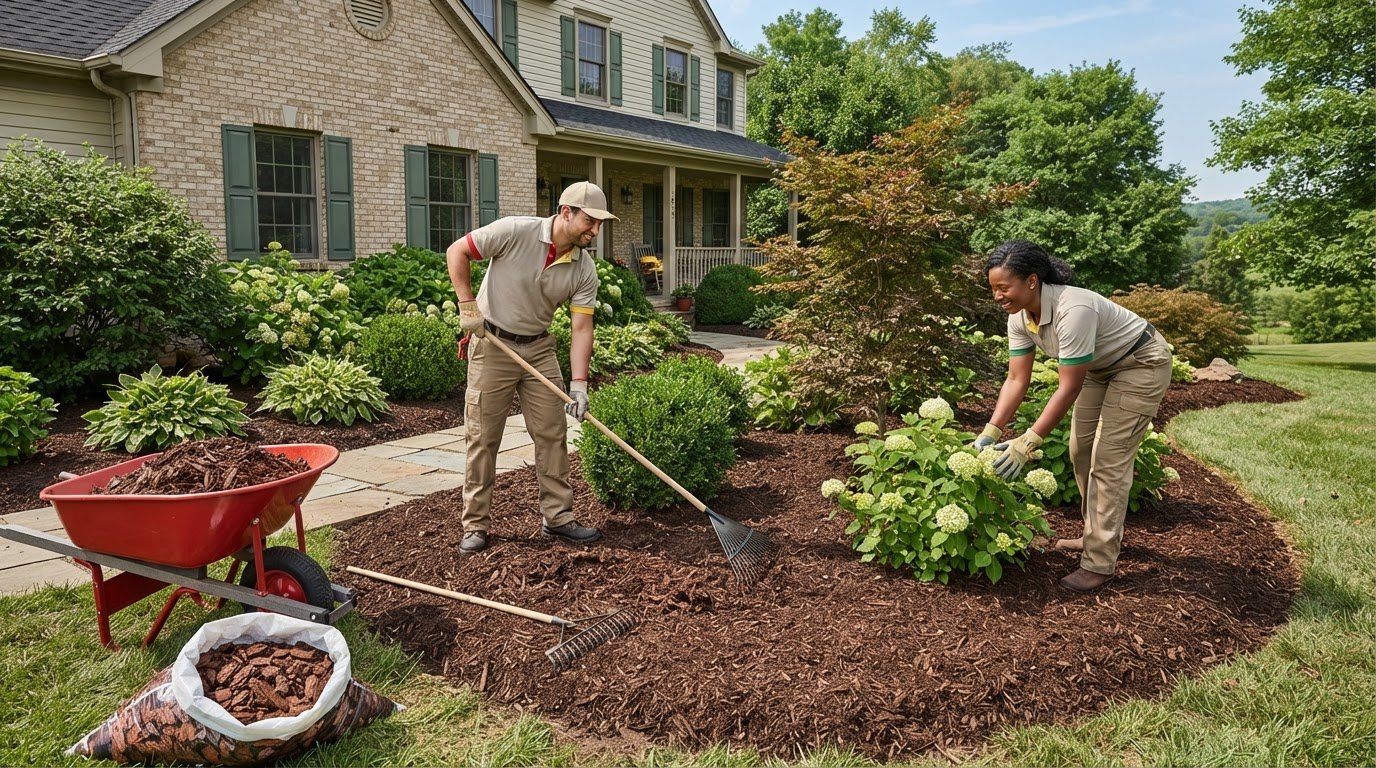

For garden bed mulching in Lancaster County, define the beds with clean edging, then apply mulch to help suppress weeds, retain moisture, and regulate soil temperature. Around trees, keep mulch no more than 3 inches deep and leave 2 to 3 inches of space between the mulch and the bark.
A fresh layer of mulch can make planting beds look orderly, but a neat finish takes more than spreading material. Well-defined edging helps keep clean lines, and careful placement prevents mulch from piling against tree trunks.
Explore how edging and mulching work together, what hardwood mulch can do, and how to maintain a neat finish for residential or commercial landscapes. You’ll also learn what to consider when refreshing beds and how to keep mulch clear of tree bark.
Edging and mulching services in Lancaster and surrounding counties
Clear edging defines planting beds, while mulch helps suppress weeds, retain moisture, and regulate soil temperature. Plan the bed, prepare its surface, then spread mulch evenly without piling it against tree bark.
Local Service Coverage
Professional garden bed mulching in Lancaster County calls for planning around the property and its access. At Snappy Landscaping, we provide reliable services throughout Lancaster, Columbia, and Mountville. Before starting, note the municipality, bed locations, and a practical area for materials so the work can be organized around the site.
Local rules can vary by municipality. Keep delivery material out of public access areas, and follow local collection instructions for cleared leaves, weeds, and branches rather than mixing yard waste with fresh mulch.
Edging and Tree-Ring Planning
Edging creates a clear border and helps keep grass from creeping into planting areas. Along a walkway or driveway, a crisp edge distinguishes the bed from the hard surface. Steel, aluminum, and pavers are permanent options; choose one that suits the bed’s shape and the finish you want.
Tree-ring edging can form a clear circular bed around a trunk. Keep mulch no more than 3 inches deep, and leave 2 to 3 inches between mulch and bark. This open gap helps prevent persistently wet bark.
Bed Preparation and Application Planning
In Lancaster County, cut back dead flower-bed material from the end of March through the beginning of April, then clear weeds and loose debris before spreading mulch. Apply a weed-suppression blanket up to 3 inches deep. Avoid covering plant crowns or piling material against stems.
Mulch timing depends on bed readiness: refresh after cleanup, once the surface is clear and accessible. For quantity, a 3-inch layer takes 0.25 cubic feet per square foot. Multiply the bed’s area by that amount, then adjust for a thinner layer or irregular edges.
Garden Mulch Cost
What does garden mulch cost in Lancaster County, PA? The price depends on the bed area, mulch type, edging needs, and preparation required; a project-specific price is given after a quote request from Snappy Landscaping. A simple, accessible bed takes different planning than one with dense planting or overgrown edges.
Compare the needs of the project, not just the mulch material. Hardwood mulch is available double- or triple-shredded and helps suppress weeds. Even spreading and clean edges across the whole bed are just as important to a consistent finish.
Delivery and Yard-Waste Logistics
Before mulch arrives, choose a practical drop area near the beds and clear the route of vehicles, tools, and branches. For residential and commercial properties, map each bed and access point so material can be distributed without crossing finished planting areas.
Tree and shrub work can affect bed preparation, too. First remove loose pruning debris and weeds, then edge carefully around established plants. This helps create an even mulch layer and a clear boundary between lawn, path, and planting bed.
Keeping mulch away from tree bark
Mulch should protect the soil, not cover a tree trunk. In Lancaster County, leave a clear space around the bark and spread the mulch in a low, even layer.
Keep the Root Flare Visible
Before adding mulch, find where the trunk widens into the root flare. Pull back existing material until the base of the bark and the flare are visible. A mound against the trunk can trap moisture and hide the tree’s natural transition into its roots.
Keep mulch no more than 3 inches deep around trees, and leave 2 to 3 inches between mulch and bark. Spread the layer outward instead of building a volcano-shaped pile. This leaves rainwater able to reach the ground and keeps bark exposed to air.
Apply Mulch Without Harming the Trunk
Use this simple sequence around a tree:
- Clear weeds, fallen leaves, and old mulch from the trunk base.
- Check that the root flare remains visible before spreading material.
- Apply mulch in a shallow, even ring, stopping short of the bark.
- Rake the surface level, then inspect the trunk from several angles.
Beside a lawn, maintain a distinct ring around the tree without piling soil over the roots. Near a walkway, keep the edge neat and preserve the same open gap. A clear boundary makes it easier to spot mulch that shifts toward the trunk.
Plant Risks from Excess Mulch
What mulch-related risks affect plants, including pests, disease, and nitrogen loss? Mulch against bark keeps the trunk damp and can shelter pests; persistently wet conditions can also favor decay. Mixing fresh woody mulch into soil may temporarily tie up nitrogen, so keep it on the surface instead.
Check shrubs and young trees after spreading mulch. Move material away from stems and uncover any plant crown. If leaves yellow or growth weakens after mulching, look for buried stems, compacted material, or mulch mixed into the soil around the roots.
Inspect and Maintain the Mulch Ring
Rain, foot traffic, and routine bed work can push mulch back toward tree bark. Inspect the ring after heavy rain and during seasonal cleanup. Pull displaced material outward, reopen the gap, and remove excess instead of piling new mulch over old layers.
A consistent surface makes maintenance easier around individual trees and grouped shrubs. Keep the root flare visible, the mulch layer even, and the bark clear. For tree rings beside professional mulch installation, a defined edge can help maintain that separation as the bed is refreshed.
Keep the separation consistent around the entire trunk, not just on one side. In Lancaster County, leave two to three inches between mulch and bark to help keep the trunk from staying wet. Check closely for spots where material touches the trunk, then pull it back until the gap is clear. Preserve that buffer whenever you level or refresh the mulch, keeping bark uncovered and away from damp material.
Fresh mulch finishes
A fresh finish depends on choosing material and texture that suit the bed’s layout. Hardwood mulch has a shredded texture, while pine bark and cedar have different qualities. For garden bed mulching in Lancaster County, consider the plants, existing landscape, and appearance you want to maintain.
Choose Mulch for the Bed
Hardwood mulch is available double- or triple-shredded and helps suppress weeds. Its shredded texture creates a consistent surface across planting beds. Use one material throughout connected beds for a unified look, or choose different materials for separate areas to suit their planting and design.
Pine bark is a long-lasting option for acid-loving plants such as azaleas. Cedar mulch is aromatic, insect-resistant, and long-lasting. Consider the plants first, then choose a texture and appearance that works with the surrounding landscape.
Natural materials such as pine and compost attract earthworms, which use them as food and shelter. Mulch can also retain 80% of the water added to soil, helping reduce moisture loss between watering. Factor those practical benefits into your material choice alongside the finished appearance.
Plan a Clean, Even Finish
Prepare the bed before spreading fresh mulch. Remove weeds and loose debris, then define the edge to keep material inside the planting area. Work carefully around established plants, leaving stems and tree bark uncovered. An even surface looks orderly without burying plant crowns.
Beside a walkway, keep the mulch line distinct from the hard surface. Along a curved bed, follow its existing shape instead of creating abrupt corners. Rake the surface evenly and redistribute material where bare soil shows. These finishing steps make the bed look intentional from the lawn and path.
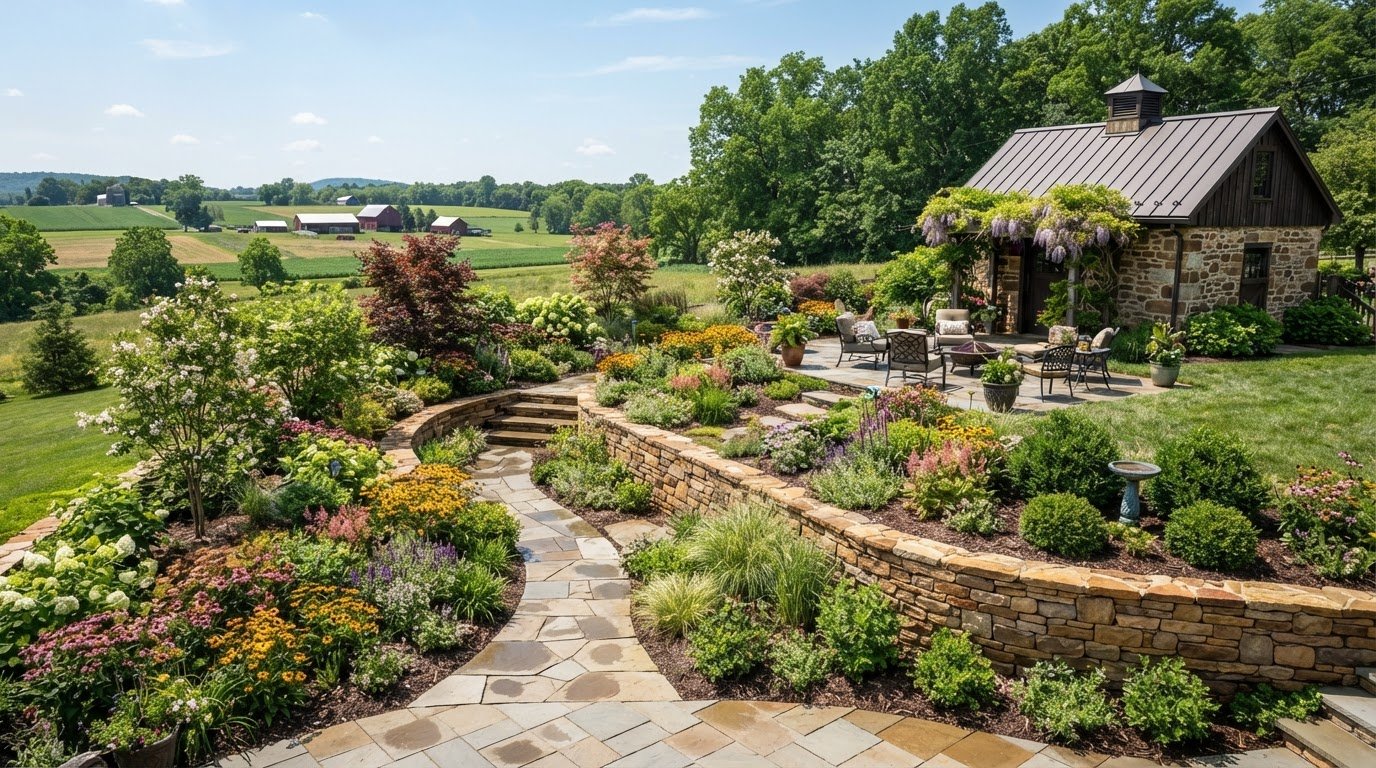
Stone and gravel offer permanent options for modern designs or high-traffic areas, with a different look and surface from organic mulch. For garden bed mulching in Lancaster County, consider how each bed is used: a planting border, a busy path edge, and a modern courtyard call for different finishes.
Refresh Without Layering Excessively
Before adding new mulch, inspect the existing layer. Remove weeds and debris, then loosen compacted material at the surface. Refresh only areas that need coverage instead of building up the whole bed. Around trees, keep mulch no more than 3 inches deep and leave 2 to 3 inches between mulch and bark.
Finish by checking the transitions between beds, lawn, and paving. Sweep stray material off concrete walkways, then review the bed from several angles. Whether you choose hardwood, pine bark, or gravel, clear edges and even coverage create a neat, cohesive landscape.
For vegetable beds, Lancaster County gardeners can add about an inch of fresh compost. Consider the bed’s purpose and the material planned for its surface. Spread compost across the bed, keeping the finish consistent with the surrounding area. A deliberate application gives the bed a considered, complete look while suiting the material to what is growing there.
Hardwood mulch
Hardwood mulch suits beds that need a consistent surface that helps suppress weeds. It is available double- or triple-shredded, offering a choice of texture. Select a grade based on the plants, the finish you want, and how exposed the bed is to wind or foot traffic.
Compare Shredded Hardwood, Bark, and Leaves
Shredded hardwood is made from processed wood fibers, while bark mulch consists of pieces of tree bark. Leaf mulch uses fallen or dried leaves. Hardwood creates a uniform surface, bark pieces look coarser, and leaves give beds a softer, more natural finish.
Hardwood is a practical choice for broad ornamental beds where an even finish matters. Pine bark lasts longer and suits acid-loving plants such as azaleas. As leaf material breaks down, it can return organic matter, making it useful where a natural, changing surface suits the planting design.
Choose the Shred and Prepare the Bed
Both double- and triple-shredded hardwood help suppress weeds. Finer shreds create a closer-textured finish, while coarser pieces make the texture more visible. Before choosing, consider nearby paths, bed curves, shrubs, and how easily the mulch can be kept within its border.
Prepare the bed by removing weeds and loose debris, then check the existing layer. Spread hardwood over exposed soil instead of mixing it into the ground. Keep it clear of plant stems and tree bark, and maintain an even surface around established perennials. These steps prevent clumps and preserve a clean boundary.
Use Hardwood as a Surface Layer
Mulch can retain 80% of the water added to soil. A surface layer helps slow moisture loss, while natural materials such as pine and compost attract earthworms seeking food and shelter. Avoid treating mulch as a soil amendment by mixing it into the bed; keep it on top instead.
After spreading hardwood, inspect the bed from its edges and nearby walkways. Pull stray shreds back into the planting area, clear material from paving, and leave visible gaps around trunks. This final pass keeps the finish orderly and prevents mulch from collecting against bark.
Refresh for a Consistent Appearance
Before adding hardwood, look for compacted material, bare patches, and weeds growing through the existing layer. Remove debris, then add mulch only where coverage needs refreshing. Check shrubs and tree rings so new material does not hide stems or build up against trunks.
For a large bed, spread hardwood in manageable sections and rake each one smooth before moving on. Match the finish across connected planting areas, then review the result beside the lawn, walkway, or patio. A consistent surface and clear edges make the bed look maintained without hiding the plants.
Residential and commercial mulching in Lancaster County
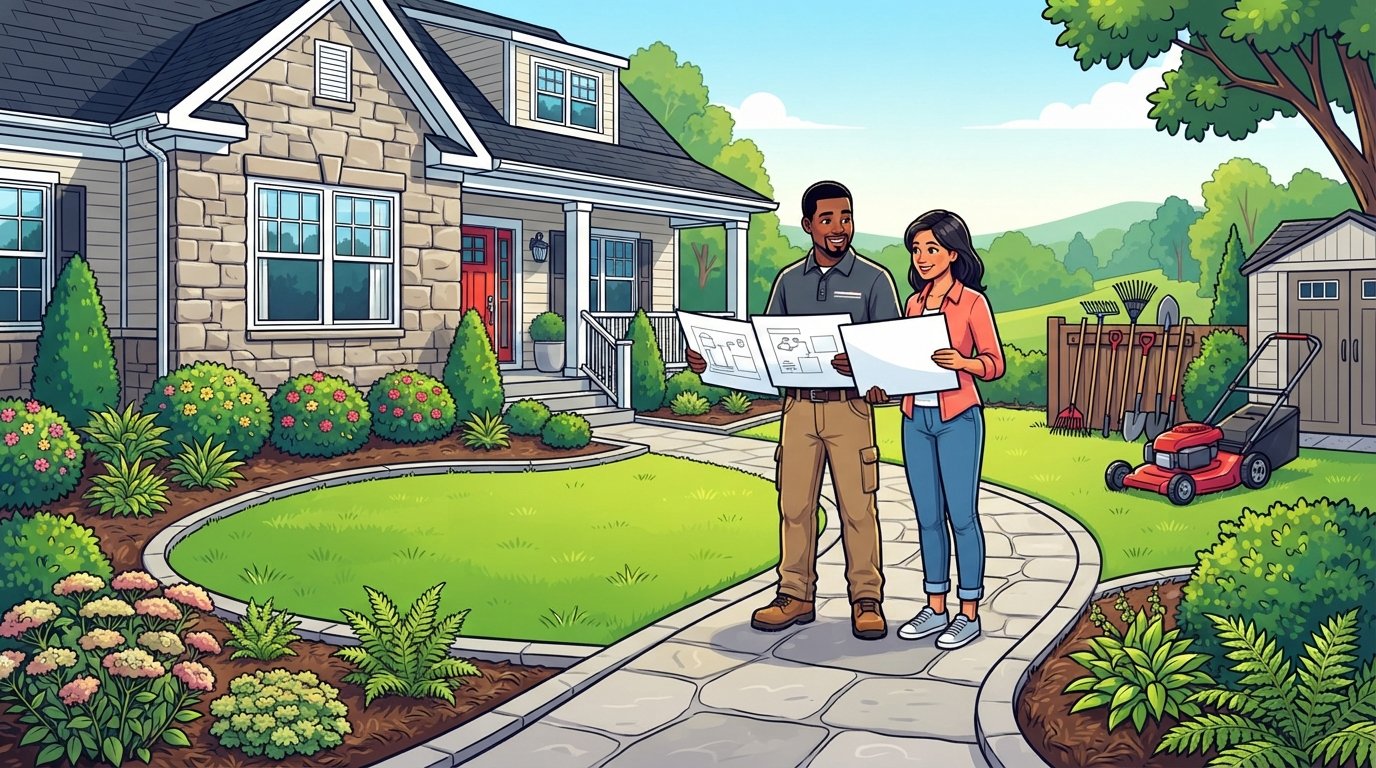
Residential and commercial beds need different planning, even when both use hardwood mulch. A homeowner may focus on a front entry, foundation beds, or a backyard tree ring. Commercial properties may have repeated beds around entrances, walkways, and shared outdoor spaces. Start by mapping each bed and noting its purpose, plants, edges, and access.
For a Lancaster County home, plan around daily use. Keep routes to the porch, driveway, and mailbox clear while preparing beds. Separate narrow foundation strips from broad ornamental beds because their shapes affect spreading and cleanup. Mark trees and shrubs before work begins so mulch stays clear of trunks and stems.
Commercial sites benefit from a consistent plan across visible areas. A bed beside the main entrance makes a different impression from one behind the building. Identify priority areas, then note where matching mulch and clean boundaries will create continuity. For properties with several buildings, a simple site map helps organize bed locations and material needs.
Access also shapes the work sequence. At a residence, identify gates, steps, parked vehicles, and narrow paths before moving materials. At an office or community property, account for pedestrian routes, parking areas, and entrances. Plan the sequence to keep active paths clear, and separate cleared debris from mulch intended for the beds.
Use this planning checklist for either property type:
- Map the beds: mark each location and estimate its area.
- Note the planting: identify trees, shrubs, flowers, and existing ground cover.
- Set priorities: begin with prominent entrances or beds needing cleanup.
- Plan access: identify walkways, gates, driveways, and work routes.
Consider the finish as part of the whole site. At a Lancaster storefront, a clean bed edge beside the entrance can visually connect the planting area and walkway. At home, matching mulch across front beds can make separate planting zones feel intentional. Choose material and edging to suit the property’s use, not just one bed.
For residential and commercial garden bed mulching in Lancaster County, start by mapping the property, preparing each bed, and planning access before spreading material. Use the same care around trees and shrubs, while adjusting the work order to suit each site. This helps keep routes clear, beds defined, and the overall finish coordinated.
Snappy Landscaping: Lawn Mowing & Maintenance
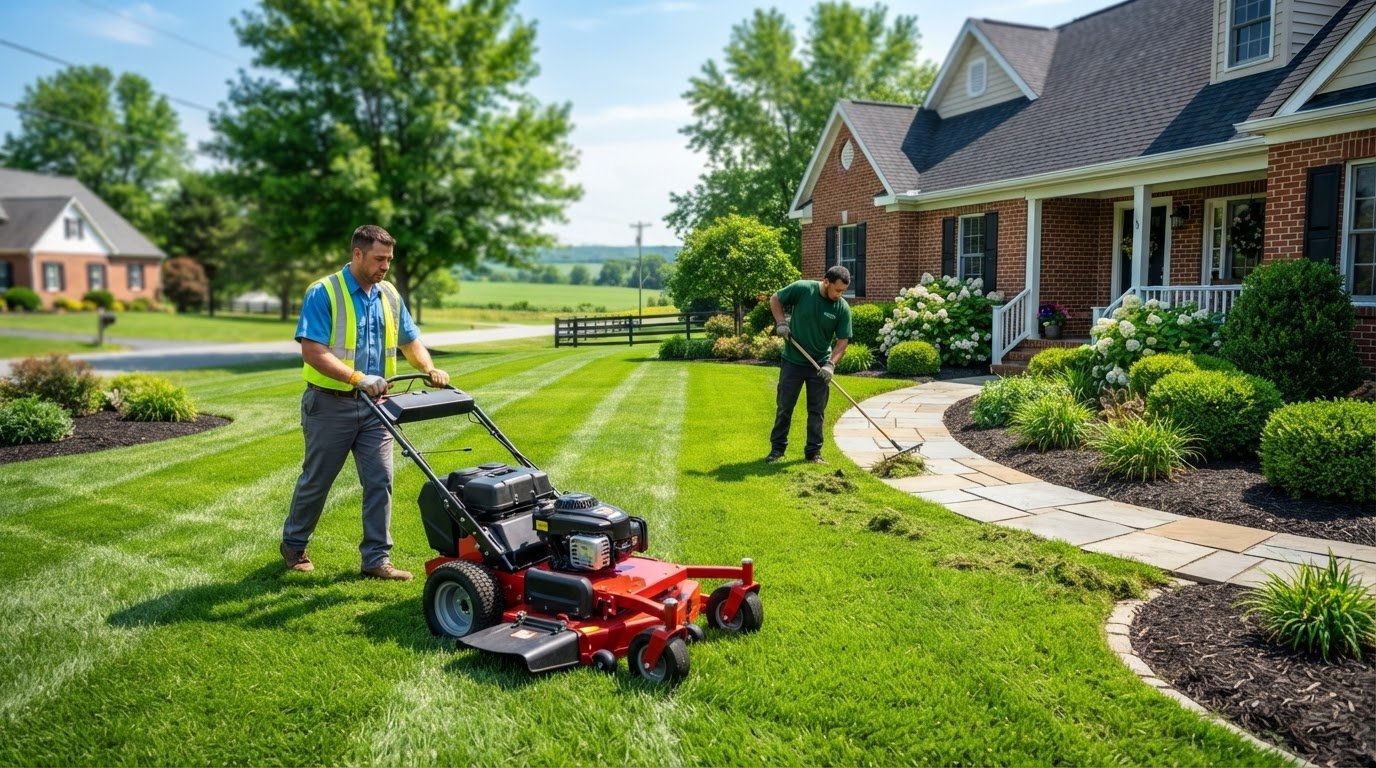
Snappy Landscaping helps property owners in Lancaster, Columbia, and Mountville maintain orderly outdoor spaces with Lawn Mowing & Maintenance. Once you have planned bed edges and mulch placement, consider how the lawn, walkways, and other landscape features fit together. Beds are easier to maintain when nearby grass and paths remain clearly defined.
Turn to Snappy Landscaping for routine lawn care as part of your property’s upkeep. For broader outdoor projects, the team also provides Custom Patio Installation, Retaining Wall Construction, and Drainage Solutions. These services meet distinct needs, from creating a patio area to managing water around the landscape.
Contact Snappy Landscaping to discuss your property’s landscaping needs.
Make Your Next Landscape Project Count
For garden bed mulching in Lancaster County, treat a refresh as the start of a more coordinated outdoor space. Consider how planting beds connect with the lawn, walkways, and gathering areas. Planning these elements together can help your property feel orderly and useful, rather than leaving each improvement disconnected.
Snappy Landscaping can support a broader plan with Lawn Mowing & Maintenance, Custom Patio Installation, and Retaining Wall Construction. Choose the next step based on your property’s needs, whether that means maintaining the lawn or creating a more functional outdoor area.
Bring your priorities and property details together, then discuss a practical way forward. Contact Snappy Landscaping to discuss your landscaping project and take the next step toward a more cared-for outdoor space.
Frequently Asked Questions
What types of mulch are best for garden beds in Lancaster County, Pennsylvania?
Hardwood mulch suits general planting beds, while pine bark is a good fit for acid-loving plants such as azaleas. Cedar is another long-lasting option. For raised vegetable beds, organic material such as dried leaves can help reduce moisture loss. Match the material to the planting area: choose pine bark for an azalea bed, for example, or hardwood for a consistent finish across mixed ornamental beds.
How far should mulch be kept from tree trunks and plant stems?
Leave 2 to 3 inches between mulch and tree bark, and keep the root flare visible. For shrubs and flowers, pull mulch back from stems and plant crowns rather than burying them. After spreading, inspect each plant base and clear any material touching bark or stems. This keeps the mulch layer on the surrounding soil instead of pressed against living plant tissue.