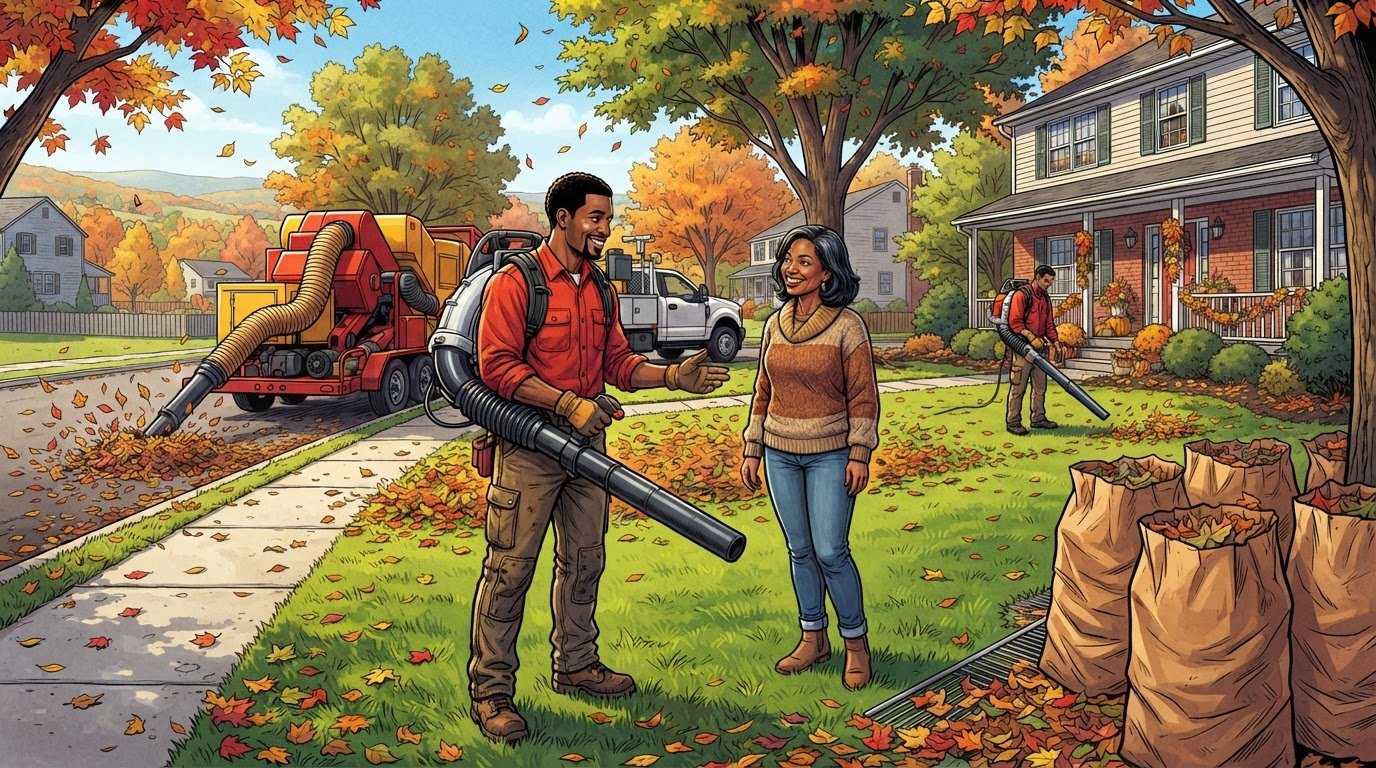

Mulching isn’t always the right call: Fall leaf removal in Lancaster, PA can mean mulching a light layer or collecting leaves when they build up too thickly or stay wet. Leaves usually begin changing color in late September and early October, with peak foliage around mid to late October. Leaf fall often starts in October, and removal may be needed through December.
It’s easy to assume one method will work all season, but the right choice depends on how much leaf cover your lawn has and where leaves collect. Mulch a thin layer into the lawn; heavier coverage can block sunlight and air from reaching the grass.
This guide explains when to mulch and when to collect, how Lancaster’s fall timeline affects your cleanup schedule, and how accumulated leaves can affect lawns and hard surfaces. You’ll also find practical guidance on local leaf collection rules to keep your property orderly without creating extra work.
Fall leaf collection from private property
For composting, keep leaves in a home compost pile or mulch a light layer into the lawn. For disposal, Lancaster residents can use free weekly curbside pickup for bagged leaves throughout fall.
Local Leaf Collection Rules
Prepare leaves according to Lancaster’s collection rules before setting them at the curb. Use biodegradable brown paper yard-waste bags or easy-to-handle bundles; plastic bags won’t be collected. Place yard waste at the curb before 5 a.m. on collection day, and keep bundles no longer than 4 feet, according to the City of Lancaster.
Bagged leaves can go out for weekly curbside pickup throughout fall, with no limit on the number of bags. The city collects them alongside regular trash and recycling. Keep bags accessible at the curb, and don’t put leaves in plastic bags intended for other waste.
For public sidewalks, Lancaster City Code § 258-21 permits leaves swept into gutters on the day before or the day of street sweeping. This rule concerns leaves from public sidewalks, not a general way to dispose of private-property debris. If recurring leaf loads come from trees that need separate attention, tree removal addresses that property issue rather than replacing seasonal leaf collection.
Free yard-waste bags are available at five city locations. The Recycling Drop Off Center at 850 New Holland Ave. distributes them Monday through Friday, 7 a.m. to 4 p.m. City Hall at 120 N. Duke St. and the Treasury Office at 39 W. Chestnut St. offer bags weekdays, 8:30 a.m. to 5 p.m. The Operations Center at 225 Riverside Ave. is open weekdays, 8:30 a.m. to 3:30 p.m.; the Water Department at 150 Pitney Rd. is open weekdays, 8 a.m. to 3:30 p.m.
Composting and Disposal Options
Choose between mulching leaves into the lawn and bagging them for curbside disposal. Use a mower to break a light layer into smaller pieces. If leaves blanket the grass or form thick piles, collect the excess rather than leaving it to smother the lawn.
To compost leaves at home, gather them in a dedicated compost pile and let them break down. Keep this option separate from the city’s curbside program: the listed collection method is bagged leaves, not loose leaves or a drop-off service for leaf composting. For routine disposal, use the city’s weekly fall pickup and place bags at the curb before 5 a.m. on collection day.
Make cleanup manageable by working in stages. First, mulch leaves that form a thin layer over lawn areas. Next, rake or gather heavier accumulations and place them in biodegradable paper bags. Finally, set the bags out with regular trash and recycling on collection day. This approach supports lawn care while keeping leaves from private property within the city’s stated collection method.
Lancaster fall leaf-fall season
Plan cleanup around Lancaster’s extended fall season, not a single weekend. Leaves begin changing color in late September and early October. Leaf fall often starts in mid to late October and continues through November. Most leaves have fallen by late November or early December, but cleanup may remain necessary through December.
That timeline creates several distinct phases. Early color is a cue to prepare tools and watch the canopy, not necessarily to clear every leaf. As leaves begin dropping in October, check lawns, paths, and driveways regularly. In November, repeated raking may be needed as more trees shed their leaves. A final pass in late November or early December can catch leaves that remain or fall later.
Tree type affects when different parts of a property need attention. Red maple, black cherry, mulberry, and tulip poplar are among Lancaster’s common leaf-shedding trees. If these trees grow across the same yard, their leaves may not fall all at once. Check beneath each canopy rather than assuming the entire property needs cleanup on the same day.
Use the season’s progression to set a flexible routine:
- Late September and early October: Watch for color changes and prepare rakes, bags, or a mower for leaf work.
- Mid to late October: Begin regular checks as leaf fall starts. Clear heavy deposits rather than waiting for all trees to shed.
- November: Repeat raking or mowing as fresh leaves collect. Focus on lawns and frequently used walking surfaces.
- Late November through December: Inspect beneath trees and along property edges for remaining leaves.
October can bring a sharp increase in demand for leaf removal in Lancaster. Demand is reported to rise 100% in October compared with the previous month. That seasonal jump makes early planning practical: decide which areas you’ll mulch, which need collection, and how you’ll handle repeated drops before the busiest part of the season.
Adjust the schedule to actual leaf cover. Wind can move leaves from a canopy onto a lawn or walkway, and a later drop may leave fresh debris after an earlier cleanup. Mowing can manage a light layer during routine lawn care; raking gives you more control over dense piles. Reassess after each major drop, then make another pass only where accumulation calls for it.
Leaf removal contractors serving Lancaster, PA
Remove leaves when coverage starts building into a thick layer rather than waiting for the season’s final drop. Before arranging fall leaf removal in Lancaster, check what areas the cleanup covers, how debris is handled, and whether repeat visits are part of the plan.
Lawn Protection Through Leaf Removal
Set cleanup frequency by the lawn’s condition, not a fixed calendar. Inspect the grass after each substantial leaf drop, especially beneath trees and along lawn edges. Clear leaves when they form a dense cover that hides the grass. Mowing may manage a thin layer, while heavier accumulation calls for collection.
Biweekly or monthly leaf removal is common in the Northeast, but the right interval depends on how quickly leaves collect. Lancaster’s changing leaf fall means one visit may not cover the full season. Recheck after wind or a fresh drop, then remove leaves where coverage has built up. A thorough routine protects the lawn without requiring the same treatment across every part of the property.
Choosing a Leaf Removal Contractor
Before arranging professional leaf removal, define the areas that need attention. Identify lawn sections, planting beds, and hard surfaces such as a patio or walkway. Make sure the planned cleanup covers those areas and clarifies what happens to collected leaves. These details help match the work to the property’s actual needs.
Also consider whether one visit suits the amount and timing of leaf fall. A property with several mature trees may need repeat cleanup, while a smaller yard may need less frequent attention. Wet or dry leaf conditions and the thickness of the leaf layer affect removal pricing. If requesting a quote, expect the price to depend on the case and be provided after the request.
Take a simple walk around the property before scheduling. Note where leaves collect most, where they tend to drift, and which surfaces need to stay clear. For example, leaves may gather beneath a tree canopy while wind pushes them toward a driveway or walkway. A written list of these locations helps define the requested scope.
Consider how the cleanup should address both lawn areas and hard surfaces. Leaves embedded in grass may need a different approach from a loose pile on a paved path. Define whether you need the debris gathered and removed, and whether the plan should account for another visit as the season progresses. Clear expectations make it easier to match the work to your cleanup needs.
Match service timing to leaf accumulation rather than choosing one date and assuming the yard is finished. Inspect the property after each major drop. If leaves cover grass or gather on frequently used surfaces, arrange removal before the buildup becomes harder to manage. This practical check keeps decisions tied to visible conditions on your property.
Risks of accumulated leaves, including mold, weeds, and slippery surfaces
A thick leaf layer affects more than a landscape’s appearance. Leaves can block the sunlight and air circulation grass needs to grow. Damp, compacted piles can hold moisture against the ground, while leaves left on paving create a separate hazard. Inspect lawns, planting beds, and walkways rather than treating the entire property alike.
On a lawn, check whether leaves cover the grass continuously or collect in isolated patches. A heavy layer blocks light and reduces airflow around the grass. Remove or mulch the buildup rather than leaving the lawn beneath a dense blanket. In planting beds, loosen matted leaves and clear them from small plants pressed flat beneath the debris.
Moisture changes a pile’s condition. Wet leaves can mat together, making them harder to move and leaving a damp layer beneath them. This environment can encourage mold growth within decomposing leaf material. Don’t confuse useful leaf compost with a wet pile spread across turf: composted leaves are collected and allowed to break down, while a matted layer can sit directly over living grass.
Assess weeds carefully. A leaf layer can cover bare soil, but leaves piled over lawn or low plants can also hide what’s growing underneath. After clearing the leaves, inspect exposed areas for weeds and remove them while they’re visible. In garden beds, move leaf piles away from plants you want to keep, then decide whether to use the remaining leaves as managed compost material.
Check hard surfaces separately. Wet leaves on sidewalks, driveways, patios, and other paved areas can become slippery and increase the risk of falls. Clear the main route to the entrance, the steps, and the path between the driveway and front door. Pay attention to shaded sections where damp leaves may remain after sunnier areas have dried.
Use this quick property check after rain or a fresh drop:
- Lawn: Look for thick, continuous coverage and leaves matted against the grass.
- Planting beds: Check whether piles press down small plants or conceal weeds.
- Hard surfaces: Remove wet leaves from sidewalks, driveways, patios, and entry paths.
Address the heaviest accumulation first, then inspect the cleared ground. This can reveal damp patches, hidden weeds, and remaining leaves that need attention. Keeping the lawn and walking surfaces clear supports a healthier landscape and a safer route around the property.
Does Lancaster city or Lancaster County have rules for leaf collection and yard waste disposal?
Lancaster city residents can use weekly curbside pickup for bagged leaves throughout fall, with no limit on bag quantity. Follow the city’s requirements for containers, bundles, and curbside timing to avoid having yard waste left behind during your fall leaf removal Lancaster PA property maintenance.
Use biodegradable brown paper bags or easy-to-handle bundles for yard waste. Plastic bags won’t be collected. According to City of Lancaster, Pennsylvania, yard waste bundles for collection must be no longer than 4 feet. According to City of Lancaster, Pennsylvania, residents must place yard waste at the curb before 5 a.m. on collection day.
Keep private-property leaves separate from the rule for public sidewalks. Lancaster City Code § 258-21 permits leaves swept from public sidewalks into gutters on the day before or the day of street sweeping. This applies to leaves swept from public sidewalks, not a general disposal method for leaves from a private yard.
Use this preparation sequence for curbside collection:
- Choose biodegradable brown paper bags or bundle the yard waste for easy handling.
- Keep each bundle within the 4-foot maximum length.
- Set the bags or bundles at the curb before 5 a.m. on collection day.
- Keep plastic bags out of the yard-waste collection.
Free yard-waste bags are available at five Lancaster city locations. The Recycling Drop Off Center, 850 New Holland Ave., distributes bags Monday through Friday, 7 a.m. to 4 p.m. City Hall, 120 N. Duke St., and the Treasury Office, 39 W. Chestnut St., offer them weekdays, 8:30 a.m. to 5 p.m. The Operations Center, 225 Riverside Ave., distributes bags weekdays, 8:30 a.m. to 3:30 p.m. The Water Department, 150 Pitney Rd., offers them weekdays, 8 a.m. to 3:30 p.m.
These locations provide bags for the city’s curbside program. They are not described as leaf-composting drop-off sites. For private-property leaves, use the weekly bagged-leaf pickup or compost leaves on your own property. If a collection is missed, Lancaster residents can report it to the Solid Waste Hotline at (717) 291-4744 or reach out to local property care experts like Snappy Landscaping for additional cleanup assistance.
Before setting anything out, match the material to the right rule: use paper bags or manageable bundles for yard waste, and put leaves in gutters only for sidewalk collection on the street-sweeping day or the day before. Follow the city’s designated collection method so leaves, bundles, and plastic bags aren’t confused at the curb.
Snappy Landscaping: Lawn Mowing & Maintenance
Snappy Landscaping helps property owners in Lancaster, Columbia, and Mountville maintain their lawns through seasonal changes. If fallen leaves are managed but your turf still needs regular care, Lawn Mowing & Maintenance can help keep the property orderly. Mowing also supports routine lawn upkeep when a light layer of leaves remains on the grass.
For broader landscape needs, Snappy Landscaping also provides landscaping services and mulch installation. These services can complement lawn maintenance when beds or other outdoor areas need attention as fall cleanup progresses. The right next step depends on your property, whether you need lawn maintenance or improvements elsewhere in the landscape.
Contact Snappy Landscaping to discuss your lawn and landscaping needs.
Set up your yard for the next season
A practical fall leaf removal plan in Lancaster, PA, starts with noticing where leaves repeatedly collect. Use those areas to decide which spots need routine lawn attention and which outdoor features need a closer look after fall. A clear plan helps you move from seasonal cleanup to steady property care.
Snappy Landscaping offers Lawn Mowing & Maintenance, Custom Patio Installation, and Retaining Wall Construction. These services address different needs, from maintaining lawn areas to improving outdoor spaces. Choose the work that fits your property rather than treating every fall concern as the same task.
Ready to discuss your yard’s next steps? Contact Snappy Landscaping to talk through your landscaping needs. A well-planned approach can help you keep outdoor areas functional and ready for the season ahead.
Frequently Asked Questions
Do you mulch or remove leaves?
Mulch a light layer that can be chopped into small pieces, and collect leaves that form a thick blanket. For example, leaves scattered across open lawn may be manageable with a mower, while dense piles beneath a tree need gathering. Check the lawn after mowing. If leaves still cover the grass or clump together, remove the excess rather than leaving it in place.
Is it worth doing leaf removal if I have years of buildup?
Yes, clearing old buildup can help restore access to the lawn and reveal what’s underneath. Work in manageable sections instead of trying to clear the entire property at once. Start with the thickest leaf cover, then inspect the grass and planting beds as you uncover them. Separate usable leaves for composting from material you plan to bag for disposal.
How can leaves damage my lawn?
A thick layer of leaves can block sunlight and restrict airflow around grass, interfering with healthy growth. For instance, leaves packed beneath a tree can cover a broad section of turf while nearby open lawn remains clear. Check for matted patches after rain and remove dense coverage. Then inspect the exposed grass for remaining piles or areas still hidden beneath debris.
How can you get rid of leaves in your yard?
Choose a method based on the amount and location of the leaves. Mow a light layer into smaller pieces, rake heavier piles, or collect leaves in biodegradable brown paper yard-waste bags for Lancaster’s curbside pickup. You can also compost leaves on your property. Keep plastic bags out of yard-waste collection, and separate leaves from other debris before setting bags out.
Need a pro for your leaf removal project in Lancaster, PA?
For fall leaf removal in Lancaster, PA, consider professional help if repeated leaf drops leave more cleanup than you can manage. Before arranging work, identify the lawn sections, planting beds, and paths that need attention. A clear list helps define the result you want, such as open turf, accessible garden beds, or clear routes between the driveway and entrance. Be specific about the areas needing attention.
What happens if I don’t clean up leaves?
Leaves left in thick piles can block light and airflow over lawn areas. On hard surfaces, wet leaves can become slippery, especially on a frequently used route such as the path from a driveway to an entrance. Walk the property after rain and note where leaves collect. Clear dense lawn coverage and slippery walking areas first, then reassess less-used corners and planting beds.
When do leaves typically fall in Lancaster, PA?
In Lancaster, leaves usually begin changing color in late September and early October. Peak foliage typically arrives around mid to late October, and leaf fall often continues from mid to late October through November. Most leaves have fallen by late November or early December, though cleanup can remain necessary through December. Use the changing canopy as a cue to start checking your property.
Which Lancaster, PA companies offer fall leaf removal?
If you need fall leaf removal in Lancaster, PA, Snappy Landscaping provides landscaping and lawn maintenance, including seasonal cleanups. These services support broader property upkeep during fall. When discussing your needs, describe the lawn areas and other parts of the property that require attention. A specific outline helps define the cleanup scope and how it fits with routine lawn care.