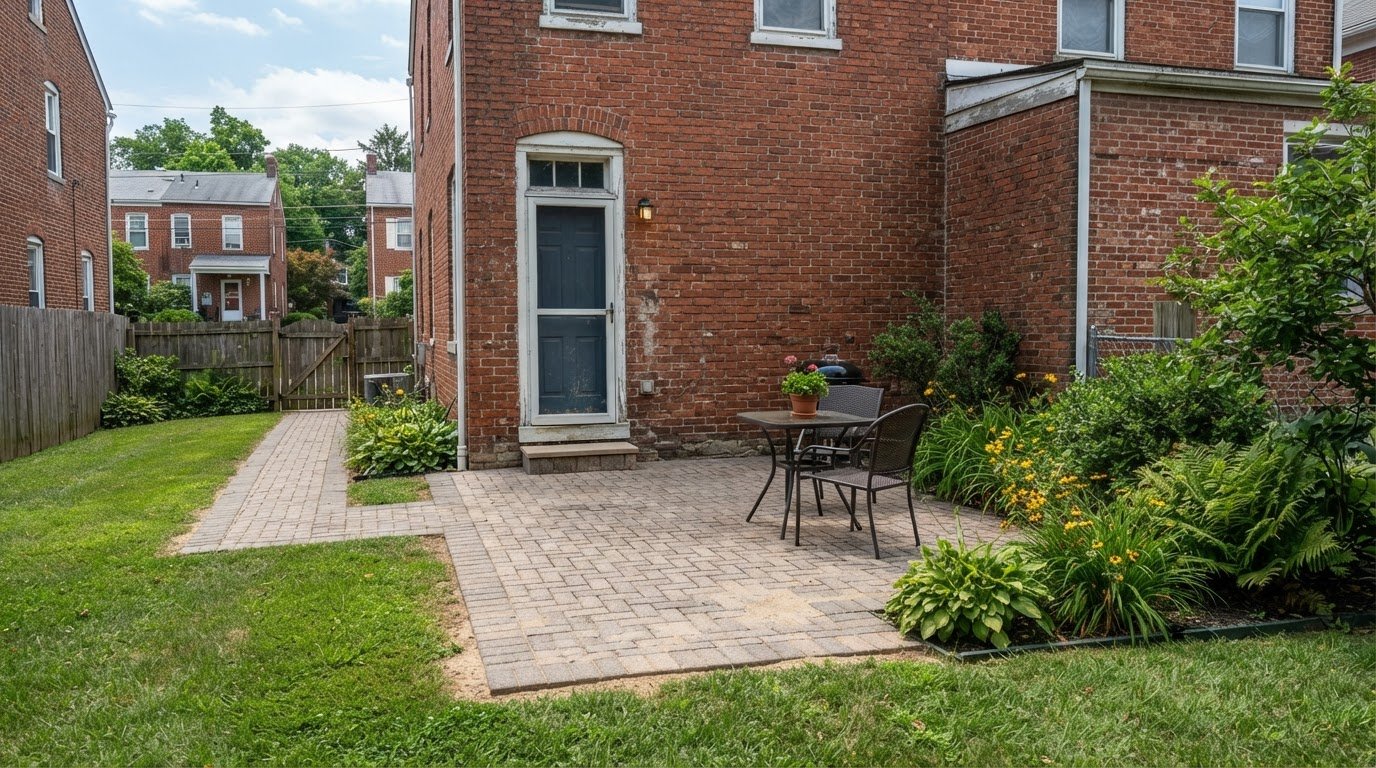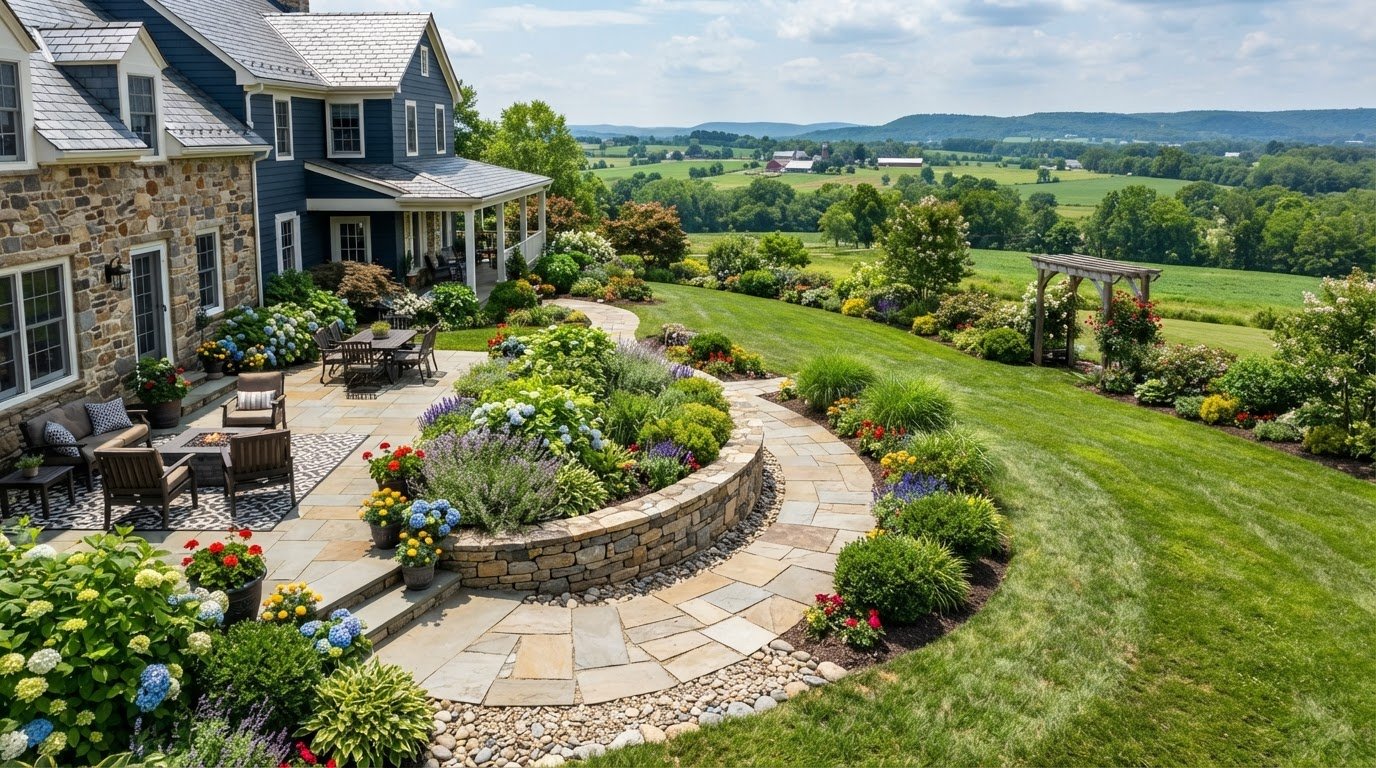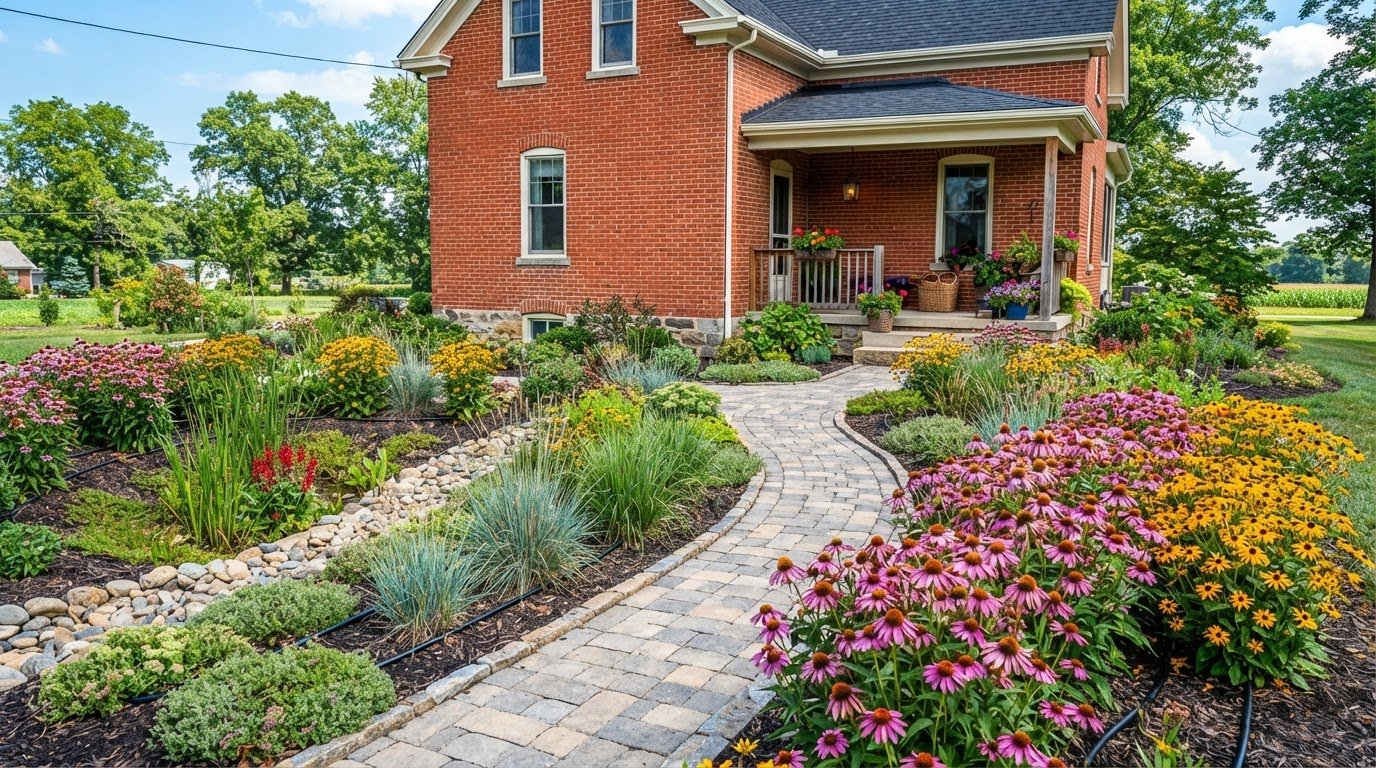

For bluestone patio installation in Columbia, PA, the base and drainage plan matter as much as the stone. The patio should slope 1/8 to 1/4 inch per foot away from buildings, with a compacted crushed-stone base at least 4 to 6 inches deep. Excavation typically reaches 8 to 12 inches total, depending on soil and climate.
It’s easy to focus on a stone’s color and pattern. But if water collects beneath the patio or the base shifts, the surface can become uneven and harder to maintain. Careful grading, clean excavation, and thorough compaction help create a stable foundation and a clear route for runoff.
This guide explains how to prepare the base, plan drainage, choose a bedding layer, and avoid common installation mistakes. You’ll also learn how compaction and material choices affect the finished patio, so you can understand the decisions behind a durable, well-drained result.
1. Base preparation and drainage
Begin by mapping the patio’s finished height in relation to nearby doors, foundations, and yard grades. This layout determines where runoff can travel without pooling beside the house. For bluestone patio installation in Columbia, PA, plan a consistent fall away from buildings, not toward a doorway or foundation. A downspout or low lawn area can also affect the route water takes.
Mark the patio edges before excavation, then extend the dig slightly beyond the finished footprint. This extra working room allows space for edge restraint and helps support stones around the perimeter. Remove roots, leaves, topsoil, and loose material. Organic matter breaks down, and loose soil can shift beneath the finished surface. Excavate to firm, stable subgrade rather than covering weak material with stone.
Typical excavation reaches 8 to 12 inches overall, depending on soil and climate. The required depth includes the base, bedding layer, and stone. Keep those layers in the plan from the start. If excavation ends too shallow, installers may have to compromise the base or finished height. If the subgrade holds water, address that condition before covering it.
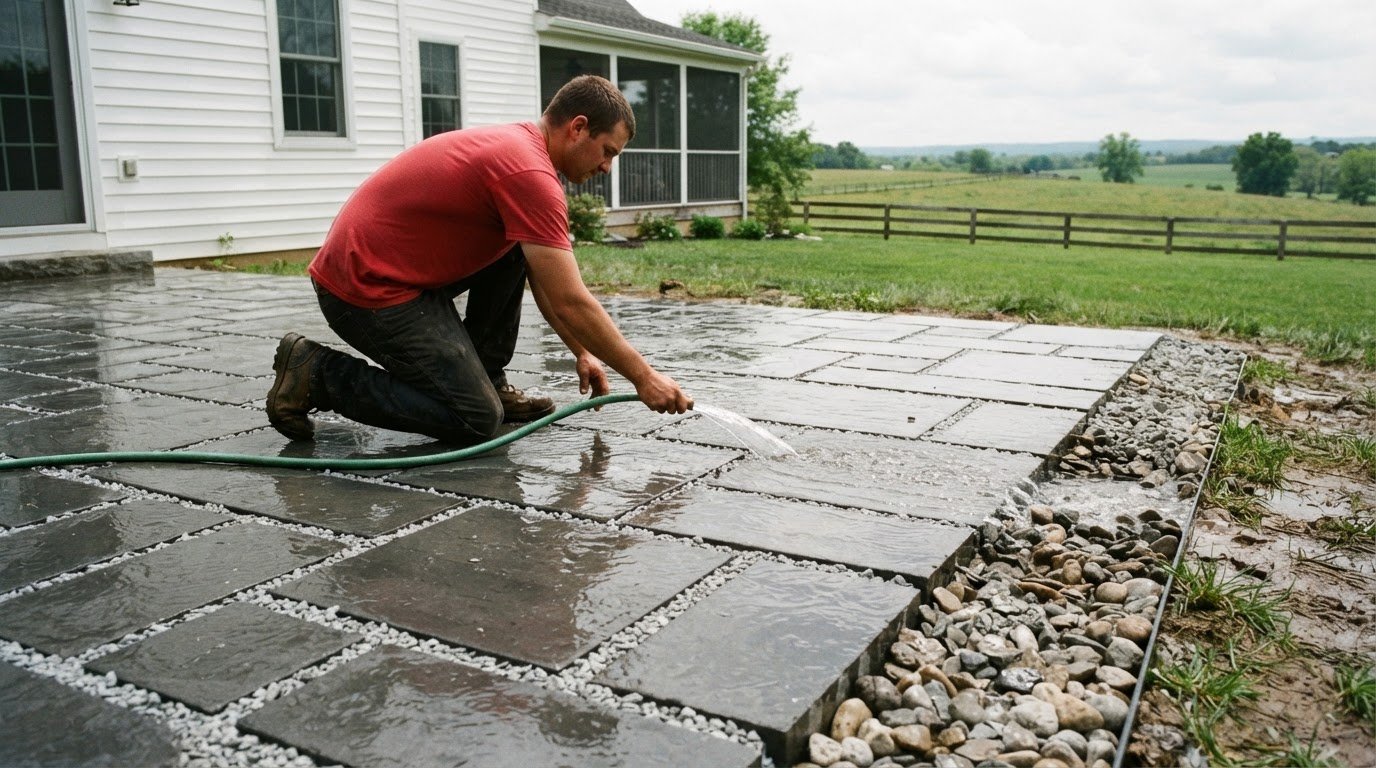
Set the drainage grade before placing bedding material. A slope of 1/8 to 1/4 inch per foot directs water away from buildings while keeping the patio comfortable to use. Check the grade across the whole surface, including transitions near steps and borders. A single low spot can trap water even when the outer edge appears to drain properly.
For Columbia, PA, stormwater and setback requirements depend on the property and project. Don’t assume there is one universal patio setback or drainage allowance. Plan the layout to direct runoff away from structures without concentrating water toward adjoining land. Make these decisions in the site plan, before excavation fixes the patio’s location.
Bluestone, concrete pavers, and flagstone can all make durable patios when their bases and drainage are properly planned. No material is automatically the most durable in every setting: stone type, installation method, soil, and maintenance all matter. Patio pricing varies based on material selection, cutting, excavation, access, and drainage work. Snappy Landscaping provides a free estimate for every project.
- Check the subgrade: Remove soft soil and organic debris before building upward.
- Control runoff: Set the fall away from buildings and low points.
- Protect the edges: Allow room for restraint beyond the finished outline.
- Confirm finished height: Coordinate stone elevation with doors, steps, and surrounding grade.
These checks connect excavation to the finished surface. A clean subgrade supports the layers above, while a planned outlet gives rainwater a clear route. Correcting either issue before laying bluestone is simpler than dealing with a settled edge or recurring puddle later.
2. Bedding layer options
The bedding layer sits between the compacted base and bluestone. It supports each piece and allows installers to make precise adjustments. Choose a bedding material that suits the installation method, drainage plan, and stone layout. Bedding cannot compensate for a weak base or poor grading.
For a dry-set patio, stone dust or screenings are common bedding options. Installers spread the material over the prepared base, then adjust each stone to meet its neighbors. The layer needs consistent coverage. Uneven bedding can leave a stone poorly supported, even when its surface looks level.
Concrete sand is another option for flexible installations. Compared with stone dust, it offers improved drainage, which can matter when water needs a clear route through the patio layers. The choice still depends on the full assembly. Bedding needs to work with the base, joints, and planned runoff, rather than on its own.
A hybrid installation uses a bluestone curb and stones set on a damp mason’s mix mortar bed. Each stone is custom cut for tight joints. This approach combines a defined perimeter with mortar bedding across the field. Careful fitting matters because each cut affects the joint and neighboring stones.
Pennsylvania bluestone comes in natural-cut and more evenly textured finishes. Natural-cut stone has ridges and surface variations; flaming creates a more even texture. Choose a thickness suited to the stone format and intended use, and make sure the selected bedding method supports each piece evenly. In Pennsylvania’s freeze-thaw conditions, moisture management matters because absorbed water can contribute to spalling along stone layers.
There isn’t one thickness that suits every bluestone patio. Stone dimensions, intended use, base design, and bedding method all affect the choice. Each piece also needs to sit securely without rocking.
- Dry-set with stone dust or screenings: A common bedding choice for bluestone patios.
- Use concrete sand: This option provides improved drainage for flexible installations.
- Choose a hybrid mortar bed: A bluestone curb and custom-cut stones create a fitted assembly.
Keep the installation layers compatible. A freely draining bedding material, for example, still needs a base and surface grade that direct water away from structures. A mortar bed supports stones differently, so plan it as part of the entire patio system.
During placement, set stones gently instead of dropping them. Check that each piece has stable support, is level, and has consistent joint spacing before moving on. These checks catch rocking or poor fit while adjustments are still practical. For a Pennsylvania patio, the bedding and stone thickness need to work with the base to manage support and moisture.
3. Common installation mistakes
Small installation errors can create noticeable problems across a bluestone patio. A rocking stone, trapped moisture, or poorly planned joint can affect neighboring pieces. Catching these issues during installation is easier than correcting them after the patio is in use.
Leaving stones unevenly supported: A stone may look level but still rock underfoot. Set each piece gently instead of dropping it into place. Check its level and joint spacing before installing neighboring stones. If one corner sits high, adjust the support beneath it rather than forcing the stone down.
Ignoring joint consistency: Irregular gaps can disrupt the pattern and complicate joint filling. Dry-set joints commonly measure 3/8 inch or more, while mortar-set patios commonly use 3/8-inch joints. Stone shape and layout influence the fit. Check spacing as you work, not only after the entire field is laid.
Using mortar without drainage planning: Mortar or a concrete bed suits bluestone steps, landings, and structural applications. These assemblies need proper drainage and expansion joints. Without them, water can become trapped and movement can stress the installation. Treat mortar as part of a planned system, not a quick fix for uneven stones.
Sealing only the visible surface: Bluestone can absorb moisture when unsealed. Freeze-thaw cycles can contribute to spalling along its layers. Installation guidance calls for careful sealing that includes the sides and bottom, helping limit water infiltration. Apply the seal consistently rather than coating only the exposed tops.
Skipping the final surface review: Inspect the full patio after placement. Walk across each section and look for rocking stones, uneven transitions, or sharply varying joints. Check areas beside steps and edges closely. Correct any piece that shifts underfoot before joint material locks the surface together.
Does Columbia Borough require a permit for patio installation? A reliable yes-or-no answer depends on the project’s full scope, not just its bluestone surface. Consider associated grading, drainage changes, and retaining structures when determining applicable Borough requirements before work begins.
- Set every bluestone piece gently and check its stability.
- Review level and joint spacing as installation progresses.
- Plan drainage and expansion joints for mortar or concrete beds.
- Seal the stone’s sides and bottom, not only its top.
- Inspect steps, edges, and transitions before finishing the joints.
These checks help keep the finished surface consistent. Careful fitting protects the pattern, while drainage details and complete sealing address moisture-related risks. Together, they help prevent avoidable corrections after the patio is complete.
Place each piece in a controlled way instead of letting it fall into position. Once it is resting, check that it is level and that the joint spacing is appropriate before moving on. You can then adjust the piece while it is still accessible, rather than finding a mismatch after surrounding stones are in place. Use the same gentle approach throughout, checking level and spacing as you place each piece instead of waiting until the end.
4. Crushed-stone base installation and compaction
A stable crushed-stone base supports dry-set Pennsylvania bluestone. It spreads patio loads across the prepared subgrade and helps limit shifting. Base material needs more than a quick pass with a compactor: installers must place it evenly, compact it in layers, and preserve the planned drainage grade.
Use at least 4 to 6 inches of crushed stone beneath the patio. Heavy traffic or poor soil can call for greater depth. The right base thickness depends on conditions below the patio and how the surface will be used. Don’t treat the minimum as a universal target for every site.
Build the base in lifts, not one deep pour. Each lift should measure 2 to 3 inches before compaction. Compact every layer thoroughly before adding the next. This method helps firm material through the full base depth. A thick, uncompacted layer can leave weak spots beneath individual stones.
A plate compactor is recommended for compacting crushed-stone patio bases. Work across each lift until the surface feels solid and doesn’t shift underfoot. Keep the base consistent with the intended patio slope. Compaction should strengthen the foundation without flattening the drainage grade.
Geotextile fabric over the subgrade helps separate native soil from crushed stone. This separation can reduce future settling by limiting soil movement into the base. Use fabric where the subgrade and base material need separation. It supports the assembly but does not replace proper excavation or compaction.
Choose angular crushed stone, not rounded gravel. Crushed pieces lock together as the base is compacted. Rounded gravel can move beneath the patio instead of forming a firm foundation. A stone that shifts underfoot, for example, signals that the base needs attention before bluestone is laid.
When planning your bluestone patio installation in Columbia PA, ask Snappy Landscaping how base depth, lift thickness, compaction method, and drainage grade fit your site. Compare written warranty terms by what they cover, how long coverage lasts, and what conditions or maintenance requirements apply.
- Base material: Crushed stone, not rounded gravel.
- Layering: Place material in 2 to 3-inch lifts.
- Compaction: Compact each layer with a plate compactor.
- Finished check: Confirm the base feels solid and doesn’t shift.
These steps create a consistent platform for bedding and bluestone. A firm, well-compacted base supports the stones, while the maintained slope helps water drain. If the base moves or loses its grade, the surface above can become uneven.
Without proper compaction, the entire foundation can become unstable. Compact the base until it feels solid and does not shift underfoot. If it moves, the foundation is not ready to support dry-set stones. Use crushed stone rather than rounded gravel for this layer. Pennsylvania bluestone can be dry-set on the compacted stone base, with polymeric sand or screenings swept into the joints. The sequence is straightforward: prepare and compact the stone base, set the bluestone dry, then sweep joint material into place. The joints do not remove the need for a firm base beneath the stones.
5. Bluestone patio installation contractors near Columbia, PA
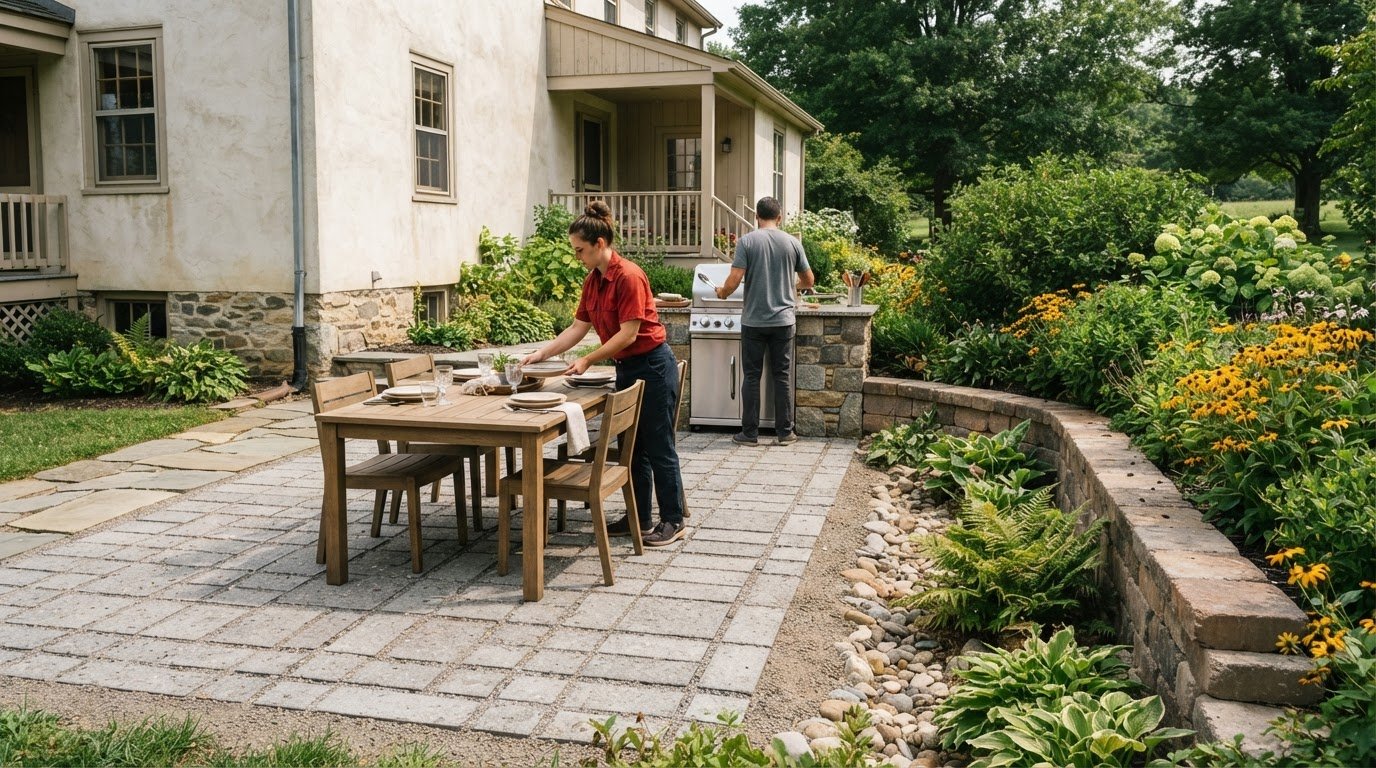
For a Columbia, PA patio, installation quality shows in the finished pattern and fit. Pennsylvania bluestone can be arranged in rectilinear or random patterns. A layout might combine a perimeter band, a running-bond field, and a centered diamond medallion. Plan stone sizes and cuts for the chosen design before placement begins.
Precise cutting helps stones follow the chosen pattern. A skilled installer can cut Pennsylvania bluestone pieces to fit joints narrower than 1/8 inch. That tight fit depends on the stone shapes and layout. Each piece must be measured against its neighbors, then adjusted so the pattern stays consistent across the patio.
Surface finish also affects the project plan. Natural-cut bluestone has ridges and variations, while flaming creates a more even texture. Blue, lilac, green, brown, and mixed colors offer different visual effects. Matching the finish and color across the layout takes care during stone selection and placement.
Installation details vary with patio edges and transitions. A perimeter stone band creates a defined border around a field pattern. Steps, landings, and nearby walkways need smooth connections without unstable edges. Set each stone gently, then check its level and joint spacing before fitting the next pieces.
Joint material must suit the installation method. Dry-set patios can use polymeric sand or screenings swept into the joints. Polymeric sand resists weeds and washout, while traditional stone dust may need occasional refilling. Mortar-set patios commonly use 3/8-inch joints. The layout and stone cuts determine how those joints appear.
A completed patio also needs a clear route for rainwater. The surface grade, edge details, and nearby landscape must work together. A downspout beside the patio, for example, can send concentrated water toward joints or borders. Coordinating these site details during installation helps avoid drainage conflicts around the finished stone.
- Pattern: Plan stone placement for bands, running bond, or random layouts.
- Fit: Cut each piece to match its position and joint spacing.
- Finish: Coordinate natural-cut or flamed surfaces with selected colors.
- Transitions: Align patio edges with steps, landings, and adjoining paths.
- Joints: Match filler to dry-set or mortar-set construction.
These details shape a patio installation near Columbia, PA. A coherent pattern, fitted edges, suitable joints, and planned runoff turn individual stones into a functional surface. Cutting and placement decisions influence how the finished layout looks and performs.
Snappy Landscaping: Custom Patio Installation
Snappy Landscaping provides custom patio installation for homeowners planning a bluestone surface in Columbia, PA. Patio stability depends on coordinated decisions about excavation, drainage, crushed-stone compaction, bedding, and stone placement. Snappy Landscaping plans these details as part of the installation, including how the patio fits the surrounding landscape.
Turn to Snappy Landscaping when you want a patio designed around your property’s layout or need drainage considered alongside the hardscape. Where runoff affects the project, drainage solutions can address that part of the plan. This is a coordinated installation approach, not simply a stone pattern placed on the ground.
Contact Snappy Landscaping to discuss your patio project.
Start planning an outdoor space that works together
A patio plan can shape how you use the rest of your yard. Before moving ahead with bluestone patio installation in Columbia, PA, consider how you want to move between the patio, lawn, and other outdoor areas. A clear picture of these connections helps guide the layout and the role each space should serve.
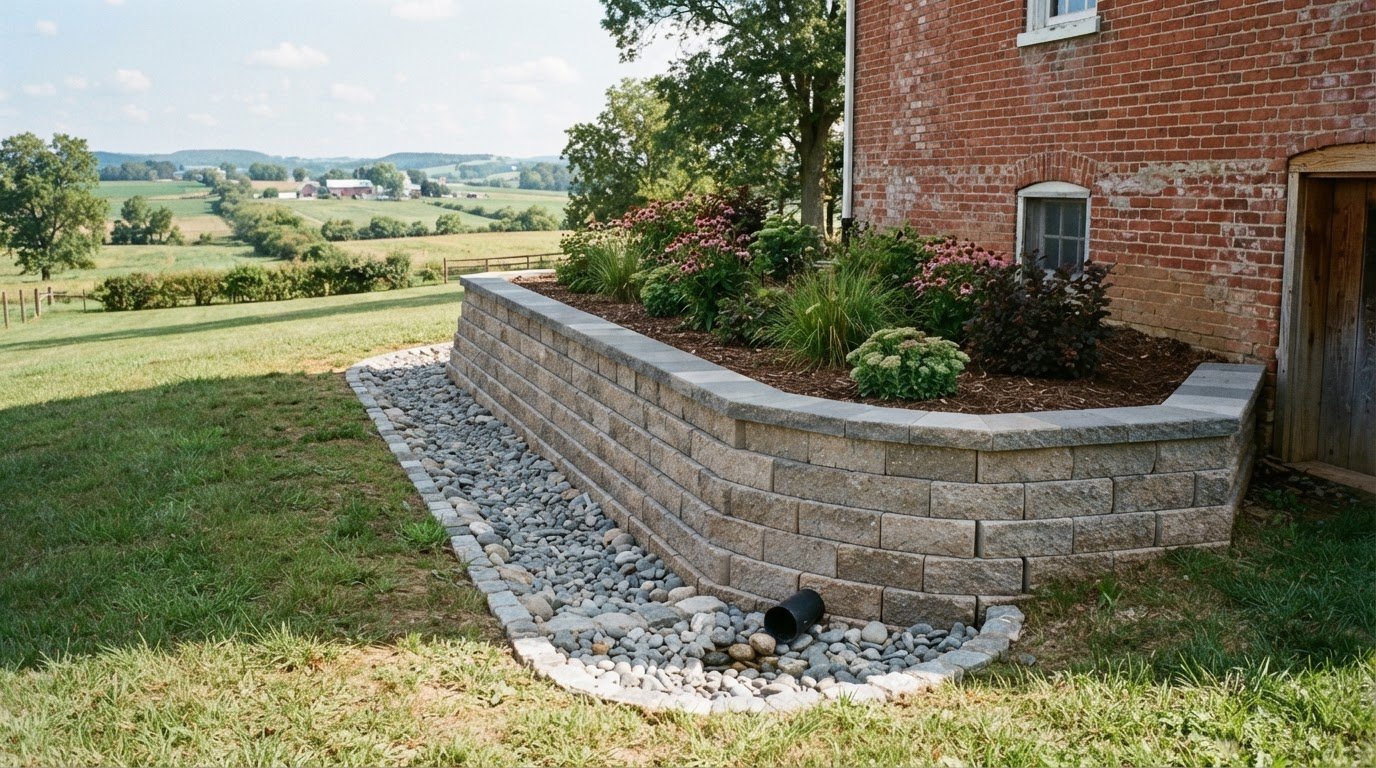
Snappy Landscaping brings together custom patio installation, lawn mowing and maintenance, and retaining wall construction. This combination can address a patio project alongside the surrounding landscape, especially when edges, level changes, or lawn transitions matter to the overall plan. Choose an approach suited to your property and how you want to use it.
Ready to take the next step? Connect with Snappy Landscaping about your patio plans, and start shaping an outdoor space that feels organized, useful, and ready to enjoy.
Frequently Asked Questions
What drainage, grading, and foundation does a bluestone patio need?
A bluestone patio needs a stable base and a finished grade that sends water away from buildings. Plan a slope of 1/8 to 1/4 inch per foot, with at least 4 to 6 inches of crushed stone beneath it. Before bedding or stone placement, check how runoff moves across the planned surface and where it exits. Keep transitions near doors, steps, and low lawn areas in the drainage plan.
Bluestone vs concrete pavers vs flagstone patio cost and durability
Bluestone, concrete pavers, and flagstone can all be durable with properly planned bases and drainage; no material is automatically the most durable. Pricing varies based on material, cutting, excavation, access, and drainage work. Snappy Landscaping provides a free estimate for every project.