
Residential landscape design in Lancaster, PA serves homeowners throughout our local service areas, including Lancaster, Columbia, and Mountville. A strong plan balances the way you want your yard to look with practical needs such as drainage, access, and usable outdoor space. Project pricing depends on the property, scope, and materials, and is provided after a quote request.
An attractive layout is only part of a successful landscape plan. You also need to understand the work involved, the site conditions that shape the design, and how material choices affect the finished space. Clear priorities make it easier to plan improvements that suit your property and daily routines.
This guide covers residential landscaping services, the factors that affect project scope, and practical ways to plan your outdoor space. You’ll also learn how to assess your property’s needs and how Snappy Landscaping’s local landscaping and hardscaping services can help when you’re ready to move forward.
How much does landscaping cost in Lancaster County?
Landscaping costs in Lancaster County depend on the work, site conditions, materials, and project size. A patio, stone walkway, or drainage improvement involves different design and construction needs, so price depends on the case and is given after a quote request.
Start by defining the result you want. A seating area, for example, may need a patio and a walkway connecting it to the house. A sloped yard may need a retaining wall before the space can be used comfortably. Each feature affects the project scope, materials, and installation work.
Site preparation also shapes the work. Existing concrete, uneven ground, limited access, and drainage concerns can affect how an improvement is built. Identify the work area, its intended use, preferred materials, and connections to existing paths or structures. These details help distinguish a focused improvement from a broader outdoor project.
Hardscaping and Stonework
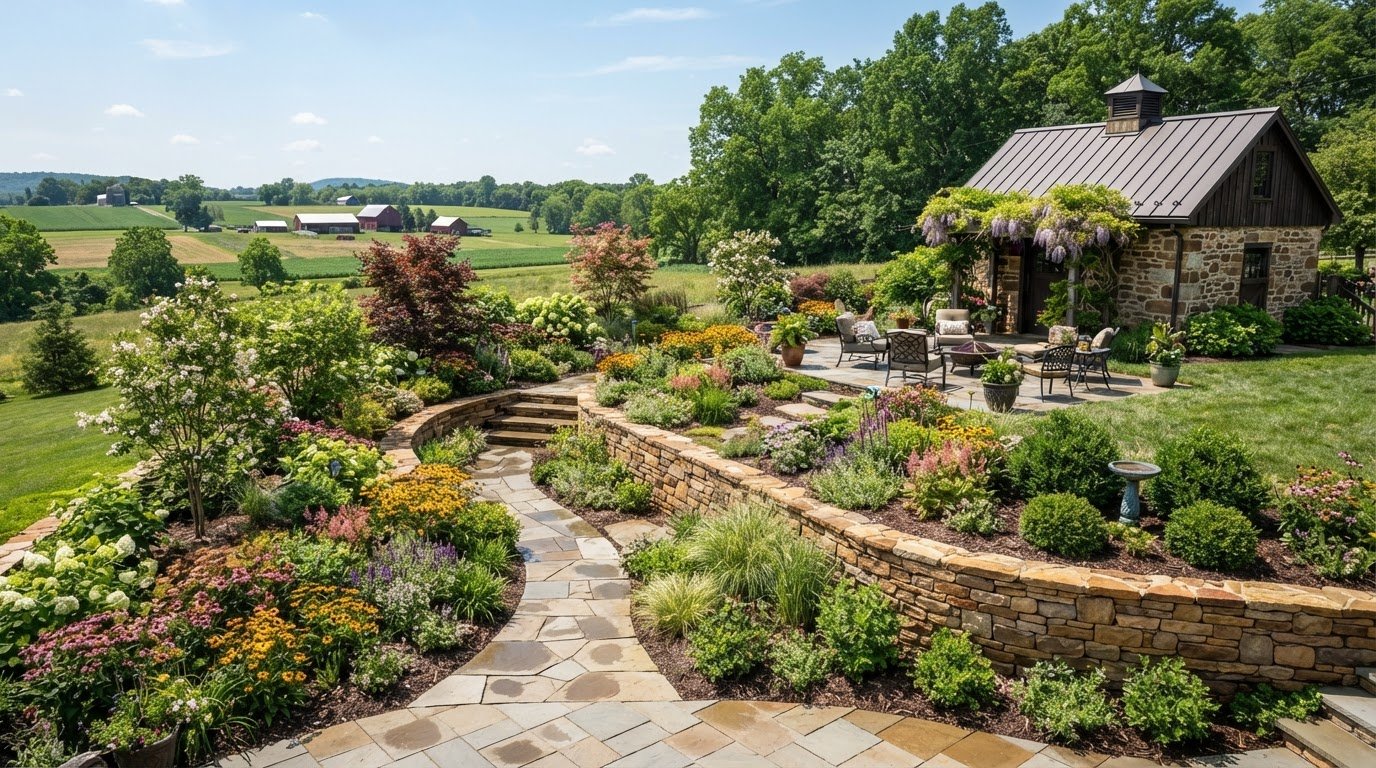
Hardscaping includes built landscape features such as patios, stonework, retaining walls, concrete pads, and walkways. These elements establish durable surfaces and define how people move through an outdoor space. For a Lancaster County property, consider how a patio connects to the house, whether a walkway reaches the driveway, and how a slope affects the layout.
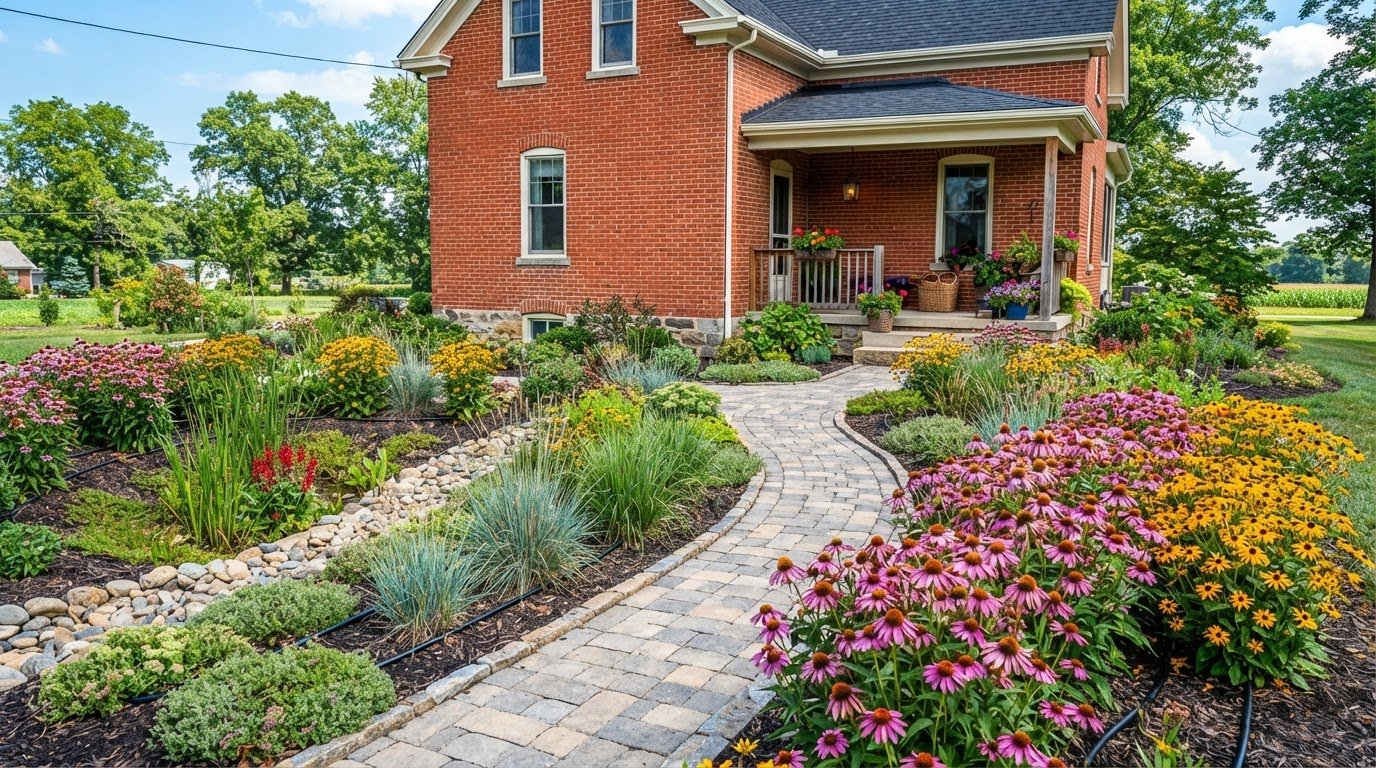
Material choice and installation complexity shape the work. A simple, direct walkway has different requirements from a stone path that curves around planting beds or meets a patio at several points. Review the intended use, surface, boundaries, and transitions together. Custom patio installation can form part of an outdoor living plan, while concrete pads and walkways address practical access and placement needs.
Permits and Local Regulations
Permit requirements for residential landscaping in Lancaster County depend on the project and municipality. A patio, walkway, retaining wall, or grading and drainage change may have different local requirements. Identify the exact work and property location before construction begins, and contact the municipality about applicable requirements.
When planning a patio, describe its location and any planned site changes when asking the municipality about applicable requirements. Include related work, such as a retaining wall or drainage adjustment, rather than asking about the surface alone. A clear description gives local officials the context they need to explain what applies.
Ask for a clear breakdown of the proposed work: site preparation, materials, hardscape installation, and related drainage work. This makes it easier to compare options and understand how a change, such as choosing stone instead of concrete, affects the scope. It also helps prioritize essential access or water-management needs before adding optional features.
Lancaster County landscaping companies
Residential landscape projects differ according to the property, existing vegetation, and how you want to use the space. Describe the work area and your priorities, then consider how the location and site conditions shape the plan.
Lancaster County Service Area
Lancaster County communities such as Lititz and Manheim include properties with different layouts and outdoor priorities. A useful project description names the community, identifies the work area, and explains how you use that part of the yard.
A home near Lititz, for example, may need a clear route from the driveway to a garden. A Manheim property might need a planting plan that works around existing trees. Share your location and desired outcome early so the proposed work reflects the actual site.
Native Plants in Lancaster County
Native plants can help create a landscape suited to local growing conditions. Pennsylvania-native examples include purple coneflower, black-eyed Susan, and switchgrass. Their varied forms add flowers, height, and texture without making every planting bed look like a uniform row.
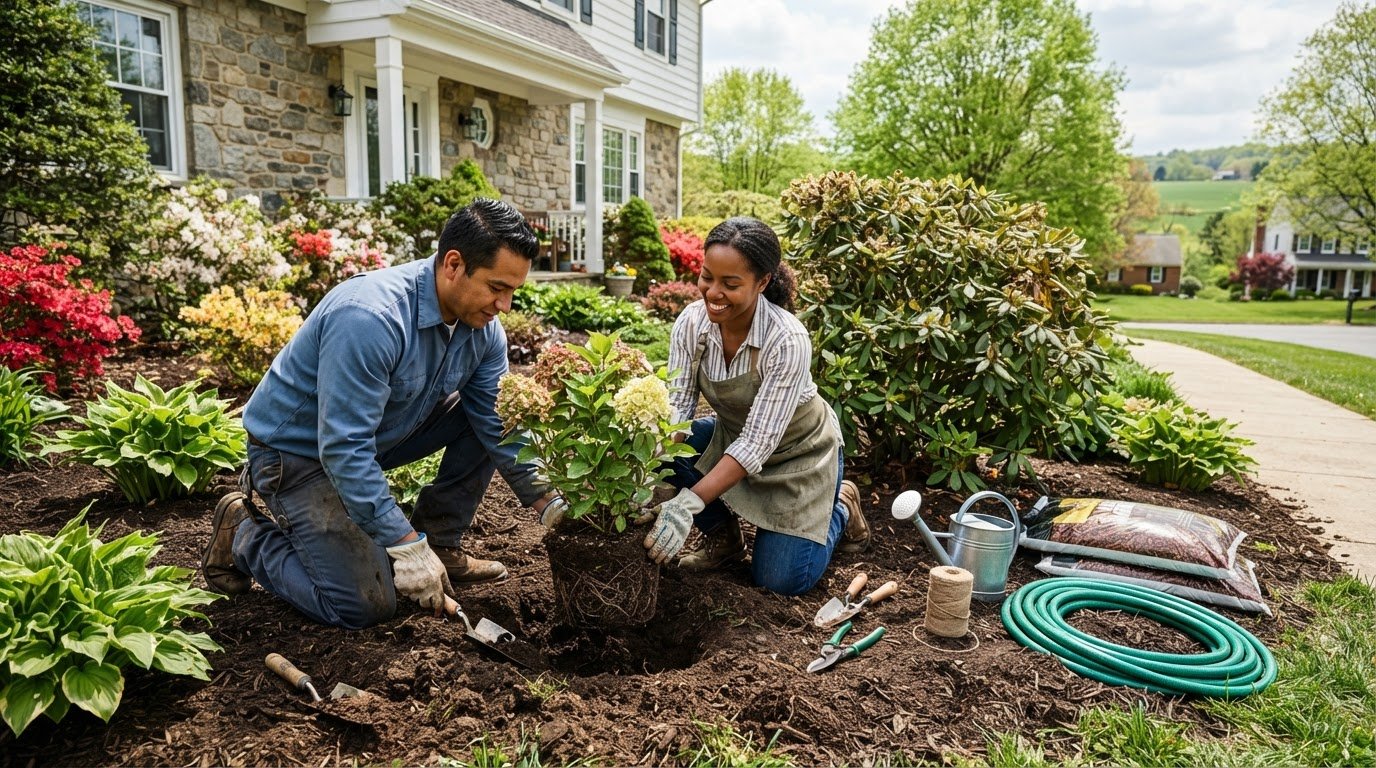
Choose plants according to the space and its conditions. A sunny border calls for different choices from a shaded area beneath mature trees. Group plants with similar light and moisture needs, and allow room for growth so they don’t crowd paths or entry points.
Invasive Plants in Lancaster County
Identify unwanted plants before planning new beds. Japanese knotweed, tree-of-heaven, and autumn olive are examples commonly treated as invasive plants in Pennsylvania. Their presence may affect where new plantings go and how the existing landscape is managed.
Mark affected areas on a simple property sketch, distinguishing unwanted plants from vegetation you want to keep. Avoid putting new plants where established growth will crowd them. Account for removal or management alongside new planting, rather than hiding the issue beneath fresh mulch.
Choosing a Landscape Designer
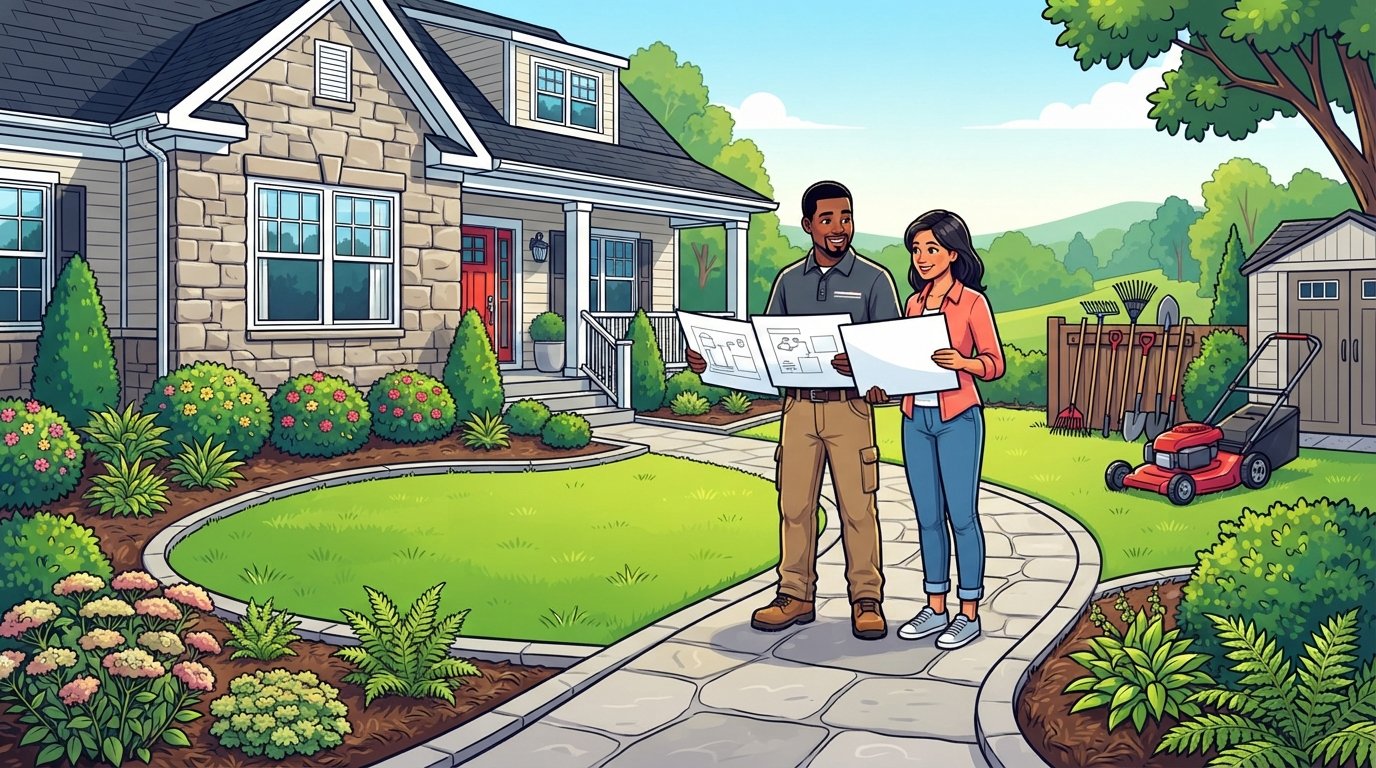
When choosing a landscape designer in Lancaster, PA, look for a plan that addresses your property, priorities, and requested work. A useful plan defines the scope, identifies materials or plant examples, and shows how the features connect.
- List the outcome you want, such as a native planting bed or clearer yard access.
- Note site concerns, including existing invasive plants, shade, slopes, or drainage.
- Review the proposed work area and how it relates to paths, buildings, and gardens.
- Ask how the design handles plant growth and ongoing maintenance needs.
A written scope makes it easier to compare design decisions with your priorities. If your plans involve Lancaster County landscaping, share your property goals to discuss the project’s needs and next steps.
Custom garden and landscape design
A custom landscape plan connects how you use your yard with the features it needs. Start with daily routines, such as dining outdoors, walking from the driveway, or tending a vegetable bed. These activities help determine where paths, seating, planting areas, and open lawn should go.
Map the property before choosing plants or surfaces. Mark the house, driveway, existing trees, doors, and areas you want to change. Note where sunlight falls, where water collects, and which views you want to screen or preserve. A sketch of these details can turn broad preferences into a workable layout.
Organize the yard into practical zones. Place a patio near the kitchen for outdoor meals, for example, and connect it to the driveway with a direct walkway. Keep a play area or open lawn clear of the route. A vegetable garden needs convenient access for watering and harvesting, not a hard-to-reach corner.
Choose materials and planting to suit each zone. A concrete pad can define a space for a grill or seating, while a walkway can guide visitors to an entrance without cutting through planting beds. For garden areas, consider plant height, spread, seasonal appearance, and maintenance needs. Leave paths clear as plants mature.
Plan around features worth keeping. A mature tree, established hedge, or existing patio can anchor a new design rather than being removed automatically. Show these features on the sketch, then position new beds and routes around them. If something conflicts with access or intended use, adjust the layout or decide whether replacement makes sense.
- Define priorities: Choose the main purpose, such as entertaining, gardening, or easier access.
- Record constraints: Note slopes, shade, wet areas, doors, and existing landscape features.
- Set the layout: Connect the patio, walkway, lawn, and garden areas logically.
- Choose details: Select surfaces and plants that suit each zone’s use and upkeep.
Review the plan from inside the home as well as outdoors. A planting bed beneath a window should preserve the view, and a seating area should connect with the rooms you use most. Walk the proposed routes from the driveway to the entrance and patio. This can reveal awkward turns or unnecessary crossings before installation.
Make the finished plan specific enough to guide the work. Mark each bed’s boundaries, the purpose of paved areas, and routes between key destinations. A clear design gives every feature a role and helps the yard function as one connected space.
Landscape design
A landscape design coordinates planting, circulation, outdoor surfaces, and maintenance across one property. Start with the daily problems you want to solve. For example, a muddy route to the driveway calls for a different response than a bare foundation bed or an unused backyard corner.
Walk the site and record what already works. Mark doors, windows, utility features, mature trees, existing paths, and areas that collect water. Note where you need privacy, open views, or a clear route between destinations. A simple property sketch keeps these decisions visible as the plan develops.
Set priorities before choosing individual features. A household that entertains outdoors may prioritize seating and convenient access from the kitchen. Someone who enjoys gardening may need sunny beds and practical paths. If both uses matter, map them together and check that one won’t interrupt the other.
Use the layout to guide movement. A direct walkway can connect the driveway to the front entrance, while another route leads to a patio or garden. Keep transitions clear where paths meet doors, steps, or planted areas. A narrow turn beside a shrub bed, for instance, can make carrying tools or groceries awkward.
Plan planting according to the conditions in each area. Record sun exposure, shade, moisture, and available space before selecting plants. A sunny foundation bed and a shaded spot beneath a mature tree need different choices. Consider mature size so foliage won’t crowd windows, walkways, or neighboring plants.
Plan the view from both inside and outside. A tall planting beneath a living-room window can block a useful view, while a low border may define the bed without closing it off. Place focal plants where they can be seen from a patio or main window. Keep entry areas legible and uncluttered.
Show how surfaces and planting meet. A concrete walkway, lawn edge, and garden bed need clear boundaries in the plan. These transitions guide movement and help the yard feel connected. For example, align a path with the entry and use planting to frame, rather than obstruct, the route.
- Map: Draw the house, access points, existing features, and problem areas.
- Prioritize: Choose the main uses, such as entry access, outdoor meals, or gardening.
- Arrange: Connect paths, open space, planting, and seating in a logical layout.
- Review: Check views, plant growth space, and maintenance access before finalizing.
Finish by checking the design against everyday needs. Can you reach each garden bed without crossing another use area? Does the walkway lead naturally to the entrance? Is there room for plants to grow and for you to maintain them? These checks turn a drawing into a practical plan.
Residential and commercial landscaping services
Residential and commercial landscaping both aim to make outdoor areas functional and orderly, but their priorities differ. A Lancaster County homeowner may want a usable patio and clear path, while a business needs accessible entrances and consistently maintained grounds.
For a home, start with how household members use the property. A front walk should guide visitors to the entrance. A backyard may need space for seating, lawn activities, or gardening. Connect each planned feature to a specific use, then consider how people move between the house, driveway, and outdoor areas.
Commercial properties require attention to shared access and regular upkeep. For example, a retail site needs clear routes from parking areas to entrances. An office landscape must keep walkways usable while presenting a cared-for appearance. A property manager should identify high-traffic areas, planting beds, lawn edges, and locations that need routine attention.
Scale affects the planning process. A residence can focus on one household’s routines, while a commercial site may serve employees, visitors, tenants, and maintenance crews. Map users and their routes before placing beds or outdoor features. A planting area that narrows a walkway can complicate access at either property type.
Coordinate landscaping with existing surfaces. A walkway should connect destinations rather than stop beside a lawn, and a planting bed should leave room for access and maintenance. On a commercial site, include service areas and building entrances in the layout. At home, check the route from the driveway to the front door.
- Residential priorities: Plan for household routines, privacy, outdoor use, and manageable upkeep.
- Commercial priorities: Account for visitors, shared access, presentation, and recurring maintenance.
- Shared planning needs: Connect paths, planted areas, buildings, and service routes clearly.
- Scope decisions: Separate one-time improvements from ongoing care requirements.
Before work begins, write down the property’s priorities and the areas included. For a home, that might mean improving the entrance route and organizing backyard use. For a commercial property, it could mean defining maintenance zones around entrances, parking, and lawn areas. A clear scope keeps decorative changes from overshadowing access or upkeep.
The practical takeaway is simple: match the plan to the people using the grounds. Residential design centers on household needs; commercial planning must also support shared use and property operations. For a tailored discussion of your site, share your landscaping project details.
Snappy Landscaping: Lawn Mowing & Maintenance
Snappy Landscaping helps homeowners and property managers in Lancaster County maintain lawns and address practical outdoor needs. Turn to the team for routine mowing, landscape improvements, or related hardscaping work.
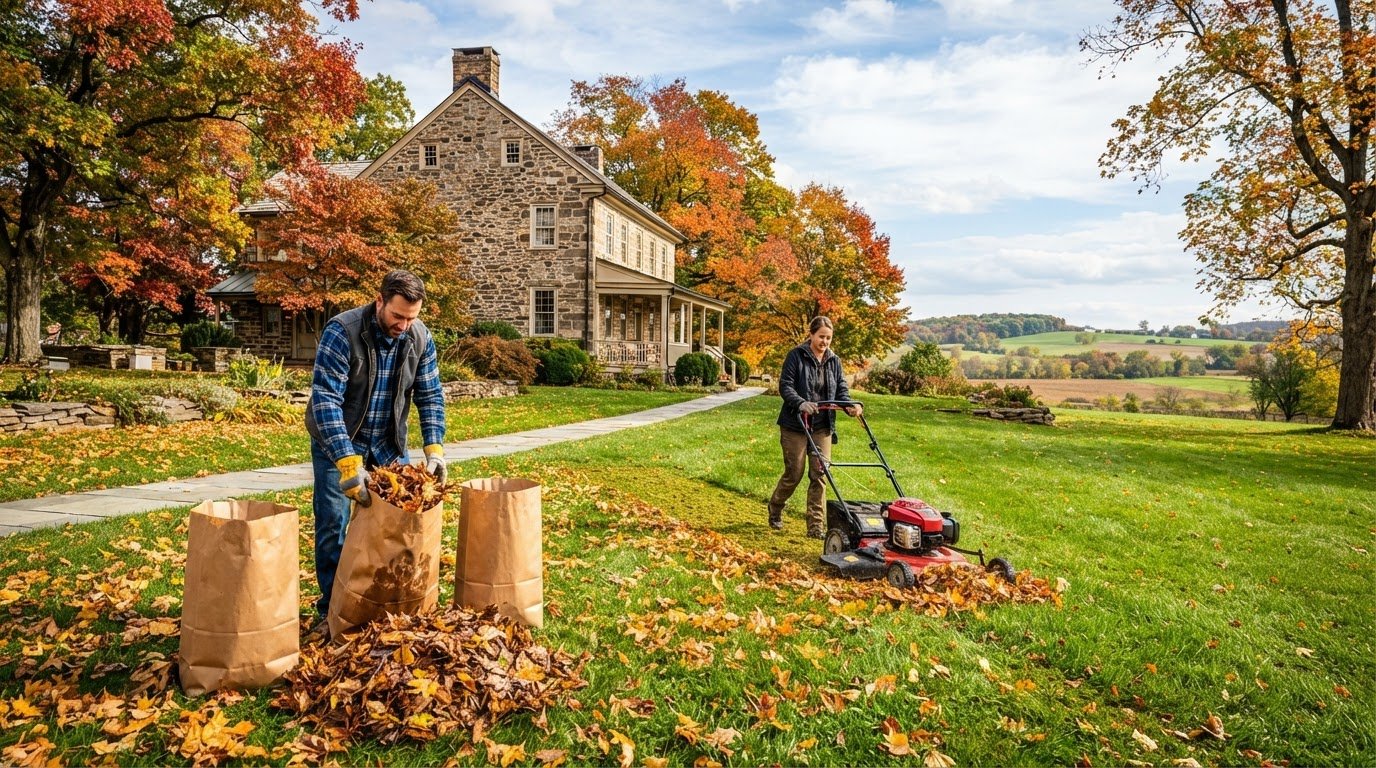
Lawn Mowing & Maintenance helps keep a yard neat and usable. For larger improvements, Custom Patio Installation creates a defined outdoor gathering space, while Retaining Wall Construction can address changes in grade. Drainage Solutions help manage water concerns around the property. Choose the service that fits your need, from ongoing lawn care to a specific landscape improvement.
Share your priorities and the areas of your property that need attention. Contact Snappy Landscaping to discuss your landscaping needs.
Take the next step toward a more usable yard
A landscape plan is most useful when it reflects how you want to use your outdoor space. Choose the issue that matters most, then define what a practical improvement should change. That could mean easier lawn upkeep, a place to gather, or a better way to address a sloped area.
Residential landscape design in Lancaster, PA, works best when the project reflects your property’s actual needs. Snappy Landscaping provides Lawn Mowing & Maintenance, Custom Patio Installation, and Retaining Wall Construction for different outdoor priorities. Identify the area you want to improve and the result you’re aiming for, then request a free estimate.
Use that starting point to turn a broad idea into a clear project conversation. Contact Snappy Landscaping to discuss your landscape plans. A practical next step can make your outdoor space easier to use and maintain.
Frequently Asked Questions
Do you provide landscaping near Manheim and Lititz?
Yes. Snappy Landscaping serves Manheim and Lititz, along with Lancaster County communities including Lancaster, Columbia, and Mountville. Its service areas are Lancaster, PA; Mountville, PA; Columbia, PA; Landisville, PA; Manheim, PA; Mount Joy, PA; Lititz, PA; Ephrata, PA; East Petersburg, PA; Millersrow, PA; Elizabethtown, PA; Leola, PA; New Holland, PA; Willow Street, PA; Strasburg, PA; Quarryville, PA; Denver, PA; Hempfield, PA; East Hempfield, PA; West Hempfield, PA. Share your community and project type when describing your property needs.
How involved will I be in the landscape design process?
Your priorities guide the project discussion and recommended solution. Submit a request describing the property issue, intended use, and features you want considered. The team will contact you to discuss your needs and provide a clear estimate. Snappy Landscaping also offers a Free one-on-one design consultation at its shop in Columbia, PA, with Hands-On Material Selection and Expert Guidance to help you make informed project decisions.
What residential landscape design services are available in Lancaster, PA?
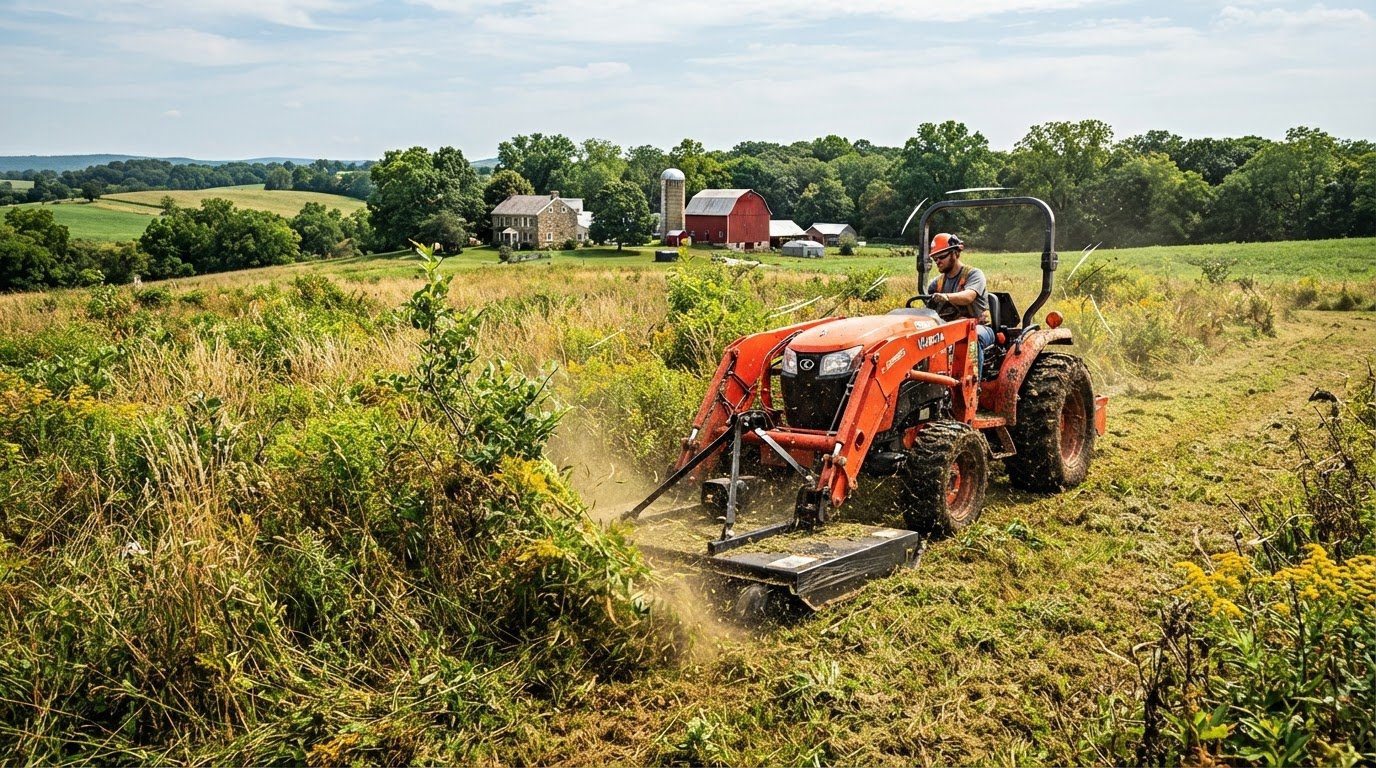
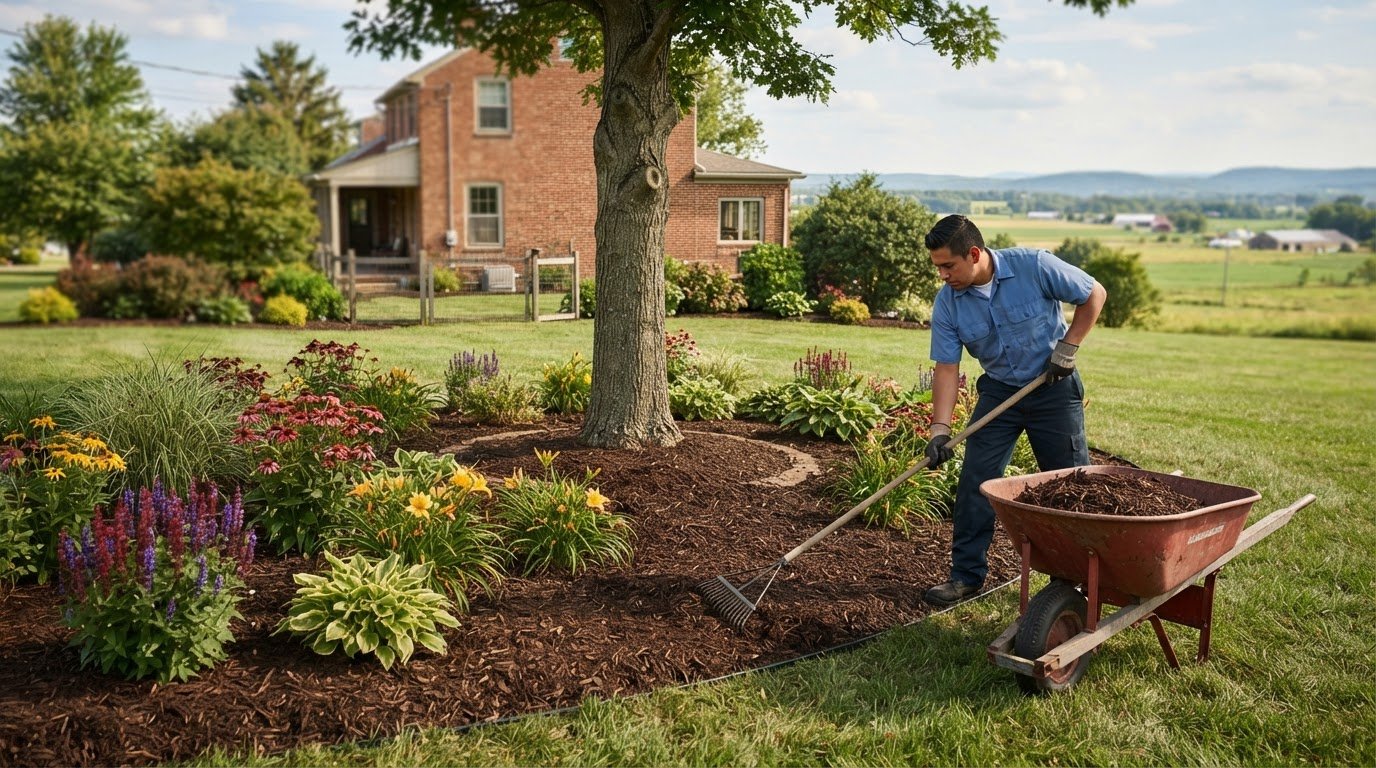
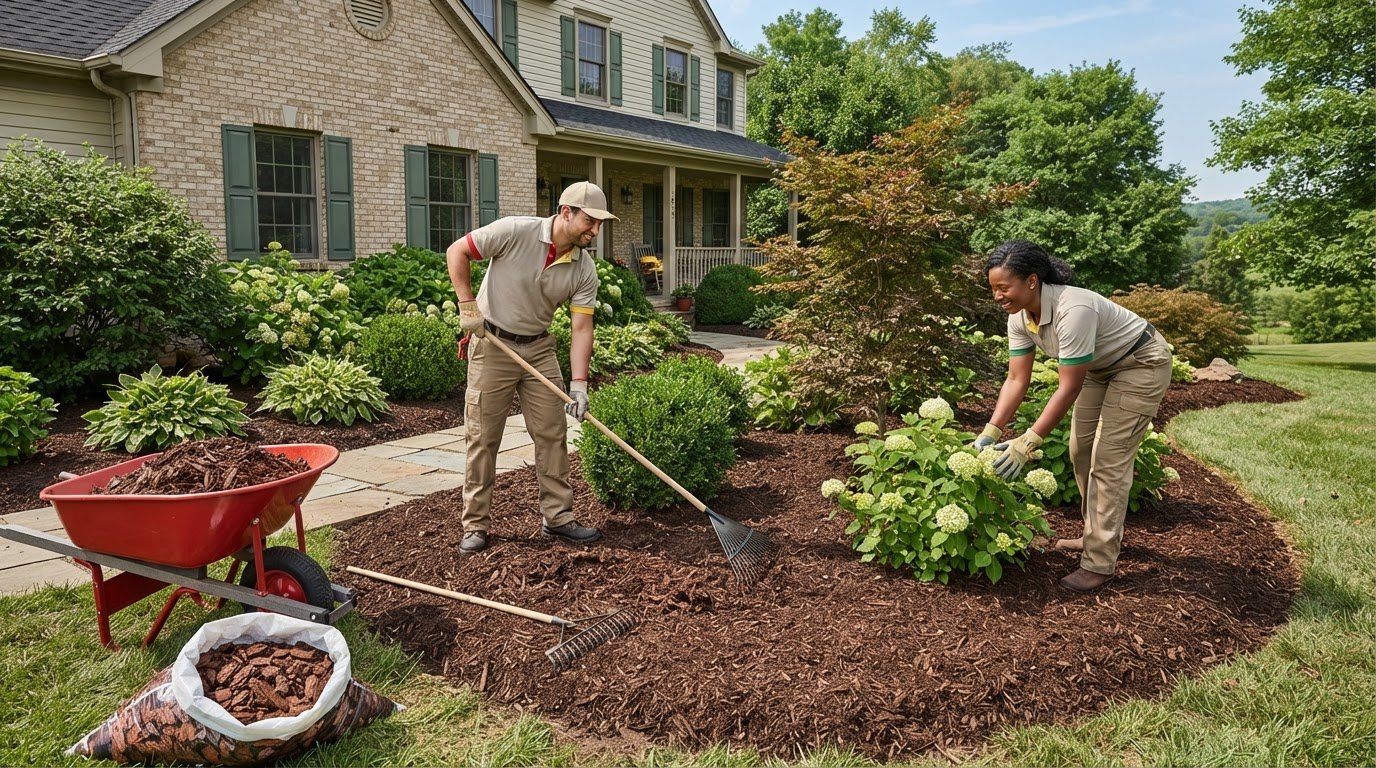
Residential services include Landscaping Services, Lawn Mowing & Maintenance, Custom Patio Installation, Retaining Wall Construction, Drainage Solutions, and Concrete Pads & Walkways. Mulch Installation and Brush Clearing can support planting-bed upkeep and overgrowth clearing. The right combination depends on your goals: a homeowner seeking better access might prioritize a walkway, while uneven ground may call for retaining-wall or drainage work.
How much does residential landscape design cost in Lancaster County, PA?
Snappy Landscaping pricing varies based on property size, service frequency, and maintenance requirements. The company provides a free estimate for all properties. To make the estimate useful, describe the area involved, the work you want completed, and whether you’re considering ongoing maintenance or a specific improvement. Routine lawn care, for example, has a different scope from a patio project combined with retaining-wall work.
Which landscape designers and design-build companies serve Lancaster, PA, and how do their services compare?
Snappy Landscaping serves residential, commercial, and HOA properties in Lancaster County. Services include landscaping and lawn maintenance, outdoor construction, drainage solutions, and commercial landscaping. The team is licensed and insured, and background-checked. When comparing project approaches, consider whether the proposed scope suits the property’s intended use, site conditions, and upkeep needs. Snappy Landscaping offers a free design consultation at its Columbia shop, Hands-On Material Selection, and Expert Guidance.
What native plants and trees thrive in Lancaster, Pennsylvania?
Native plant choices depend on sunlight, soil moisture, and available growing space. Pennsylvania-native tree options include eastern redbud, serviceberry, and red maple; flowering choices include wild bergamot and milkweed. Match each plant to its location rather than choosing by appearance alone. A sunny, dry border differs from a damp area beneath existing trees. Leave room for mature growth near buildings and walkways.
What landscaping works best for Lancaster, PA's climate and soil conditions?
Choose landscaping to suit your property’s conditions. Sunlight, drainage, slope, and soil can vary across Lancaster County. Observe where water stands after rain and which areas dry quickly, then use those observations to guide planting locations and surface choices. A persistently wet area may need drainage planning before planting, while a shaded spot calls for plants suited to limited direct sun.
How do I plan a residential landscape design project in Lancaster, PA?
Start with the main outcome you want, such as a clearer entrance route, a gathering space, or easier lawn care. Mark the project area, existing features to keep, and problems such as pooling water or difficult access. Set priorities and identify which work should happen together. For residential landscape design in Lancaster, PA, a focused scope connects design decisions to your property’s daily use and maintenance needs.