
If a customer slips on your sidewalk at 10:01 a.m. after a light dusting, is your business legally protected? In Lancaster City, municipal codes require a clear 36-inch path within five hours of a storm's end, leaving no room for contractor delays. Managing commercial snow plowing in Lancaster County is a high-stakes game of risk mitigation where a single late arrival can lead to a costly lawsuit. You need more than a plow truck; you need a partner who understands the local legal standards and the physical demands of a Central PA winter.
We understand the pressure of keeping your tenants safe while keeping your overhead predictable. It's frustrating to deal with unreliable service or hidden surcharges that blow your maintenance budget by January. This 2026 guide provides the roadmap you need to ensure business continuity and minimize liability through every storm. We'll explore the critical "Hills and Ridges" doctrine, explain how to navigate varying township ordinances, and show you how to secure a snow management plan that prioritizes clear communication and zero-tolerance safety for your customers.
Navigating Winter Liability: The Stakes of Commercial Snow Removal in Lancaster
Liability is not an abstract worry for property managers; it's a direct threat to your bottom line. In Pennsylvania, the standard of care is largely defined by the "Hills and Ridges" doctrine. This legal principle protects you from liability for generally slippery conditions during an active storm. However, that protection evaporates once snow accumulates into dangerous elevations or "ridges" that obstruct travel. If a claimant proves you had notice of the hazard and failed to act within a reasonable timeframe, your business is exposed. Professional commercial snow plowing Lancaster County helps you maintain this standard of care through rigorous documentation and timely response.
The financial impact of a single slip-and-fall incident extends far beyond a settlement. It often triggers a sharp increase in insurance premiums and can lead to years of deposition and litigation. To defend your property, you need a partner who treats snow management as a tactical risk-mitigation operation. Detailed service logs, GPS time-stamping, and before-and-after photos serve as your first line of defense in court, proving that you met local ordinances and industry standards.
The Legal Reality for PA Property Managers
Local regulations in Lancaster County are strict and vary by municipality. For example, the City of Lancaster requires you to clear a 36-inch path on sidewalks within five hours after a storm ends. If the snow stops overnight, you must have it cleared by 10:00 a.m. Manheim Township allows 24 hours, but waiting that long increases the risk of "artificial conditions." These occur when snow piles melt and refreeze across walkways or ADA ramps. Because these patches aren't "natural" accumulations, the "Hills and Ridges" defense doesn't apply. We focus on these high-risk areas, including shaded entrances and drainage points, to ensure your property remains compliant and safe.
Proactive vs. Reactive Management
Reactive management is a gamble that rarely pays off. Waiting for a specific accumulation trigger before calling a plow often leads to hardpacked ice that is nearly impossible to remove. Proactive management utilizes advanced snow and ice removal practices like liquid anti-icing. By applying brine before the flakes fall, we prevent the bond between snow and pavement. This strategy eliminates the dangerous refreeze cycle that causes most accidents.
Snappy Landscaping takes the burden of weather monitoring off your plate. We track local weather patterns and deploy teams based on pre-set triggers, such as a "trace" requirement for pedestrian walks. Our commercial and HOA maintenance services prioritize business accessibility, ensuring your doors stay open and your liability stays low, regardless of the forecast.
Beyond the Blade: Advanced Ice Management and Plowing Techniques
Effective commercial snow plowing Lancaster County requires more than just pushing white powder into a pile. It's about the chemistry of the pavement. Many contractors rely solely on rock salt, but standard sodium chloride loses its effectiveness once temperatures drop below 15°F. For the deep freezes typical of Lancaster winters, we utilize high-performance agents like calcium chloride. This material is safer for your concrete walkways because it remains active down to -25°F, preventing the destructive freeze-thaw cycles that cause surface spalling and cracks.
Environmental stewardship is a functional necessity for modern property management. Excessive salt runoff damages your expensive landscaping and pollutes the local Susquehanna River watershed. We mitigate this by following OSHA winter weather safety precautions while using precision application techniques. This ensures your lot is safe for pedestrians without over-salting the surrounding turf or soil.
The Science of De-Icing Agents
Brining is the proactive application of liquid salt solution to surfaces before a storm to prevent ice from bonding to the pavement. This pre-treatment creates a barrier that makes mechanical clearing much more efficient. By using liquid brine, we often reduce total salt usage by 30% to 50% compared to traditional granular methods. It eliminates the "hardpack" ice that usually leads to slip-and-fall claims. While rock salt is sufficient for parking lots in moderate cold, calcium chloride is the superior choice for pedestrian areas where safety is the absolute priority.
Commercial Grade Equipment Requirements
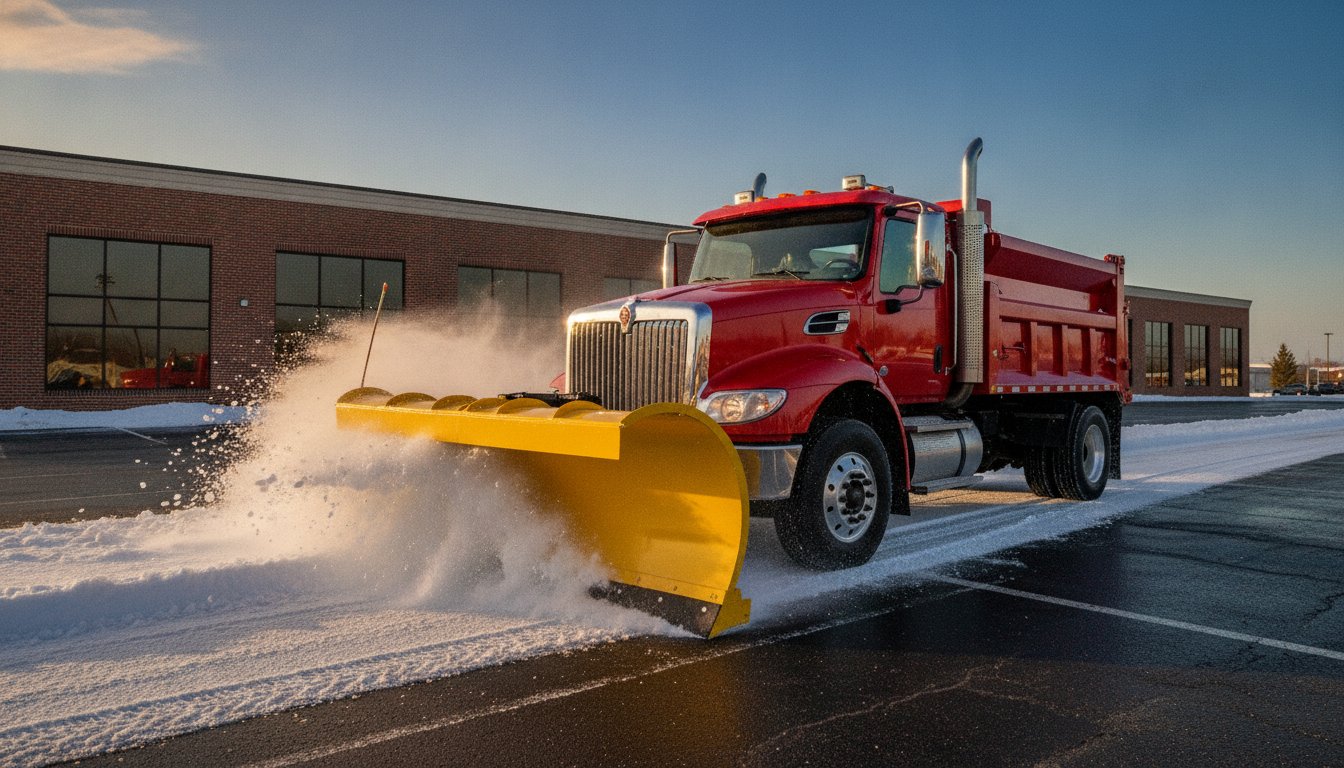
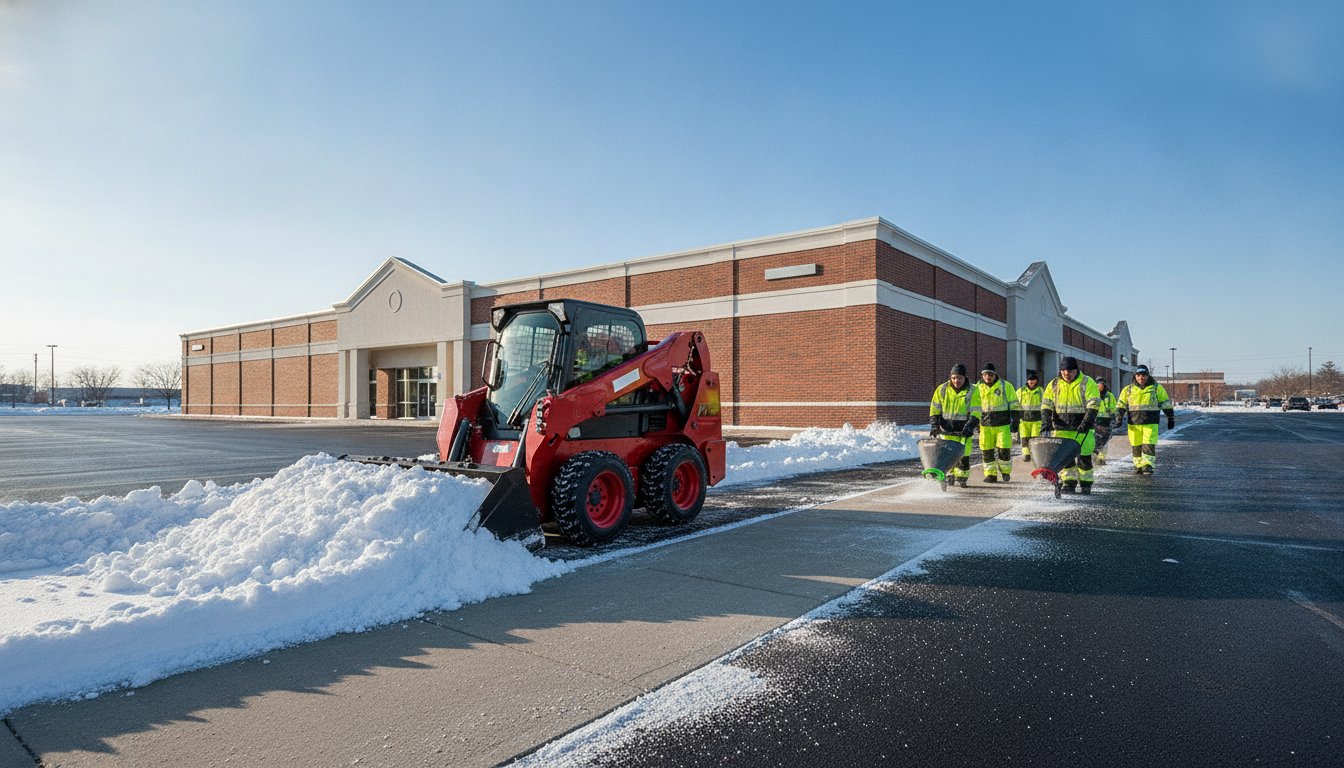
A standard pickup truck with a plow is insufficient for modern commercial footprints. Large logistics facilities and shopping centers require heavy-duty wheel loaders and skid steers to move massive volumes of snow quickly. These machines offer the maneuverability and power needed to stack snow in designated dump areas without blocking valuable parking stalls or sightlines. Specialized equipment ensures we don't just move the snow, but manage it.
Accessibility for HOAs and retail storefronts depends on specialized sidewalk equipment. We use dedicated machines that clear a precise 36-inch path in a single pass, ensuring compliance with local municipal ordinances. Reliability is our standard; we maintain a rigorous maintenance schedule to prevent mid-storm breakdowns. If you want to see how our specialized fleet can secure your property this winter, reach out to our team for a professional site audit.
Choosing the Right Snow Removal Contract for Your Business
Lancaster winters are notoriously unpredictable. One year we see 20 inches of total accumulation, and the next we see 40. This volatility makes choosing a contract for commercial snow plowing Lancaster County a strategic financial decision rather than a simple administrative task. You need a billing structure that aligns with your risk tolerance and operational budget. A poorly defined agreement leads to "billing surprises" after a major blizzard or, worse, gaps in service that leave your lot a sheet of ice during business hours.
Every commercial property has different needs. A retail center requiring 24/7 "zero-tolerance" clearing has a different risk profile than an industrial warehouse that only operates Monday through Friday. Your contract is the blueprint for how those risks are managed. It should clearly define when the contractor arrives, what materials they use, and how they handle the inevitable challenges of a Pennsylvania winter.
Contract Structure Comparison
A Fixed Seasonal contract offers the highest level of budget security. You pay a set monthly fee regardless of how many times the trucks deploy. This is ideal for property managers who need to lock in expenses early and avoid the stress of a heavy winter. Conversely, Per-Push or Per-Inch billing ensures you only pay when work is performed. While this saves money during mild winters, a heavy season can quickly deplete your maintenance reserves. Many businesses now opt for hybrid models. These often include a base fee for standby readiness and per-event billing that triggers only after a certain accumulation. Always look for a "cap" limit in these agreements to protect your business from extreme weather anomalies that could otherwise cause costs to spiral.
Essential Contract Clauses
A professional service agreement must be exhaustive. It starts with a clear response time guarantee. You need to know exactly how soon your contractor will be on-site after a specific trigger depth is reached. The scope of work should explicitly detail whether pedestrian walkways, ADA ramps, and loading docks are included. It should also specify the types of materials used. For instance, referencing Penn State Extension's chemical deicer guide can help you understand why your contract might specify calcium chloride for sidewalks to prevent runoff damage and preserve your concrete.
Finally, address property damage proactively. Plowing is heavy work, and even the best operators occasionally clip a curb or disturb the sod. A clear clause should define the repair process and timeline for these issues. At Snappy Landscaping, our commercial and HOA maintenance services include pre-season site audits to mark hazards. This step reduces the likelihood of damage before the season begins. We believe a contract should remove the burden of management, not create new administrative headaches for the property owner.
Pre-Season Strategy: Creating a Zero-Tolerance Snow Management Plan
Effective winter management is a year-round commitment. Most property managers wait until the first forecast to call a contractor, but that's a mistake that leads to property damage. Successful commercial snow plowing Lancaster County starts with a detailed site walkthrough during the late summer or early fall. We need to see your property while the pavement is clear and the landscape is visible. This allows us to identify potential hazards that disappear under six inches of snow, such as uneven slabs, hidden curbs, and delicate plant beds that require extra protection from heavy equipment.
A proactive plan removes the guesswork during a storm. We coordinate with our landscaping teams to ensure that your property's transition from summer maintenance to winter management is seamless. By identifying these needs early, we prevent the "reactive" scrambling that often leads to late arrivals and missed triggers.
The Site Mapping Process
We create a digital map of your facility to designate "priority one" zones. These usually include main entrances, emergency exits, and ADA ramps that must remain clear at all times. Mapping your property's topography is equally critical for risk management. We identify low spots where meltwater pools. If your lot has chronic standing water issues, you can learn more about yard drainage solutions that prevent ice from forming in the first place. We also strategize snow pile placement. Stacking snow at the high end of a lot creates a constant stream of runoff that refreezes overnight. We place piles near catch basins or at the low end of the property to keep travel lanes dry and safe.
Stake Out and Protection
Before the ground freezes, our teams install high-visibility stakes across the property. We mark every fire hydrant, concrete pad, and curb line to ensure operator safety and property integrity. This isn't just a courtesy; it's a financial safeguard. Staking ensures that heavy plows don't catch the edge of your walkway installation or tear up expensive turf. Pre-season staking significantly reduces spring repair costs by giving drivers a clear visual guide of where the pavement ends and the landscape begins. We also identify sensitive shrubs and trees that need shielding from salt spray and heavy snow weight.
Don't leave your property's safety to chance this winter. Contact us today to schedule your pre-season site audit and secure your spot on our 2026 winter route before capacity is reached.
Reliable Commercial Snow Plowing with Snappy Landscaping
Choosing a partner for commercial snow plowing Lancaster County isn't just about finding someone with a plow. It's about finding a team that understands the specific challenges of West Hempfield, Columbia, and Mountville. At Snappy Landscaping, we specialize in the restoration of order after a storm. We don't just react to the weather; we manage the outcome. Our methodical approach ensures your business remains accessible to customers and safe for employees, regardless of how many inches fall.
Our work doesn't start when the first flake falls. It's a continuous cycle of care that transitions naturally from summer lawn maintenance to winter safety. Because we already know your property's layout, drainage patterns, and sensitive landscape features, we are uniquely positioned to protect your investment year-round. This deep familiarity eliminates the learning curve that often leads to property damage when hiring unvetted contractors.
The Snappy Advantage
Reliability is built into our process. We combine local knowledge with professional-grade equipment and highly trained crews. Our commercial and HOA maintenance services are designed to remove the management burden from your shoulders completely. We provide direct communication during every storm event. You won't have to wonder where the trucks are; our digital logging and proactive updates keep you informed from the first brine application to the final sidewalk clearing.
Secure Your Property for 2026
The critical industry procurement window for snow services typically closes between September 30 and October 31. Leading contractors finalize their routes and equipment allocations early to ensure they can meet their service level agreements. Capacity is limited. Once our routes are locked, we cannot add new properties without compromising our response times. Secure your spot now to avoid the stress of a last-minute search during a winter emergency.
Take the first step toward a safer, more predictable winter. We invite you to request a commercial snow management proposal today. Our team will conduct a custom site assessment to identify your property's specific needs and provide a clear, transparent quote for the 2026 season. Let us handle the forecast so you can focus on running your business.
Secure Your Property Against the 2026 Winter Season
Managing a commercial property during a Pennsylvania winter is a test of preparation and reliability. Successful commercial snow plowing Lancaster County depends on more than just a truck and a blade. It requires a deep understanding of municipal clearance codes, the "Hills and Ridges" doctrine, and the proactive application of liquid de-icing agents. By finalizing your contract early and completing a pre-season site walkthrough, you eliminate the risk of late arrivals and hidden property damage.
Snappy Landscaping is locally owned and operated in Lancaster County. We specialize in the high standards required for HOA and commercial property maintenance. Our team provides full-service winter risk management, handling everything from tactical snow storage to precise sidewalk clearing. We take the burden of monitoring the forecast off your shoulders, allowing you to focus on your operations while we maintain a safe environment for your tenants and customers.
Don't wait until the first blizzard to secure your service. Get a Professional Snow Management Quote today and ensure your facility is ready for whatever the 2026 season brings. We look forward to being your dependable partner in the months ahead.
Frequently Asked Questions
What is the difference between snow plowing and snow management?
Snow plowing is the reactive act of moving snow after it falls. Snow management is a proactive, comprehensive strategy that includes weather monitoring, pre-treatment with liquid brine, mechanical clearing, and post-storm ice control. We focus on commercial snow plowing Lancaster County to minimize liability and ensure business continuity. It's about managing the outcome, not just pushing the powder. This methodical approach ensures your property remains safe and accessible.
How much snow needs to fall before a commercial plow is dispatched?
Most commercial contracts in Lancaster County use a 1-inch or 2-inch trigger for parking lots. However, for high-traffic pedestrian areas and ADA ramps, we often implement a "trace" or zero-tolerance trigger. Clearing begins as soon as accumulation starts. Your specific trigger depth is established during the contract phase to align with your facility's safety requirements and operational budget, ensuring your business stays open during a storm.
Does commercial snow removal include salt and de-icing for sidewalks?
Yes, our full-service commercial snow and ice removal includes dedicated sidewalk clearing and de-icing. We use specialized equipment to clear a precise 36-inch path and apply high-performance agents like calcium chloride. These materials are more effective than standard rock salt in extreme cold and are safer for your concrete walkways. We prioritize pedestrian safety to help you comply with municipal ordinances in Lancaster and Columbia.
How do you prevent snow piles from damaging our landscaping or drainage?
We conduct a pre-season site audit to designate specific snow dump areas. These zones are chosen to avoid blocking sightlines or covering sensitive landscaping. We also map your property's topography to ensure piles are placed near catch basins. This prevents meltwater from running across travel lanes and refreezing, which protects your drainage systems and reduces the risk of "artificial condition" slip-and-fall hazards on your property.
Are you insured for commercial slip-and-fall liability?
Snappy Landscaping maintains comprehensive commercial general liability insurance specifically rated for snow and ice management. We provide our clients with certificates of insurance before the season begins. Our process includes digital time-stamping and GPS logging for every visit. This documentation serves as a critical defense against premises liability claims by proving that your property was maintained according to the agreed-upon safety standards and local ordinances.
What happens if a plow damages my parking lot or curbs?
We use high-visibility stakes to mark curbs, fire hydrants, and concrete pads before the first storm. If damage occurs despite these precautions, we document the issue immediately. Our contracts include clear property damage clauses that outline the repair process. Because we are a full-service landscaping and hardscaping company, we possess the internal expertise to repair turf, curbs, or walkways quickly once the spring thaw arrives in Lancaster County.
Do you offer 24/7 monitoring during Lancaster winter storms?
We provide proactive weather monitoring for all commercial clients throughout the winter season. Our team tracks local weather patterns and radar 24/7 during active storm events to ensure timely deployment. You don't need to call us when the snow starts; our crews are dispatched automatically based on your pre-set contract triggers. This constant oversight ensures your lot is cleared before your business opens or tenants leave for work.
Can I bundle snow removal with my HOA lawn maintenance contract?
Yes, bundling is a standard practice that ensures seamless property care throughout the year. We offer integrated HOA lawn maintenance and snow management programs for communities in Mountville and Lancaster. This approach allows our team to become deeply familiar with your property's layout during the summer, which reduces the risk of damage during the winter. It also simplifies your administrative work by providing a single point of contact.