A damaged patio or walkway doesn’t always need to be replaced. Patio repair services in Lancaster, PA, can address loose or sunken pavers, worn joints, and surface deterioration through targeted repairs, cleaning, re-sanding, sealing, or resurfacing when the underlying structure remains sound. The right approach depends on what has shifted or worn and whether the base is stable.
It’s understandable to want clear expectations before work begins. Patio repair services in Lancaster, PA, can involve different tasks depending on the hardscape’s condition and the weather. This guide explains what patio and walkway repairs may involve, how Lancaster County’s seasonal weather can affect timing, and what goes into a custom estimate. You’ll also learn how cleaning, resetting, joint work, sealing, and concrete repairs differ, so you can understand the scope and choose a practical next step.
Lancaster County service area
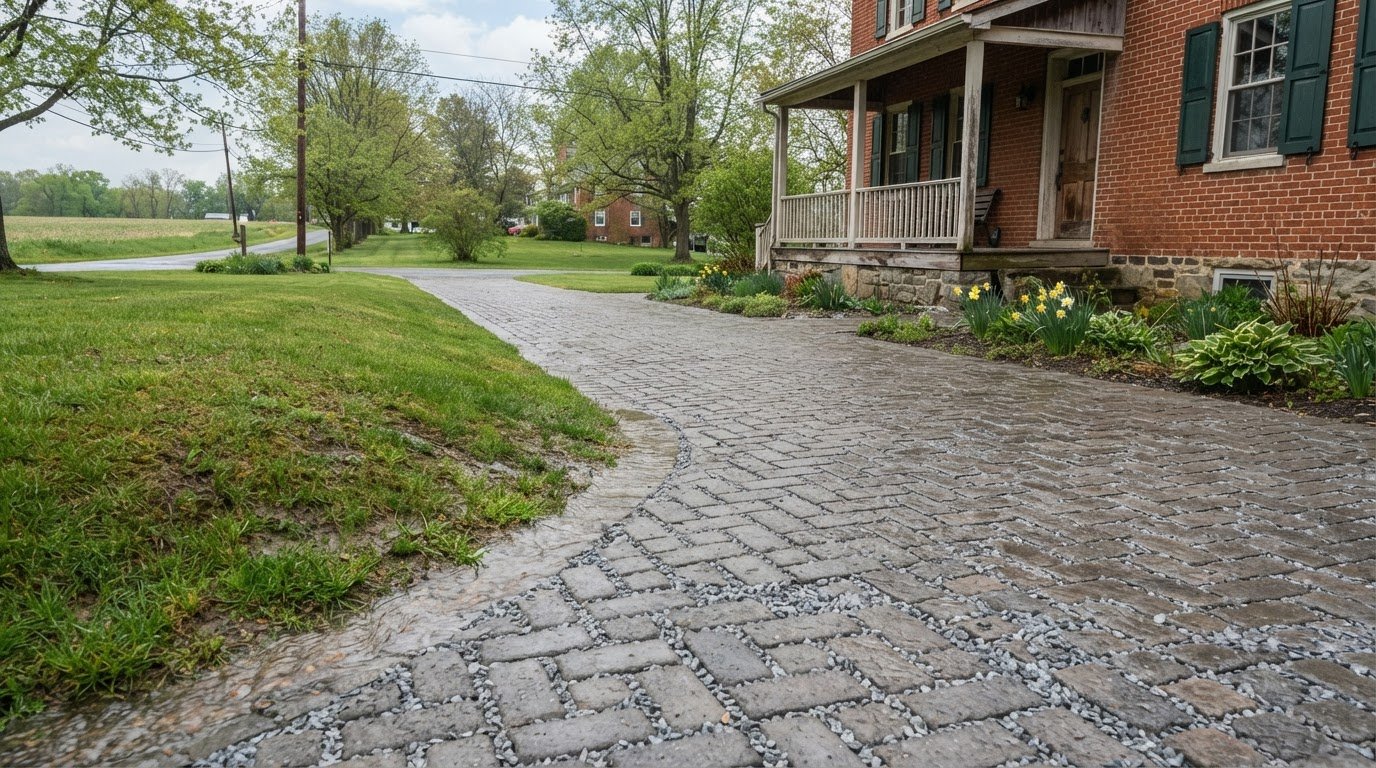
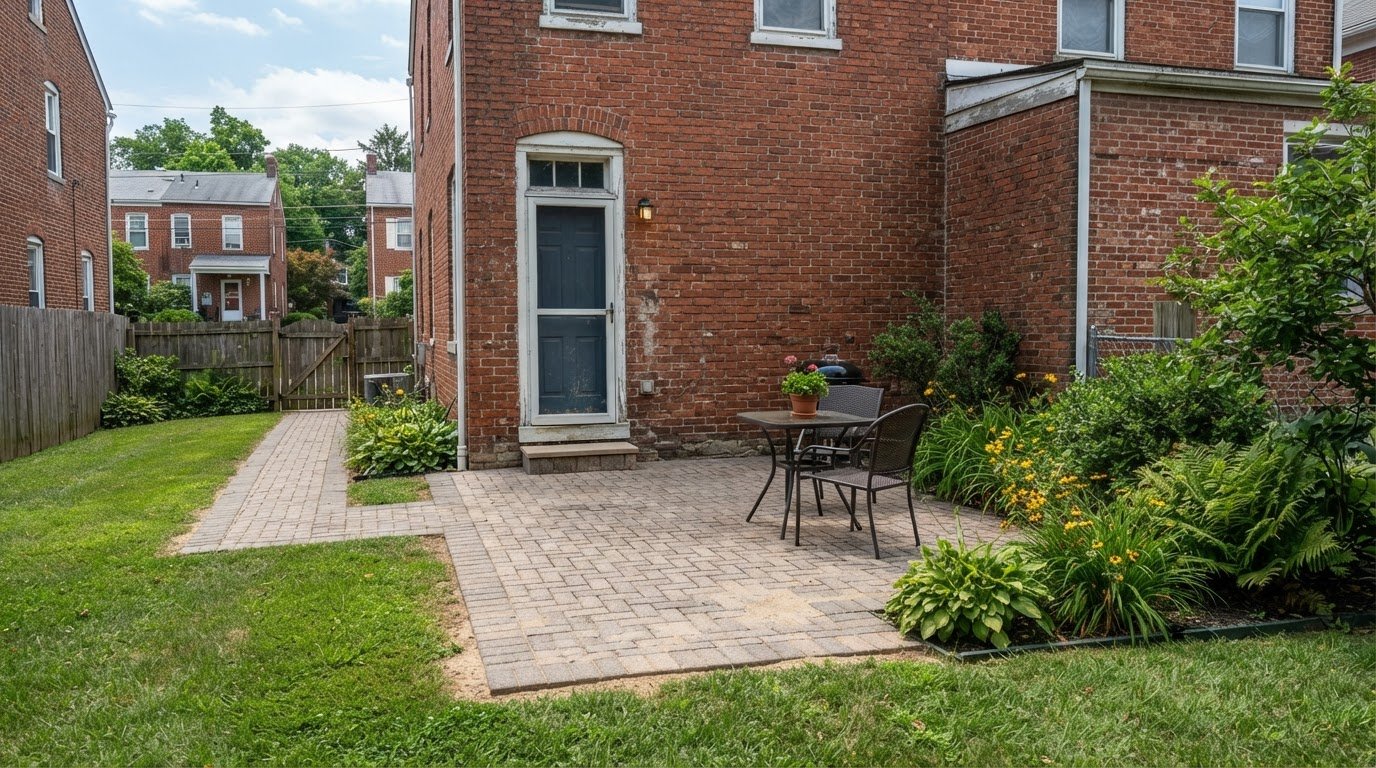
Patio repair conditions vary from one Lancaster County property to another. A patio in Lancaster, Lititz, or Ephrata may have settled pavers, cracked concrete, loose joints, or water collecting at its edge. The visible damage is only part of the assessment. Repair planning also considers the patio base, nearby slopes, downspouts, and the route water takes across the yard.
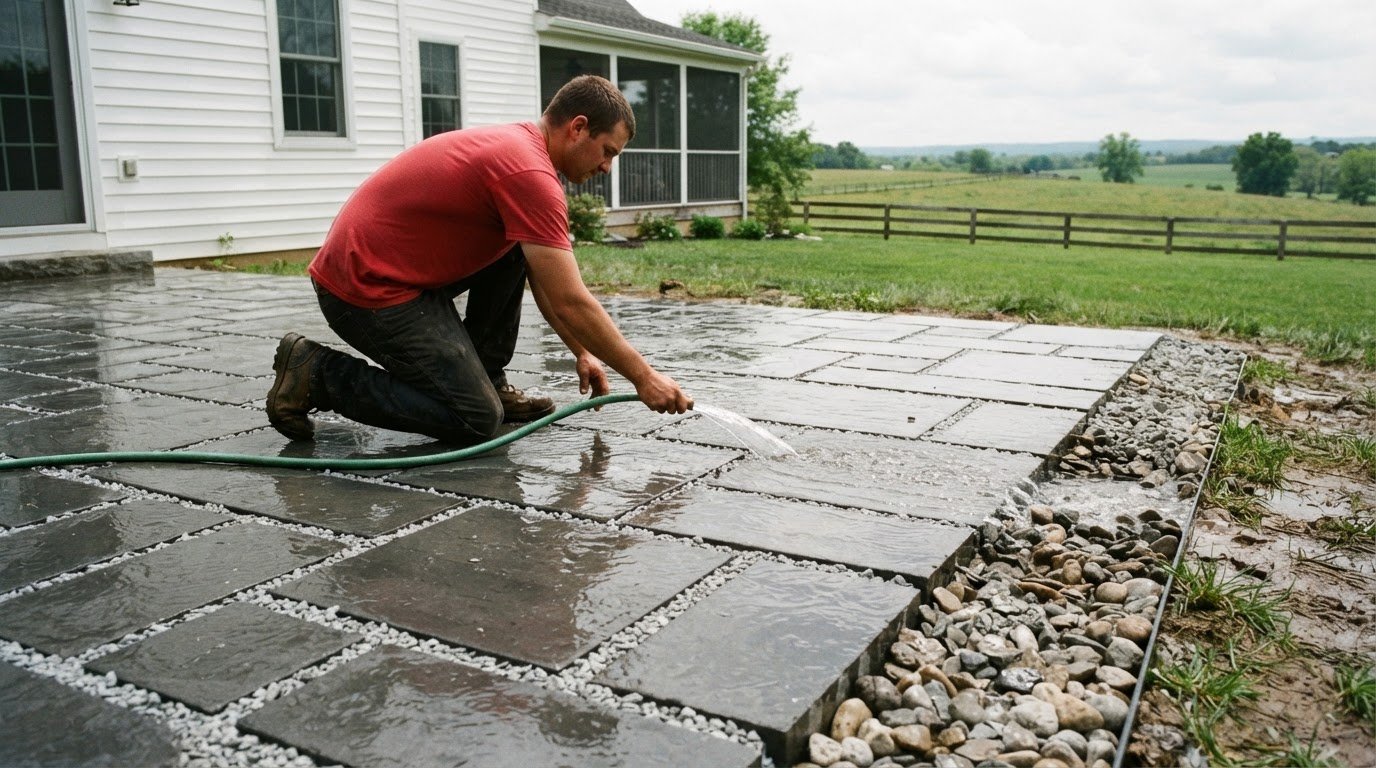
Soil and drainage affect how well a repaired surface stays level. Runoff flowing toward a patio can wash material from beneath pavers or leave water against concrete. A low spot beside a walkway may also indicate that water lacks a clear path away. Identifying these conditions before resetting stones or patching a surface helps avoid leaving the underlying drainage issue unresolved.
For example, a sunken section beside a downspout calls for more than lifting and replacing pavers. The base and water flow need attention together. A cracked concrete walkway may need a different assessment, especially if the crack follows a slope or sits near a poorly drained area. Commercial and HOA maintenance services can also matter for shared outdoor spaces, where walkways and patios serve multiple residents.
Are patio repair contractors in Pennsylvania required to be licensed or insured? Requirements depend on the type of work and applicable local rules, so there isn’t one answer for every patio repair. Licensing and insurance are separate matters; the project scope should make clear who performs the work and what coverage applies.
Do I need a permit for patio repairs in Lancaster, PA? Permit needs can depend on the work’s scope, including changes to grading, drainage, or retaining structures. Lancaster County includes separate municipalities, so applicable review may depend on the property’s location and the proposed work.
What warranties do Lancaster, PA patio repair companies offer? Warranty terms vary by company and repair scope. Written terms should identify the covered work, duration, exclusions, and process for raising a concern.
Local experience shows in the assessment, not just the finished surface. A careful process records where movement occurs, checks nearby drainage, and matches the repair to the material. Resetting a few loose pavers, for example, differs from addressing a broad settled area. Concrete repairs also require attention to the surrounding section. These distinctions help define a practical scope instead of treating every crack or dip alike.
Across Lancaster County, start by identifying the affected surface and noting nearby water sources, such as roof runoff or a sloped lawn. These details help explain site conditions and shape the repair plan. The right repair addresses both the damaged patio or walkway and the conditions contributing to the problem.
Project duration and weather requirements
Repair timing depends on the work sequence, surface size, and weather window. A straightforward cleaning and sealing project on a standard 400-square-foot patio is typically completed in one day. A larger restoration involving sunken sections, re-sanding, and sealing typically takes 2 to 3 days. These are planning ranges, not a substitute for assessing the surface and the tasks involved.
Each stage has its own conditions. Cleaning must prepare the surface for the next step, while joint work and sealing need suitable conditions to cure. For polymeric sand, plan for 24 hours without rain after installation. A forecast that changes during that period can affect when the work begins, so scheduling should account for both the work and its curing window.
Lancaster’s seasonal weather matters for concrete work. Freeze-thaw cycles and changing conditions can affect outdoor repairs, making the timing and surface condition important. A cracked concrete walkway, for example, may need a different plan from pavers that only need joint restoration. Good craftsmanship means choosing a sequence that allows each repair stage to be completed properly, rather than rushing through changing conditions.
A useful assessment starts by defining the actual scope. It should distinguish cleaning from re-sanding, sealing, resetting, or broader restoration, while accounting for access, patio layout, and nearby features that affect the work area. A compact patio with clear access may require a simpler sequence than a larger property with connected outdoor surfaces. A clear scope helps set realistic timing and reduce surprises once work begins.
Weather can change the schedule even after a start date is discussed. Rain may interrupt preparation or interfere with curing; seasonal shifts can also narrow suitable windows for certain tasks. A sound schedule identifies stages that depend on dry conditions and allows the sequence to adjust when the forecast changes. This protects the finished work and clarifies when the patio can return to regular use.
Financing and project timing are separate planning questions. If payment arrangements affect your decision, account for them independently from the repair schedule; don’t assume the work estimate includes financing. Prioritize the repairs by condition and intended use, then set the project scope around those needs. For a tailored discussion of your patio’s work plan, share your project details.
Walkway paver installation and repair
Uneven residential walkways can often be repaired without replacing every paver. A professional assessment looks at the location of sunken stones, cracked units, loose joints, and movement across the path. If the underlying base remains suitable, the affected area can be lifted, reset, and finished to match the surrounding surface. Widespread movement or failing support may call for more extensive reconstruction.
Can a patio be repaired, or does it need replacement? A patio can be repaired when the underlying structure remains sound and the damage is limited. Replacement may make more sense when the base has widespread failure or the surface cannot be restored reliably.
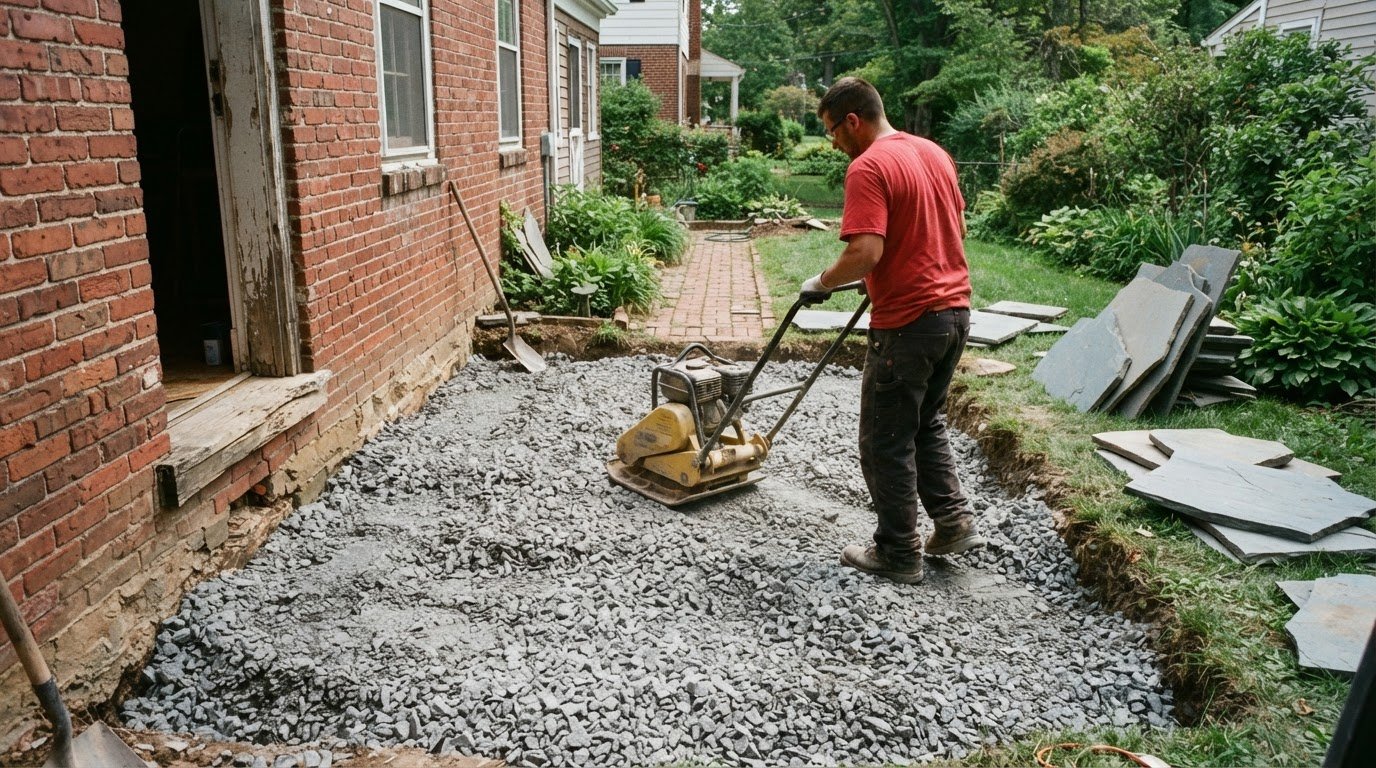
Professional installation begins below the visible pavers. The work typically includes removing affected stones, correcting the base, resetting pavers to a consistent level, and restoring the joints. On a walkway, the crew also considers edges and transitions to adjacent concrete or lawn. A low section near a gate, for example, needs to meet the adjoining surface cleanly and remain stable under foot traffic.
Polymeric sand fills joints and helps hold pavers in place. Installation requires clean, properly prepared joints, careful distribution of sand, and activation according to the product directions. Most polymeric sand products need 24 hours without rain after installation. Most residential paver restoration jobs take 1 to 3 days, depending on the surface and work involved. When installed using the required preparation and activation process, polymeric sand joints can stay locked for 5 to 8 years.
Maintenance also affects the timing of future work. Pennsylvania pavers generally need resealing every 3 to 5 years. Sun exposure and foot traffic influence how quickly a surface wears, so a walkway exposed to direct sun may need attention sooner than a shaded, lightly used path. The repair scope should distinguish joint maintenance from resetting settled pavers; re-sanding alone won’t correct a base that has shifted.
Pool installation is separate from patio or walkway paver repair. A paver path beside an existing pool may still need resetting or joint restoration, but that work addresses the hardscape, not the pool. Keeping the scopes distinct makes the work plan clearer. For new hardscape layouts, walkway installation can be planned around the route, transitions, and intended use.
Choose repair when damage is localized and surrounding pavers are stable. Consider broader restoration when several sections have settled, joints have deteriorated across the surface, or repeated patching hasn’t addressed the movement. This distinction helps match the installation method to the walkway’s actual condition.
Sealing and polymeric sand re-sanding
Sealing and re-sanding address different parts of a paver surface. Polymeric sand fills the joints between stones, while sealer protects the paver surface and can deepen its appearance. Neither step corrects a settled base. Before work begins, assess loose pavers, worn joints, staining, and drainage around the outdoor space.
For re-sanding, the crew first removes deteriorated joint material and debris. Clean joints leave room for new sand to settle between pavers. The sand is spread and worked into the gaps, then excess is removed from the stone faces before activation. If old sand remains packed near the top, new material may not fill the joint evenly. Careful preparation helps create a consistent finish across the repaired area.
Sealing follows a separate preparation process. The pavers need to be clean and dry before a sealer is applied. The crew considers the surface material, existing finish, and surrounding landscape features, such as planting beds or nearby concrete. Protecting those edges helps keep application controlled. A shaded walkway with light foot traffic can go 5 years between sealer coats, while direct sun can shorten that interval.
Exposure makes a practical difference in Lancaster. South-facing patios may need resealing closer to every 3 years because direct ultraviolet exposure wears the finish sooner. A shaded path with light use can often retain its sealer longer. These examples show why the same maintenance schedule doesn’t fit every property. Sun, foot traffic, surface condition, and water exposure all shape the timing.
Choose the work according to what has worn. If joints have emptied but pavers remain level, cleaning and re-sanding may address the immediate issue. If the surface also needs protection, sealing can follow preparation. If stones have shifted, reset those sections before finishing the joints. Sealer cannot resolve movement beneath a surface that still needs repair.
A patio beside a garden, for example, may collect soil and organic debris in its joints. The repair sequence should clear that material, prepare the gaps, and restore the joints before considering sealer. On an open, south-facing patio, the exposed pavers may need closer assessment. For a new layout, custom patio installation considers how the surface fits its outdoor setting.
Plan sealing around the pavers’ condition, not appearance alone. A clean surface can still have loose joints, and a glossy finish cannot stabilize a moving stone. Separating joint repair from surface protection clarifies the scope and keeps each step focused on its purpose.
Custom estimates and pricing
A useful patio estimate connects the requested work to the surface’s actual condition. Cleaning, re-sanding, sealing, resetting sunken pavers, and repairing concrete involve different tasks. A custom estimate should define which steps apply, which areas they cover, and what preparation is required. A few loose pavers, for example, call for a different scope than movement across an entire walkway.
Price depends on the project and is provided after a quote request. Key cost factors include the surface area, material, access, condition of the base, and amount of repair needed. A patio with stable pavers and worn joints has a different scope from one with settled sections that need lifting and resetting. Drainage concerns can also affect the work if water movement contributes to the damage.
For homeowners planning outdoor improvements, a clear estimate separates immediate repairs from optional work. It should identify whether the proposed scope includes cleaning, joint replacement, sealing, or resetting stones. If concrete is involved, the estimate should describe the affected area and repair approach. Specific descriptions help you understand what the work addresses instead of relying on a broad label such as “patio restoration.”
Compare the scope, not just the final figure. One estimate may cover joint work alone, while another includes resetting pavers and applying sealer. Those plans aren’t equivalent. Look for the areas covered, repair steps, material assumptions, and stated exclusions. A practical example is a walkway estimate that identifies the settled section separately from sound pavers left in place.
Project access can shape the plan, too. Narrow gates, steps, planted borders, and nearby structures may affect how crews reach the patio and handle materials. The surface layout matters as well: curved edges or transitions to concrete need attention beyond the open center. These details help explain why two patios with similar visible wear may have different scopes.
Before approving an estimate, make sure the described work matches your priority. If your main concern is tripping over a raised paver, confirm that resetting is included, not just cleaning or sealing. If water collects beside the patio, the proposed work should address relevant drainage conditions. A written scope gives homeowners a clear basis for understanding the work and its limits.
To discuss your patio or walkway conditions and request a tailored estimate, send your project details. Mention the affected surface, visible damage, and any access constraints, such as a narrow side gate. Those specifics help frame the estimate around the property and the work required.
Snappy Landscaping: Custom Patio Installation
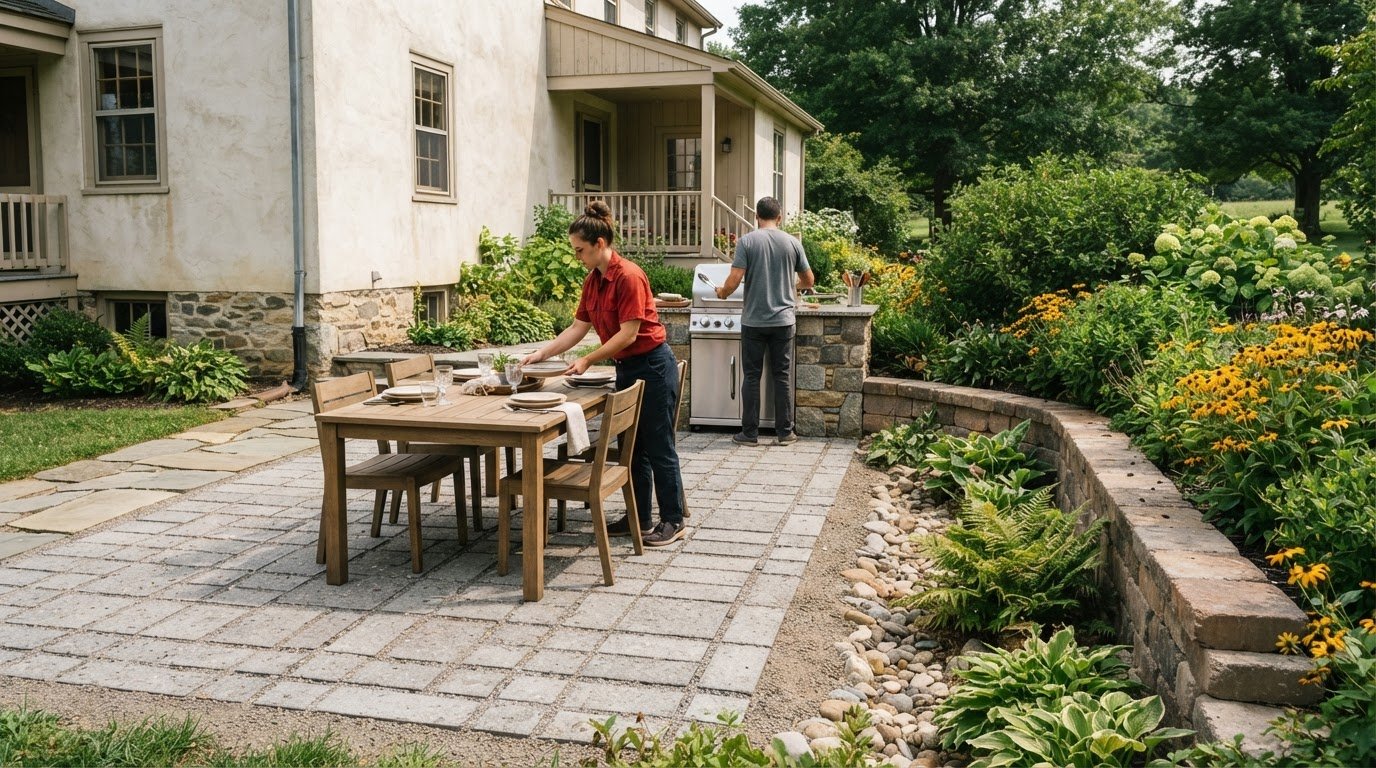
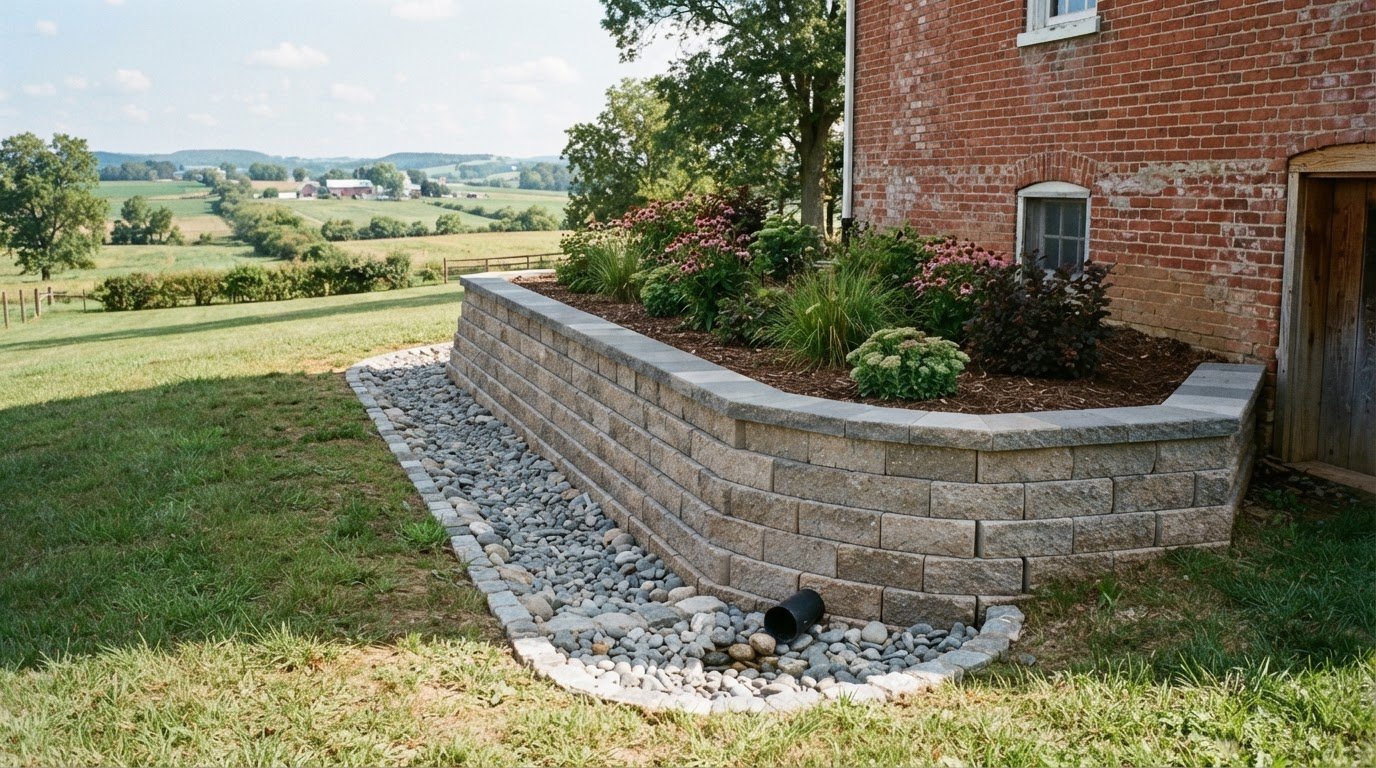
Snappy Landscaping helps Lancaster County property owners plan custom patios when repairs won’t meet their needs or a new layout makes more sense. A well-defined project considers how the patio will be used, how it connects to walkways, and how surrounding grades affect water flow. Retaining walls can also support a landscape plan where changes in elevation shape usable outdoor space.
For a localized issue, start by understanding the damaged area and whether restoration can address it. For a larger redesign or new patio, custom installation can shape the layout around your property. Landscaping services can connect the patio with the surrounding yard.
Contact Snappy Landscaping to discuss your patio project and the next practical step.
Choose the next step for your outdoor space
The useful next step is to define what you want the surface to do. If the existing patio can be restored, focus the project on the damaged areas and their causes. If the layout no longer fits your needs, a new design may be the better direction. Patio repair services in Lancaster, PA, can help frame that decision around the hardscape’s condition and your plans for the property.
Snappy Landscaping provides custom patio installation, retaining wall construction, and lawn mowing and maintenance. These services can support a broader outdoor plan, from shaping the patio layout to maintaining the surrounding grounds. Start with the main issue you want addressed, whether that’s uneven pavers, a worn surface, or a patio that no longer works for your household.
Share those priorities and the areas involved to begin a focused conversation about the project. Contact Snappy Landscaping to discuss your patio plans and take a clear next step toward a more functional outdoor space.
Frequently Asked Questions
What patio repair services are available in Lancaster, PA?
Patio repair services in Lancaster, PA, may involve paver resetting, joint re-sanding, sealing, or concrete walkway and pad work. Snappy Landscaping provides concrete pads and walkways, drainage solutions, landscaping services, and custom patio installation. A patio with settled stones, for example, needs a different scope from a surface that needs a new layout. Request a free estimate to understand the recommended work for your property.
Which patio repair contractors serve Lancaster County, PA?
Snappy Landscaping serves Lancaster County, including Lancaster, PA; Mountville, PA; Columbia, PA; Landisville, PA; Manheim, PA; Mount Joy, PA; Lititz, PA; Ephrata, PA; East Petersburg, PA; Millersrow, PA; Elizabethtown, PA; Leola, PA; New Holland, PA; Willow Street, PA; Strasburg, PA; Quarryville, PA; Denver, PA; Hempfield, PA; East Hempfield, PA; West Hempfield, PA. The company is licensed and insured, and its team is background-checked.
How much does patio repair cost in Lancaster, PA?
Patio repair pricing varies by project, and Snappy Landscaping provides a free estimate for every property. The scope, surface area, materials, access, and patio condition affect the recommended work. Cleaning and sealing involve different tasks from lifting settled stones or rebuilding a damaged section. A project estimate outlines a solution tailored to the property rather than applying one fixed rate to every patio.
What is the average cost to repair patio pavers in Lancaster, PA?
There isn’t one fixed average for paver repair because the work may involve joint restoration, resetting stones, or correcting a failed base. Snappy Landscaping provides free estimates, with pricing varying based on the property’s size, service frequency, and maintenance requirements. A short walkway section with loose joints differs from a broad area with uneven pavers. The estimate should describe the sections and repair steps included.
How much does concrete patio crack repair cost near Lancaster, PA?
Concrete crack repair pricing depends on the affected area and the work needed to address it. Snappy Landscaping provides a free estimate for each property instead of a single fixed rate. The assessment considers the crack’s location, surrounding surface condition, and whether the concrete pad or walkway needs a localized repair or broader work. Those details help define a practical project scope.
How do I choose a reputable patio repair contractor in Lancaster, PA?
Choose a contractor who explains the proposed work in a clear, written scope. Snappy Landscaping provides a recommended solution and estimate based on the property. Look for specific descriptions of affected areas, preparation, materials, and repair steps. For example, an estimate should distinguish resetting loose pavers from cleaning or sealing. Clear scope makes it easier to understand what the work addresses and how it fits your priorities.
How long does patio repair take, and what affects the timeline?
The timeline depends on repair scope, site access, and the conditions needed for each work stage. Resetting several pavers involves a different sequence from cleaning and sealing a surface. Rain can interrupt preparation or delay work requiring dry conditions. A narrow access route or obstacles around the patio can also affect material handling. The project plan should account for the work stages and weather before scheduling use of the area.
What causes patio pavers or concrete to settle or crack in Lancaster County?
Water movement, shifting support beneath the surface, and seasonal freeze-thaw cycles can contribute to settling or cracking. Runoff repeatedly crossing a paver edge, for example, can disturb joints or the supporting base. Concrete may crack as underlying support changes or seasonal conditions stress the surface. The location and pattern of damage help distinguish a localized surface issue from a broader problem involving drainage or support.