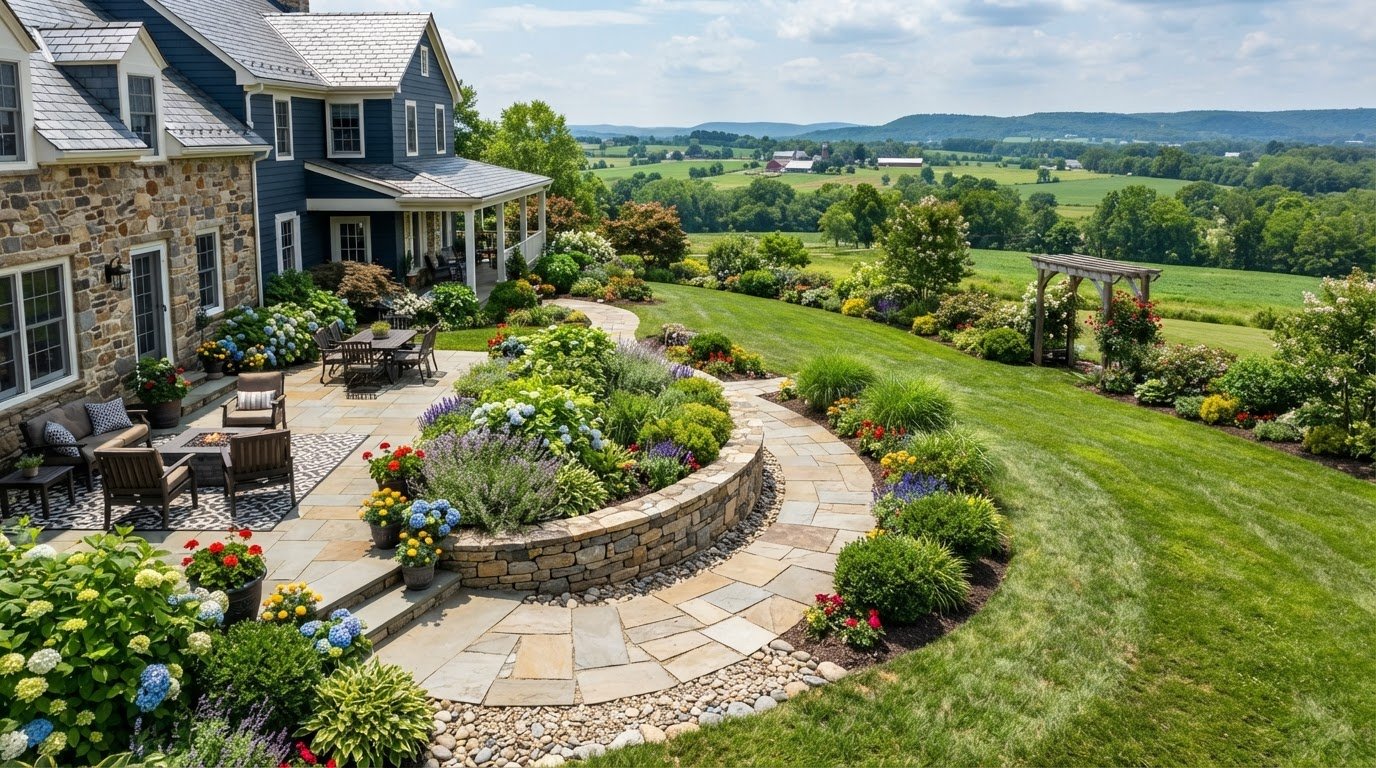

Could your township or HOA require runoff controls before you add a driveway or patio? Some townships and HOAs require stormwater management for new construction or hardscape additions above a certain size, but that doesn’t automatically make permeable pavers mandatory. Permeable paver installation in Lancaster, PA, can help manage runoff by allowing rainwater to pass through the joints into a stone base, where it can percolate into the soil.
It’s reasonable to want a clear answer before planning a hardscape project. The right approach depends on local requirements and site conditions, including soil, slope, drainage, and exposure to freeze-thaw cycles. This guide explains how permeable pavers reduce, but don’t eliminate, runoff, how the layered stone base is prepared, and how Lancaster County conditions affect durability. You’ll also learn when this system may suit a property and what to consider next.
Do permeable pavers actually stop water runoff?
No. Permeable pavers reduce runoff, but they don’t eliminate it. Pennsylvania’s Department of Environmental Protection considers permeable pavers a best management practice for controlling stormwater flows and reducing rainfall entering local waterways and combined sewer systems.
Rainwater and Runoff Management
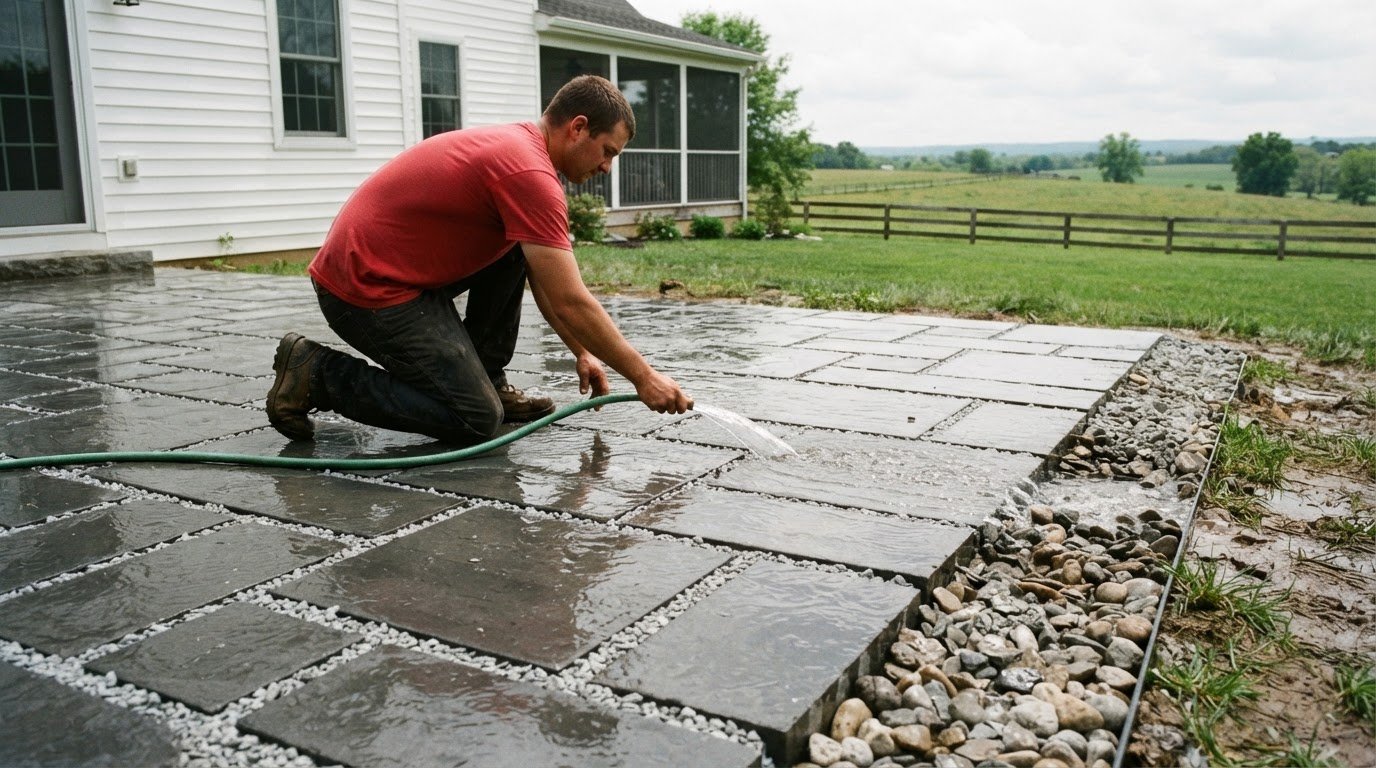
Rain passes through the joints between permeable pavers and enters a crushed-stone base. The stone temporarily stores water as it percolates into adjacent soil and recharges groundwater. For on-site stormwater management, the design accounts for the property’s soil, slope, drainage needs, and paved area. Those conditions shape the base and help determine where excess water can flow.
A local example shows the system’s potential: a one-inch rainfall on a permeable driveway in Elizabethtown collects 2,600 gallons of water. That figure describes one driveway, not a guaranteed result for every paving project. A custom layout should account for runoff from the paved area and surrounding surfaces. Permeable pavers manage rainwater at its source, rather than sending all of it directly across the surface.
Stormwater management requirements can also affect project planning. Some townships and HOAs require stormwater management for new construction or hardscape additions above a certain size. Don’t assume permeable pavement is mandatory or that it automatically satisfies local requirements. Lancaster City or County doesn’t have a universal permeable-pavement credit or rebate established here; potential incentives depend on the applicable program and eligibility.
After rain, water should not collect on a driveway surface for longer than 15 minutes. The benchmark helps distinguish brief surface flow from persistent ponding. A contractor assessing paving can consider the slope, soil, drainage path, and base design together. If the site cannot absorb water quickly, the system’s layout needs to account for that limitation.
Maintenance is practical: remove leaves and visible debris before they accumulate in the joints, and clean the surface when debris begins restricting water flow. Check the pavement after heavy leaf fall or a storm for blocked joints and standing water. No single cleaning interval suits every property; nearby trees, sediment, and site use affect how often cleaning is needed.
Clogging and Settling Risks
Fine sediment, leaves, and sand can clog permeable joints, slowing infiltration and leaving more water on the surface. Avoid adding sand for traction because it can block the openings. Settling can create uneven pavers or low spots when the underlying support is inconsistent. Watch for recurring ponding, displaced pavers, and joints that no longer drain freely.
Permeable paver installation in Lancaster, PA takes 10 to 14 days because the base engineering is more involved. That timeframe covers the installation process, not a promise for every project. Site access, excavation, soil, slope, drainage needs, and the base design all shape the work. A well-planned system manages runoff, while routine debris removal helps keep its joints open.
Layered open-graded stone base design
A permeable pavement’s performance depends on the stone base beneath it. In Central Pennsylvania, base depth and stone sizing should reflect the site’s soil, slope, drainage needs, and intended use.
For vehicle traffic, a recommended total base depth is 12 to 16 inches. The material is open-graded stone in several sizes, not a densely compacted mix of stone and sand. The exact design depends on the property: a driveway carrying regular vehicles has different demands from a walkway used only by pedestrians.
Build the base in layers. Finer bedding stone sits near the pavers, coarser base stone supports the middle, and larger storage stone fills the bottom. This arrangement creates openings for water to move through and temporary storage below the surface. Each layer has a distinct purpose, so changing stone sizes or layer depths affects system performance.
Homeowners planning outdoor living areas should consider how the permeable surface connects with patios, planting beds, doors, and existing grades. A 3D design can help visualize those relationships before construction, including how a walkway approaches a patio or turns around a garden. It supports layout decisions, but the base still needs to be designed for actual soil and drainage conditions.
Walkway options include a direct route between destinations, a curved path around landscape features, or a connection between a patio and another outdoor area. Choose a layout that suits how people use the property, then coordinate its edges and transitions with adjacent surfaces. Walkway installation details can help frame these design choices alongside drainage goals.
Plan for loading, too. In one Lancaster-area project, homeowners wanted a permeable driveway to support heavy delivery trucks. That requirement makes intended vehicle use a central design input, not a finishing detail. The base must account for both water storage and the loads expected at the surface.
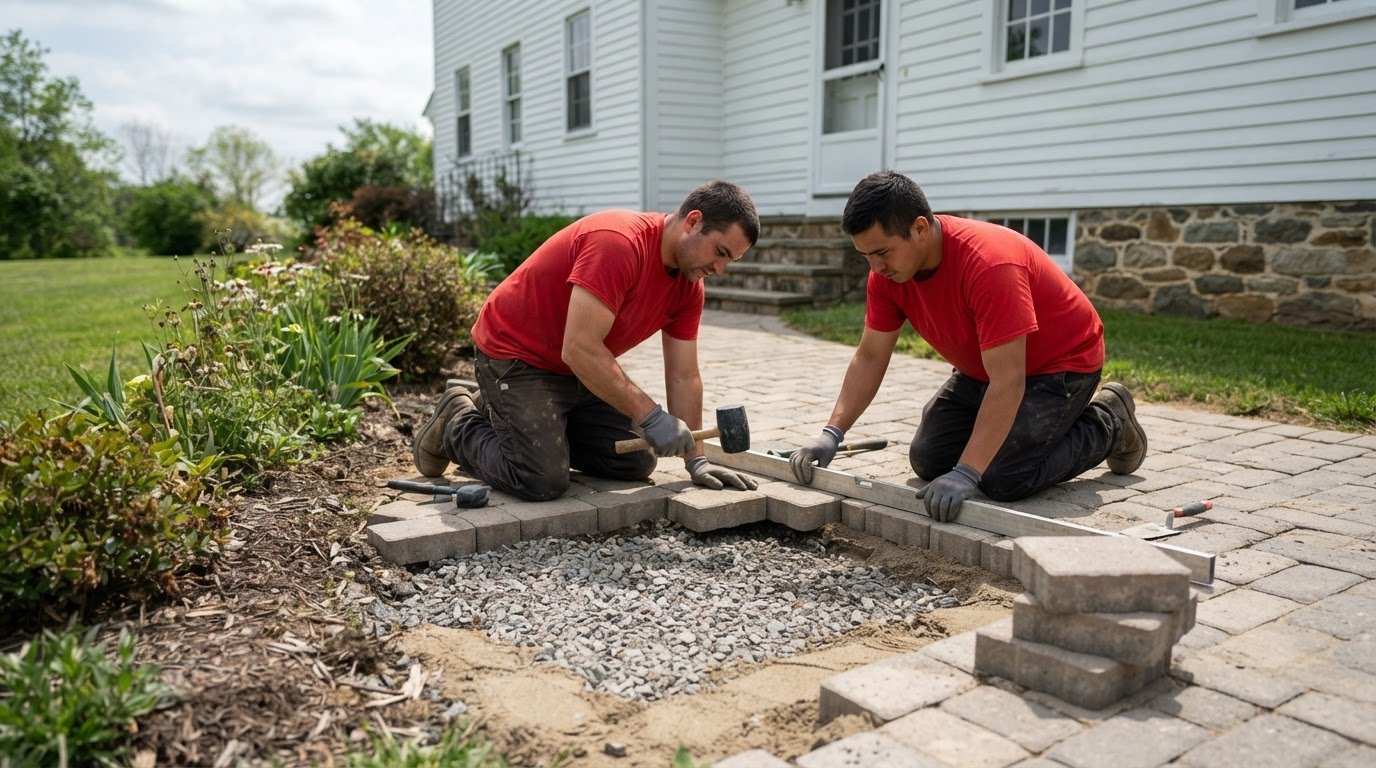
A sound installation starts with a site assessment, followed by excavation and preparation for the designed stone profile. The specified layers are placed and compacted in sequence, maintaining planned grades and transitions. Before setting pavers, confirm the base matches the design; uneven support can contribute to later settlement.
To shape a layout around a specific property, share the project details and intended use. Soil, slope, drainage, and vehicle loads give the design its starting point.
This site-specific approach ties the base profile to the conditions it must accommodate, rather than applying the same depth and stone sizing to every driveway.
Lancaster County soil and freeze-thaw conditions
In Central Pennsylvania, winter frost can drive 36 inches deep. That depth matters because water held in soil or pavement layers can freeze, expand, and shift nearby materials. Permeable pavers help manage surface water by draining it through their joints and base instead of letting it pool and freeze at the surface. They can resist freeze-thaw damage, but the whole assembly still needs a site-specific design.
Start with the soil. Its ability to absorb water affects how quickly rain can move away from the stone base. Slowly draining soil can keep the lower layers wet longer, while better-draining soil allows more infiltration. Lancaster County properties vary, so assess the actual site rather than assuming one soil profile fits every garden, driveway, or patio.
Next, assess grade and drainage paths. A low area beside a house, a sloping yard, and a level garden edge each present different water-management challenges. The design should account for where water enters, how it moves through the pavement, and what happens when the soil cannot absorb it quickly enough. This helps prevent water from collecting at edges or flowing toward structures.
Freeze-thaw performance also depends on installation quality. The paver surface, joints, and stone layers must work together as a drainage system. If water becomes trapped beneath the surface, freezing can contribute to movement or uneven areas. Permeable design gives water a route through the pavement, but it cannot correct poor grading or an unsuitable base on its own.
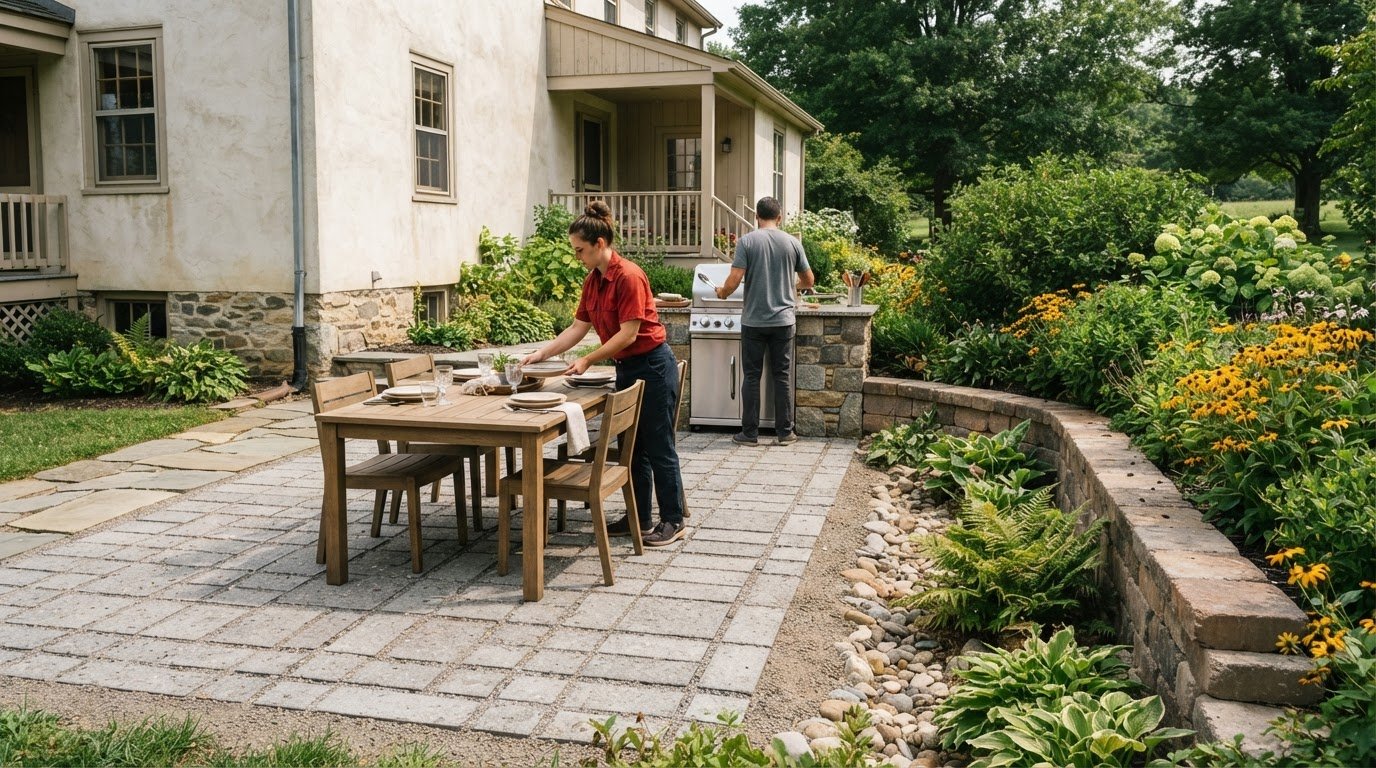
For hardscaping beside a garden, coordinate the pavers with planting beds and surrounding grades. Soil or mulch washing onto the surface can introduce fine material into the joints. A defined edge and a clear transition between paving and garden textures help limit that movement. The installation plan should also preserve the intended water path rather than direct it into a low point.
Before construction, review soil conditions, slope, nearby drainage, and how the space will be used. The base design can then reflect those findings rather than rely on a standard detail alone. This matters especially where a driveway meets a walkway or patio, since each transition can change surface elevation and water flow.
For Lancaster County hardscaping, the practical goal is a stable surface with a drainage route suited to the property. Frost reaching 36 inches deep is a regional consideration, not an automatic instruction to excavate that exact depth. Soil, slope, water movement, and the planned use together guide the design.
Open-graded stone base preparation
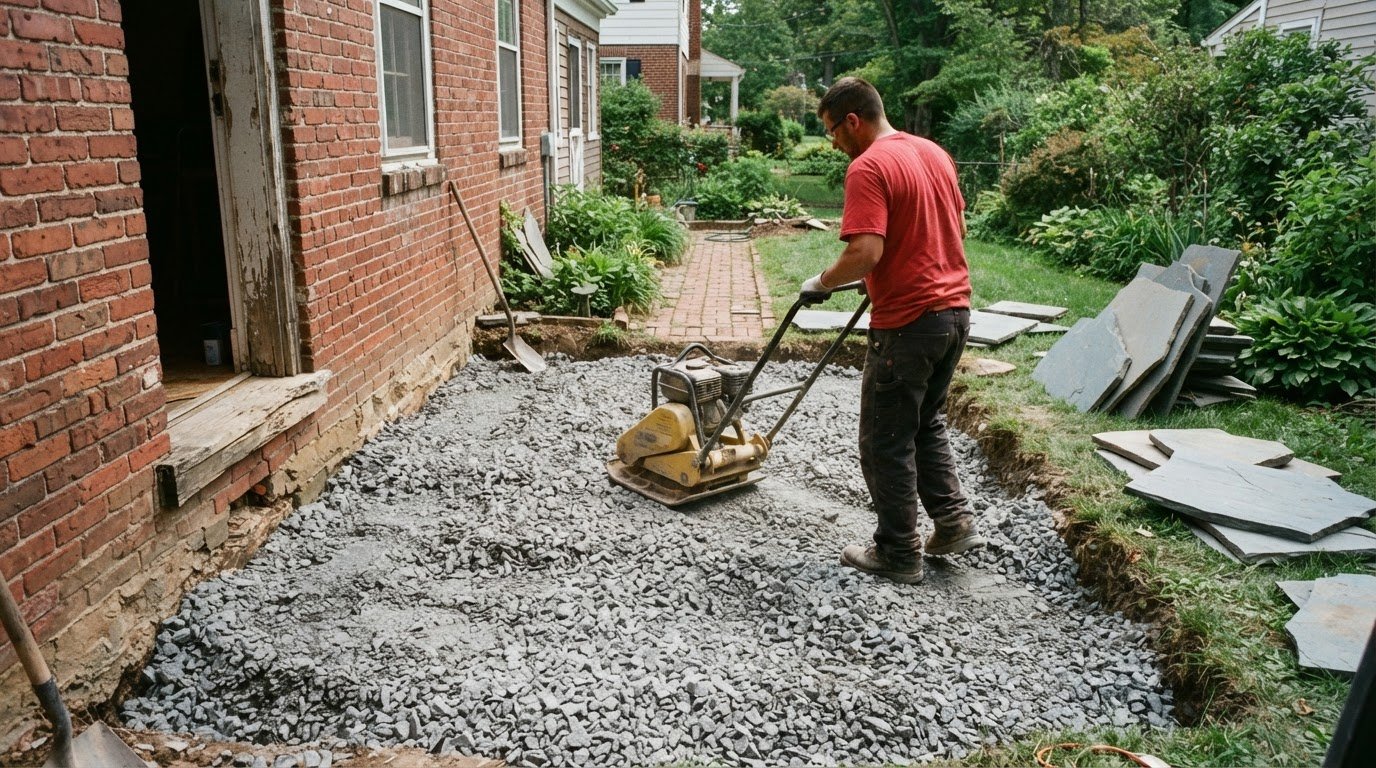
Base preparation controls support and water movement beneath permeable driveways and patios. In Central Pennsylvania, a driveway base is recommended to include 8 to 10 inches of compacted aggregate. The full design must still reflect soil, slope, drainage needs, and vehicle use. Open-graded stone allows water to move through connected spaces, unlike densely compacted stone and sand.
Installation follows a sequence. Each step prepares the next layer and protects the planned finish.
- Excavate the area. Remove soil to the depth required by the site-specific design. Set the excavation to accommodate the pavers, bedding material, and designed stone base.
- Prepare the subgrade. Shape it to the planned slope and remove soft or uneven areas that could compromise support. A driveway should have a minimum slope of 2%, equal to a 2-foot rise over 100 feet.
- Place open-graded aggregate. Install the specified stone in layers and compact each layer as designed. Keep the stone profile consistent across the surface.
- Add the bedding layer. Place finer stone above the coarser base, creating an even setting surface for the pavers.
- Set and finish the pavers. Install pavers to the planned pattern, then complete the joints and final compaction according to the system design.
The 8 to 10 inches of compacted aggregate is a preparation recommendation, not a universal total excavation depth. Base depth and stone sizing depend on site conditions. A driveway carrying vehicles also requires a design suited to its loads. A patio or walkway may have different demands, so the layout and base should match the intended use.
Check transitions before setting pavers. At a driveway entrance, the surface must meet the street without an abrupt lip or disruption to the planned drainage path. Patio edges and walkway connections also need consistent elevations. These details affect access, water movement, and the finished appearance.
For a custom patio or walkway, the surface pattern is only one design choice. The base profile, slope, and connection to nearby paving shape how the completed space functions. Coordinate these decisions rather than treating the pavers as a final cosmetic layer.
Before construction begins, the installer should establish the excavation limits, planned grades, stone layers, and paver layout. That sequence makes it easier to catch uneven support before the surface is installed. To discuss a driveway or patio layout, share your project details.
Permeable concrete pavers
Permeable pavers manage drainage by letting rain pass through joints into a stone base; asphalt and poured concrete don’t provide that same route. Installation costs depend on the site and design, including the more involved base engineering required for a permeable system.
Permeable Concrete Paver Features
Permeable concrete pavers create a load-bearing surface with openings that let water pass through. The pavers work as part of a system: joints, bedding, and the underlying stone base all contribute to drainage. Consider the planned use, surrounding grades, and connections to nearby landscaping before choosing a layout.
Permeable pavement can suit driveways, patios, and walkways when the design and base preparation fit the property. Molded plastic spacers can also adapt concrete pavers for permeable pavement. This option lets the surface design respond to the space while maintaining openings for water movement.
Compare drainage by considering where rain goes after it reaches the surface. Permeable pavers direct water through their joints into the base, where it can percolate into adjacent soil. Asphalt and poured concrete generally shed water across the surface instead. Standard pavers can also be adapted for permeability with suitable spacers and a designed base.
Cost and Drainage Comparisons
There’s no reliable cost comparison without matching project scopes and site conditions. Permeable systems need more involved base engineering, while material choices, excavation, soil, slope, and drainage needs also affect installation. Compare designs by what they include, not by surface material alone.
Drainage performance also differs by construction. A conventional concrete or asphalt surface directs rainfall toward its edges or a drainage route. A permeable system lets water enter through the pavement, reducing runoff but not eliminating it. Standard pavers provide that pathway only when their joints and base are designed for permeability.
For a concrete or permeable-paver project, first decide how the surface will be used and where runoff should go. The design should account for adjacent landscaping, property grades, and the paved area. A driveway needs a system suited to vehicle traffic, while a patio layout should coordinate with nearby doors and garden edges.
Permeable pavers generally shouldn’t be sealed because standard sealers reduce surface porosity. Keep the joints open and the drainage path functional instead. For a site-specific comparison of paving and drainage options, discuss your project requirements.
Snappy Landscaping
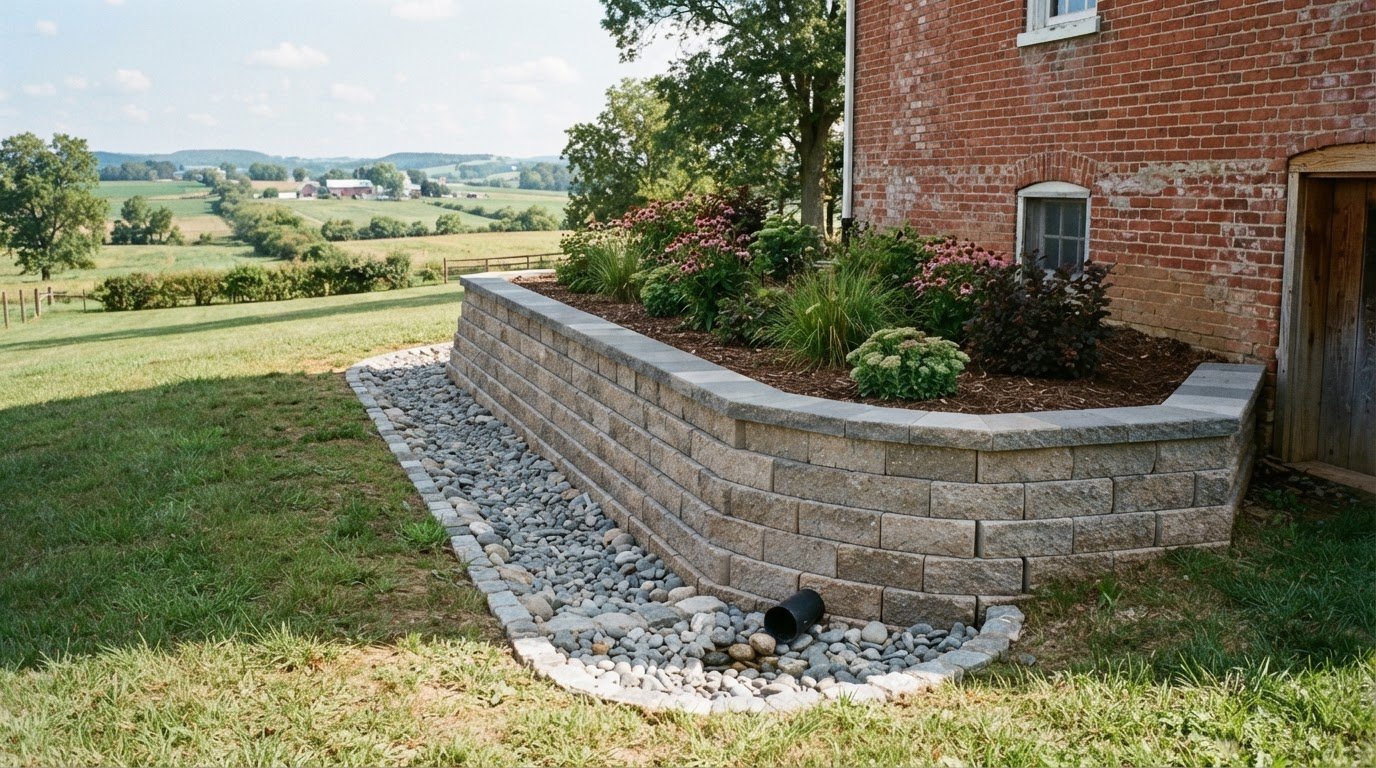
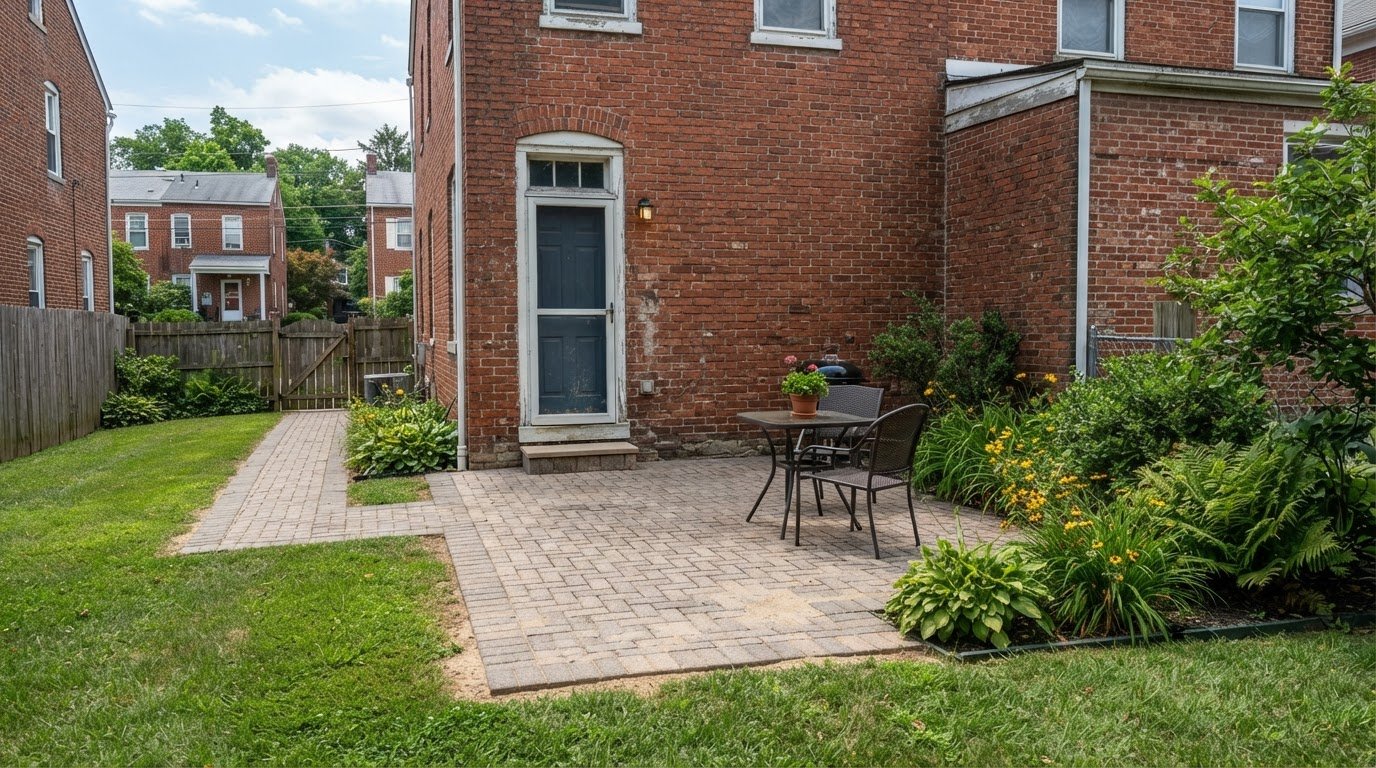
Snappy Landscaping helps Lancaster County property owners plan hardscaping around runoff, site grades, and intended use. Turn to the team when weighing permeable paving or when drainage needs to be considered alongside a patio, retaining wall, or surrounding landscape. The right layout depends on how water moves across your property and how you’ll use the finished space. Snappy Landscaping provides drainage solutions and custom patio installation to bring these considerations together in a practical plan. Share your goals, site concerns, and the area you want to improve to discuss next steps.
Contact Snappy Landscaping about your project.
Plan a surface that fits your property
Choose your next step by considering how you use the space, which runoff concerns you want to address, and how the paved area connects with the rest of your property. Permeable paver installation in Lancaster, PA, is one part of a broader site plan, especially when patios, retaining walls, and surrounding grades affect water movement.
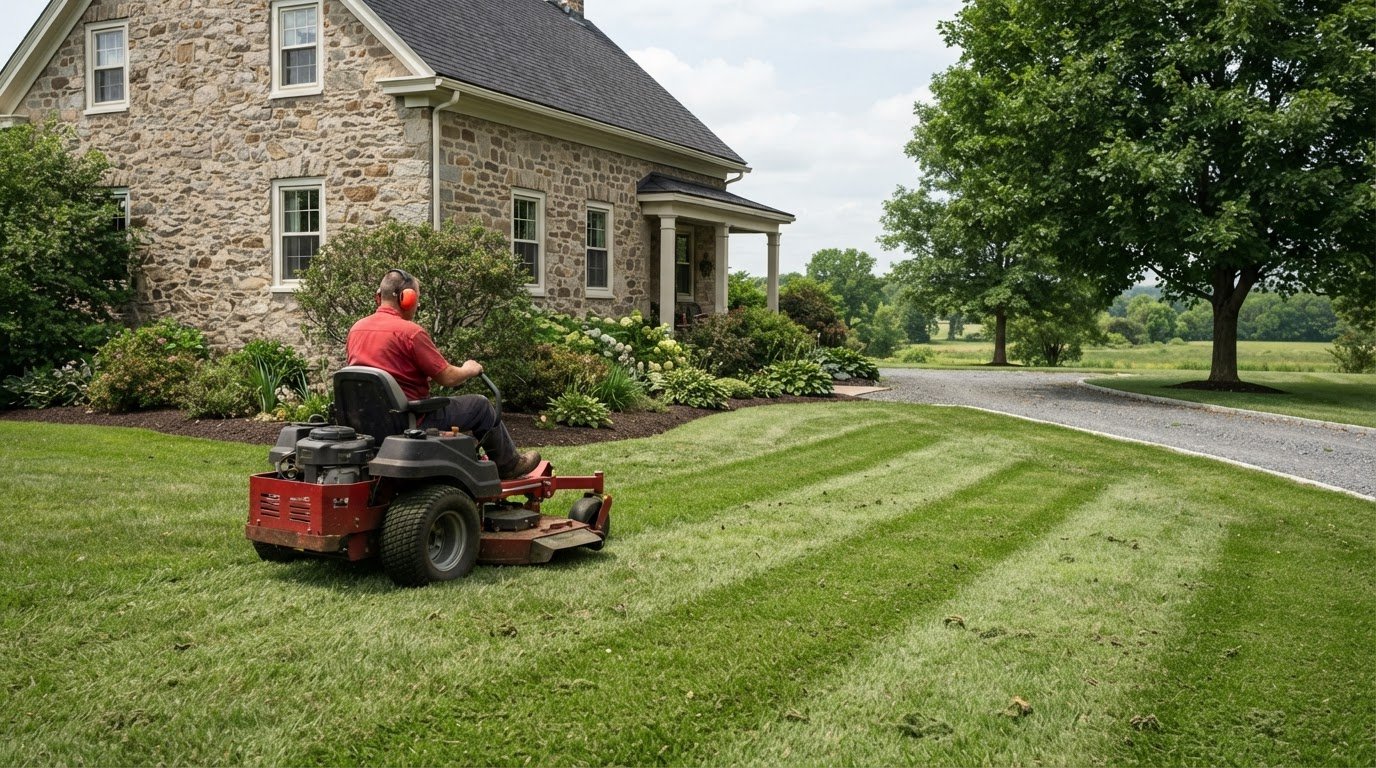
Snappy Landscaping also provides Custom Patio Installation, Retaining Wall Construction, and Lawn Mowing & Maintenance. Bringing those needs into the conversation can help shape a coordinated approach to your outdoor space instead of treating paving as an isolated project.
Share what you want to improve and where water creates challenges. Contact Snappy Landscaping to discuss your project and take a practical next step toward a more functional property.
Frequently Asked Questions
Are permeable pavers required by my township or HOA?
Not automatically. Some townships and HOAs require stormwater management for new construction or hardscape additions above a certain size, but that doesn’t mean they specifically require permeable pavers. Requirements depend on the property and applicable local rules. Before choosing a surface, identify whether the project involves new construction or an addition, and include stormwater management in the planning discussion.
Can permeable pavers handle Central PA winters and snow plowing?
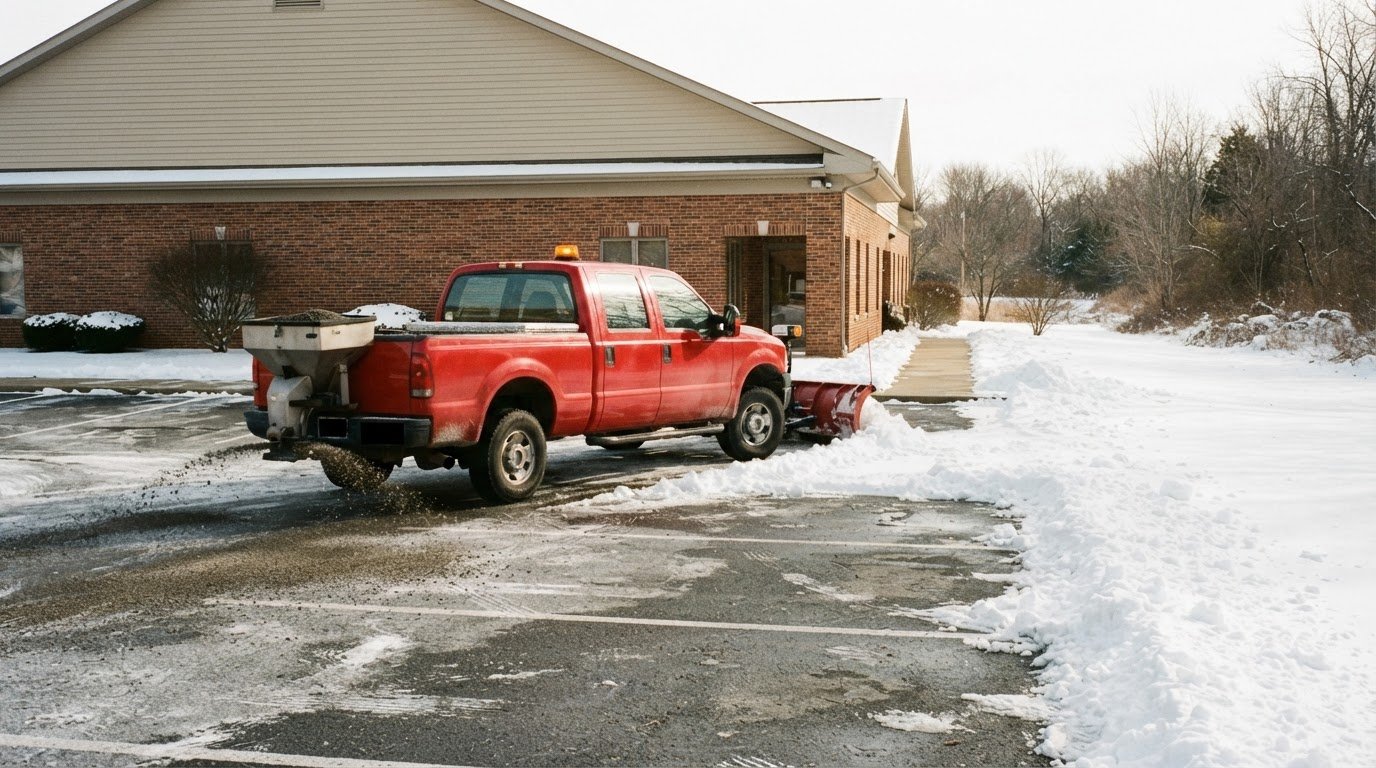
Permeable pavers can resist freeze-thaw damage because water drains through the joints and base instead of pooling and freezing at the surface. Snow plowing adds a separate consideration: equipment and plowing methods must suit the paver surface and project design. A driveway plan should account for winter use, vehicle loads, and snow removal without assuming every system has the same specifications.
How much does a permeable driveway cost in Central PA?
There isn’t one fixed cost for a permeable driveway in Central Pennsylvania. The estimate depends on the property’s size, soil, slope, drainage needs, excavation, paver selection, and engineered base. These factors affect the preparation and materials involved. For a useful estimate, define the driveway area and intended vehicle use so the design and scope reflect the actual site.
Need a pro for your pavers and hardscaping service project in Lancaster, PA?
Snappy Landscaping is a local hardscaping and drainage resource for Lancaster County. Services include custom patio installation, retaining wall construction, and drainage solutions. Bring the project’s purpose, site conditions, and runoff concerns into the initial discussion. That gives the team a practical basis for considering how the paved area connects with the property. Contact Snappy Landscaping to discuss a hardscaping project in Lancaster, Columbia, or Mountville.
What does permeable paver installation cost in Lancaster PA per square foot?
A single per-square-foot figure won’t reflect every Lancaster property or project scope. Cost depends on the paved area, excavation, soil and slope, drainage requirements, paver choice, and designed base. Snappy Landscaping provides a free estimate, with pricing varying based on property size, service frequency, and maintenance requirements. Share the site details and planned use so the estimate can address your project’s specific scope.
Which Lancaster PA contractors install permeable pavers?
Snappy Landscaping serves residential and commercial customers in Lancaster County and provides hardscaping and drainage services for paved outdoor projects. Service areas are: Lancaster, PA; Mountville, PA; Columbia, PA; Landisville, PA; Manheim, PA; Mount Joy, PA; Lititz, PA; Ephrata, PA; East Petersburg, PA; Millersrow, PA; Elizabethtown, PA; Leola, PA; New Holland, PA; Willow Street, PA; Strasburg, PA; Quarryville, PA; Denver, PA; Hempfield, PA; East Hempfield, PA; West Hempfield, PA.
What permits are required for permeable paver installation in Lancaster County?
Permit requirements depend on the municipality and project scope. Stormwater management requirements may also apply to some new construction or hardscape additions above a certain size, including projects reviewed by a township or HOA. Relevant details include the property’s location, how much paving the project adds, and how runoff will be managed. Include these details in the local review before construction begins.
How does Lancaster PA soil type and freeze-thaw climate affect permeable paver installation?
Soil drainage, slope, and groundwater movement influence the stone base design. In Central Pennsylvania, winter frost can reach deep into the ground, so the installation must manage water movement as well as support the surface. On a Lancaster property with slower-draining soil, the design needs to account for how water moves through and around the base, rather than assuming it will quickly soak away.