
A useful backyard path starts where you actually arrive, not simply where it looks convenient on a plan. A walkway connecting a driveway to a backyard in Columbia, PA, creates a clear route from the car or side door to a patio, lawn, or garden while helping protect frequently crossed grass from wear.
That connection needs to work for your property and everyday routines. The route, material, slope, and drainage all affect how the walkway fits into the yard and what installation involves. A straight path may suit one layout; another may need to follow the house or manage a change in grade.
This guide explains how to plan the connection, compare walkway materials, and understand the installation process. You’ll also learn what shapes an estimate and how site conditions, design choices, and material planning affect the project.
Connecting a driveway or side door to the backyard
A walkway can link the driveway or side door to a back patio, lawn, or garden. Trace the route people already use, then plan a solid surface to limit worn grass and keep everyday foot traffic off muddy ground.
Permit and Local Rule Checks
For a private walkway in Columbia Borough, permit requirements depend on the project’s scope and location. Work contained within the property raises different questions from work that reaches a public area or changes how water moves across the site.
Before excavation, identify property boundaries, nearby structures, and where runoff flows during rain. Plan the surface so water does not collect beside the house or flow onto a neighboring property. If the design changes grading or drainage, treat that as a key local-rule question.
Accessibility and Safe Dimensions
Pennsylvania accessibility requirements depend on a property’s use and the standards that apply, so do not assume one rule covers every private residential path. For everyday access, choose a clear width that suits the people using it, including anyone who needs room for a mobility aid or assistance from another person.
Keep the walking surface stable and the route as direct and even as the yard allows. A gentle grade is easier to navigate than a steep shortcut. Where the yard changes levels, stairs can connect the walkway to the next area.
Residential Walkway Contractors
A walkway project in Columbia, Pennsylvania, involves planning the route, preparing the ground, and installing the selected surface. Define the full scope, from the driveway or side door to the backyard destination, including any slope or drainage concerns along the way.
For example, a path from a side entrance to a patio may need a different layout from a route that crosses the yard from the driveway. Walkway installation can connect these outdoor areas with a planned, usable route.
There is no single recommended width or slope for every yard. Set dimensions according to daily use, available space, and grade. Keep the path broad enough for its intended traffic and avoid abrupt changes in level where possible.
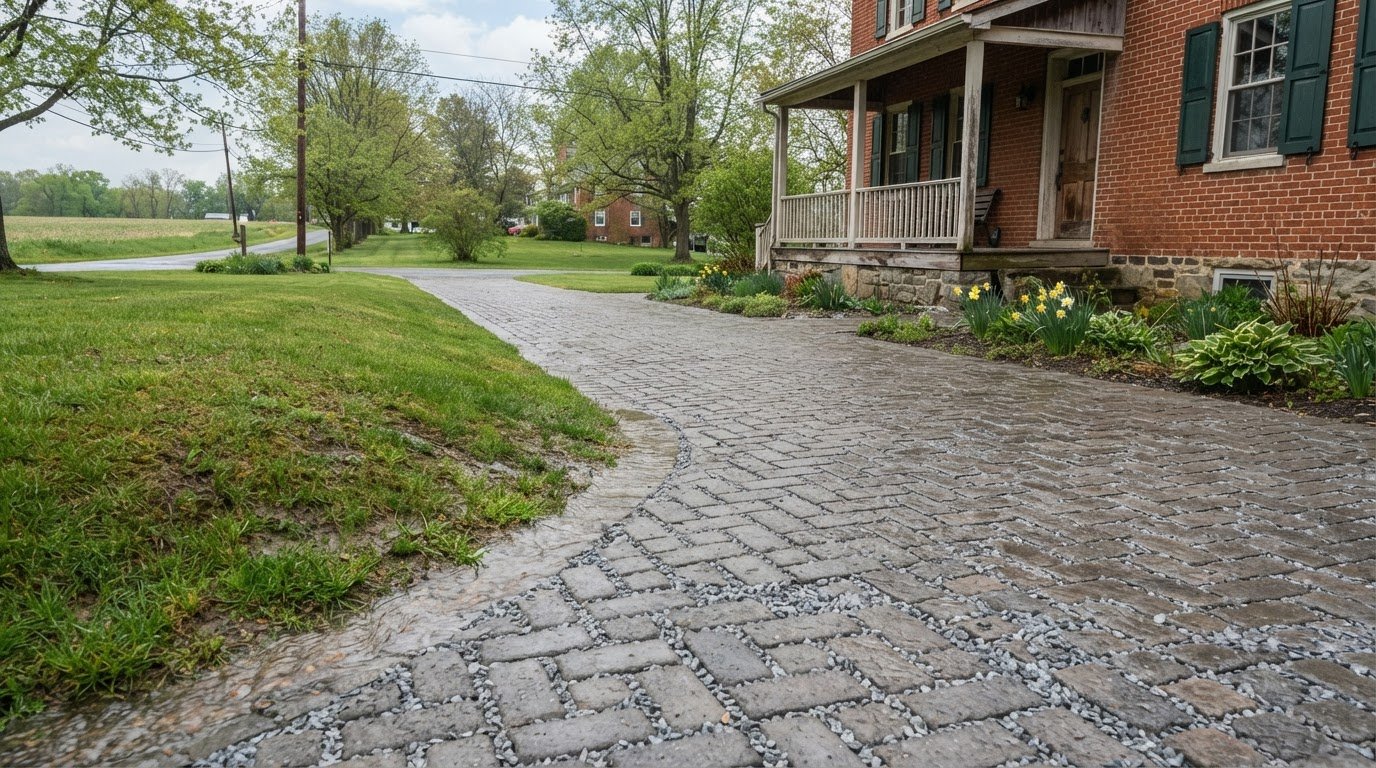
These choices also shape the material and installation plan. Concrete pavers provide a solid surface in varied shapes and colors, while a stone path can suit a more natural garden setting. A front-door route and a backyard connection can have different layouts, but both should lead clearly to their destination.
Installation process and timelines
A driveway-to-backyard walkway follows a clear sequence: layout, ground preparation, surface installation, and cleanup. Each step affects the next. A route that bends around a house or crosses a slope may need different preparation from a straight path over level ground.
Planning starts by marking the route between its endpoints. Account for the driveway edge, side-door threshold, patio entrance, and obstacles such as planting beds. Settle the walkway’s shape and material at this stage, since both affect excavation and material coordination.
- Set the route. Mark the planned path and its connections, such as the driveway apron and patio edge. Check that the route leads naturally to each entrance rather than stopping short.
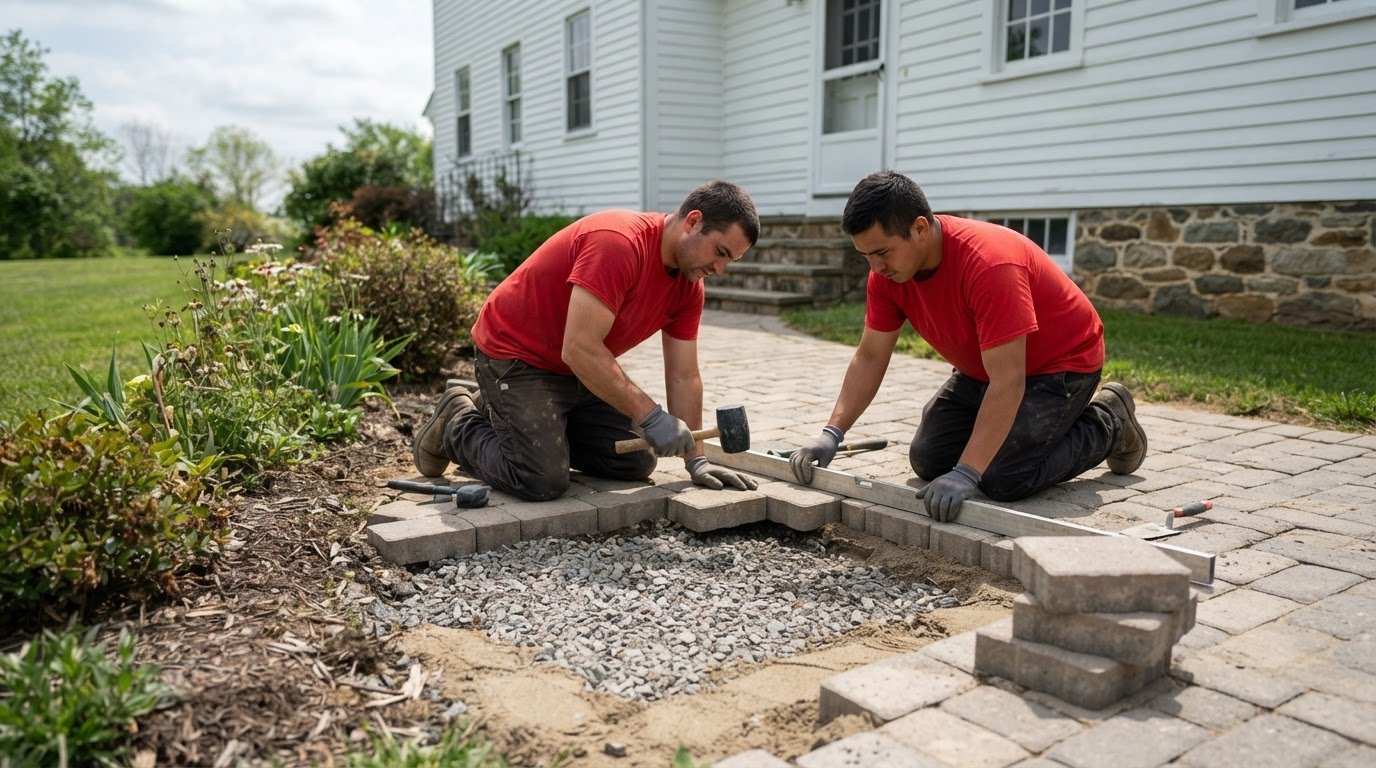
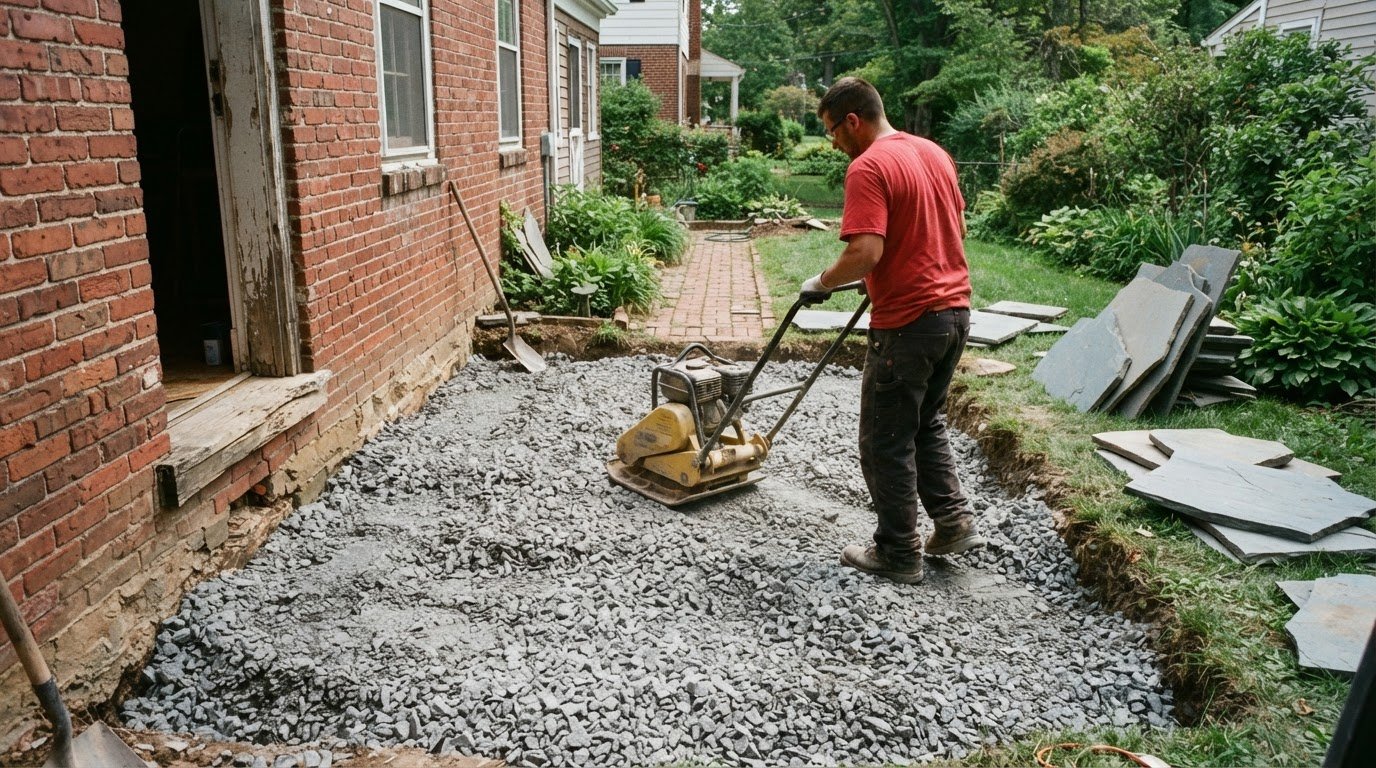
- Prepare the ground. Remove surface material and excavate to suit the selected construction. Address the grade and drainage before placing the walkway surface.
- Install the surface. Place the selected material along the prepared route, then complete the edges and transitions. A consistent finish helps the path meet the driveway and backyard destination cleanly.
- Finish the site. Clear construction debris and restore disturbed areas around the path. The final review checks the connections, surface, and drainage direction.
The project schedule depends on walkway length, layout, material, ground conditions, and preparation needs. A direct path over accessible ground involves different work from a route with a slope, several turns, or a difficult patio connection. Material selection and ordering also affect when construction can begin.
For context, a standard two-car paver driveway installation takes 5 to 8 working days on site, while its full design-to-construction timeline is about 4 to 8 weeks. Larger driveway projects with borders or permeable systems may take 10 to 14 days. These are driveway benchmarks, not promised durations for a backyard walkway. A walkway schedule must reflect its own dimensions, materials, and site work.
Ask for an estimate that identifies the route, surface material, preparation, drainage work, and finish details. This breakdown clarifies what shapes the schedule and where design choices affect the project. If the path joins a patio, coordinating both surfaces can create a more unified outdoor appearance.
To discuss the route and project details, share your walkway plans before the installation schedule is set.
That figure provides driveway-specific cost context, not a price for a backyard walkway.
A walkway estimate should reflect the planned route, surface material, ground preparation, drainage needs, and connection details, rather than transfer a driveway figure directly. Review whether the proposal identifies the surface and preparation included and explains how transitions to the driveway and patio will work. Check whether cleanup and restoration of disturbed areas are included. Comparing these scope details alongside the expected schedule helps you assess the work, not just a broad benchmark.
Stone, cobblestone, and flagstone paths
Stone choices shape a walkway’s appearance, footing, and connection to nearby outdoor spaces. Natural stone paths can use flagstone, limestone, bluestone, granite, or travertine. Stone is a higher-end material choice, while concrete pavers offer varied shapes and colors. Choose a surface that complements the driveway and backyard destination.
For example, a bluestone route can lead from a side door toward a garden patio. Cobblestone can create a more textured look along a driveway edge, while flagstone suits an informal route with irregular shapes. Straight or curved layouts can both work; the path should connect its endpoints without awkward turns or abrupt transitions.
How do paver, concrete, and gravel walkways compare for maintenance and durability? Concrete pavers are strong and durable, and individual units can be reset if a section needs attention. Poured concrete provides a continuous surface, while gravel needs periodic raking or replenishment to keep its coverage even. The right fit depends on the appearance you want and the upkeep you prefer.
Pennsylvania freeze-thaw cycles make water management and base preparation important. In Central Pennsylvania, winter frost can extend 36 inches deep. Water that collects beneath or between walkway materials can freeze and contribute to shifting or uneven areas. A properly planned base and route drainage help limit trapped water and support a stable surface.
Compare materials by considering how the path will be used and maintained:
- Concrete pavers: Choose these for a defined, solid route with options in shapes and colors. Their individual units allow targeted repair.
- Natural stone: Consider flagstone, limestone, bluestone, granite, or travertine for a distinct stone finish. Irregular pieces may require careful placement for a consistent walking surface.
- Poured concrete: Use a continuous surface where a simpler, uniform appearance suits the property. Any repair may affect a larger visible section.
- Gravel: Select it for a loose, informal garden path, and plan for periodic leveling and replenishment.
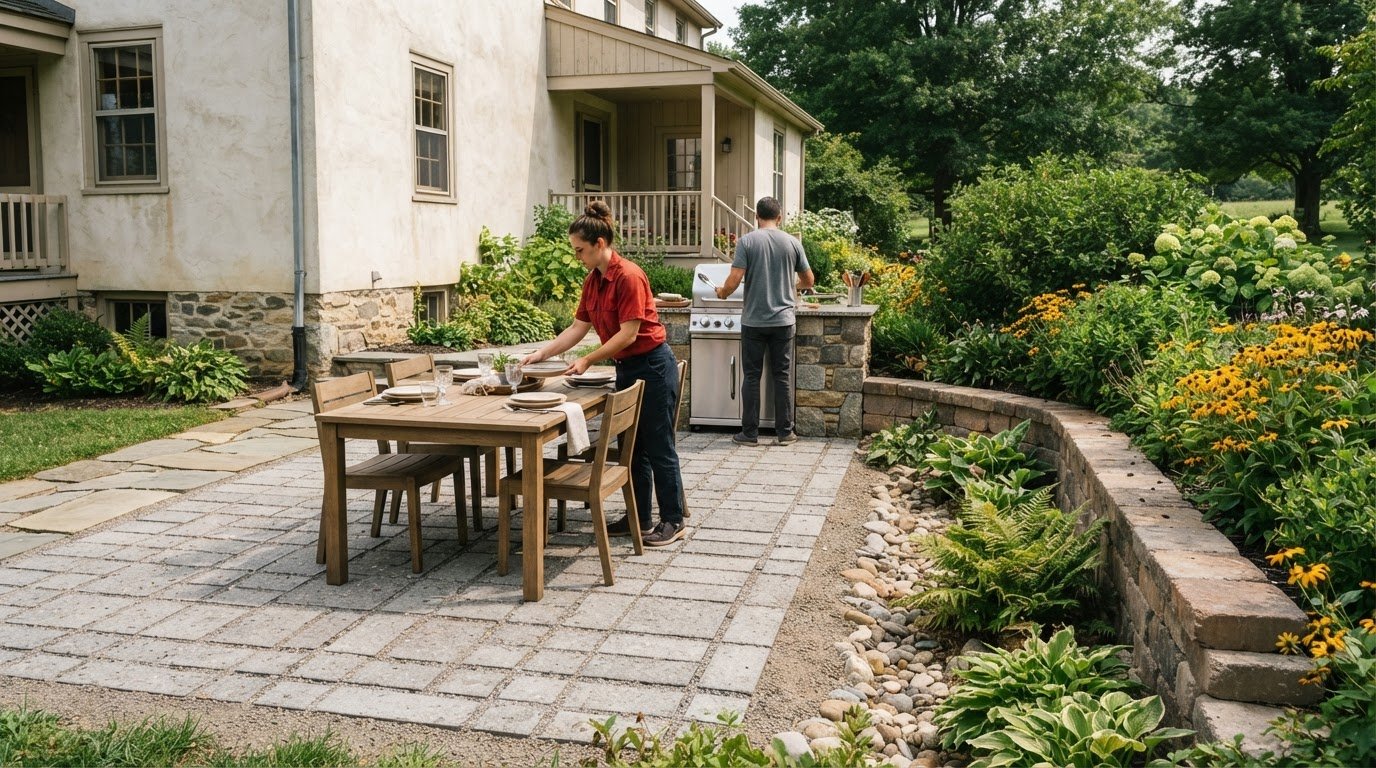
Match joints, edges, and colors to nearby hardscape. A path joining a patio can repeat its stone or paver tones, while a route through planting beds can contrast with mulch and greenery. Check how the surface meets the driveway and patio before finalizing the layout. This helps the walkway feel intentional and remain practical through changing seasons.
Paver walkways can connect detached garages or garden areas to a main patio, making routes between separate parts of the property feel deliberate. Consider where the walk begins and ends, then choose a clear route that fits the surrounding outdoor space. A path from a detached garage may continue toward the patio, while one through a garden can guide movement to the same destination.
Concrete pavers come in different shapes and colors, so consider their appearance alongside the patio and driveway. Repeating nearby tones can help the walkway sit naturally within the overall layout. Keep the route straightforward, joining its endpoints without awkward turns or abrupt transitions. This creates a practical link between outdoor destinations while maintaining a coherent look across the property.
The estimate and design process
A useful estimate starts with the route’s endpoints, surface choice, and site conditions. For a driveway-to-patio connection, the design should show where the path begins, how it reaches the backyard, and how it meets existing hardscape. These details help define the work before materials are selected.
During design, assess the route’s length, width, curves, grade changes, and obstacles. A straight path may need less layout work than one that bends around a planting bed or follows the side of a house. The estimate also reflects preparation, material, edging, steps, and restoration of disturbed lawn or garden areas.
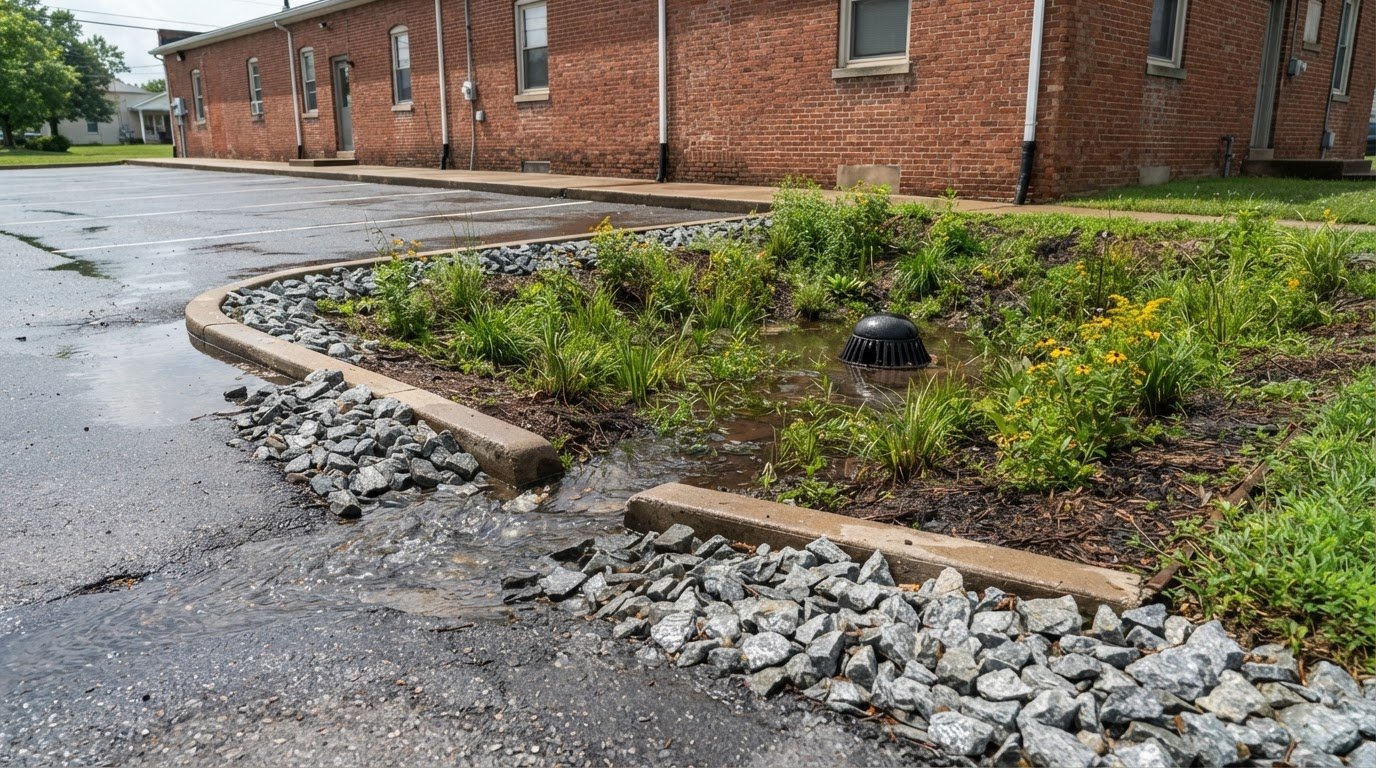
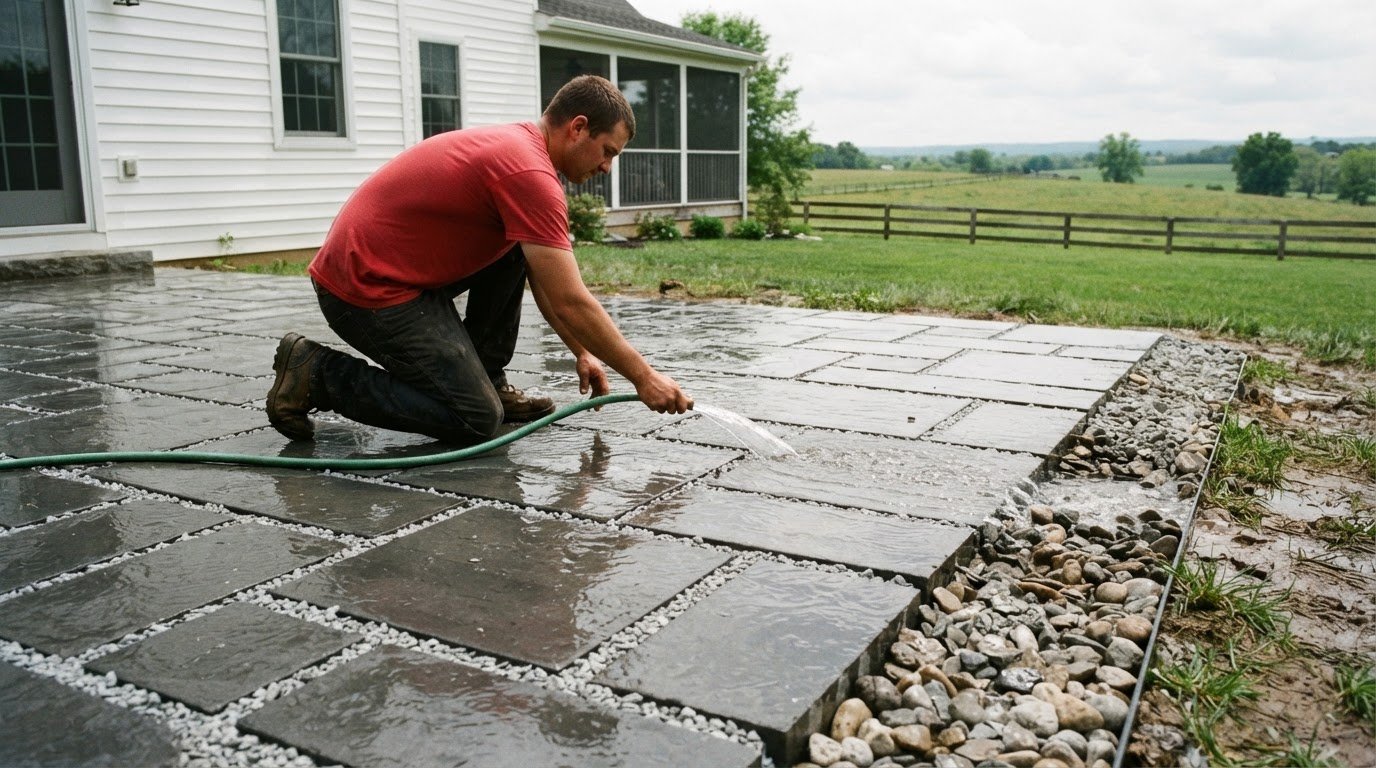
Plan runoff alongside the walkway’s shape. Set the surface grade to move water away from the house, avoid low spots where water can collect, and direct drainage toward an appropriate area. This helps reduce pooling that can freeze across the walking route during winter.
Material choices also affect the design. Concrete pavers offer different shapes and colors, while natural stone creates a distinctive finish. The estimate should account for the selected surface and how it connects to the driveway, side door, and patio. Matching nearby hardscape can make the route feel integrated rather than added later.
To make the estimate useful, define the project scope around these decisions:
- Route: Identify the driveway or side-door starting point and the backyard destination.
- Layout: Choose straight, curved, or angled shapes based on the yard and access needs.
- Site work: Include excavation, grade preparation, drainage considerations, and any steps.
- Finish: Select the surface, edging, and transition details at both ends.
For a clear budget, the price depends on the project and is provided after a quote request; the route length, selected material, ground preparation, drainage needs, and finishing details shape the estimate.
Before construction, review how the planned path meets each entrance. For example, a walkway ending at a patio should align with its usable access point, not simply its nearest edge. Check that the route leaves room for nearby planting beds and that surface transitions work for daily foot traffic.
A complete design ties together a defined route, suitable material, planned water movement, and clear connections to existing spaces. This scope gives the estimate a concrete basis and helps the installation plan reflect the actual yard rather than a generic walkway.
Which local contractors build residential walkways near Columbia, PA?
Residential walkway projects near Columbia call for a contractor who handles hardscape layout and surface installation. For a driveway-to-backyard route, the work should connect the starting point, destination, and any existing patio or garden path. A crew focused on outdoor construction can plan those transitions as one project.
Define the project around the site’s actual needs. A path from a side door to a rear patio differs from one crossing a sloped lawn or turning around planting beds. The estimate and work plan should address the route, surface, excavation, drainage, and finish details. This shows whether the proposed scope covers the full connection, not just the visible paving.
Look for a project process that covers the following:
- Route planning: Connect the driveway or side entrance directly to the backyard destination, accounting for doors, existing paths, and landscape features.
- Ground preparation: Include excavation and a prepared base suited to the selected walkway surface and site conditions.
- Water management: Plan the grade so runoff moves away from the house and does not collect along the route.
- Finished connections: Detail how the walkway meets the driveway, patio, steps, or lawn edge.
- Site restoration: Include cleanup and repair of areas disturbed during construction.
For example, a path from a driveway to a lower patio needs a plan for the change in elevation and the transition at the destination. A route beside a house needs attention to runoff and side-door access. These are different site conditions, so a useful scope describes the specific property rather than relying on a generic walkway description.
Clear communication matters from the initial layout through installation. The project plan should identify the route, surface selection, preparation, and finishing work. These details define the estimate and clarify what the work includes. They also help coordinate the walkway’s appearance with nearby hardscape and the home’s outdoor layout.
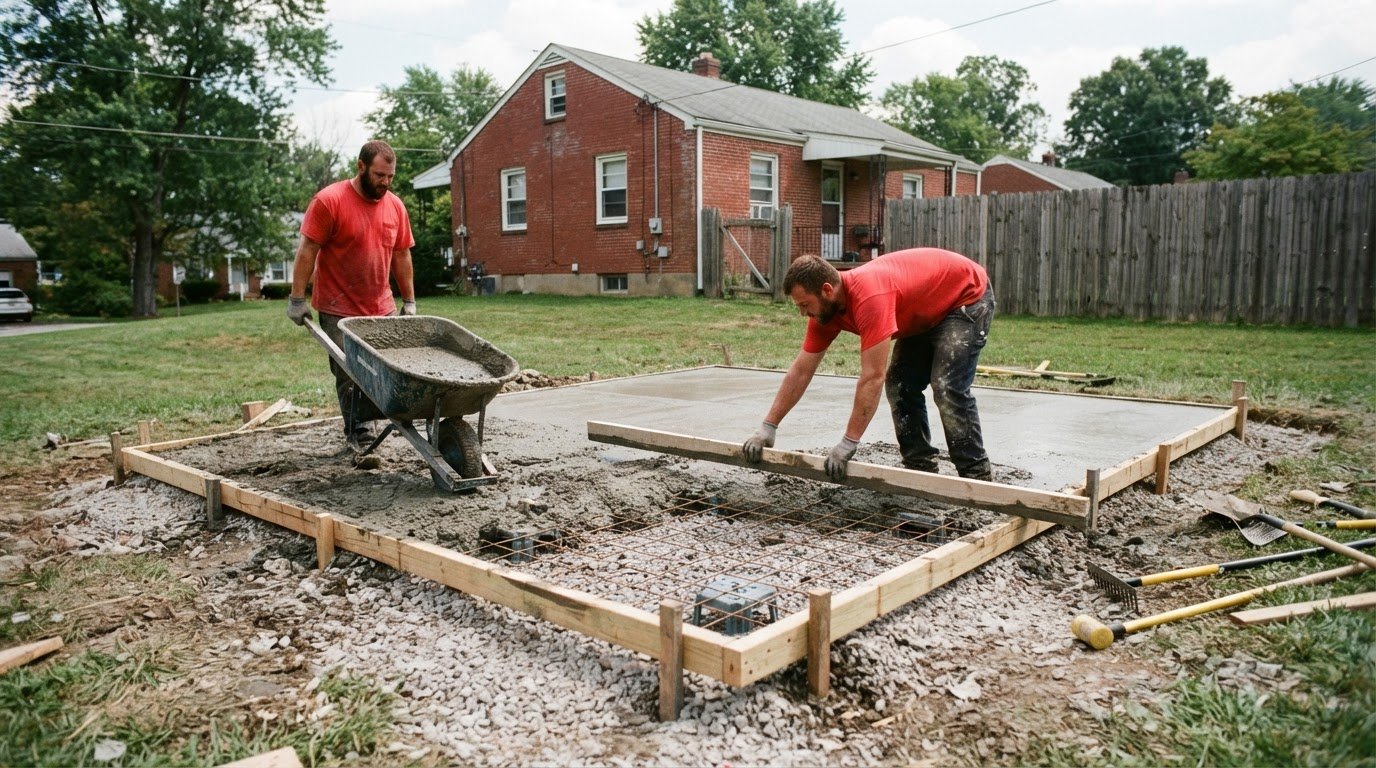
For Columbia-area homeowners, Snappy Landscaping’s hardscaping work includes concrete pads and walkways. The team plans the walkway around its endpoints and property conditions, then completes the agreed scope through installation. A clear plan benefits both a straightforward path and a route with turns or grade changes.
Share the driveway or side-door starting point, backyard destination, and any known slope or drainage concerns to begin planning. Discuss your residential walkway project and its site requirements.
Snappy Landscaping: Concrete Pads & Walkways
Snappy Landscaping installs concrete pads and walkways for homeowners planning a clear route from a driveway or side door to the backyard. This service can help when worn grass, an awkward path, or a connection to a patio calls for a durable hardscape solution.
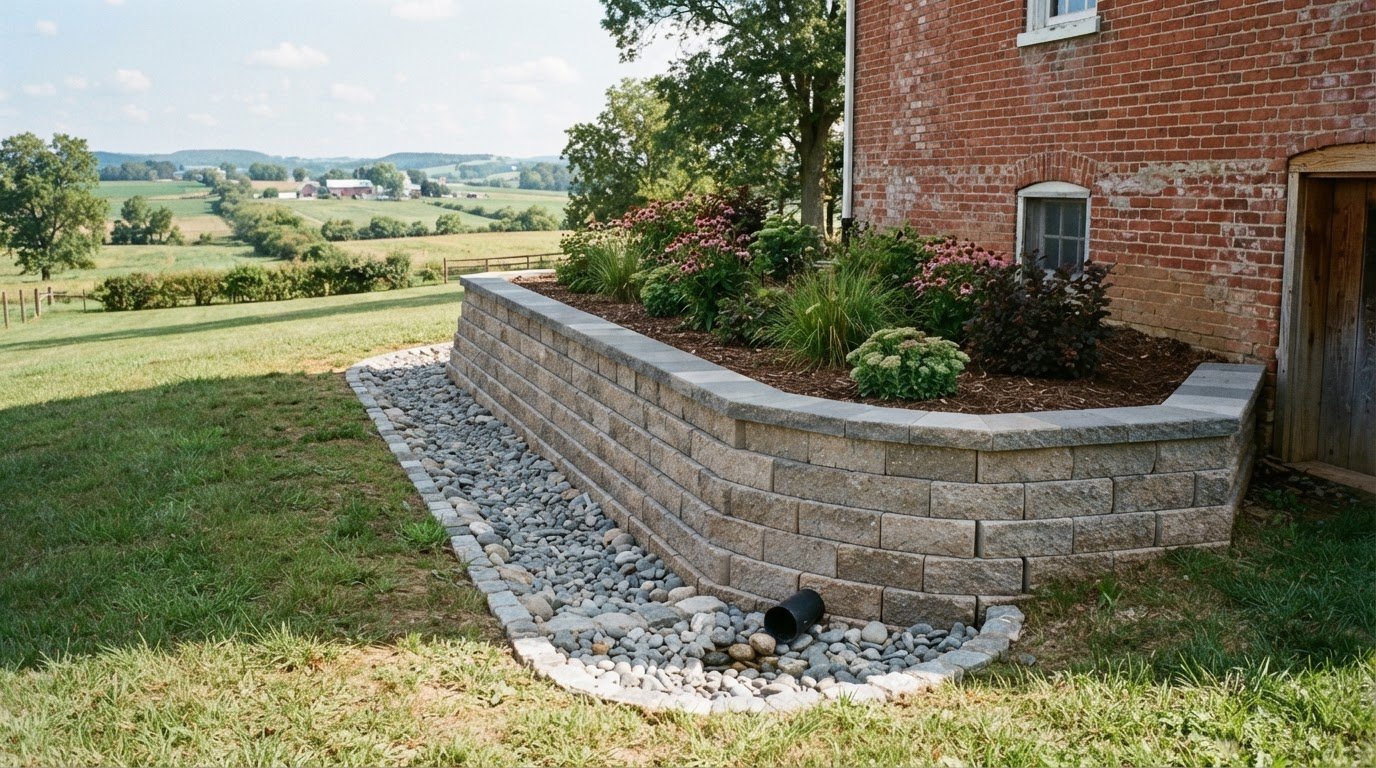
The layout can account for the route’s endpoints, yard grade, drainage, and connections to existing outdoor spaces. If the project also includes a patio or a change in elevation, custom patio installation or retaining wall construction may fit the broader plan.
To discuss a driveway-to-backyard walkway and its site requirements, contact Snappy Landscaping.
Plan a Path That Works for Your Yard
A walkway connecting your driveway to your backyard in Columbia, PA, should fit how you use your outdoor space now and how you want it to function in the future. Define the route, destination, and connection to existing areas. A clear scope helps turn those priorities into a practical design.
Snappy Landscaping can coordinate the walkway with related property work. Lawn Mowing & Maintenance can support the surrounding lawn, while Custom Patio Installation or Retaining Wall Construction can address adjoining outdoor spaces and changes in grade. Consider each service in relation to the walkway’s role on your property.
Ready to discuss the route and your project goals? Contact Snappy Landscaping to plan your walkway. A well-planned connection can make everyday trips between the driveway and backyard simpler and more direct.
Frequently Asked Questions
What walkway materials are best for connecting a driveway to a backyard in Columbia, PA?
Concrete pavers suit a defined route with coordinated shapes and colors, while natural stone offers a distinctive finish. Choose based on how the path meets the driveway and backyard, as well as the look you want beside your home. A straight route to a patio can use a consistent paver pattern; a garden path may suit irregular flagstone. Consider upkeep and how the surface will handle water and seasonal conditions.
How much does it cost to build a walkway in Columbia, Pennsylvania?
There isn’t one price for every Columbia walkway. The estimate depends on the property, selected materials, route, ground preparation, drainage needs, and finishing details. Snappy Landscaping provides a free estimate for projects, with pricing varying based on property size, service frequency, and maintenance requirements. A clear scope accounts for the actual route and site work rather than relying on a generic figure.
What is the typical cost per square foot for concrete, paver, gravel, and flagstone walkways?
A general per-square-foot rate for concrete, paver, gravel, or flagstone walkways could misrepresent a project-specific estimate. Material is only one factor; the walkway’s dimensions, excavation, ground preparation, drainage, and edges also affect the scope. A flagstone route with several turns, for instance, may need different preparation from a straight concrete path. Request a free estimate based on the planned layout and site.
What are the steps for planning and installing a driveway-to-backyard walkway?
Plan the route, choose the surface, prepare the ground, install the walkway, then finish and review its connections. Snappy Landscaping serves Lancaster County, including Lancaster, PA; Columbia, PA; and Mountville, PA. The team is licensed and insured, and background-checked.
What setback, drainage, or stormwater rules apply to walkways in Columbia Borough?
Identify property boundaries and plan runoff so water does not collect beside the house or flow onto a neighboring property. Changes to grading or drainage are key local-rule questions; no specific setback is given.