
A standard gravel trench will quickly fail if it isn't engineered to handle Central Pennsylvania's dense clay soil. Lancaster receives roughly 45 inches of precipitation each year, easily turning poorly drained lawns into muddy basins. If you're wondering whether professional french drain installation Lancaster PA homeowners rely on will truly solve your yard flooding, the answer is yes, but only when it's tailored to local terrain.
You already know the frustration of watching standing water drown healthy turf, wash away mulch beds, and press heavily against your foundation walls. Hydrostatic pressure shouldn't threaten your home after every seasonal storm, nor should persistent runoff keep your family from enjoying your outdoor spaces.
Discover how professional French drain installation solves standing water, protects foundations, and preserves Lancaster landscapes with clean, discreet results. This guide walks you through essential grading standards, non-woven geotextile filtration, and practical planning steps to keep your property dry year-round.
Why Standing Water Plagues Lancaster Yards: Soil and Drainage Dynamics
Persistent puddles across your yard signal a deeper subsurface issue. An engineered French drain utilizes a sloped, gravel-filled trench housing a perforated pipe to intercept groundwater before it pools at the surface. When sudden downpours sweep through Central Pennsylvania, natural absorption halts quickly. Water settles in low turf zones, suffocating turfgrass root systems within days and creating prime breeding conditions for pests.
Without an underground exit path, water takes the path of least resistance across your property. Securing professional french drain installation Lancaster PA properties require turns uncontrolled sheet flow into a managed, subterranean stream. This proactive defense stops topsoil erosion and restores order to saturated outdoor living areas.
Understanding Lancaster County Clay Soil and Percolation
Lancaster County features productive agricultural ground, yet those same limestone-derived silt and clay profiles cause serious residential water troubles. Clay particles are microscopic and pack tightly together, leaving minimal pore space for water to percolate downward. When storms strike, the upper soil layer reaches saturation almost instantly. Compacted subsoil prevents moisture from filtering into deeper aquifers, trapping gallons of water right below your grass blades where it cannot evaporate quickly.
The True Cost of Unmanaged Runoff on Foundations
Water trapped in heavy clay doesn't simply sit idle; it swells. Saturated soil creates intense hydrostatic pressure that pushes continuously against basement masonry and foundation footings. Central Pennsylvania's winter weather magnifies the risk. Repeated freeze-thaw cycles cause waterlogged ground to expand with tremendous force, triggering foundation shifts, widening hairline cracks, and causing chronic basement dampness.
Uncontrolled subsurface moisture also erodes base materials beneath outdoor structures. Managing subterranean water flow protects your home's structural footing and shields hardscape investments like a custom patio installation from shifting out of grade. Intercepting groundwater early relieves pressure, preserves structural stability, and protects your property value indefinitely.
Anatomy of an Engineered French Drain: Key Components
A successful drainage channel is much more than a trench with a plastic pipe. High-performing french drain installation Lancaster PA properties require is an engineered subterranean filtration network. Every component serves a specific mechanical purpose, shielding the conduit against silt intrusion while collecting runoff efficiently. When correcting severe yard saturation, Penn State Extension emphasizes that installing drainage tile or perforated piping provides the foundation needed to resolve moisture trouble before attempting turf restoration.
Filtration Fabric and Washed Aggregate Selection
Fine Central Pennsylvania clay ruins improperly wrapped drains. Slit socks slipped directly over pipes clog rapidly in dense regional soil. High-performance installations line the entire excavated trench with durable, non-woven geotextile fabric. This fabric functions like a mechanical filter, allowing groundwater to pass freely while locking silt outside the stone column. The trench is then packed with clean, washed crushed stone rather than dirty bank-run gravel. Washed stone eliminates fines and maintains open void space so water moves straight into the pipe.
Pipe Styles: Smooth Interior vs. Perforated Corrugated
Pipe material directly dictates long-term flow rates and maintenance demands:
- Smooth-Wall Rigid PVC: Features a slick interior that maximizes water velocity, flushes out minor sediment naturally, and withstands heavy overhead soil loads.
- Perforated Corrugated Pipe: Bends easily around obstacles and mature tree root zones, but internal ridges can slow transit speeds and collect settling sediment over time.
Choosing between four-inch and six-inch diameters depends entirely on square footage, soil saturation levels, and the volume of nearby surface runoff entering the system.
Discharge Strategies: Gravity Outlets and Pop-Up Emitters
Collecting water is only the first phase; safely directing it away finishes the job. Daylight gravity exits work best along natural slopes, dumping collected volume into designated swales. Flat properties benefit from spring-loaded pop-up emitters that stay flush with the lawn during mowing, pop open under hydrostatic flow during rainstorms, and snap shut to keep rodents out. If your yard suffers from persistent standing water, consult our team for a site assessment to design an engineered drainage layout tailored to your lot's specific slope.
French Drains vs. Alternative Yard Drainage Solutions
Every wet yard presents a unique topographical challenge. Choosing the right water management system comes down to where the water originates, whether it's pouring down from a roofline or slowly weeping upward from saturated ground. While some properties need broad overland grading, others need invisible subterranean channels. Selecting the right setup saves thousands of dollars in trial-and-error digging while preventing unnecessary landscape disruption.
A precision french drain installation Lancaster PA homeowners choose addresses root-zone saturation and high water tables directly beneath turfgrass. Unlike surface remedies that only collect visible rainwater, French drains continuously relieve subterranean pressure before it saturates topsoil or pools across low-lying recreation spots.
French Drains vs. Surface Swales and Catch Basins
Each drainage solution solves a distinct hydraulic problem:
- Surface Swales: Shallow, contoured turf valleys redirect heavy torrents overland. Swales handle significant storm volume, but they require substantial yard space and still leave subsoil waterlogged after surface flow stops.
- Catch Basins: Grated underground boxes capture rapid downspout rushes and driveway washouts at a single collection point. They excel at point-source intake, but they cannot collect dispersed groundwater rising across wide lawn sections.
- French Drains: Perforated lateral pipes collect distributed subsurface moisture across entire yards, carrying it away invisibly without interrupting your lawn's natural grading.
Protecting Hardscapes: Integrating Patios and Walkways
Uncontrolled runoff wreaks havoc on outdoor living spaces. When storm runoff washes beneath flatwork, it erodes the bedding sand and compactable aggregate sub-base holding pavers level. Over time, that erosion causes severe settling, sunken pavers, and aggressive frost-heave damage during freezing temperatures.
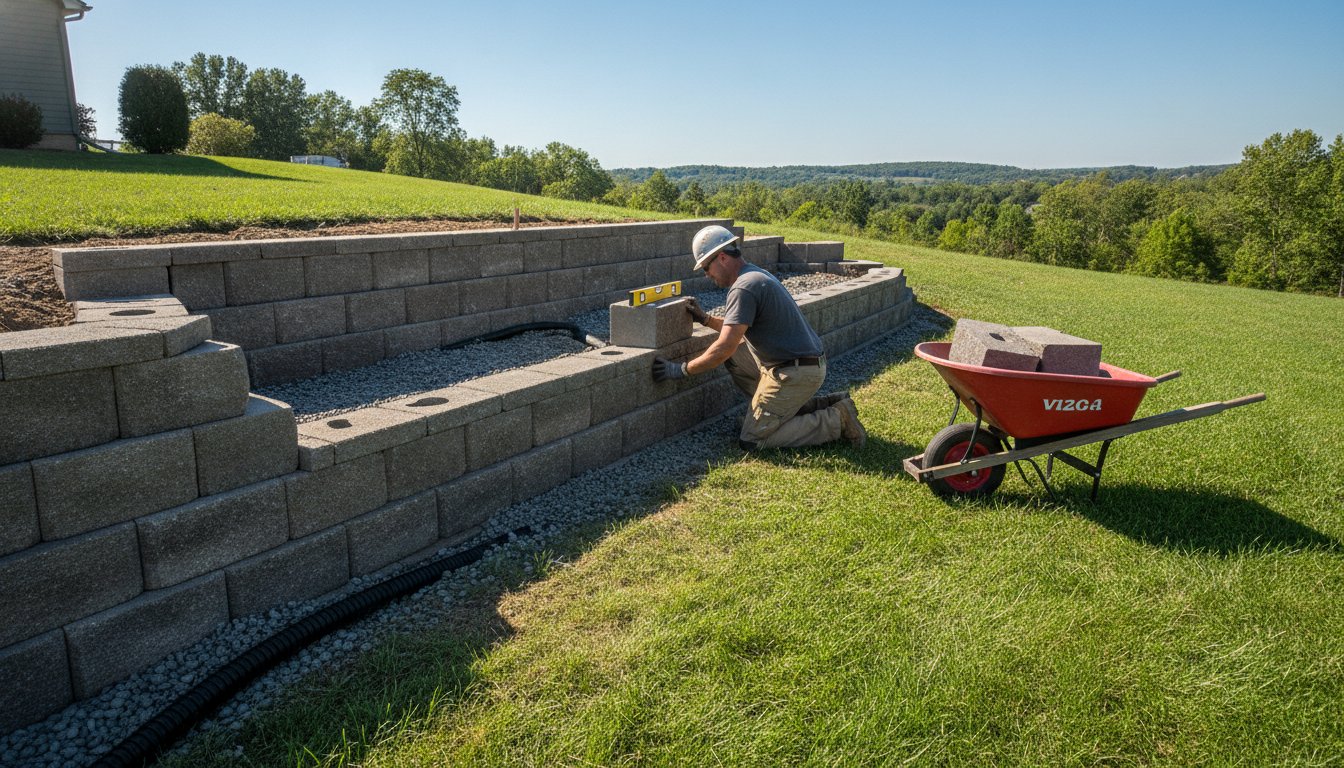
Pairing high-traffic areas with targeted drainage stops sub-base migration before it begins. Discover how a professional patio installation incorporates perimeter trenching to intercept sheet flow, preserving structural integrity for decades. Similarly, retaining structures demand specialized pressure relief to prevent catastrophic failure; read our guide on retaining wall drainage to discover how gravel backfill and perforated pipe prevent structural blowouts behind block facades.
The Professional French Drain Installation Process
Precision matters when redirecting hundreds of gallons of groundwater. Installing an exterior drainage system requires an organized, step-by-step workflow that respects your property while establishing permanent hydraulic flow. Professional contractors don't guess grades or dig randomly; they measure, excavate with care, and restore your yard so the finished system operates invisibly beneath healthy grass.
Executing a reliable french drain installation Lancaster PA homeowners trust demands strict attention to slope and soil stability. Cutting corners during trench excavation or stone placement leads to premature clogs and uneven ground settling.
Site Survey, Slope Measurement, and Utility Marking
Work begins well before equipment arrives on site:
- Utility Clearance: Calling PA One Call (811) is legally required. Marking subterranean gas, power, water, and communication lines prevents dangerous utility strikes during excavation.
- Slope Verification: Technicians use optical transit levels or laser levels to establish a consistent downhill gradient, maintaining a minimum slope of one inch for every ten feet of pipe run toward the discharge point.
- Capacity Calculation: Measuring roof surface runoff, downspout outputs, and lawn grade ensures the trench layout can handle torrential Central Pennsylvania storm surges.
Excavation, Fabric Encapsulation, and Gravel Bedding
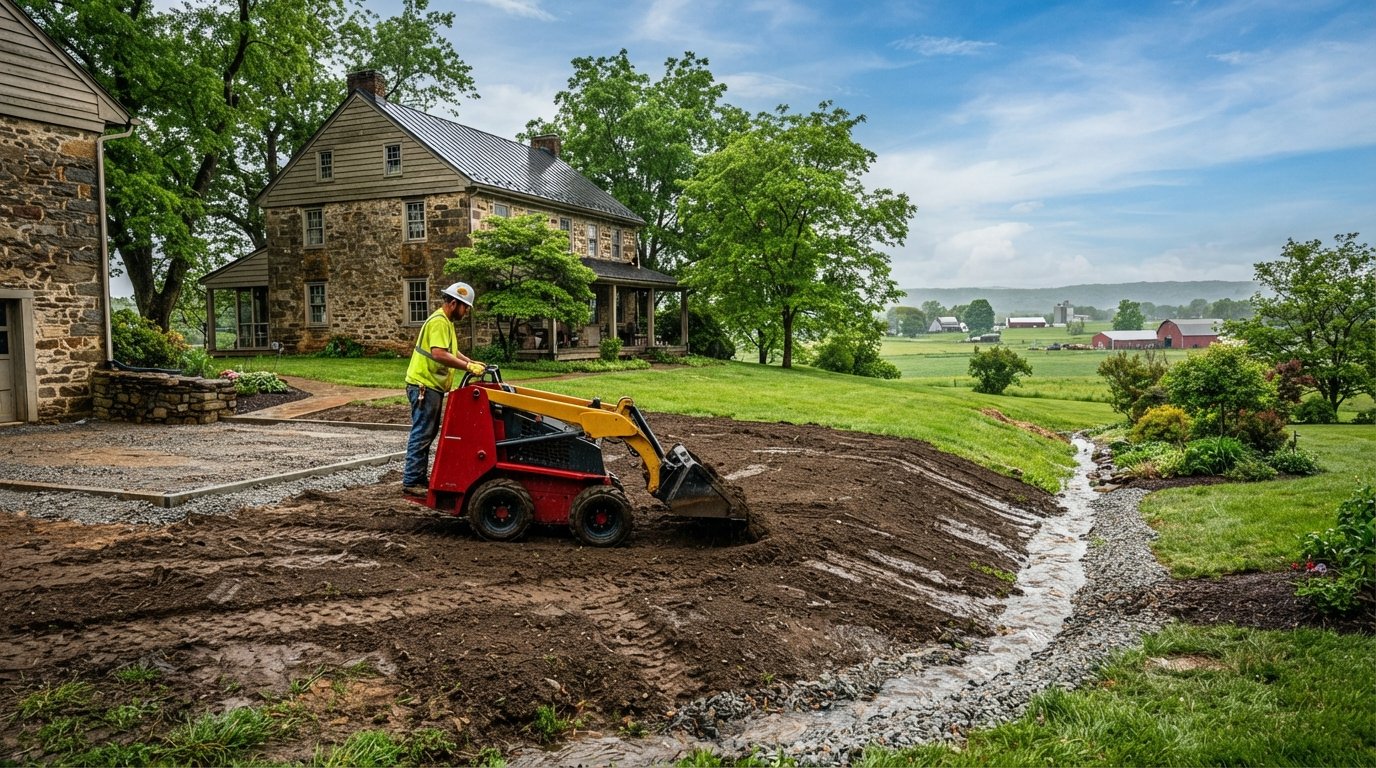
Specialized compact trenching machinery or careful hand-digging opens the path while protecting existing tree root zones. Crews cut and set aside top sod strips cleanly for later reinstallation. Once the trench reaches depth, non-woven geotextile fabric lines the bare earth walls and floor, leaving generous wings on both sides. A base bed of washed crushed stone is laid down, followed by the perforated pipe. Holes face downward toward the gravel bed, which allows rising groundwater to enter from below and flow away quickly.
Backfilling, Turf Restoration, and Clean-Up
Additional washed aggregate completely buries the pipe, leaving just enough depth for topsoil. The contractor then wraps the fabric wings over the stone, sealing the filter envelope tight against clay migration. Porous topsoil fills the final inches before technicians roll the preserved sod directly back into place or overseed bare areas.
When completed correctly, the only sign of work is a dry lawn after heavy rain. If standing water threatens your yard, schedule your professional drainage consultation to start planning a permanent drainage solution today.
Selecting a Drainage Contractor in Lancaster, PA
Excavating your property requires a delicate balance of civil engineering and landscape artistry. Anyone with a trencher can dig a ditch, but an inexperienced crew risks reversing critical pipe pitch or leaving your yard scarred with rutted subsoil. Effective water mitigation must protect your home's foundation while preserving the finished curb appeal of your lawn and planting beds.
Partnering with an experienced local contractor ensures your french drain installation Lancaster PA project satisfies regional environmental rules. Municipalities across Lancaster County enforce strict stormwater management ordinances under Pennsylvania Act 167. Discharging concentrated runoff incorrectly toward a neighbor's boundary or tying into municipal lines without required permits can trigger costly fines. A knowledgeable specialist plans legal, effective discharge locations from day one.
Essential Questions to Ask Before Hiring
Protect your investment by vetting potential contractors with direct technical inquiries:
- Material Specifications: Do they use needle-punched non-woven geotextile fabric and washed crushed stone, or cheap knit pipe socks that clog in Lancaster clay?
- Utility Protocols: Do they manage the PA One Call process directly to verify gas, water, and power lines before digging begins?
- Restoration Scope: Does the written estimate include trench compaction, topsoil grading, and sod re-laying, or will your lawn be left as open dirt?
The Snappy Landscaping Advantage for Lancaster Properties
We approach water management through a comprehensive lens. Heavy equipment work shouldn't permanently ruin your yard. Our crew combines extensive experience managing Lancaster County slopes with full-service hardscaping capabilities, ensuring seamless turf repair and clean property restoration after excavation is complete.
Drainage rarely exists in isolation from the rest of your landscape. If your property features sharp grade changes, discover how our retaining wall installation reinforces sloped Lancaster backyards while relieving hydrostatic pressure. We also integrate functional drainage alongside custom walkway installation services to safeguard paver sub-bases against freeze-thaw shifting. Contact Snappy Landscaping today to schedule an on-site property drainage consultation and secure lasting protection for your home.
Reclaim a Dry, Usable Yard With Long-Term Drainage Protection
Standing water doesn't have to dictate how you use your property. Successfully managing runoff in Central Pennsylvania requires engineered gravel trenches, durable non-woven geotextile filtration, and exact slope calculations built specifically for dense clay soil. When properly executed, an exterior drainage system relieves dangerous hydrostatic pressure against foundation walls and keeps heavy storms from washing out your landscape beds.
Snappy Landscaping delivers complete outdoor solutions that protect your property while elevating curb appeal. Our team brings extensive local grading experience to every project, combining functional drainage with seamless turf restoration and clean-up. Whether safeguarding custom patios or reinforcing retaining walls, we handle the excavation with care so your yard looks immaculate once the job is finished.
Don't let another rainy season wash away your landscape investment. Investing in dependable french drain installation Lancaster PA homeowners trust restores order, safeguards your foundation, and gives your family a clean, functional yard year-round. Request your on-site yard drainage assessment with Snappy Landscaping today, and enjoy total peace of mind through every storm.
Frequently Asked Questions
How deep should a residential French drain be buried?
A residential yard French drain is typically buried 18 to 24 inches deep, while foundation foot drains sit between four and six feet deep depending on basement depth. Shallow curtain drains capture surface runoff across wet lawn areas in Lancaster, Columbia, and Mountville. Digging deeper than necessary can disturb stable subsoil and add unneeded excavation labor. Your contractor selects the trench depth based on local groundwater levels and existing property topography.
Can a French drain handle roof runoff from gutter downspouts?
Roof downspouts shouldn't dump directly into a perforated French drain pipe. Intense rainfall cascades off roofs too fast, overwhelming the gravel bed and backflowing water into your lawn. Instead, downspouts connect to solid, non-perforated corrugated or PVC pipes that route high volumes directly downstream. French drains collect dispersed soil moisture. Combining solid downspout lines with perforated perimeter pipes in the same trench delivers total moisture control.
What is the average lifespan of an exterior French drain?
A properly built exterior French drain lasts between 20 and 30 years without major failure. Longevity depends almost entirely on filtration design and aggregate purity. Installing needle-punched geotextile fabric and clean washed stone keeps local silt from sealing the pipe perforations. Quality french drain installation Lancaster PA homeowners invest in avoids cheap filter socks, ensuring that water continues discharging freely down the line decade after decade.
Can heavy clay soil clog a newly installed French drain?
Heavy clay can clog an unprotected pipe within just a few seasons, but proper filtration completely prevents this problem. Unwrapped systems or cheap knit sleeves let fine clay particles penetrate aggregate voids, turning stone into packed mud. Wrapping the entire trench envelope in heavy-duty non-woven geotextile fabric traps fine sediment while allowing water to pass. This engineering approach keeps the crushed stone clean and free-flowing even in Lancaster's stickiest ground.
Is a permit required for French drain installation in Lancaster, PA?
Permit requirements vary across Lancaster County municipalities, such as Lancaster Township, Columbia, and Mountville. A permit is often required if excavation involves major earth disturbance, connects directly into municipal storm sewers, or alters natural drainage boundaries near property lines. Local stormwater management ordinances enforce strict runoff guidelines under Pennsylvania Act 167. Homeowners should verify municipal codes with their local borough or township office before excavation starts.
How does a contractor ensure water flows downhill without a pump?
Contractors establish a continuous downhill slope using laser levels and optical transits during excavation. Reliable gravity drainage requires a minimum slope of one percent, which equals roughly one inch of drop for every ten feet of pipe. Even across seemingly flat yards in Lancaster County, skilled grading creates an artificial fall inside the trench bed, ensuring water travels steadily toward daylight outlets or pop-up relief valves without mechanical pumps.
What happens if a French drain freezes during Pennsylvania winters?
A correctly sloped French drain rarely freezes because water empties continuously rather than sitting stagnant inside the line. During cold Central Pennsylvania winters, pooling water only turns to ice if the pipe sags or flattens out. Professional french drain installation Lancaster PA contractors provide maintains consistent pitch, carries water below the shallow frost line where feasible, and includes screened outlets to stop leaves and snow buildup from blocking winter discharge.