
Lancaster County's dense clay soil turns routine severe downpours into immediate structural hazards for residential properties. Because this dense earth prevents runoff from naturally percolating downward, excess water quickly pools across turf and pushes toward foundation walls. If your lawn turns into a standing swamp for days after every storm, implementing engineered yard drainage solutions for heavy rain Lancaster properties demand is essential to protect your landscape and home.
You shouldn't have to stress about water encroaching on your patio, saturating basement footers, or ruining your turf whenever heavy weather strikes. Discover proven yard drainage systems engineered to stop standing water, eliminate surface pooling within 24 hours, and protect your property from severe erosion. In this 2026 guide, we review the most effective drainage options tailored to Lancaster topography, showing you how integrated catch basins, French drains, and precision grading keep your yard firm and dry.
Why Heavy Rain Causes Severe Yard Flooding in Lancaster County
Lancaster County averages over 45 inches of precipitation annually, but concentrated seasonal storms deliver the most severe damage. Sudden cloudbursts dump inches of water in under an hour, overwhelming residential turf faster than local ground can absorb it. When settling soil or negative yard slopes tilt back toward living areas, thousands of gallons of roof runoff collect into stagnant pools. Unmanaged ground saturation generates extreme hydrostatic pressure against basement walls and outdoor living structures. Without intervention, this pressure forces moisture through masonry joints and destabilizes structural bases. Installing proven yard drainage solutions for heavy rain Lancaster properties face stops this destructive cycle before soil movement occurs.
The Role of Lancaster Soil Composition in Drainage Failures
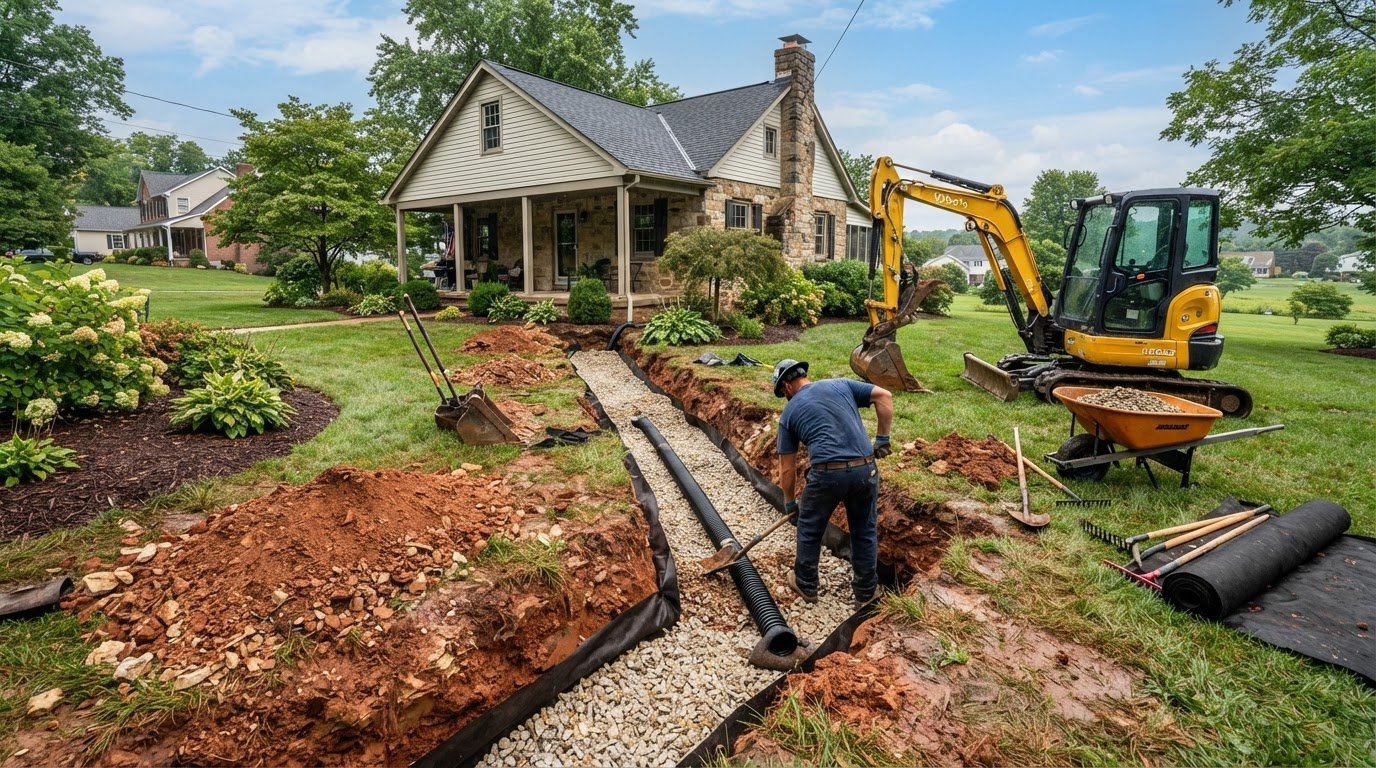
Local soil composition acts as the primary bottleneck during heavy Mid-Atlantic storm events. Lancaster features dense clay-loam that binds tightly together when wet, forming an almost impervious subterranean barrier. Routine lawn equipment traffic compounds this problem by compacting surface layers and sealing off vital air pockets. Because this dense clay halts downward percolation, turf root systems quickly suffocate in oxygen-deprived mud. Understanding what a French drain is helps homeowners see how perforated subsurface piping bypasses tight clay layers to transport trapped groundwater away from drowning roots.
Identifying Dangerous Runoff Patterns Around Your Home
Pinpointing drainage failures before structural damage occurs requires observing your property during an active downpour. Walk your perimeter and monitor these critical warning signs:
- Foundation sheet flow: Broad sheets of surface runoff traveling toward exterior walls rather than shedding away to street swales.
- Unextended downspouts: Gutter leaders dumping concentrated roof deluge directly against foundation footings or saturating backfill behind retaining walls.
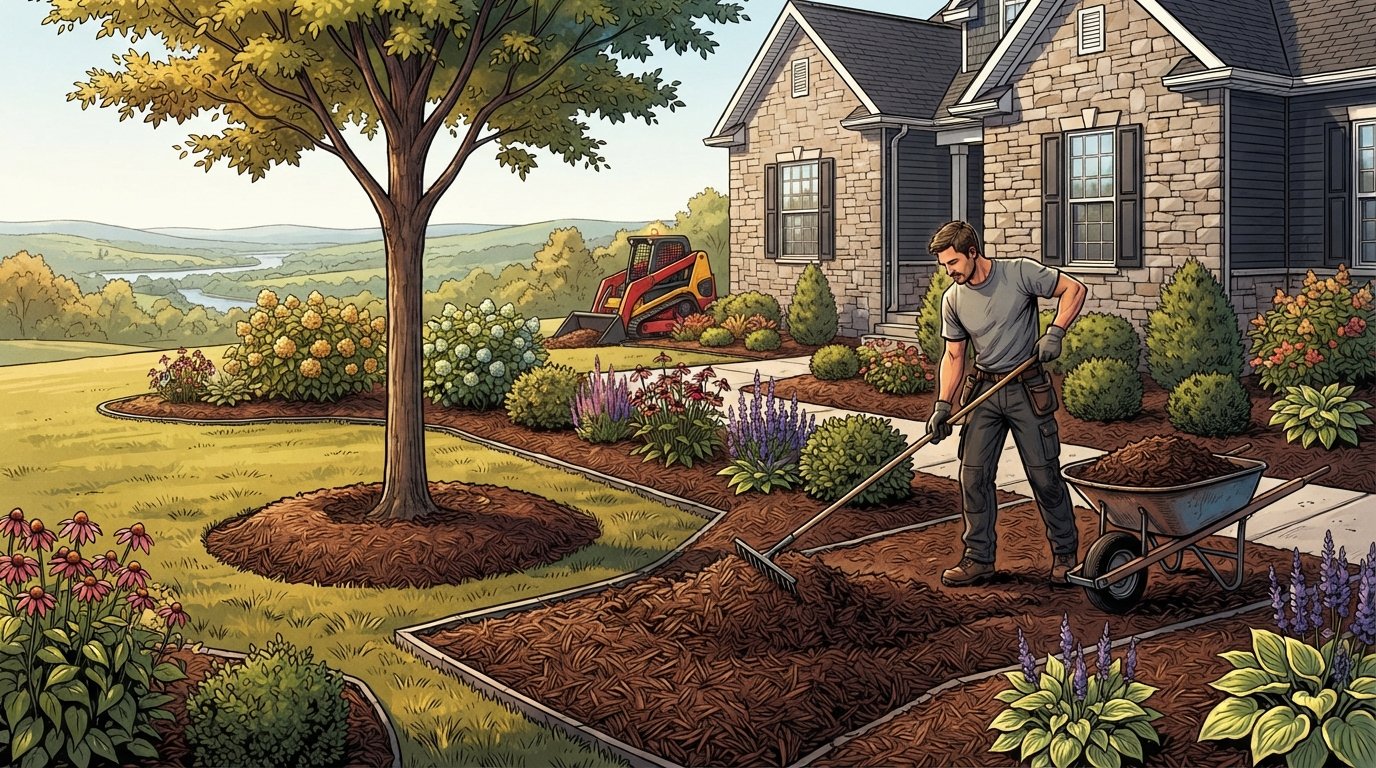
- Mulch bed washouts: Fast-moving surface torrents carving deep erosion gullies through planting beds and sweeping topsoil onto paved surfaces.
Recognizing these flow patterns is the first step toward correcting grading defects and establishing resilient yard drainage solutions for heavy rain Lancaster storms bring each season.
Comparing the Best Yard Drainage Solutions for Heavy Rain
Every piece of land responds differently to intense storms. Flat turf traps standing sheets of water, while rolling acreage generates fast-moving surface torrents that tear through landscape beds. Solving these issues requires matching the right mechanical assembly to your property's slope, runoff volume, and soil profile. A comprehensive approach connects surface collection inlets with subterranean transit lines, rather than treating individual wet spots in isolation. Engineered swales redirect high-volume overland floods, while buried pipe networks manage hidden saturation. Exploring research-backed ways to manage stormwater on your property highlights how strategic infiltration structures relieve stress on municipal infrastructure while keeping private yards stable.
French Drains vs. Surface Catch Basins
Surface water and subsurface water present distinct challenges. Catch basins handle sudden downpours on the surface. Positioned in low depressions or along hardscape edges, their grated metal or composite tops swallow rushing runoff immediately before pooling begins. In contrast, French drains target trapped subterranean moisture. A perforated pipe rests inside a gravel trench lined with permeable geotextile fabric, intercepting rising water tables and pulling saturation out of muddy turf layers. Pairing surface basins with French drains creates an integrated network that clears standing puddles right away while keeping ground beds firm for your routine lawn care and maintenance.
Burying Downspouts and Installing Dry Wells
Standard splash blocks cannot process the sheer volume of water cascading off a residential roof during an August cloudburst. Channeling roof runoff into buried, solid-wall PVC pipe prevents roof wash from saturating the ground near your siding. Consider the key benefits of solid pipe networks:
- Smooth interior walls: Rigid PVC lines resist root intrusion and shed sediment, preventing the chronic clogs that plague corrugated pipe.
- Subsurface detention: Directing solid lines into underground dry wells captures peak surges, slowly releasing volume back into the subsoil once the storm passes.
- Hardscape stability: Moving roof drainage safely away preserves structural base aggregates beneath a patio installation or paved walkway.
Investing in engineered yard drainage solutions for heavy rain Lancaster properties require eliminates chronic mud pits and safeguards your structural investments. If recurring washouts continue to compromise your outdoor living spaces, consult a specialist for engineered drainage solutions tailored specifically to your site topography.
How Yard Grading and Swale Construction Direct Runoff
Subterranean pipes move water once it enters the ground, but surface grading dictates where that water travels in the first place. Precision regrading reshapes elevation contours across your property, using gravity to steer high-volume sheets away from structures before ground saturation occurs. Professional contractors use laser-level transit surveys to map local fall lines and establish a steady, reliable pitch. Aligning site slope with the environmental framework outlined in Pennsylvania's Stormwater Management Program ensures your property manages surface volume responsibly without flooding adjacent parcels. Without correct surface elevation, even the most advanced subsurface drains will struggle to perform during severe downpours.
Establishing Positive Grade Away from Structures
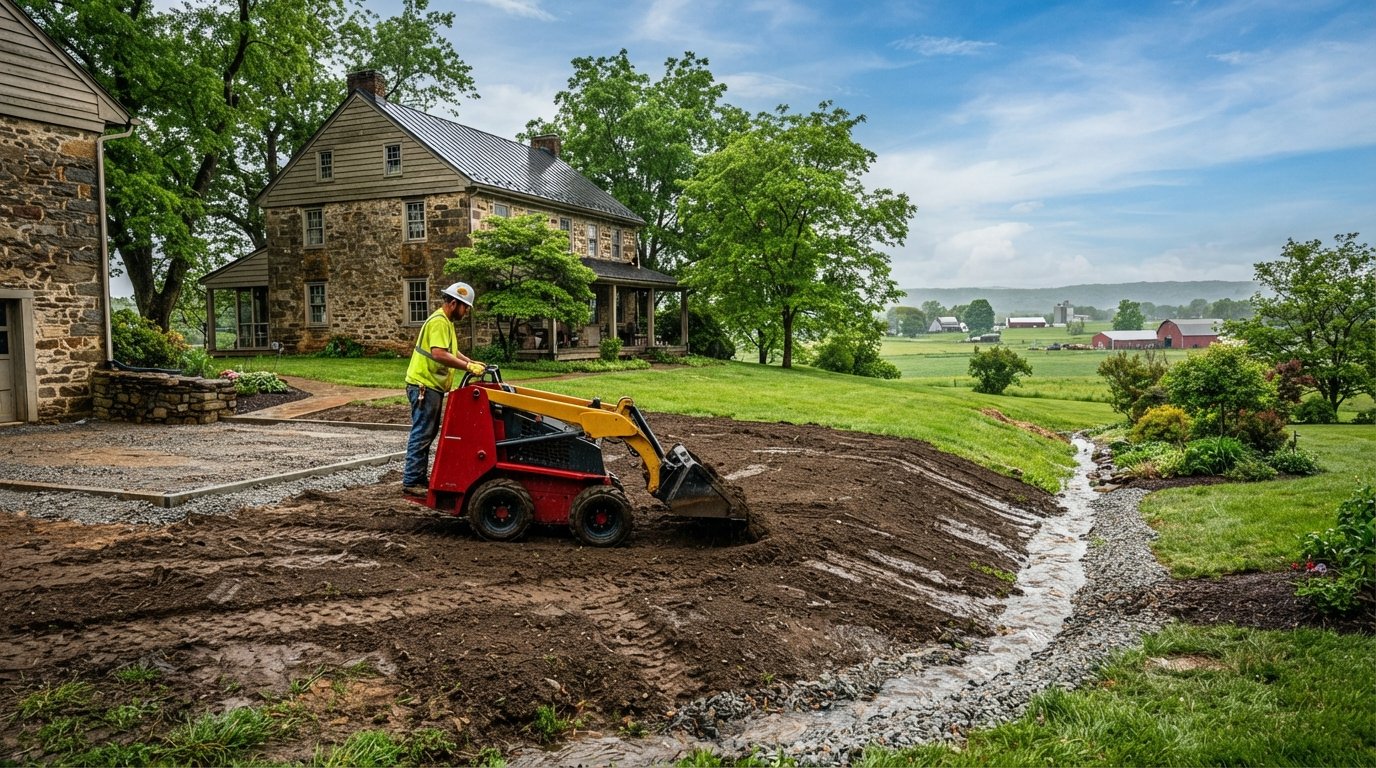
Residential standards recommend a downward pitch of at least six inches over the first ten feet to shed water away from foundation footers. Over time, settled backfill reverses that grade, trapping gallons of torrential runoff directly against foundation masonry. Compact track loaders and mini-skid steers correct negative pitch by importing stable fill dirt and re-establishing deliberate slopes away from exterior walls. This targeted recontouring resolves chronic crawl space humidity and basement seepage without tearing up your entire yard or damaging mature trees.
Designing Functional Vegetated and Rock Swales
Once positive slope shields the structure, shallow drainage channels known as swales guide overland runoff toward designated exit zones. These wide depressions handle heavy stormwater sheets without creating unsightly or hazardous drop-offs:
- Vegetated grass swales: Broad turf valleys that slow rushing water down. They blend into the surrounding lawn and allow easy mower passes without scalping the turf.
- Rock-armored swales: Decorative dry riverbeds lined with smooth river rock and riprap that protect high-velocity runoff channels from severe erosion along steeper slopes.
Establishing correct ground elevation and contoured swales provides the critical baseline for all yard drainage solutions for heavy rain Lancaster homeowners invest in. When planned as part of wider outdoor projects, engineered surface grading prevents standing water, eliminates soggy zones, and preserves property value year after year.
Protecting Hardscapes and Retaining Walls from Stormwater
Water weighs roughly 62.4 pounds per cubic foot. When intense downpours saturate the earth trapped behind masonry structures, that weight converts into crushing hydrostatic pressure. Saturated backfill pushes relentlessly against masonry blocks, bowing vertical facades and fracturing leveling pads. At the same time, unmanaged sheets of water rolling across patios erode the compacted aggregate base beneath individual pavers. Paved living areas require deliberate surface slopes, perimeter channel drains, and subterranean relief lines to survive heavy storms intact. Integrating hardscape construction with yard drainage solutions for heavy rain Lancaster homes need preserves outdoor investments and stops premature structural failure.
Retaining Wall Drainage Backfill Requirements
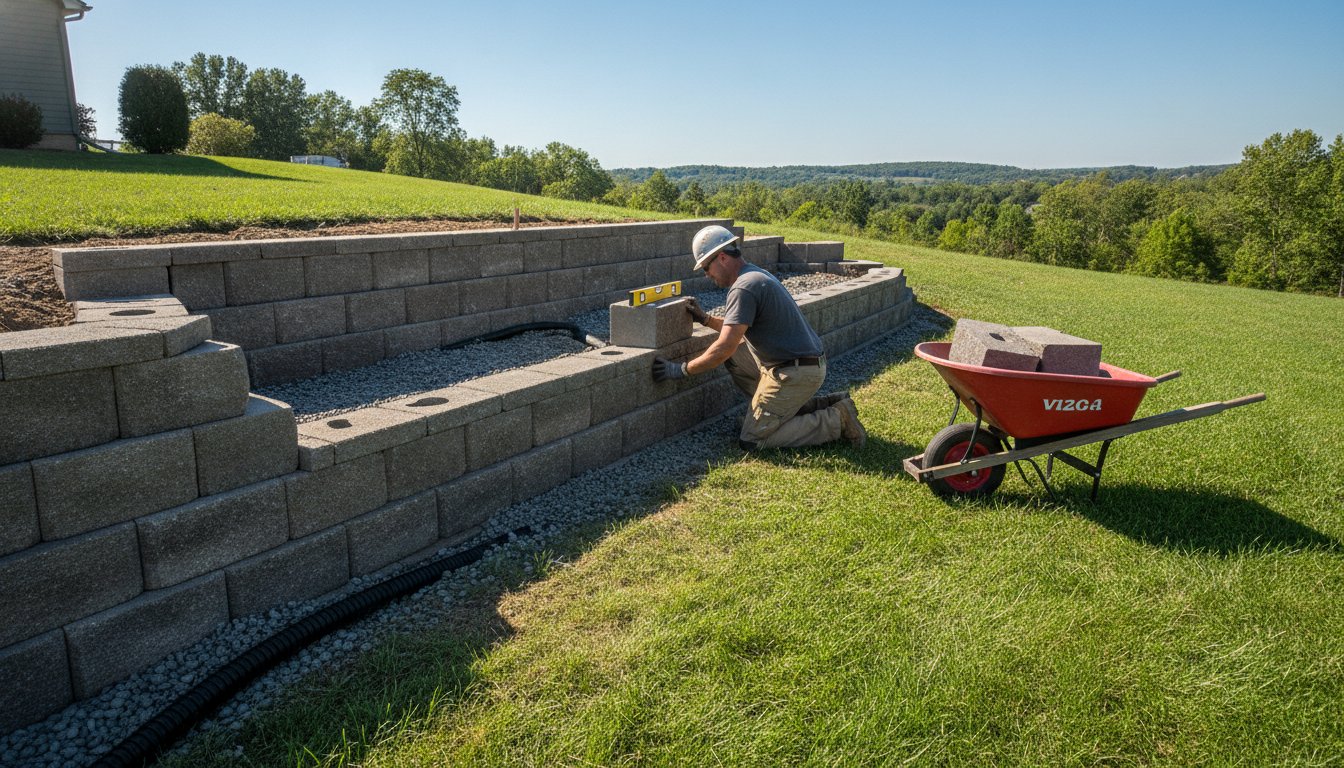
Retaining walls don't fail because of poor block quality. They fail because water accumulates behind them. Relieving hydrostatic load demands a multi-tiered filtration column behind the entire block face. Install a perforated collector pipe along the base footing, pitching it toward daylight to evacuate trapped groundwater. Directly behind the wall, clean, angular crushed gravel replaces native clay to create a free-draining vertical chimney. Discover critical engineering concepts in retaining wall drainage to see how clean stone and footer piping prevent wall blowouts.
Managing Runoff Around Patios and Walkways
Flat hardscape surfaces must shed surface runoff instantly to keep water away from adjoining lawns and foundations:
- Slotted channel drains: Flush trench grates set at patio thresholds capture rushing sheets of storm runoff before they undermine paved edges.
- Engineered surface slope: Proper installations maintain a precise quarter-inch drop per foot, guiding water away from outdoor living zones.
- Base preservation: Intercepting runoff above paved areas prevents washouts beneath joint sand beds and walkway installation bases.
Deliberate surface grades direct high-volume storms safely into subsurface exit routes. Protect your property investment through specialized retaining walls designed for local soil conditions. If shifting blocks or settling pavers threaten your outdoor living area, contact our team today to schedule a structural drainage evaluation.
Selecting the Right Drainage Contractor in Lancaster, PA
Hiring an excavation crew solves only half the problem if they leave your yard rutted and raw. Effective stormwater mitigation requires a team that understands Pennsylvania municipal stormwater guidelines, regional soil conditions, and the fine art of post-trenching site repair. Many generic contractors bury cheap, flexible pipe, backfill the trench with native clay, and walk away. That approach leads to crushed lines, root intrusion, and recurring yard swamps during the next major cloudburst. The right contractor approaches your property holistically, engineering yard drainage solutions for heavy rain Lancaster storms create while protecting your landscape's health and appearance.
Essential Questions to Ask Before Hiring
Vetting prospective drainage companies requires specific technical inquiries. Ask these key questions before signing an agreement:
- How do you establish pipe pitch? Ensure the contractor uses laser transit levels to verify a minimum one percent fall across long runs.
- What pipe material do you install? Insist on smooth-wall, rigid PVC pipe rather than flimsy perforated corrugated plastic that collapses under heavy foot or mower traffic.
- What does post-excavation restoration include? Confirm the scope covers mechanical backfill tamping, precision fine grading, topsoil replacement, and reseeding.
- Where are cleanouts and discharge points located? Look for accessible surface cleanout ports and grated discharge hubs that allow easy visual inspection and seasonal flushing.
Comprehensive Outdoor Solutions with Snappy Landscaping
Snappy Landscaping delivers complete drainage engineering and site restoration across Lancaster, Columbia, and Mountville. We bridge the gap between heavy sitework and finish landscaping, managing every phase from initial trenching to final sodding. Our crews don't simply lay pipe; we analyze your watershed, grade high-risk slopes, and integrate water diversion around your living areas. That end-to-end focus means your drainage system functions flawlessly without sacrificing the appearance of your turf, garden beds, or paved surfaces.
Whether you need to intercept stormwater above a hardscape or eliminate soggy turf pockets, we design integrated yard drainage solutions for heavy rain Lancaster properties depend on year after year. Connect with the local team through Snappy Landscaping to schedule an on-site property evaluation before the next heavy storm strikes.
Take Control of Your Property's Stormwater Today
Severe seasonal cloudbursts don't have to leave your property waterlogged or compromise your foundation. Lancaster County's dense clay soils and steep slope challenges require a deliberate approach that moves beyond temporary fixes. Real storm resilience pairs precision surface regrading with durable, smooth-wall subsurface piping, protecting your basement footers, patios, and retaining walls from destructive hydrostatic pressure.
At Snappy Landscaping, we bring deep local expertise to every drainage challenge. Our comprehensive site capabilities cover precision grading, rigid PVC drainage piping, and complete lawn restoration so your yard looks immaculate once construction wraps up. Investing in engineered yard drainage solutions for heavy rain Lancaster properties demand ensures your turf stays firm and your outdoor investments remain secure year after year.
Don't wait for the next major storm to threaten your home. Schedule a drainage and grading assessment with Snappy Landscaping today and enjoy true peace of mind all season long.
Frequently Asked Questions
How long does it take for a yard to dry out after heavy rain in Lancaster?
A properly graded lawn with functional drainage should dry out within 24 to 48 hours following a storm. Because Lancaster County soils contain dense clay, poorly drained properties often hold standing pools for four to seven days. Lingering water suffocates turf roots, encourages weed growth, and signals that you need engineered yard drainage solutions for heavy rain Lancaster properties require to evacuate storm runoff quickly.
What is the difference between a French drain and a catch basin?
Catch basins target fast-moving surface water, while French drains collect trapped subterranean groundwater. A catch basin uses a visible surface grate to capture concentrated runoff from downspouts or paved slopes during cloudbursts. A French drain uses a buried, perforated pipe embedded in washed aggregate to intercept rising water tables, dry out soggy turf, and keep subsoil firm across low-lying yard sections.
Can poor yard drainage damage my home's foundation or basement?
Yes, chronic pooling near your foundation causes significant structural damage over time. Saturated clay soil expands and creates extreme hydrostatic pressure against exterior basement walls, forcing moisture through hairline cracks and mortar joints. Excess ground saturation also weakens the bearing soil beneath footings, causing uneven foundation settlement, wall bowing, and persistent basement seepage during heavy seasonal storms across Lancaster, Columbia, and Mountville.
Will installing an underground drainage system ruin my lawn?
A professional installation does not permanently ruin your lawn when handled by an experienced contractor. Quality crews use sod cutters to preserve existing grass, set excavated soil onto protective tarps, and backfill trenches with mechanical compaction. Once pipes are laid, replacing the original sod or applying precision fine grading and seed restores turf vigor quickly, leaving behind barely visible trench lines.
Why does water pool on my property when my neighbor's yard stays dry?
Micro-topography, subsurface soil density, and roof orientation explain why identical weather affects neighboring yards differently. Your property may sit at a slight low elevation point in the local watershed, receiving excess sheet flow from adjoining lots. Settled fill dirt, compacted topsoil from equipment, or unrouted downspouts often trap heavy water on one parcel while neighboring lots shed runoff naturally.
Are downspout extensions enough to stop yard flooding during severe storms?
Surface splash blocks and short plastic extensions rarely handle high-volume rainfall. Concentrated roof downpours quickly overwhelm short surface pipes, pooling water within feet of the foundation or creating mud slicks in nearby turf. Routing downspouts into solid-wall buried PVC transit lines delivers true storm protection by carrying thousands of gallons safely past fragile structures to dedicated underground collection basins or daylight outlets.