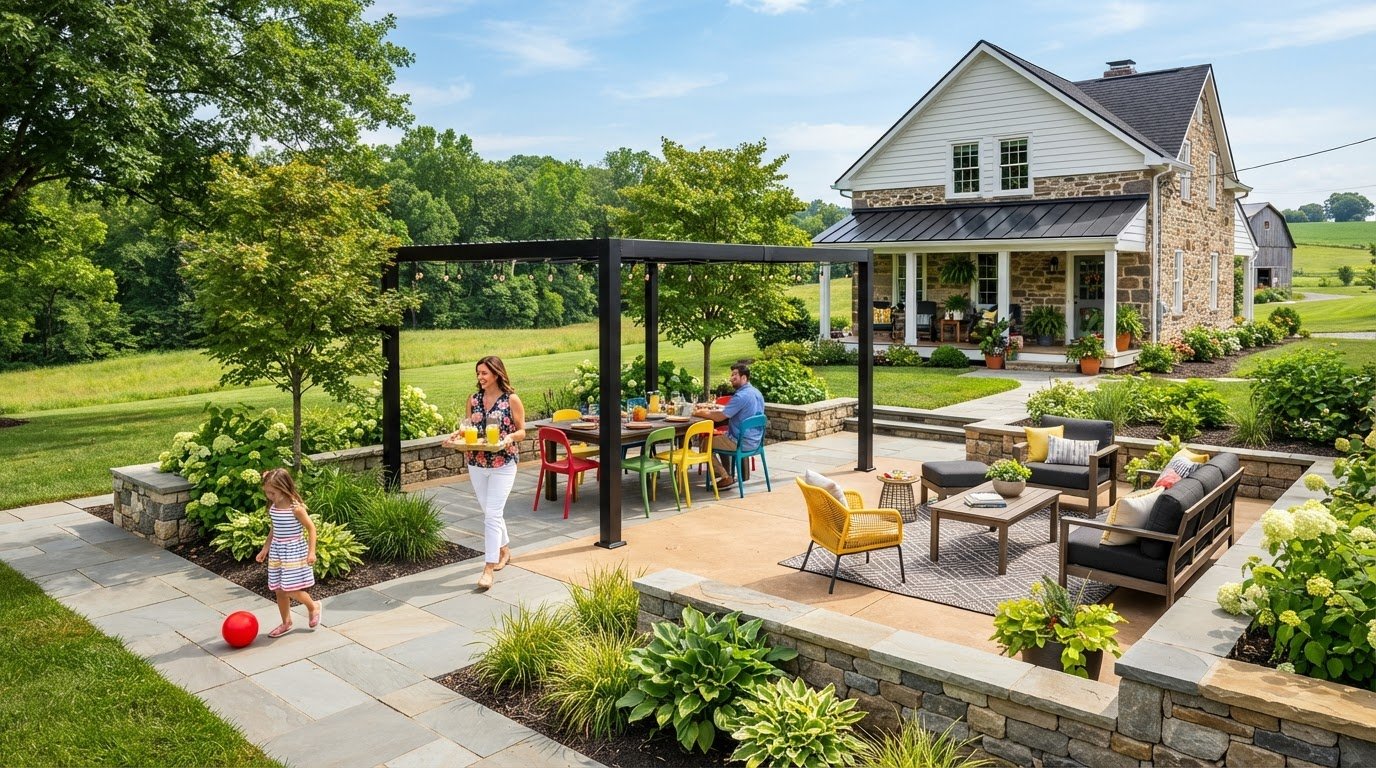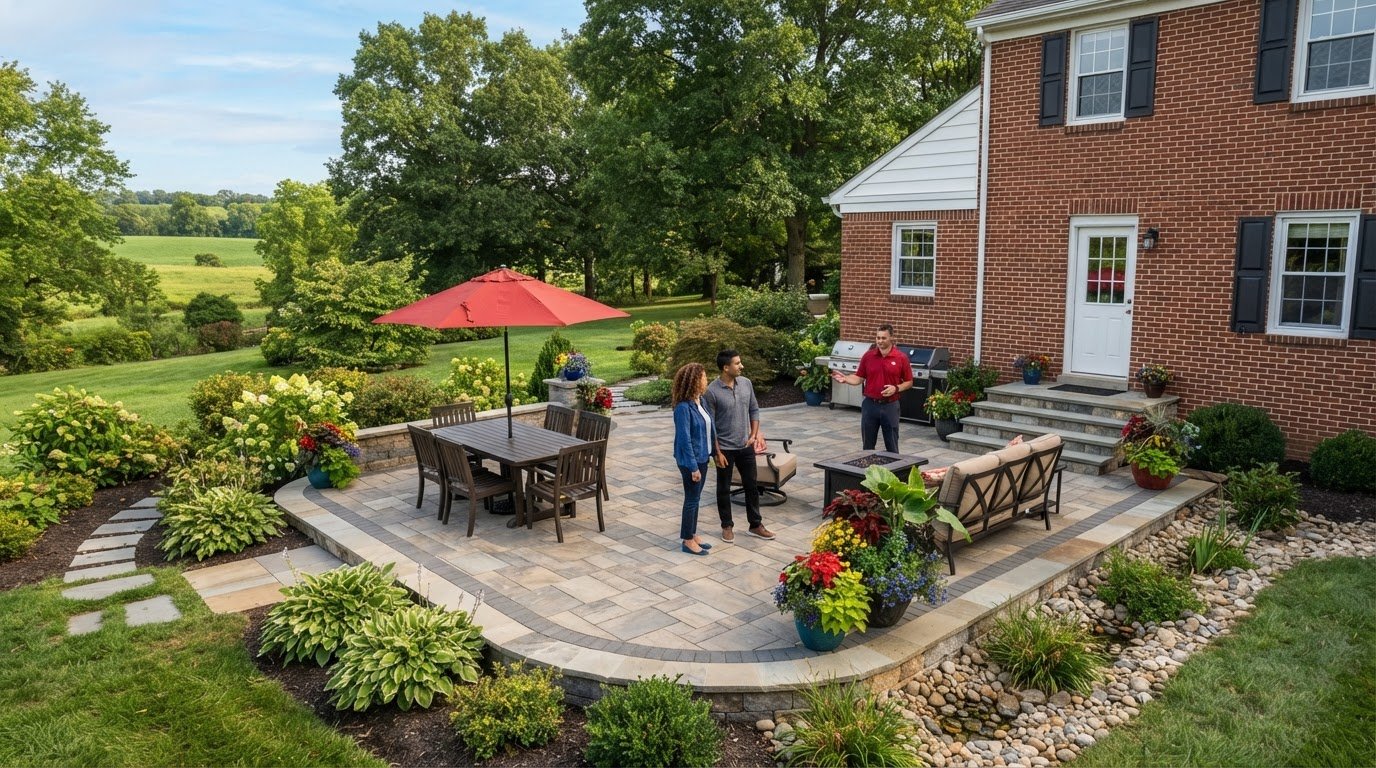

Patio Design and Installation Lancaster: The 2026 Homeowner’s Resource Guide
A beautiful patio is a liability if it transforms your backyard into a swamp during the first heavy spring rain. In Lancaster County, aesthetics must always follow engineering. When you invest in patio design and installation Lancaster homeowners expect more than just a place for a grill. You need a structural asset that withstands deep winter freezes and manages the runoff from our unique rolling terrain.
We understand the frustration of watching concrete crack or pavers shift because the base wasn't prepared for Pennsylvania's clay soil. You deserve an outdoor living space that increases your property value without creating a list of future repairs. This guide gives you the tools to plan a durable, high-value patio tailored specifically to the local climate. We will walk through the essentials of proper grading, material longevity, and the often confusing township permit process. By the end, you'll know exactly how to build a functional entertainment area that stays level and dry for years to come.
Understanding Lancaster’s Unique Patio Design Requirements
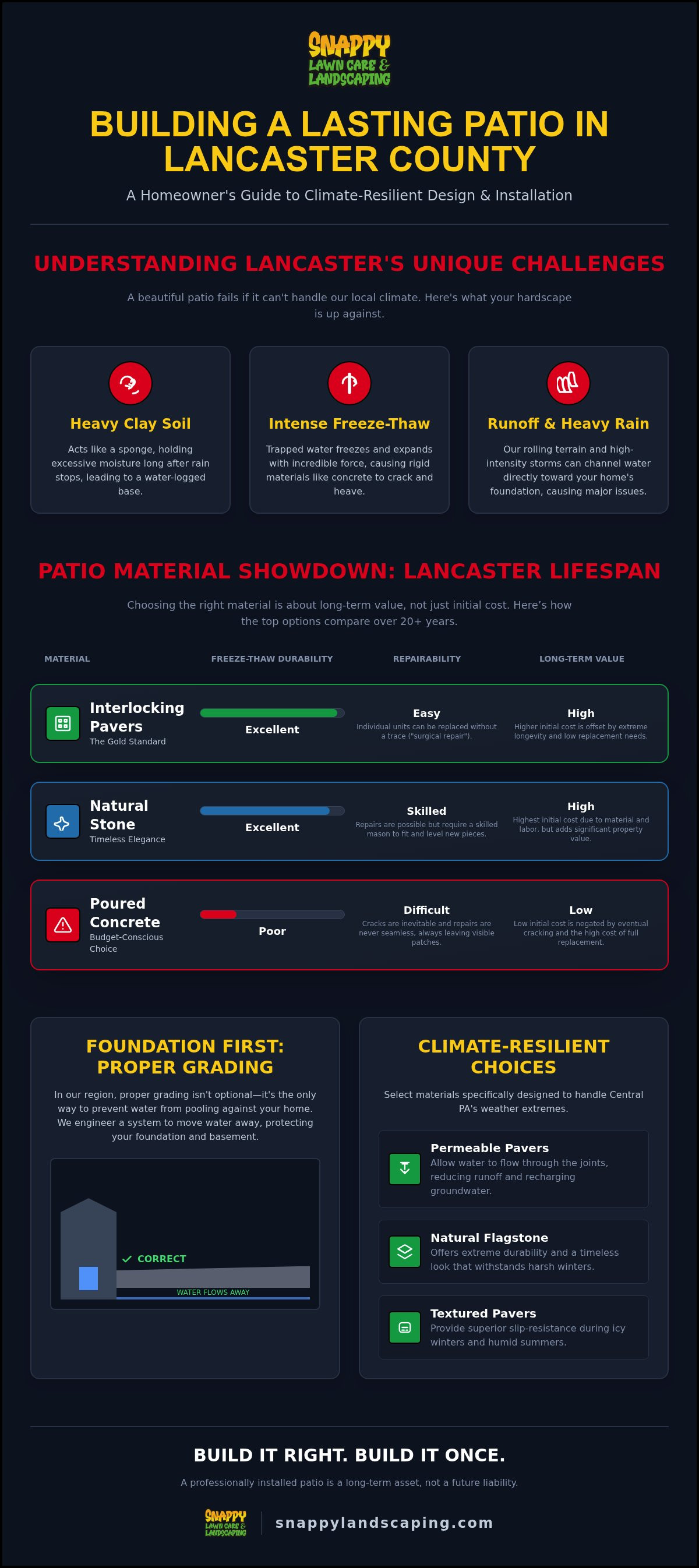
In Lancaster, a patio is more than just a flat surface. It's a structural challenge. The region's heavy clay soil acts like a sponge, holding moisture long after the rain stops. When winter hits, that trapped water freezes and expands with incredible force. If your patio isn't designed to breathe or drain, it will crack and heave. Successful patio design and installation Lancaster projects start below the surface. We focus on the foundation because the soil in Columbia and Mountville is rarely level or stable. Proper grading isn't optional; it's the only way to prevent water from pooling against your home's foundation. Beyond durability, a well-executed design boosts curb appeal. In the competitive Lancaster real estate market, a functional outdoor living space is a high-value asset that sets your property apart.
Climate-Resilient Hardscaping for Central PA
Central PA weather is becoming more unpredictable. By 2026, we're seeing more frequent, high-intensity rain events that overwhelm standard drainage. We recommend "floating" paver systems over traditional poured concrete for several reasons. Pavers are individual units that shift slightly during the freeze-thaw cycle without snapping. They allow for a flexible base that handles Lancaster's humidity and heavy snow loads. Choosing high-density, low-porosity stone ensures your surface won't flake or spall when the temperature drops below zero. Consider these resilient options:
- Permeable Pavers: These allow water to flow through the joints, reducing runoff and protecting your lawn.
- Natural Flagstone: Offers extreme durability and a classic look that complements Lancaster's historic architecture.
- Textured Concrete Pavers: Provide better slip resistance during icy winters or humid summers.
Local Zoning and Permit Essentials
Navigating local townships can be a headache for homeowners. Most Lancaster County municipalities have strict rules regarding impervious surfaces. This refers to any ground cover that doesn't allow water to soak through naturally. If your new patio exceeds a certain percentage of your lot, you'll likely need a professional grading plan. This ensures your project doesn't flood your neighbor's yard or disrupt local stormwater systems. At Snappy Landscaping, we handle the technical details of township compliance. We ensure your patio installation meets all local codes, so you don't face fines or forced removals later. We also integrate retaining walls when necessary to manage slopes and satisfy grading requirements simultaneously.
Comparing Patio Materials: Pavers, Concrete, and Natural Stone
Choosing the right material for your patio design and installation Lancaster project requires looking past the initial price tag. You need to consider how a surface performs over a 20-year lifespan in Pennsylvania's volatile climate. Poured concrete often appeals to the budget-conscious, but it's a rigid material in a shifting environment. Over a decade of freeze-thaw cycles, concrete slabs inevitably snap and crack. These repairs are never seamless. In contrast, pavers and natural stone provide the structural flexibility needed to survive Lancaster winters without catastrophic failure. While the initial investment is higher, the long-term value is found in the lack of replacement costs.
Maintenance requirements also dictate your daily experience. Concrete is low-maintenance until it fails, but it requires periodic sealing to prevent salt damage. Pavers need occasional joint sand top-offs and power washing to prevent weeding and moss growth. Natural stone demands specialized cleaning to avoid etching the surface. From an aesthetic standpoint, your choice should complement your home's architecture. Whether you're matching a historic brick farmhouse or a modern suburban build, the material choice sets the tone for the entire landscape.
The Case for Interlocking Pavers
Interlocking pavers are the gold standard for Lancaster hardscaping because they function as a modular system. If a single unit cracks or a tree root pushes up a section, we can pull up the affected pavers, fix the base, and reset them. You can't perform this type of surgical repair with a concrete slab. Permeable pavers are another functional choice for homeowners managing stormwater. These units feature wider joints filled with small aggregate, allowing heavy rain to return to the earth rather than running off into your basement or your neighbor's yard. If you're unsure which material fits your budget and lifestyle, you can request a professional site assessment to review your options.
Natural Stone and Flagstone Elegance
Natural stone offers a timeless aesthetic that matches the historic limestone and brick homes found throughout Lancaster County. Irregular flagstone creates an organic, rustic look, while dimensional stone provides clean lines for modern designs. Thermal properties are a major factor for south-facing yards. Light-colored natural stones like limestone stay significantly cooler under the July sun compared to dark manufactured pavers. However, installation is complex. Every piece must be hand-selected and fitted by a skilled installer. This labor-intensive process ensures a stable surface but increases the project's lead time and initial cost.
Essential Hardscape Integration: Drainage and Retaining Walls
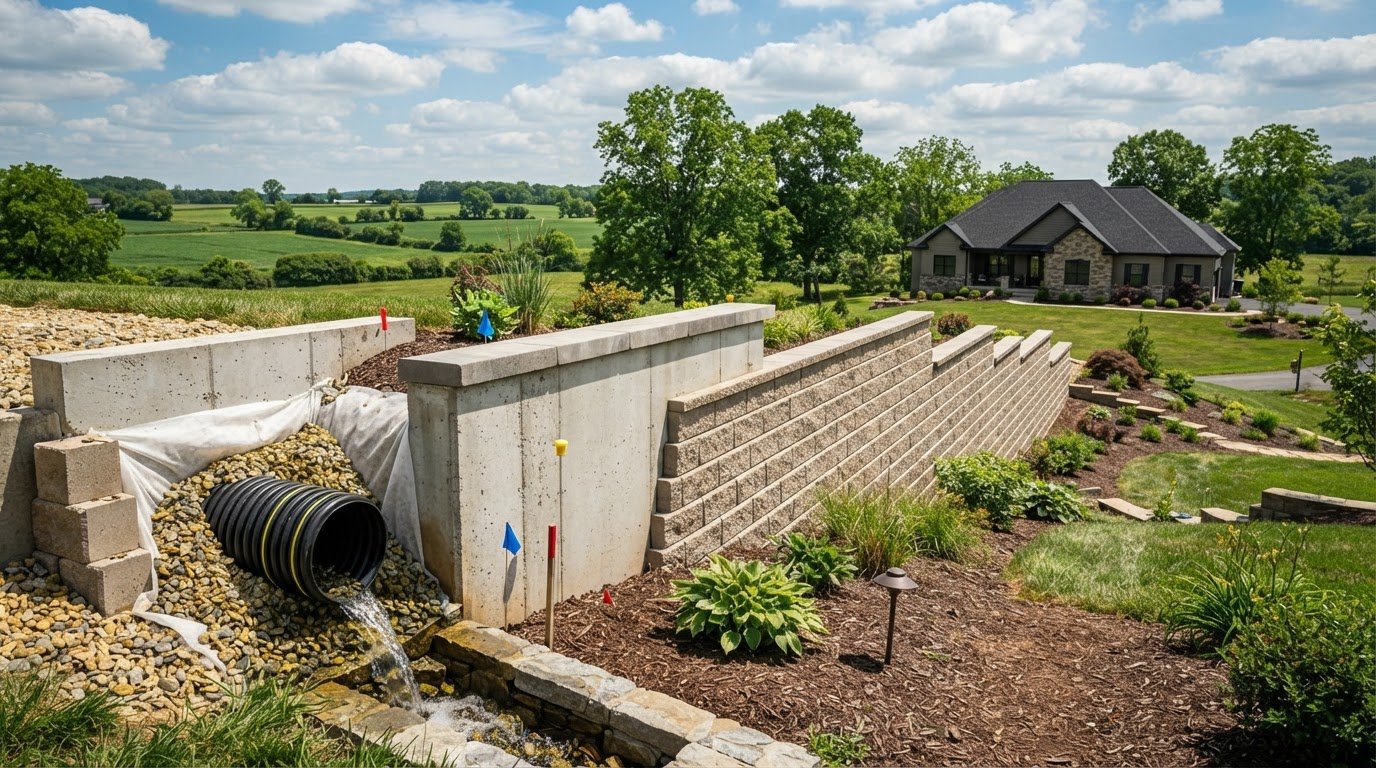
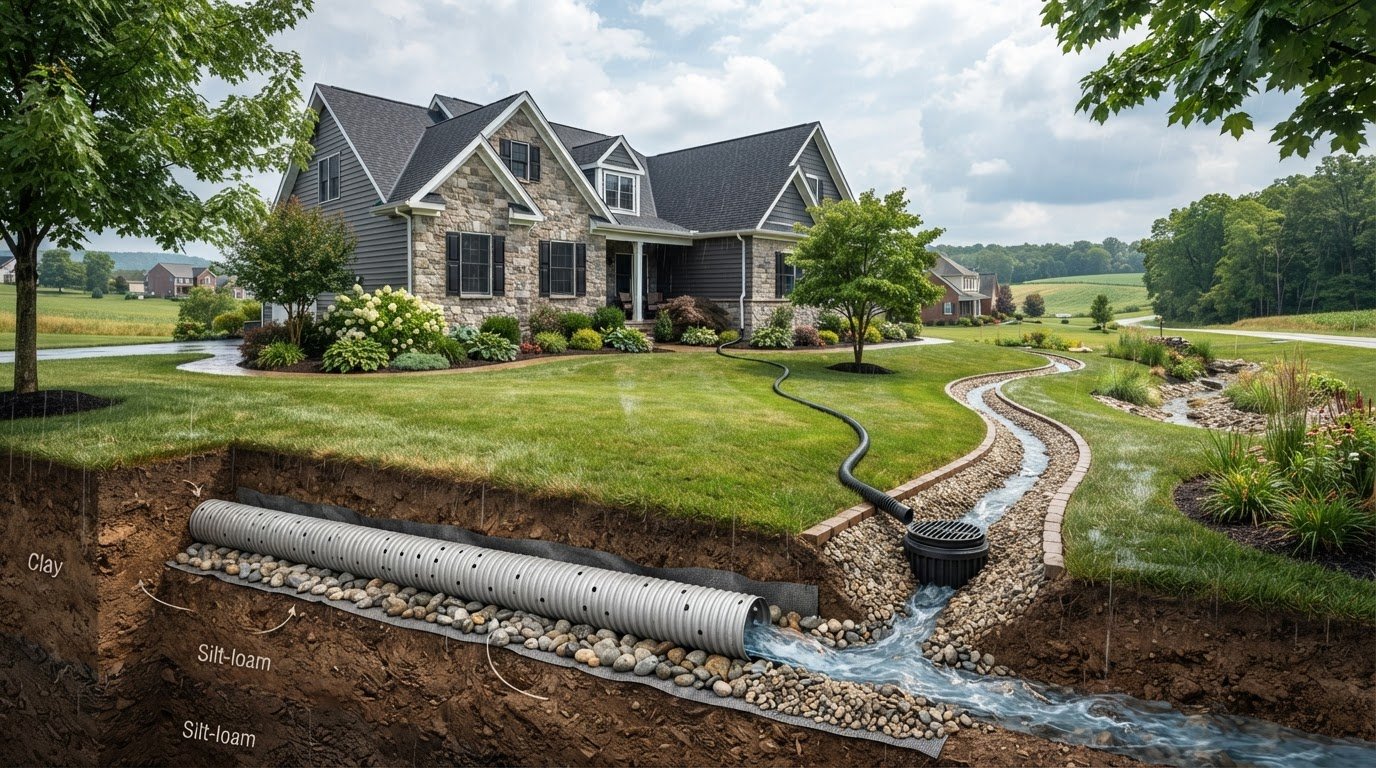
A patio that collects water is a failed investment. Before we lay a single stone, we perform a comprehensive drainage assessment. Lancaster's rolling hills often send water directly toward your home's foundation. We don't just build a surface; we engineer a system to move water away. By integrating French drains and catch basins directly into your patio design, we ensure your yard stays dry and your basement stays safe. This proactive approach separates professional patio design and installation Lancaster from amateur attempts that ignore the local terrain. Catch basins are strategically placed at low points to collect surface water, while French drains handle subsurface moisture. This prevents the "swamp" effect common in clay-heavy yards after a Central PA thunderstorm.
Ignoring water runoff can lead to costly structural damage. When water pools against a patio's edge, it saturates the ground and weakens the base. This leads to sunken pavers and uneven surfaces within just a few seasons. We prioritize the restoration of order by identifying these risks during the planning phase. Our goal is to create a functional space that manages environmental stress without requiring constant intervention from the homeowner. We handle the heavy lifting of grading and water diversion so you can enjoy your space with peace of mind.
Solving Slope Challenges with Retaining Walls
If your yard is sloped, you don't have to settle for a small, cramped patio. We use retaining walls to carve out level living spaces from steep terrain. It's vital to distinguish between structural and decorative walls. Structural walls hold back tons of earth and require specific engineering to handle hydrostatic pressure. Decorative walls define spaces or provide extra seating. We select materials that complement your custom patio, ensuring a cohesive look across the property. Whether we use modular blocks for a clean finish or natural stone for a rustic feel, the goal is long-term stability and visual harmony. A well-placed wall doesn't just hold dirt; it expands your usable square footage.
Smart Drainage Solutions for Patios
Effective drainage is often invisible to the naked eye. We pitch every patio at a precise angle to guide water toward designated runoff areas. This hidden diversion prevents puddling and dangerous ice patches in the winter. The real work happens in the sub-base, where we use layers of crushed stone to facilitate natural percolation. For a deeper look at how these elements work together, read our guide on Custom Hardscaping Lancaster County. Proper water management isn't an "add-on" service. It's a foundational requirement for any durable hardscape. We use specific gradations of clean stone that won't clog over time, creating a permanent solution for your property's water needs.
The Patio Installation Process: From Design to Completion
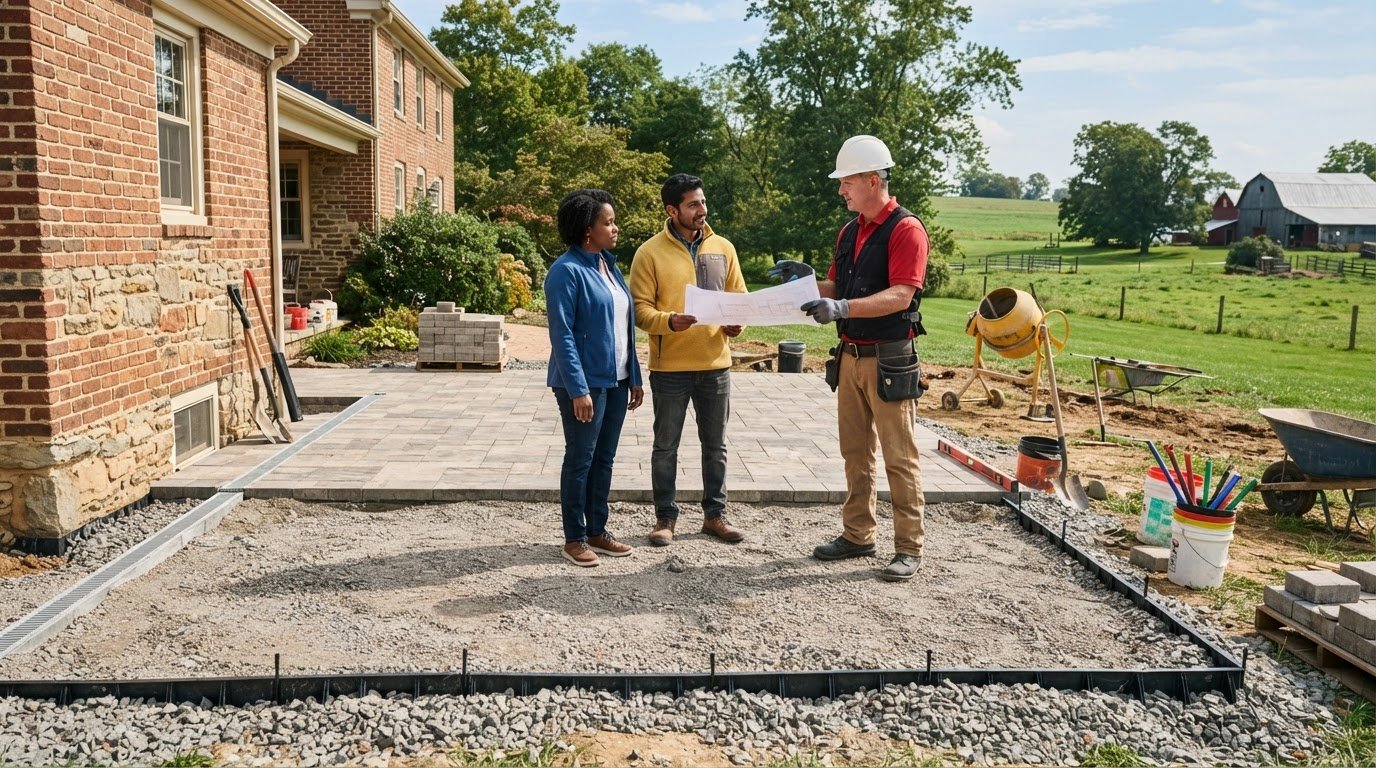
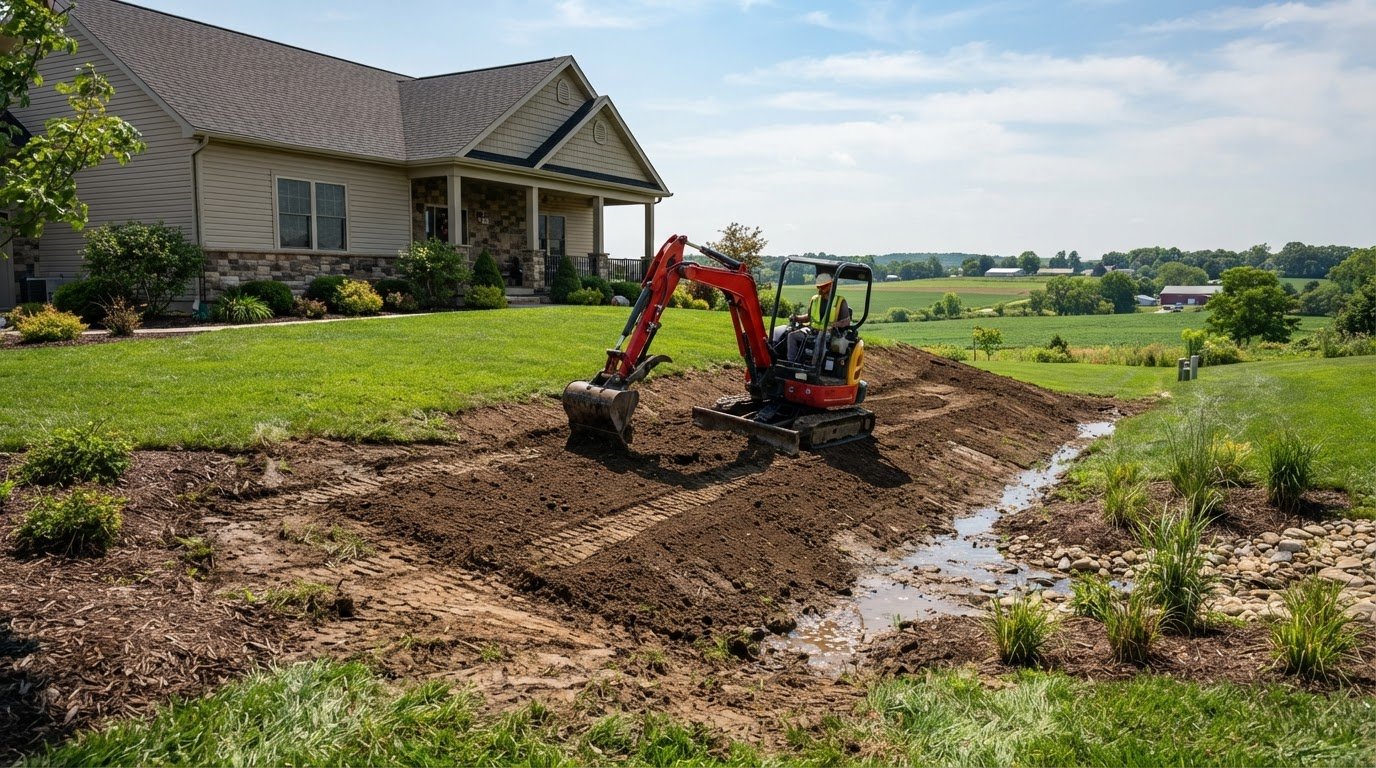
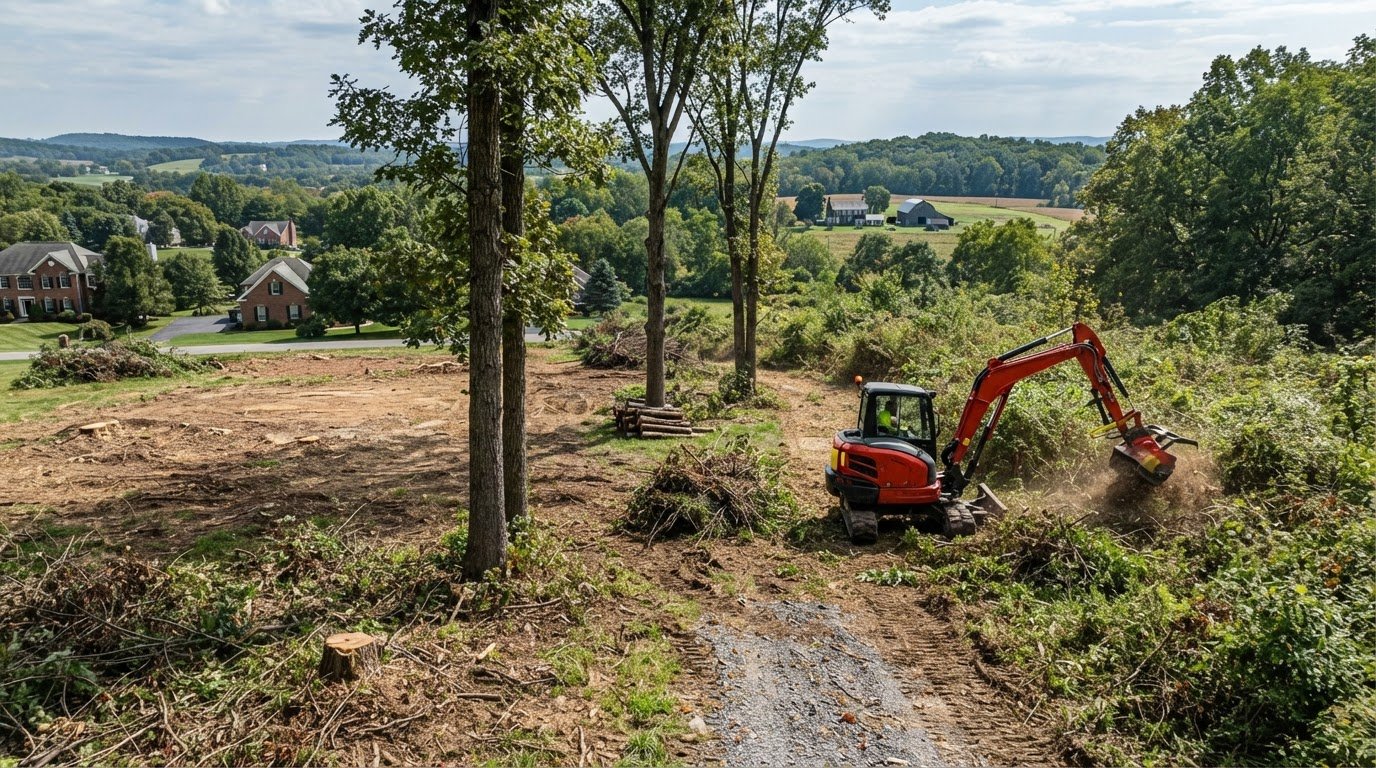
Professional patio design and installation Lancaster follows a strict, methodical sequence. We start with an on-site consultation to map the footprint and coordinate utility marking through PA One Call. This prevents service interruptions and ensures safety before any ground is broken. Once the site is marked, we begin excavation. We remove enough soil to stabilize the sub-grade, often utilizing geo-textile fabric to keep the base from sinking into the native clay. This step is essential for the restoration of order on your property.
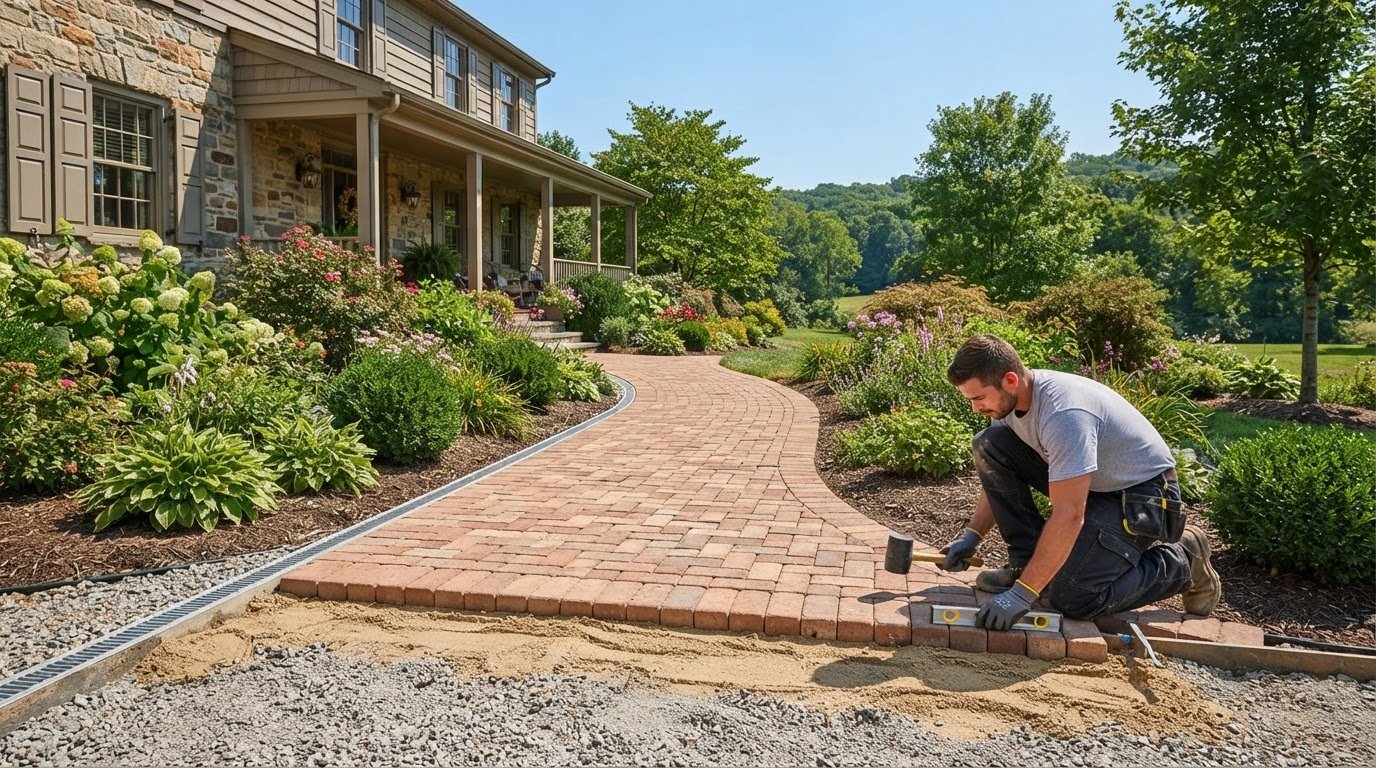
The foundation is the most critical phase of the build. We install a minimum of 6 inches of 2A modified stone. We compact this stone in layers, known as lifts, to achieve maximum density. This rigid base prevents the shifting and settling common in amateur builds. After the base is set, we lay the stone or pavers according to the design pattern. We secure the entire perimeter with professional-grade edge restraints to prevent lateral movement. Finally, we sweep polymeric sand into the joints and perform a final vibration compaction to lock the entire system in place.
The Importance of Professional Excavation
Managing displaced soil is a major logistical hurdle for most homeowners. On a standard project, we often remove several tons of earth. We handle the hauling and disposal so your property stays clean and organized. Proper compaction during this stage is the only way to prevent future settling and low spots. You can see the results of this methodical approach in our outdoor projects gallery. We ensure the sub-grade is pitched correctly to work with the drainage systems discussed earlier.
Timeline and Homeowner Preparation
Most standard patio builds in Lancaster County take between five and ten business days. This timeline depends on weather conditions and site complexity. You should clear the work area of furniture, toys, and debris before our crew arrives. We require a clear path for heavy equipment like skid steers or mini-excavators. Once the project is complete, we perform a final walkthrough to ensure every detail meets our standards. We provide specific instructions on care and maintenance to ensure your surface survives the next 20 years of PA weather. If you're ready to start your project, contact us for a professional estimate today.
Selecting Your Lancaster Patio Builder: Why Snappy Landscaping?
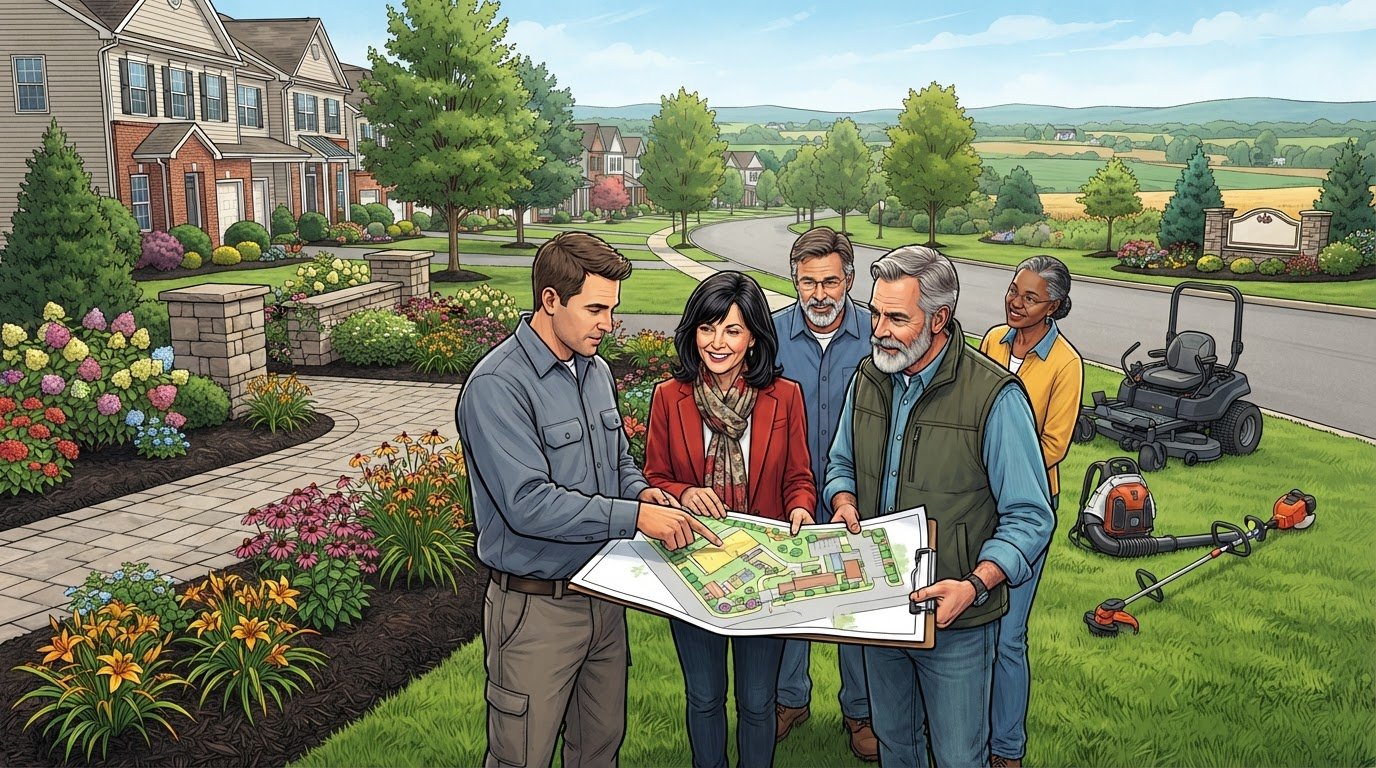
Choosing a contractor for patio design and installation Lancaster is a decision that affects your property's value and structural health for decades. We take a pragmatic approach to every site we visit. We don't just see a backyard; we see a complex system of drainage, soil stability, and functional flow. Our deep local knowledge of the terrain in Lancaster, Columbia, and Mountville allows us to anticipate problems before they occur. We maintain transparent communication throughout the entire project so you're never left guessing about the status of your build. Because we also provide Lawn Maintenance, we understand how to protect your existing turf during construction and ensure the new hardscape doesn't interfere with future yard care.
Our methodical workflow ensures that every patio design and installation Lancaster project we touch is built to last. We focus on the restoration of order, taking the burden of property management off your shoulders. We believe in providing clear, actionable information that builds immediate trust. You won't find fluff or poetic descriptions here. You'll find a team of dedicated experts who value your time and your peace of mind.
The Snappy Landscaping Difference
Our consultations are direct and solution-oriented. We avoid abstract promises and focus on the engineering that makes an outdoor space durable. We don't just lay stone; we fix property headaches. Our expertise covers the full spectrum of outdoor work, from precision Patio Installation to integrated Drainage Solutions. We leave your property better than we found it, ensuring all grading is perfect and all debris is hauled away. This commitment to professional standards is why homeowners trust us with their most significant outdoor investments.
Start Your Outdoor Transformation Today
Transformation starts with a clear plan and a competent partner. Request a professional on-site estimate to get an accurate assessment of your property's specific needs. Before we arrive, identify your primary goals for the space. Think about whether you're hosting large family gatherings or seeking a quiet evening retreat. It's also helpful to note any known water pooling issues or soft spots in your yard. Review our Custom Patio Installation Cost guide to help align your vision with your budget. We're ready to help you build a functional, high-value patio that stands the test of time.
Build a Durable Lancaster Outdoor Space That Lasts
Success in Central PA hardscaping requires more than just picking a stone. It demands a technical understanding of Lancaster's clay soil and freeze-thaw cycles. We've established that a high-value patio must integrate professional grading and drainage systems to prevent structural failure. By prioritizing engineering over simple aesthetics, you ensure your investment survives the next 20 years of Pennsylvania weather.
Snappy Landscaping is locally owned and operated in Lancaster County. We specialize in an integrated approach to drainage and hardscaping that solves property management burdens for our neighbors. Our pragmatic, solution-oriented design approach focuses on stability and functionality from the first on-site consultation. When you choose us for your patio design and installation Lancaster project, you get a partner dedicated to the restoration of order on your property. We don't just lay pavers; we manage outcomes and prevent future issues.
Ready to transform your backyard into a functional entertainment space? Request Your Custom Patio Consultation with Snappy Landscaping today. Let's build a foundation for your home's value together.
Frequently Asked Questions
How much does patio installation cost in Lancaster, PA?
Total project costs depend on material selection, site accessibility, and the complexity of required drainage work. Every property in Lancaster presents unique challenges, such as steep slopes or heavy clay soil, which influence the final investment. We provide detailed estimates after an on-site evaluation to ensure all structural requirements are met. Focusing on long-term durability over the lowest initial bid prevents expensive repairs later.
Do I need a permit for a patio in Lancaster County?
Yes, most townships in Lancaster County require a permit for new hardscape projects. Regulations often focus on impervious surface limits to manage stormwater runoff across the property. If your project exceeds a specific square footage, you might also need a professional grading plan. We handle the technical documentation and submission process for local townships to ensure your project remains compliant with municipal codes.
What is the best month to install a patio in Pennsylvania?
April through October is the ideal window for patio installation in Pennsylvania. This period offers stable ground conditions and manageable humidity levels for setting base materials. While we can work in late autumn, early spring installs ensure your outdoor space is ready before the peak summer season. Avoiding deep winter installs ensures the ground isn't frozen, which is critical for achieving proper soil compaction.
How do I fix a patio that is sinking or has drainage issues?
Fixing a sinking patio demands excavating the affected area to address the underlying base failure. Most sinking results from poor compaction or inadequate drainage that allows water to wash away the sub-base. We identify the root cause, install a deeper stone foundation, and integrate drainage solutions like French drains. This restoration process ensures the surface remains level and dry even after heavy rainfall.
Are pavers better than stamped concrete for PA winters?
Pavers outperform stamped concrete in our local climate because they function as a flexible system. Concrete is a rigid slab that inevitably cracks during the freeze-thaw cycle, and these cracks are impossible to hide. Pavers shift slightly without snapping, making patio design and installation Lancaster much more durable. Modular units can be individually replaced or reset if the ground moves over time.
How long does a professional patio installation take?
A standard professional installation typically takes between five and ten business days. Larger projects involving retaining walls or extensive drainage work can extend this timeline. We follow a methodical workflow that includes excavation, base preparation, and stone laying. Weather conditions can impact the schedule, but we maintain clear communication to keep the project moving toward a timely completion and the restoration of order.
Can you build a patio on a sloped yard?
You can build a patio on a sloped yard by using retaining walls to create a level terrace. This process involves cutting into the slope and filling the area behind a structural wall to provide a flat foundation. We specialize in managing Lancaster's hilly terrain, using engineered walls to expand your usable living space. Proper grading ensures water flows around the new structure rather than pooling against it.