
Seasonal Lawn Cleanup Lancaster PA: The 2026 Property Owner’s Guide
Is your weekend spent wrestling with a rake actually protecting your turf, or are you just moving debris from one corner to another? In our region, a seasonal lawn cleanup Lancaster PA homeowners can rely on is more than a cosmetic chore; it is a technical restoration process. You already understand the physical strain of manual hauling and the confusion of navigating municipal waste disposal rules. It is frustrating to invest your limited free time into yard work only to see lawn diseases or mold take hold because the timing was wrong.
We are here to change that. You can master your yard’s transition through Pennsylvania’s toughest seasons with professional strategies that protect your root systems and maximize curb appeal. This guide provides a clear, actionable plan for both spring and fall maintenance. We will show you how to prevent soil compaction, manage local perennials, and achieve a pristine property reset without the backbreaking labor. Stop guessing about pruning times and start following a proven workflow that delivers results and restores order to your landscape.
Why Seasonal Cleanup in Lancaster PA is Critical for Lawn Health
A seasonal lawn cleanup Lancaster PA residents schedule isn't just a cosmetic choice. It is a biological necessity. Think of your turf as a living system that needs to breathe. When layers of organic debris, fallen leaves, and dead wood accumulate, they create a physical barrier. This barrier blocks sunlight and prevents essential gas exchange between the soil and the atmosphere. Without this "reset," your grass struggles to survive the transition between Lancaster’s volatile seasons.
Our region sits firmly in USDA Zone 6b. This means our local cool-season grasses, like Kentucky Bluegrass and Tall Fescue, rely on specific dormancy cycles to survive the winter and thrive in the spring. If you leave a thick carpet of wet leaves on your lawn, you are effectively "smothering" the turf. This trapped moisture creates a breeding ground for fungal pathogens and snow mold. These diseases can decimate a healthy lawn in weeks, leaving you with expensive restoration bills once the snow melts. A professional cleanup removes these risks while preparing your ground for critical follow-up services like aeration or mulch installation.
The Freeze-Thaw Cycle and Soil Compaction
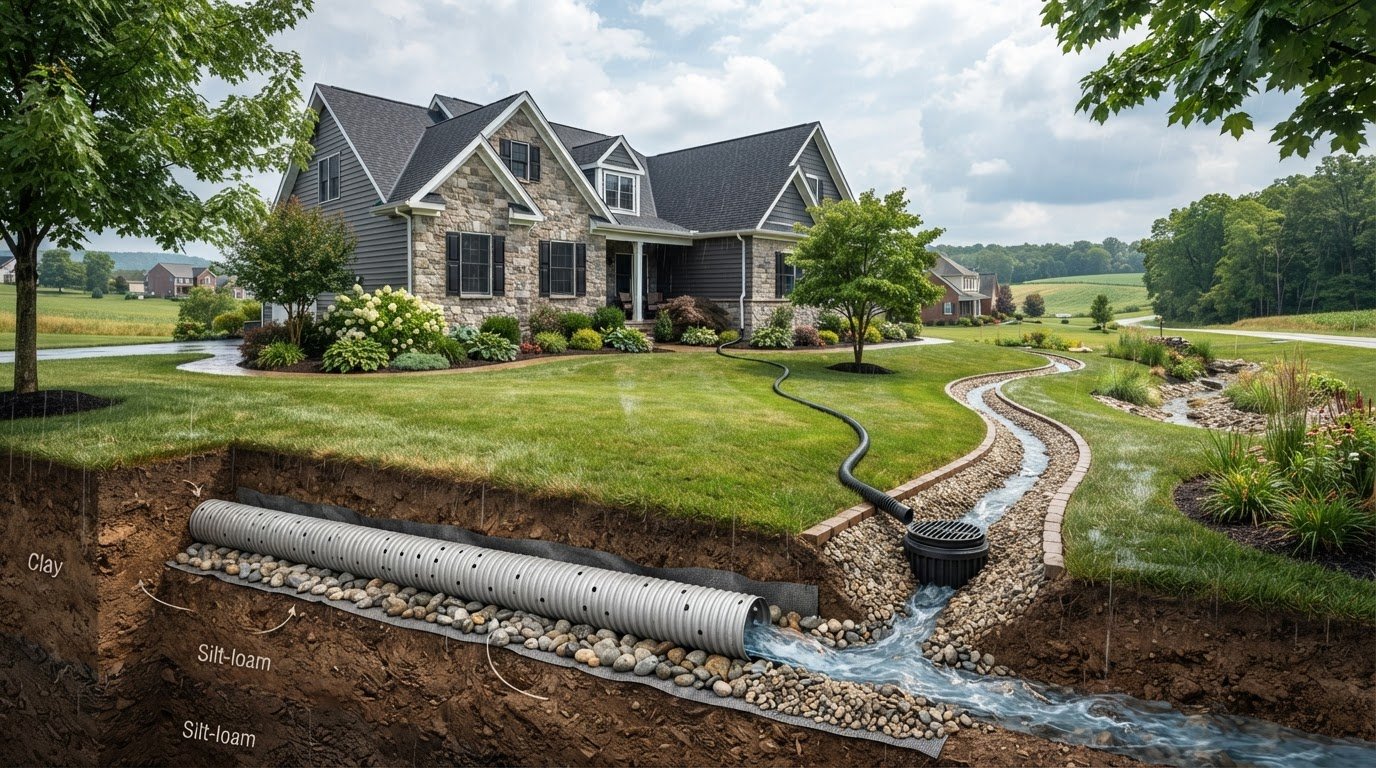
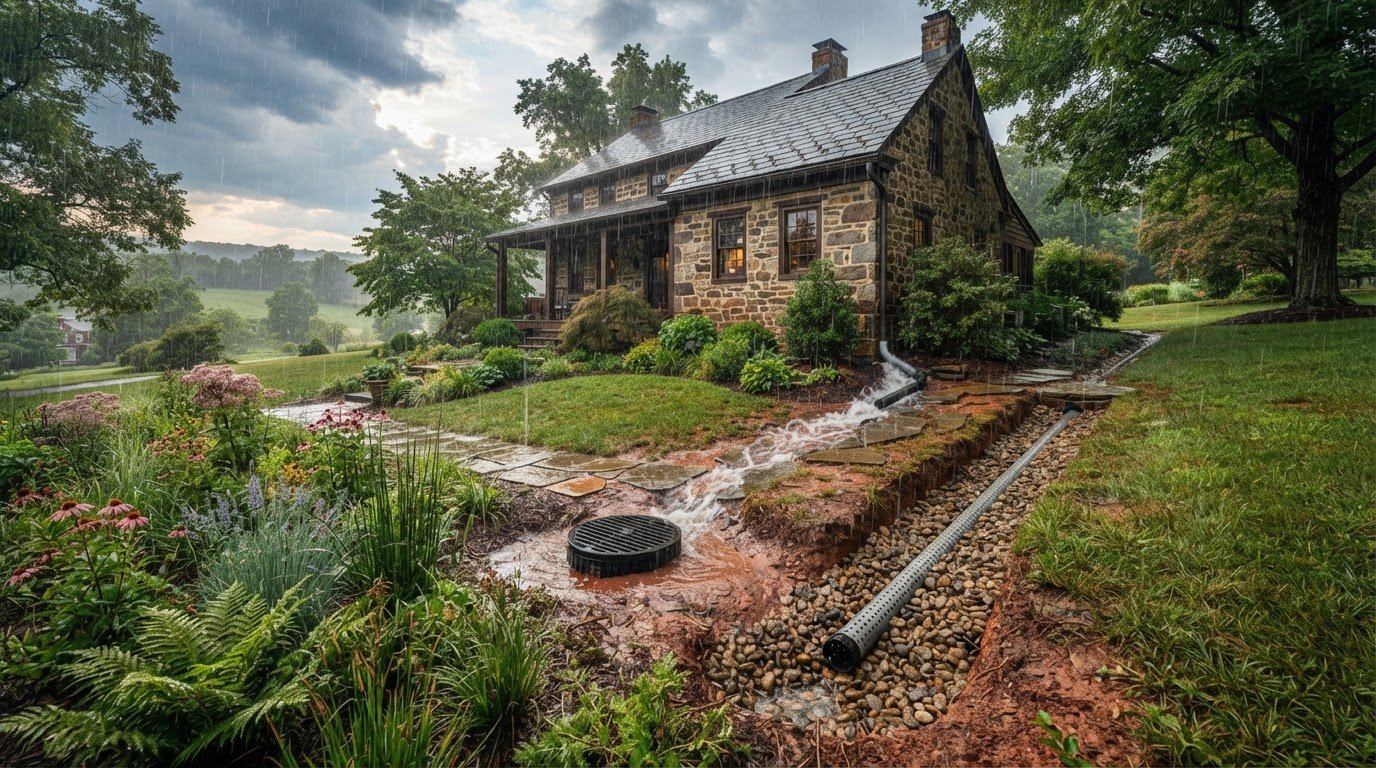
Lancaster County is known for its heavy clay soil. While nutrient-rich, this soil type is prone to severe compaction. During a typical Pennsylvania winter, the ground undergoes a constant freeze-thaw cycle. When debris is left on the surface, it traps excessive moisture against the clay. This prevents the soil from drying out properly during thaws, which leads to a muddy, compacted mess that suffocates root systems. Removing debris early ensures that moisture can move through the soil profile rather than sitting on top. A clean lawn improves spring drainage efficiency and prevents standing water issues near your home.
Preventing Local Pest Infestations
Your yard debris is more than just an eyesore; it's a high-end hotel for local pests. Deep leaf litter provides the perfect humid environment for tick habitats and serves as a primary overwintering site for the Spotted Lanternfly. By clearing these areas, you disrupt their life cycles before they can damage your trees or threaten your family's health.
- Tick Control: Removing damp leaves reduces the population of deer ticks near play areas.
- Rodent Prevention: Clearing brush piles near the foundation stops mice and voles from nesting against your home.
- Insect Management: Eliminating organic waste removes the egg-laying sites for invasive species common in Lancaster.
Think of a thorough cleanup as your first line of defense in a comprehensive pest management strategy. It's much easier to prevent a nesting issue in November than it is to trap a colony of rodents in March. Restoring order to your property edges protects both your landscape and your home's structural integrity.
Spring vs. Fall Cleanup: A Technical Breakdown
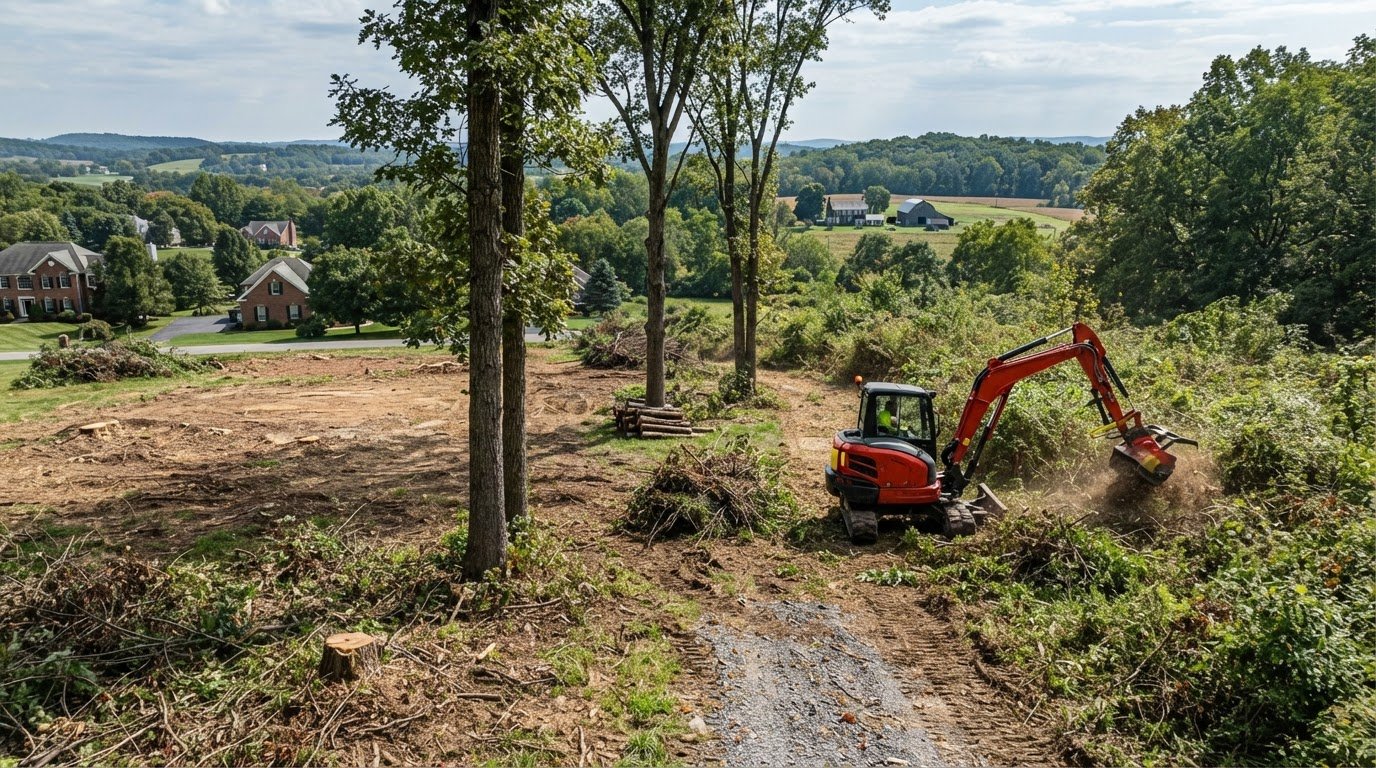
Spring and fall cleanups serve two distinct masters. Spring is about preparation; fall is about protection. In Lancaster, the window for a spring seasonal lawn cleanup Lancaster PA usually opens in late March as the ground thaws. This is your chance to strip away "winter kill"-those bleached-out stalks of ornamental grasses and brittle, shattered shrub branches that didn't survive the ice. For property owners in Columbia or Mountville bordering wooded areas, this is also the critical time for professional brush clearing to reclaim your property lines before the spring growth explosion hides the encroachment. Waiting until May is too late; the weeds will have already established their root systems.
Contrast this with the November fall cycle. Your focus shifts from growth to defense. You aren't just tidying up for the holidays; you're hardening your landscape against the coming freeze. A professional fall cleanup removes the heavy organic load that would otherwise rot on your turf for four months. This strategic timing ensures your property enters dormancy in a clean, stable state, which significantly reduces the restoration work required the following year.
The Spring Restoration Checklist
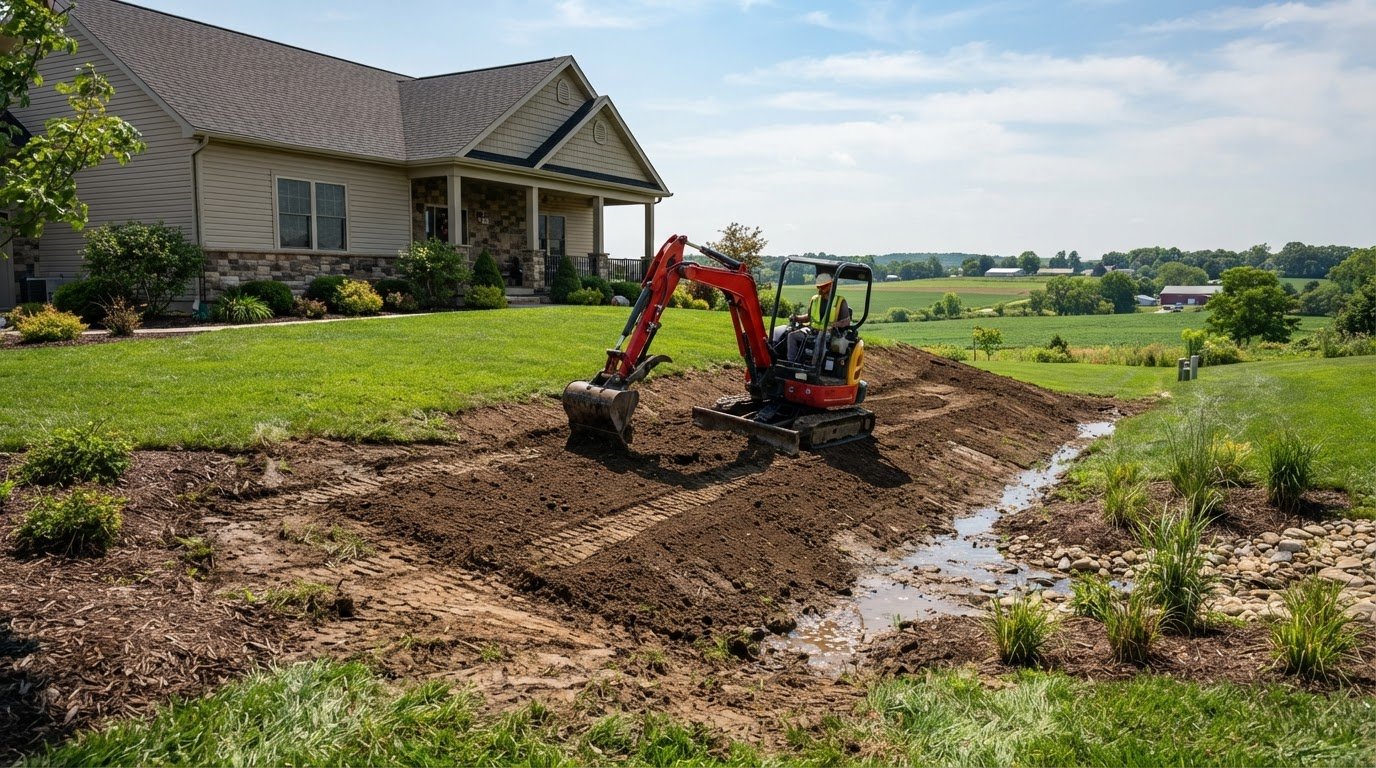
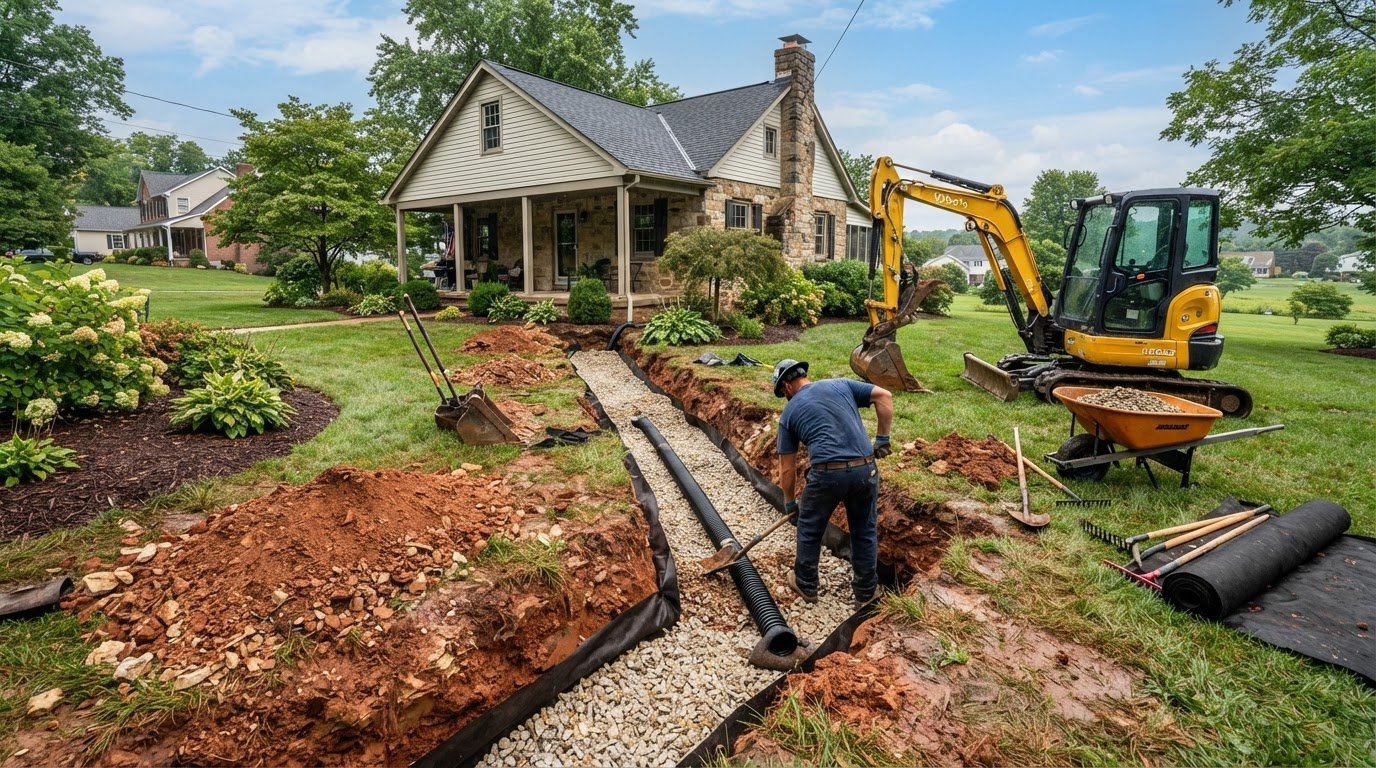
Success in the spring depends on speed and precision. Once the debris is cleared, we prioritize bed edging and the first application of mulch. Crisp edges don't just look better; they create a physical barrier that prevents grass from creeping into your flower beds. This is also the time to address drainage issues. April’s heavy rains will find every grading flaw in your yard. Fix these low spots now before you invest in new seed or plantings. Finally, prune your late-blooming shrubs to encourage vigorous summer growth. Removing dead wood now allows the plant to direct all its energy into new, healthy stems.
The Fall Protection Strategy
Your fall strategy centers on leaf management and height control. A thorough seasonal lawn cleanup Lancaster PA ensures that no leaves are left to mat down and suffocate your grass. We also execute a specific "final mow." For Pennsylvania cool-season grasses, we drop the mower deck to approximately 2.5 inches. This shorter height prevents the grass blades from folding over and matting under heavy snow, which is the primary cause of snow mold. While we are there, we handle perennial cut-backs and bulb planting. Clearing away spent perennials removes the overwintering sites for pests, while planting bulbs now guarantees a burst of color the moment the ground thaws in March.
The Efficiency Gap: DIY vs. Professional Commercial Equipment
The "weekend warrior" approach often turns a single Saturday chore into a three-week marathon. Most residential-grade leaf blowers lack the CFM (cubic feet per minute) required to move heavy, wet Pennsylvania leaves. You eventually resort to manual raking, which leads to significant physical strain and missed family time. A professional seasonal lawn cleanup Lancaster PA team uses high-velocity commercial equipment to finish in hours what takes a homeowner days. This isn't just about speed; it's about the opportunity cost of your limited free time and the physical toll of repetitive labor.
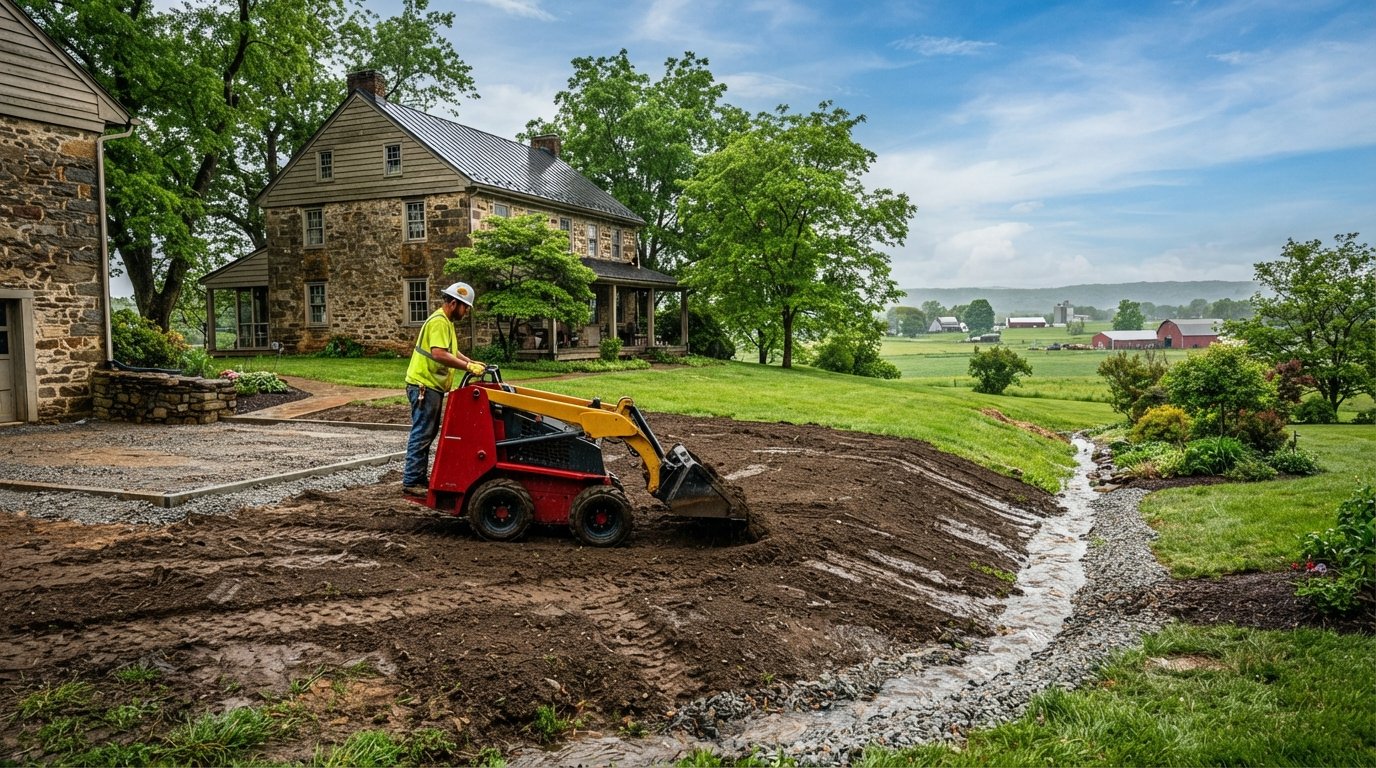
Commercial debris loaders and high-capacity trucks change the logic of the job. Instead of moving piles from one spot to another, we vacuum the debris directly into our trucks. This eliminates the "double handling" that makes DIY projects so slow. You avoid the blisters, the back pain, and the frustration of a windstorm blowing your piles back across the lawn before you can bag them. By handing off the heavy labor, you ensure the job is done correctly the first time without sacrificing your entire month to yard work.
Commercial Grade Tools for Lancaster Properties
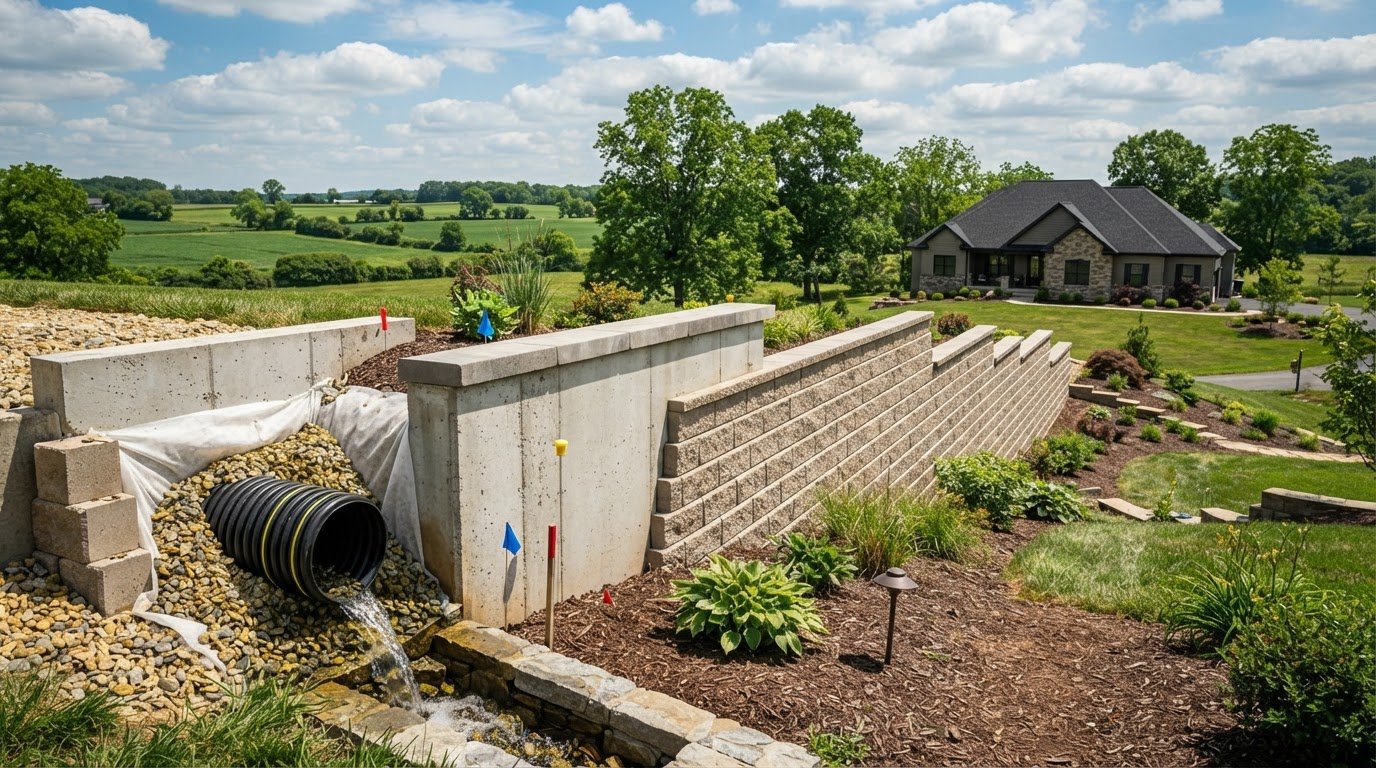
Stand-on blowers and industrial vacuum systems are the backbone of a professional operation. These machines clear large lots with surgical precision, reaching deep into fence lines and property edges where debris hides. Beyond the cleanup, our crews have the trained eyes to spot failing retaining walls or emerging drainage issues that are often buried under overgrown brush. We use dedicated mechanical bed edgers to create deep, sharp lines. These lines provide the "sharp" look that residential string trimmers simply cannot replicate, giving your property an immediate boost in curb appeal.
Solving the Yard Waste Problem
Then there's the disposal headache. Many Lancaster County municipalities have strict, often confusing rules for yard waste pickup. Bagging dozens of heavy, wet bags for the curb is exhausting. It often requires you to wait weeks for specific pickup dates while the bags sit on your driveway. Snappy Landscaping removes this burden entirely. We handle the hauling and disposal of all organic waste from your property immediately. Our process includes transporting the material to professional composting facilities. This ensures your yard waste is recycled into nutrient-rich soil rather than taking up space in a local landfill.
Step-by-Step Guide to a Professional-Grade Cleanup
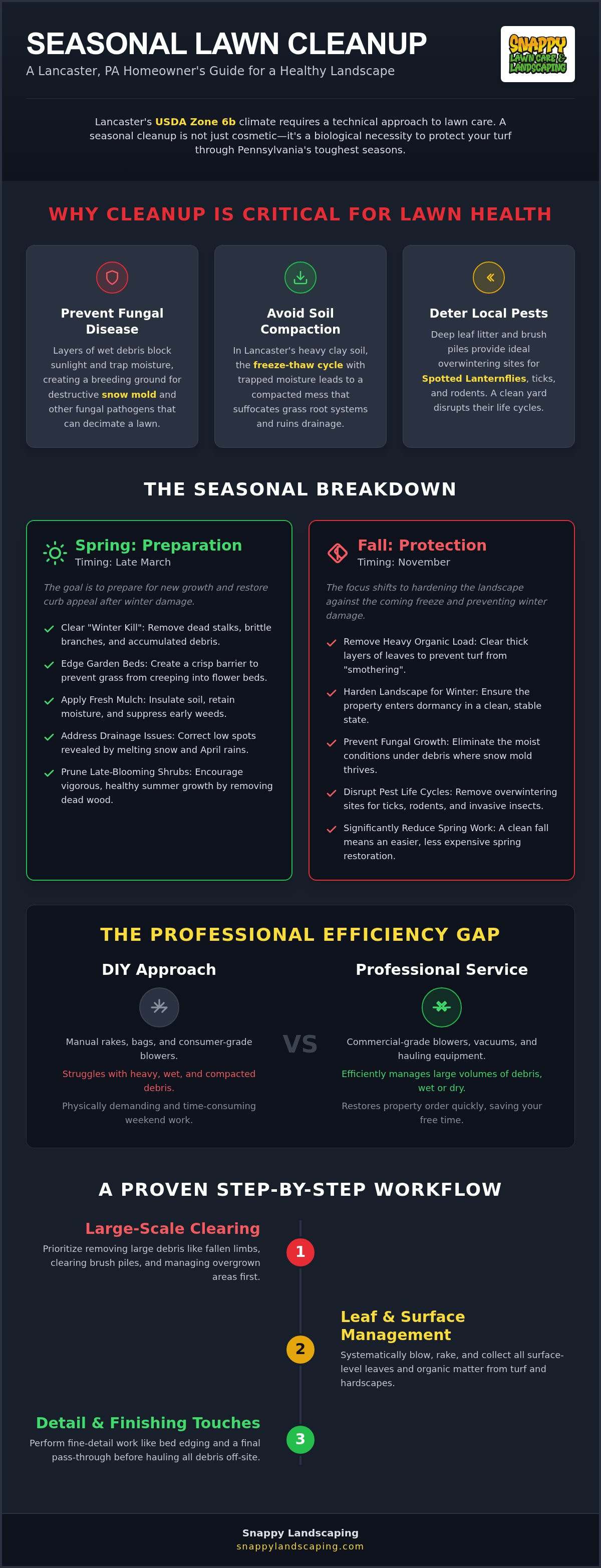
Executing a seasonal lawn cleanup Lancaster PA property owners can be proud of requires a methodical workflow. Don't start with the small stuff. You must focus on the "big picture" first to clear the way for precision work. This logical sequence maximizes efficiency and ensures that no task needs to be repeated because of falling debris or shifting piles. By following a structured process, you restore order to the landscape while protecting the long-term health of your turf and plantings.
Step 1: Debris and Brush Clearing
Start with the heavy lifting. Remove fallen branches and clear overgrown property lines to establish your working boundaries. This phase is the best time to inspect your drainage swales and gutter outlets for blockages. Obstructions here lead to basement seepage and soil erosion during Lancaster’s heavy spring rains. Identify and remove invasive brush that has crept into your landscape before it chokes out your ornamental plants. Take this opportunity to check the structural health of your trees and shrubs; look for split bark or signs of winter stress that may require professional tree trimming to prevent future hazards.
Step 2: Leaf Management and Bed Prep
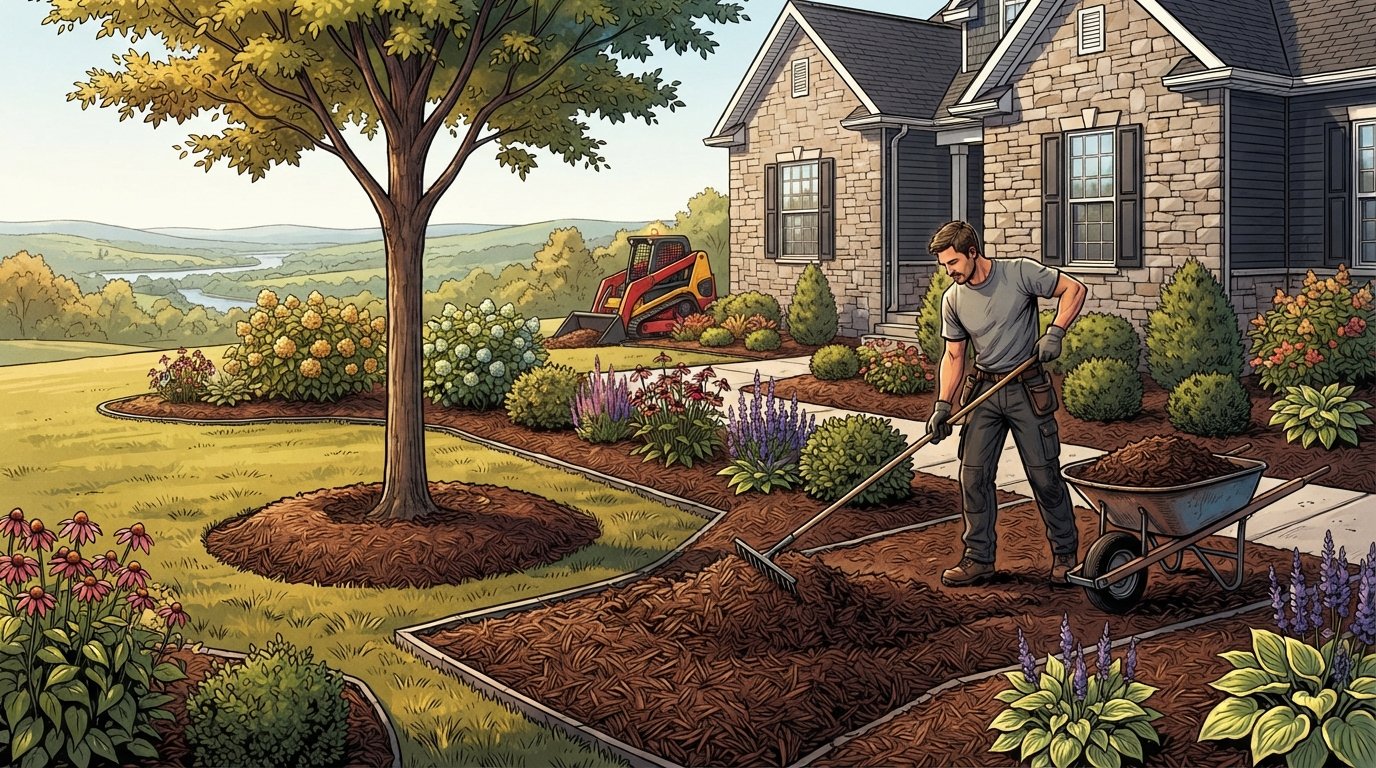
Once the large debris is gone, pivot to leaf management. Blow out leaves from garden beds, window wells, and the tight spaces under decks where moisture and mold thrive. After the beds are clear, focus on the edges. We use mechanical bed edgers to create a deep, vertical cut that provides a clean transition between your lawn and landscape beds. Mechanical edging is significantly more durable and uniform than manual spade edging, which often leaves uneven lines and loose soil that quickly washes away during the first storm.
Step 3: Pruning and Mulch Installation
The final phase involves refining the plants and protecting the soil. Perform "dead-heading" on perennials to remove spent stalks and execute light pruning on shrubs to maintain their shape. Apply a fresh layer of mulch as the finishing touch. Mulch does more than just look good; it suppresses weed growth and regulates soil temperature against our erratic Pennsylvania weather. Learn more about our mulch installation services in Lancaster PA to see how we finalize our restoration process. A professional seasonal lawn cleanup Lancaster PA ensures your property is not just clean, but prepared for the growth or dormancy ahead.
Ready to reclaim your weekend and see your property transformed? Schedule your seasonal cleanup today and let our team handle the heavy labor for you.
Restore Your Property with Snappy Landscaping
Don't let your yard dictate your schedule or drain your energy. Snappy Landscaping provides the professional restoration your property needs to thrive through every Pennsylvania season. We position ourselves as the premier solution for both residential homeowners and HOA boards who demand high standards and consistent results. Our team handles the heavy lifting, from routine lawn mowing and maintenance to complex brush clearing for overgrown property edges. As a local, family-owned business deeply rooted in Lancaster County, we take pride in restoring order to our neighbors' landscapes. We remove the physical burden of property management so you can reclaim your weekends for family and relaxation.
Choosing a professional partner means you aren't just hiring labor; you're investing in expertise. We understand the specific challenges of Lancaster’s geography, from clay soil compaction to the seasonal pest cycles we’ve discussed. Our crew arrives with commercial-grade equipment designed to eliminate debris efficiently and safely. You avoid the blisters, the back strain, and the logistical nightmare of yard waste disposal. Instead, you get a pristine, "reset" property that is ready for the next phase of growth or dormancy. We focus on the functionality of your outdoor space, ensuring that every drainage swale is clear and every bed edge is sharp.
Comprehensive Maintenance for Lancaster, Columbia, and Mountville
Our service area extends across Lancaster, Columbia, and Mountville, where we maintain a commitment to local property standards. We believe in building year-round partnerships with our clients. Beyond a seasonal lawn cleanup Lancaster PA residents trust, we offer commercial snow and ice removal to keep your property safe during the harshest winter months. This continuity ensures that the team caring for your turf in the spring is the same one protecting your pavement in January. We know your property’s specific quirks and needs. Because our schedule fills up rapidly during the peak transition months of March and November, we encourage you to book your service early. Securing your slot ahead of time ensures your cleanup happens at the optimal biological moment for your lawn’s health.
Get Your Free Quote Today
Take the first step toward a worry-free landscape by requesting a no-obligation estimate through our contact form. We don't just send a price; we provide a professional walkthrough of your property. This assessment allows our experts to identify hidden needs, such as emerging drainage issues or trees that require trimming, before they evolve into expensive repairs. This proactive approach saves you money and prevents property damage over time. Stop wrestling with wet leaves and heavy branches. Trust a methodical, expert team to deliver the professional standards your home deserves. Contact Snappy Landscaping for your seasonal cleanup quote and experience the immediate relief of a well-managed property.
Secure Your Property’s Future This Season
Effective property management requires more than just a quick rake. It demands a technical understanding of Lancaster’s specific climate and soil needs. You now know that a strategic seasonal lawn cleanup Lancaster PA protects your turf from the smothering effects of wet debris and the dangers of local pest habitats. By prioritizing timing and using a logical sequence of operations, you ensure your landscape remains healthy and resilient throughout the year.
Snappy Landscaping is a locally owned and operated partner dedicated to restoring order to your property. We bring commercial-grade equipment to every job to ensure maximum efficiency and professional-grade results. Whether you need comprehensive brush clearing or a fresh application of mulch, we provide the relief of expert property management. You don't have to sacrifice your limited free time to achieve a pristine outdoor space. Trust a methodical team to manage the heavy labor so you can focus on what matters most.
Take control of your property’s transition and enjoy the peace of mind that comes with a professionally maintained lawn.
Frequently Asked Questions
When should I schedule my spring cleanup in Lancaster, PA?
Schedule your spring cleanup in late March or early April as soon as the ground thaws. This timing allows our team to remove winter debris before the first growth flush of your cool-season grass. If you wait too long, new growth can hide debris, making the process less efficient and potentially damaging emerging plants. Booking early ensures you secure a slot before the peak spring rush.
Is it better to mulch in the spring or the fall?
Spring is the ideal time for mulch installation to suppress weeds and retain moisture for the summer. However, a light application in the fall protects root systems from the harsh Pennsylvania freeze and thaw cycles. Most Lancaster property owners choose spring for the visual reset and weed control benefits. We recommend a fresh layer once your spring cleanup and bed edging are complete.
Can I leave leaves on my lawn to act as fertilizer?
Leaving whole leaves on your lawn is a mistake because they create a wet mat that smothers your turf. While finely mulched leaves can return nutrients to the soil, thick layers of oak or maple leaves block sunlight and trap fungal pathogens. A professional seasonal lawn cleanup Lancaster PA ensures that heavy organic loads are removed entirely. This prevents winter die-back and protects your grass's health.
Do you provide brush clearing for overgrown property edges?
Yes, we provide professional brush clearing for overgrown property lines and wooded edges. Our team uses commercial equipment to remove invasive species, thickets, and large debris that manual tools can't handle. This service is essential for reclaiming your yard and preventing pests from nesting near your home. We specialize in restoring order to properties in Lancaster, Columbia, and Mountville that border natural areas.
How long does a professional seasonal cleanup usually take?
Most professional cleanups take between four and eight hours depending on the property size and debris volume. A standard residential lot in Lancaster County is often completed in half a day by our expert crew. Larger properties or wooded lots with heavy brush clearing needs may require a full day or multiple visits. We prioritize efficiency to minimize the disruption to your schedule while ensuring a thorough restoration.
What happens to the yard waste after the cleanup is finished?
We haul away all organic waste immediately after the job is finished. You won't have to deal with heavy bags sitting on your curb or waiting for municipal pickup schedules. All collected leaves, branches, and brush are transported to local composting facilities. This professional disposal method is environmentally responsible and keeps your driveway and street clear of unsightly yard waste that often attracts local pests.
Do you offer seasonal cleanup for HOA communities in Lancaster County?
Yes, we provide comprehensive HOA lawn maintenance and seasonal cleanups for communities throughout Lancaster County. Our team works with board members and property managers to maintain high aesthetic standards across all common areas and individual lots. We understand the specific requirements of HOA bylaws and deliver consistent results. Our commercial equipment allows us to manage a large-scale seasonal lawn cleanup Lancaster PA efficiently without sacrificing fine details.
Should I prune my trees and shrubs during a fall cleanup?
Pruning during a fall cleanup should be limited to removing dead wood and spent perennial stalks. Heavy structural pruning is often better left for late winter dormancy to avoid stimulating new growth before a freeze. We focus on dead-heading and light trimming to maintain shape and prevent winter breakage. Our team can identify which species in your landscape need immediate attention and which should wait until spring.