
Erosion Control Retaining Wall Lancaster: The 2026 Property Owner’s Guide
In Lancaster County, the ground beneath your feet is often a heavy, moisture-trapping clay that exerts thousands of pounds of pressure against your property after every storm. You've likely watched your expensive topsoil wash away or felt the anxiety of seeing a steep slope slowly claim your usable yard space. It's a common headache, but ignoring sediment runoff only leads to more significant structural risks and property damage down the road.
Installing a professional erosion control retaining wall Lancaster residents can trust is about more than just moving dirt; it's about restoring order and protecting your home's value. This 2026 guide shows you how to stop soil washout using engineered solutions designed specifically for Pennsylvania’s unique terrain and freeze-thaw cycles. We'll break down the essential permit requirements for walls over three feet, compare modern segmental block options, and explain why a professional drainage system is the only thing standing between a stable yard and a structural collapse. By the end of this guide, you'll have a clear understanding of material options and the steps required to secure your landscape for decades to come.
Why Erosion Control Retaining Walls are Essential in Lancaster
An erosion control retaining wall Lancaster property owners invest in is more than a landscaping feature. It is a structural barrier specifically designed to resist lateral soil pressure. These systems serve as the primary defense against gravity and the relentless movement of earth. When you have a steep grade, the soil naturally wants to move to a lower point. A properly built wall stops that momentum, creating flat, usable tiers out of otherwise wasted space.
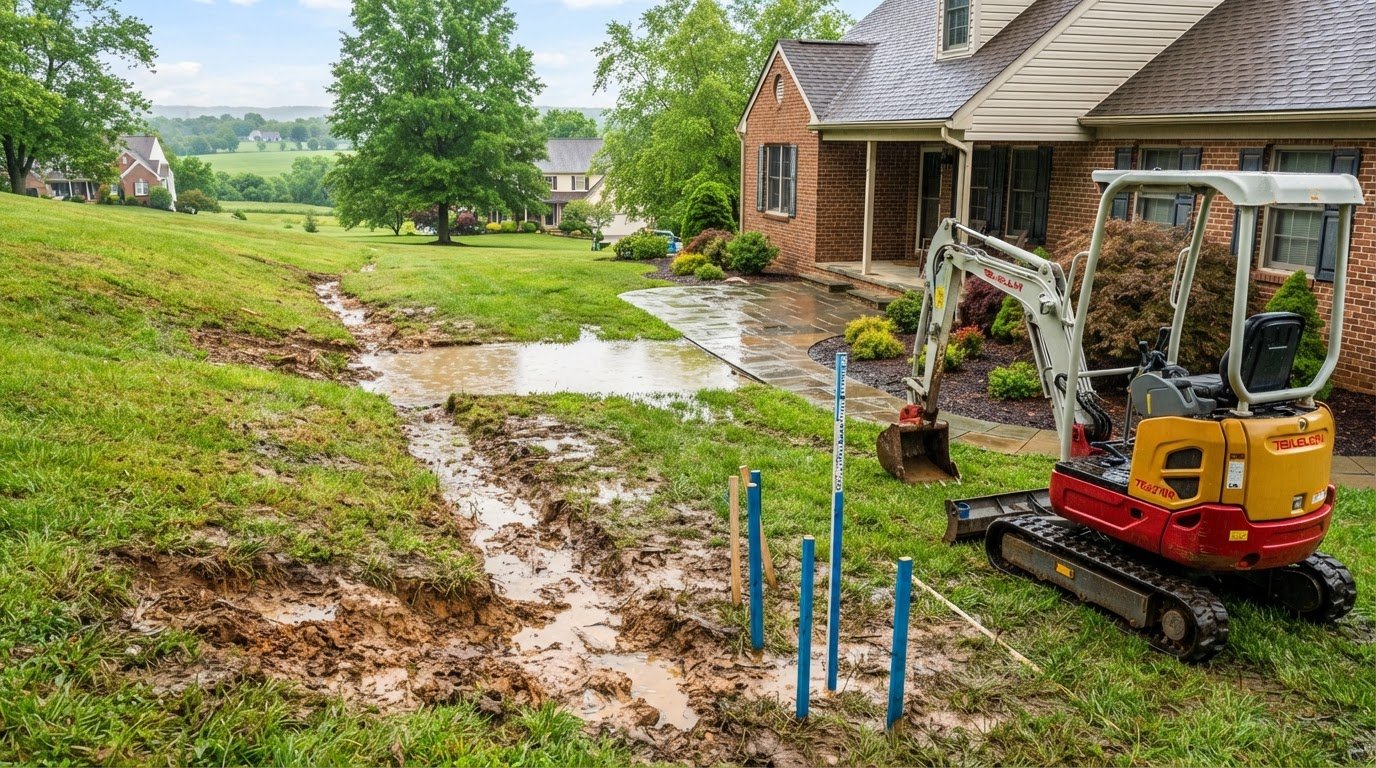
Lancaster County’s rolling hills and silty-clay soil create a unique set of challenges. This type of soil is exceptionally dense and holds onto water like a sponge. During the heavy spring rains common in Pennsylvania, the ground becomes incredibly heavy. This saturated earth exerts immense pressure against anything in its path. If your slope is unprotected, the water will find the path of least resistance, washing away your expensive topsoil and leaving behind unsightly scars on your landscape.
The Impact of Lancaster’s Geography on Your Soil
Local geography often works against property stability. Many slopes in our region exceed the natural angle of repose, which is the maximum slope at which soil can remain stable without sliding. In communities like Columbia and Mountville, steep grades often create washout zones where water gains high velocity during storms. These areas lose grass and sediment rapidly, often exposing tree roots or damaging existing hardscapes. Professional yard grading services are frequently required alongside wall construction to ensure water is channeled away from vulnerable areas. This combined approach restores order to a chaotic landscape.
The Cost of Inaction: When Erosion Becomes a Liability
Leaving a failing slope unaddressed is a significant financial risk. What starts as minor rilling, or small channels in the dirt, can quickly transform into deep gullies after just one or two heavy storms. This process doesn't just ruin your curb appeal; it threatens the structural integrity of your home's foundation. Property line loss is another major concern, as soil can migrate onto neighboring land or into public roadways. Engineered retaining walls are the standard solution for preventing these issues.
Beyond the visible washouts, you must also consider the long-term effects of unstable earth. Soil creep is the slow, downward movement of a slope that occurs over a long period of time. This silent process eventually causes fences to lean, walkways to crack, and patios to shift. By installing a robust erosion control retaining wall Lancaster homeowners can stop this movement before it requires expensive structural repairs. Addressing the problem now prevents a minor yard issue from becoming a major legal or safety liability.
How an Engineered Retaining Wall Stops Soil Washout
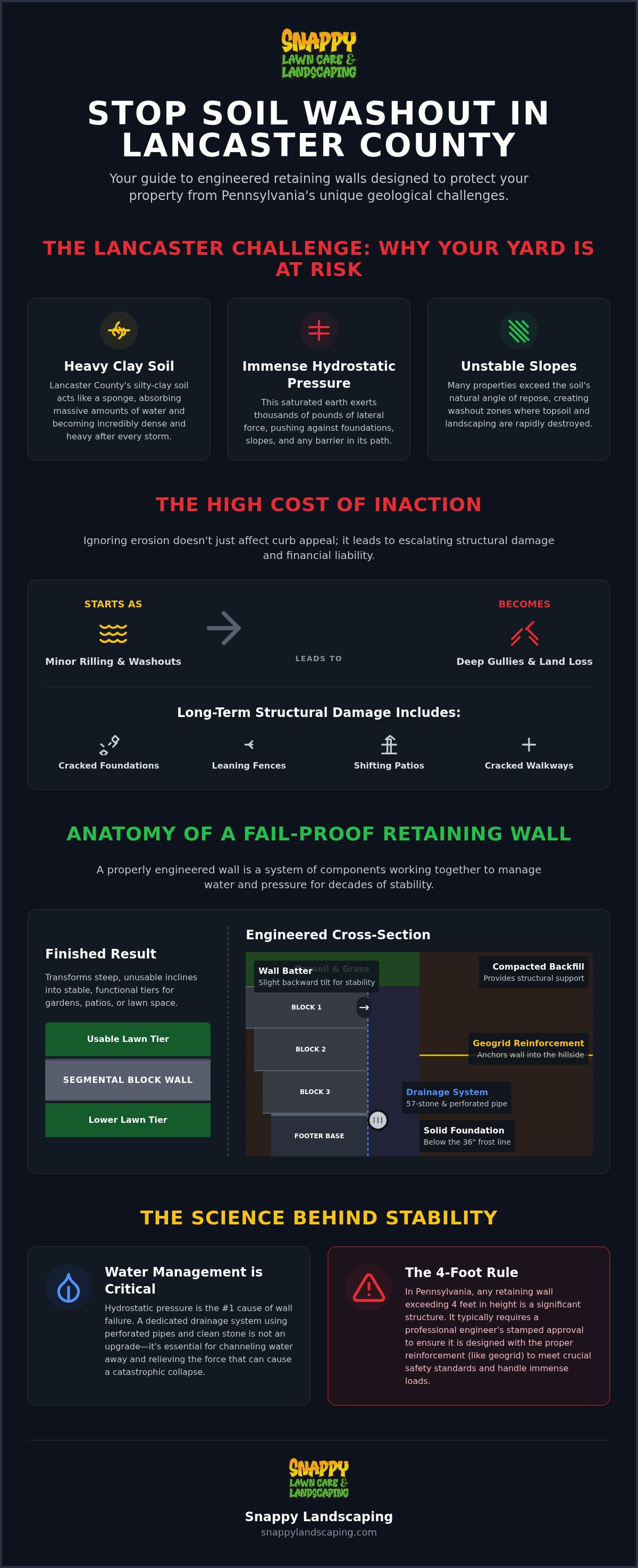
Building a lasting erosion control retaining wall Lancaster homeowners can rely on requires more than stacking blocks. It is a precise engineering task. A successful wall consists of three main components: the base, the batter, and the backfill. The base provides a level foundation that distributes the weight of the structure. The batter refers to the slight backward tilt of the wall toward the slope, which uses gravity to increase stability. By stepping back each row of blocks into the hillside, we create a structure that naturally leans into the soil it is meant to hold. This design creates flat, usable tiers that transform steep, dangerous inclines into functional garden beds or yard space.
Hydrostatic pressure is the primary reason walls fail in Lancaster. When our heavy clay soil becomes saturated, it pushes against the structure with immense force. If the wall isn't designed to handle this weight, it will eventually bow or collapse. To prevent this, we ensure footers are placed below the frost line, which is 36 inches deep in Lancaster County. This prevents the ground from heaving during winter freeze-thaw cycles and keeps the structure plumb. Without this deep foundation, the wall would shift every time the ground freezes, leading to rapid structural failure.
The Science of Drainage in Retaining Walls
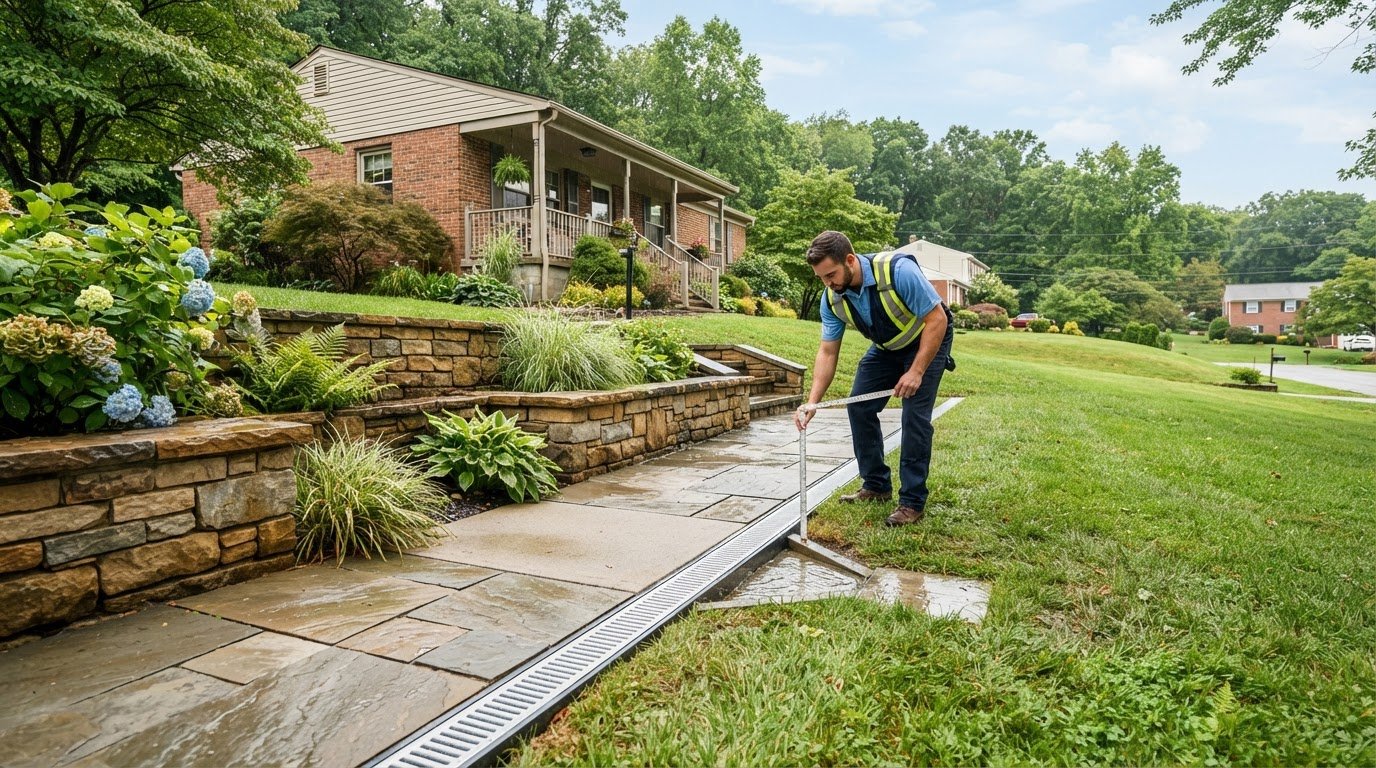
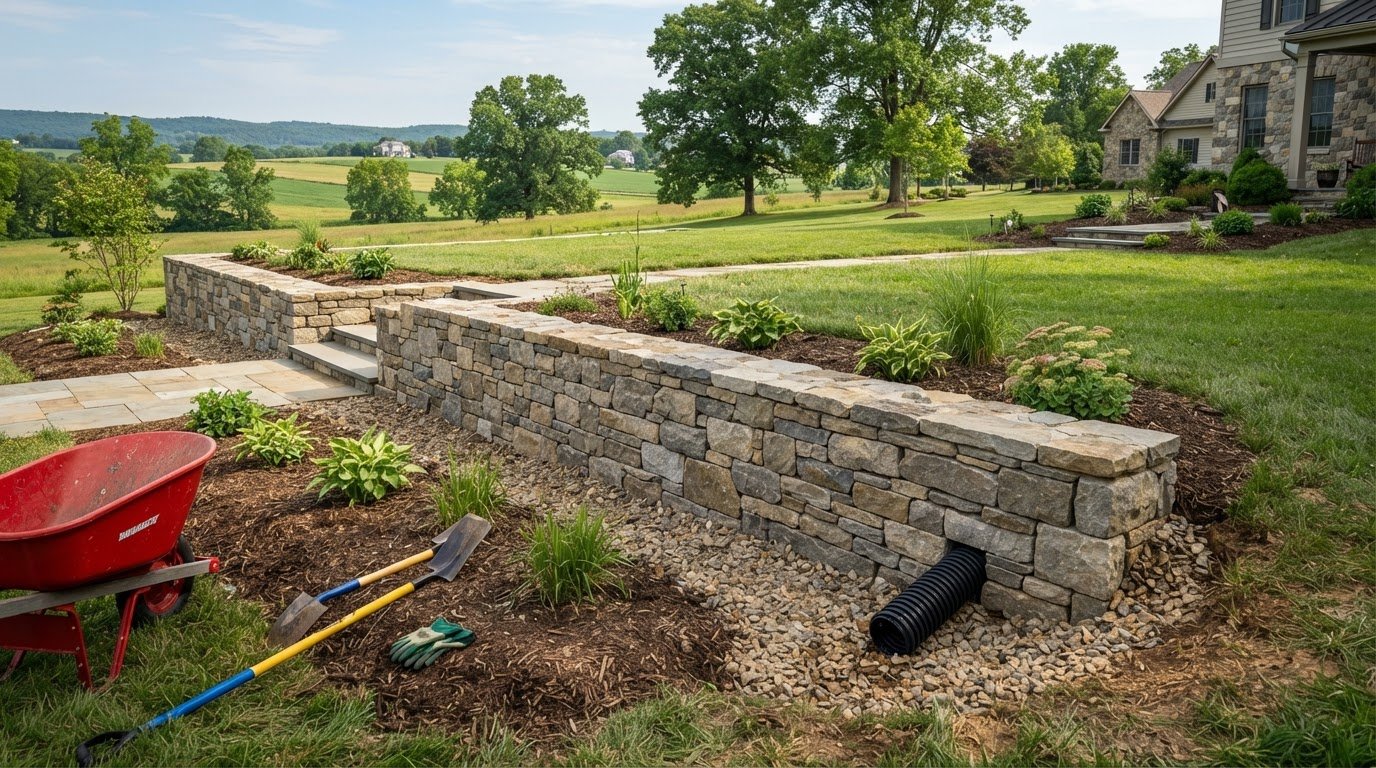
Water management is the most critical part of the build. We use perforated pipes and clean 57-stone backfill to create a path of least resistance for moisture. This system captures water behind the wall and redirects it away from the foundation. For solid or poured concrete structures, we incorporate weep holes to allow trapped moisture to escape. These drainage solutions are a prerequisite for long-term wall integrity. If water cannot escape, it will eventually find a way through the wall, often causing catastrophic washouts.
Reinforcement Techniques: Geogrid and Deadmen
For taller structures or those supporting high-load areas like driveways, we use geogrid. This is a high-strength synthetic mesh that anchors the wall blocks deep into the soil behind them. When designing an erosion control retaining wall Lancaster residents can trust, geogrid provides the necessary tensile strength to hold back thousands of pounds of pressure. If we are using timber, we install deadmen anchors. These are T-shaped beams that extend back into the hillside to prevent the wall from tipping forward. In Pennsylvania, any wall exceeding 4 feet in height typically requires an engineer’s seal to ensure it meets safety standards. If you aren't sure how high your slope needs to be, schedule a site assessment to review your property's specific needs.
Comparing Retaining Wall Materials for Lancaster Landscapes
Selecting the right material for an erosion control retaining wall Lancaster property owners need is a balance of engineering and aesthetics. Lancaster’s intense freeze-thaw cycles serve as the ultimate test for any hardscape. Materials must withstand the ground’s constant expansion and contraction without cracking or losing their structural alignment. While timber is a budget-friendly entry point, it lacks the multi-decade durability of masonry or stone. Your choice impacts not just the look of your yard, but the long-term stability of your property.
Segmental Block Walls: The Modern Standard
Segmental Retaining Walls (SRW) are the preferred choice for high-performance erosion control. These systems use a "pinned" or interlocking mechanism that allows for slight, natural movement without structural failure. Unlike solid poured concrete, which often cracks under pressure, SRW units shift with the earth. Modern blocks offer a variety of textures that mimic natural stone while providing superior engineering precision. For a deeper look at the technical specs, reviewing a retaining wall installation Lancaster PA guide clarifies how these units integrate with drainage layers and geogrid.
Natural Stone and Boulders: Timeless and Tough
Natural stone remains a favorite for historic Lancaster properties and rural acreage. Dry-stack stone walls are naturally excellent for drainage because they allow water to seep through the joints. This reduces hydrostatic pressure without the need for complex pipe systems in every instance. However, they require expert masonry to ensure the stones are properly weighted and seated. Boulder walls are another cost-effective solution for large-scale erosion control on rural properties. They use massive weight to hold back the earth. Keep in mind that older stone walls are prone to shifting over decades. Knowing common failing retaining wall signs is essential for anyone with an existing stone structure.
From a pragmatic standpoint, SRW offers the best balance of cost, speed of installation, and structural reliability. Natural stone provides unmatched beauty and longevity but carries a higher labor cost. Pressure-treated timber is suitable for low-profile garden walls, but we generally advise against it for primary erosion control. Lancaster’s moisture-heavy clay often leads to premature rot in wood structures. Focus on materials that offer a restoration of order and a permanent end to soil washout.
Is a Retaining Wall Your Best Erosion Solution?
Determining the right fix for a washing-out hillside requires a pragmatic assessment of your property's physics. While an erosion control retaining wall Lancaster homeowners choose is often the most effective solution, it isn't the only tool in the box. For minor slopes, vegetative buffers or riprap (loose, heavy stone) might provide enough stability. However, riprap is often an eyesore and doesn't create functional yard space. If your primary goal is to restore order and gain usable land, a structural wall is the superior choice. It transforms a steep, dangerous incline into a series of flat, manageable tiers.
The steepness of your slope dictates the level of intervention required. We use a 2:1 slope ratio as a general guide; this means for every two feet of horizontal distance, the elevation changes by one foot. Once a slope exceeds this 2:1 ratio, gravity and Lancaster’s clay soil make natural stabilization nearly impossible. At this point, structural intervention becomes a necessity rather than an upgrade. To accurately see the extent of the damage, professional brush clearing is often the first step. Removing overgrown weeds and debris reveals hidden gullies and structural weaknesses that need immediate attention.
When Grading is Enough (and When it Isn’t)
In some cases, you can solve drainage issues without a vertical wall. Strategic grading can create swales or berms that redirect water flow before it gains enough velocity to strip away topsoil. This approach works well for moderate inclines where there is no "surcharge." A surcharge is any additional weight above the slope, such as a driveway, a shed, or the foundation of your home. When a surcharge is present, simple grading won't suffice because the lateral pressure is too great. For properties with stable, gentle grades, consistent lawn maintenance and healthy turf can provide enough root structure to hold the soil in place.
Combining Walls with Other Hardscapes
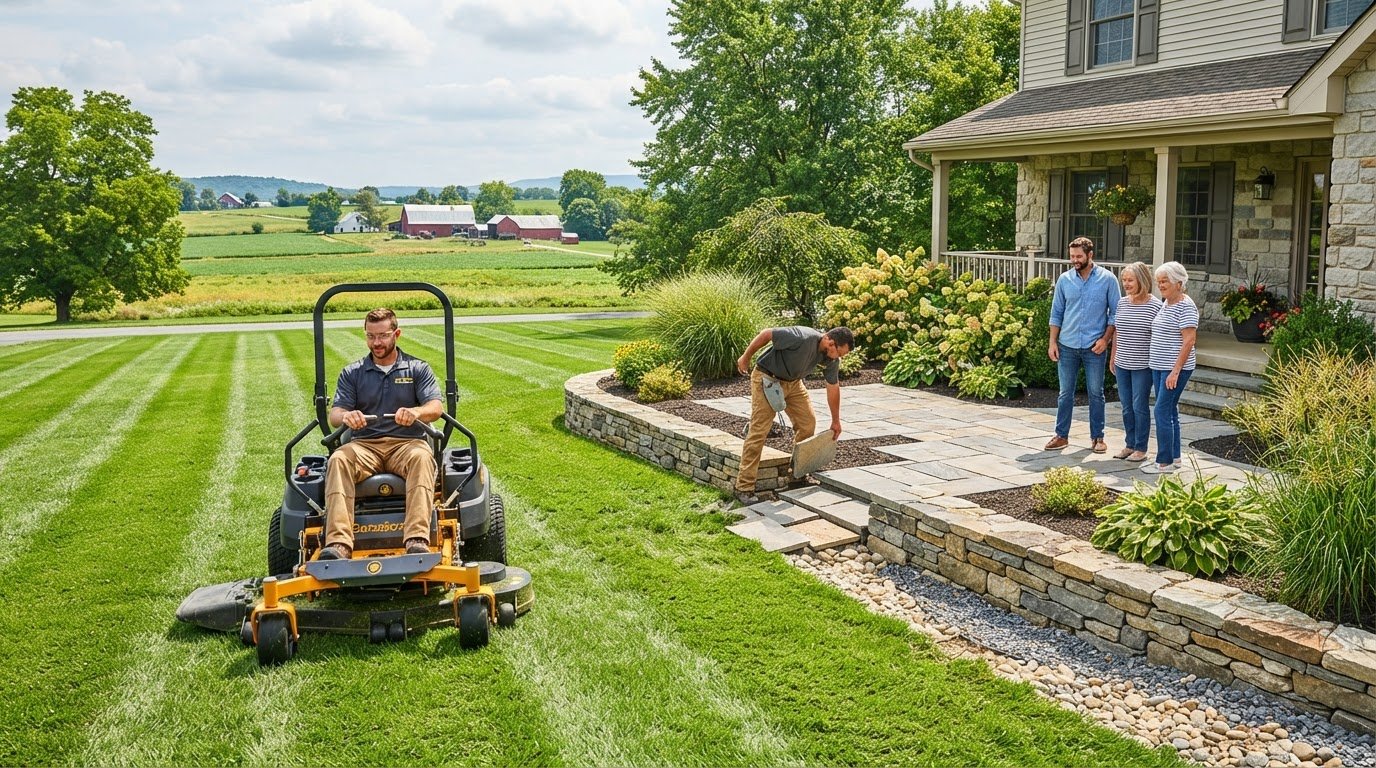
A total property approach to water management often involves integrating multiple services. You can turn a tiered wall system into a focal point by incorporating walkway installation between the levels. This provides safe access to different parts of your yard that were previously unreachable. During the first season after construction, professional mulch installation helps protect the newly disturbed soil until your permanent plantings take root. This layered defense ensures that your investment remains stable during the heavy rains that follow a new build. If you're ready to stop the washout and reclaim your yard, contact us for a professional site evaluation today.
Choosing a Retaining Wall Contractor in Lancaster, PA
Hiring a contractor for an erosion control retaining wall Lancaster property owners can trust requires looking past the bottom line. You need a partner who understands the specific hydraulic pressures of our local silty-clay soil. A major red flag in any quote is the absence of detailed drainage specifications. If a contractor doesn't explicitly mention perforated pipes, 57-stone backfill, or geogrid for taller structures, they are likely ignoring the primary causes of wall failure. Local knowledge is equally critical for navigating permit requirements. Townships across Lancaster County have varying thresholds for structural drawings and inspections. A professional contractor should handle these logistics on your behalf to ensure the project meets regional safety codes.
Questions to Ask Before You Sign
Protect your investment by asking direct technical questions before any contracts are signed. Inquire about the exact depth of the base trench; it must be deep enough to provide a stable foundation that won't shift. Ask what type of backfill material will be used and how they plan to manage water runoff behind the blocks. A professional must also confirm they will handle the PA One Call process to locate underground utilities before excavation begins. Finally, request to see examples of their work in the area that have weathered at least three full Pennsylvania winters. This is the only way to verify that their construction methods can withstand our regional freeze-thaw cycles without bowing or cracking.
The Snappy Landscaping Difference
We take a pragmatic, solution-oriented approach to every property headache. Our team doesn't just install blocks; we restore order to your landscape through comprehensive project management. We are equipped to handle the entire scope of outdoor projects, which saves you the stress of coordinating multiple vendors. Whether your site requires initial tree removal to clear a steep slope or precision grading to ensure proper drainage, we manage every step of the workflow. We don't believe in temporary patches. Our goal is to remove the burden of property management from your shoulders by delivering a result that stays level and functional for decades. We focus on structural integrity and professional standards to ensure your erosion issues are solved permanently.
Contact Snappy Landscaping for an erosion control consultation to review your site and receive a clear, actionable plan for your retaining wall project.
Secure Your Lancaster Property Today
Managing a washing-out slope doesn't have to be a recurring seasonal headache. By prioritizing structural integrity and integrated drainage, you can permanently stop soil loss and reclaim your yard. Remember that successful erosion control requires more than just heavy materials. It demands a deep understanding of Lancaster’s clay soil and freeze-thaw cycles. Whether you choose a segmental block system for its modern durability or natural stone for a timeless look, the goal remains the same: a stable, functional landscape that protects your home’s foundation.
As locally owned Lancaster hardscaping specialists, we focus on pragmatic, no-nonsense property solutions. We provide expert drainage and erosion control integration to ensure your investment stands the test of time. Investing in a high-quality erosion control retaining wall Lancaster property owners trust is the smartest way to restore order and increase your curb appeal. Stop watching your yard wash away. Start building a permanent solution that gives you lasting peace of mind.
Frequently Asked Questions
How much does an erosion control retaining wall cost in Lancaster, PA?
The total investment depends on the wall's height, the total linear footage, and the specific materials selected for the project. Access to the site and the severity of the slope also play significant roles in determining the final cost. While basic timber is cheaper upfront, it lacks the multi-decade durability of masonry. We recommend a professional site assessment to determine the scope of work required to build a durable erosion control retaining wall Lancaster residents can rely on.
Do I need a permit for a retaining wall in Lancaster County?
Permits are typically required in Lancaster County for any retaining wall that exceeds three to four feet in height. Local townships often mandate a building permit for walls over 36 inches, especially if they support a surcharge like a driveway or building foundation. Walls over four feet high usually require a structural drawing from a licensed engineer under Pennsylvania’s Uniform Construction Code. Always check with your specific borough or township code office before starting construction.
What is the best material for a retaining wall on a steep slope?
Interlocking segmental block systems are the most reliable option for stabilizing steep hillsides in Pennsylvania. These blocks are designed to work with geogrid reinforcement, which anchors the wall deep into the soil behind it. This creates a massive, stable structure that can withstand the lateral pressure of heavy clay. Unlike timber, these blocks don't rot and can handle the constant expansion and contraction of Lancaster’s intense seasonal freeze-thaw cycles.
How long do timber retaining walls last compared to concrete blocks?
Timber walls generally have a lifespan of 10 to 15 years before the wood begins to rot in Lancaster’s moisture-heavy soil. In contrast, high-quality concrete block systems or natural stone can last 50 to 100 years when properly maintained. While wood is a budget-friendly option, the long-term value of concrete is much higher. You'll avoid the cost of a total replacement a decade down the road by choosing more durable masonry materials today.
Can a retaining wall be built during the winter in Pennsylvania?
Construction can proceed during the winter, but it requires specific techniques to handle frozen ground. Excavating Lancaster’s clay soil is significantly more labor-intensive once the frost line reaches 36 inches deep. We must ensure that backfill materials remain dry and that the base is set on non-frozen earth to prevent settling later. While spring and fall are the ideal windows for installation, professional crews can manage winter builds if the property needs immediate stabilization.
Will a retaining wall increase my property value in Lancaster?
A professionally installed wall significantly boosts property value by transforming useless, sloped land into functional yard space. It also provides essential protection for your home’s foundation by preventing soil migration and water damage. In the Lancaster real estate market, a stable and well-drained landscape is a major selling point. Potential buyers view a robust erosion control retaining wall Lancaster homeowners have already installed as a sign of a well-maintained and secure property.
What happens if my retaining wall doesn’t have a drainage pipe?
Failure is almost certain if a wall lacks a dedicated drainage pipe and gravel backfill. Without a path for water to escape, hydrostatic pressure builds up behind the structure every time it rains. This pressure is strong enough to push blocks out of alignment or cause a complete structural collapse. A perforated pipe system, often called a French drain, is the most critical component for ensuring your wall survives Pennsylvania’s heavy spring and fall storms.
How do I know if my existing retaining wall is failing?
Signs of failure include noticeable leaning, bulging in the middle of the wall, or large cracks in the masonry. You should also watch for soil washing out through the joints or sinking behind the wall’s capstones. If you see any of these indicators, the structure’s integrity is compromised. Addressing these issues early prevents a total collapse, which is far more expensive to clean up and replace than performing a timely structural repair.