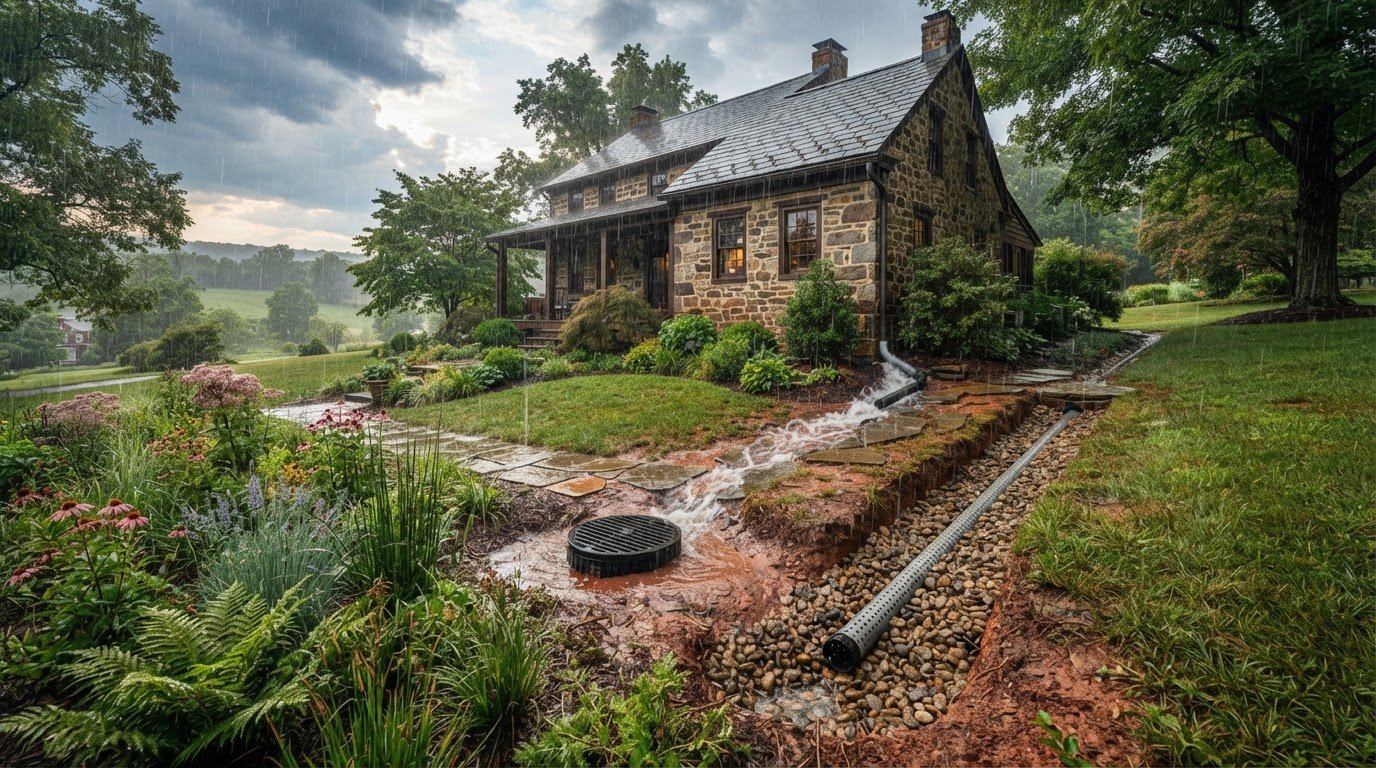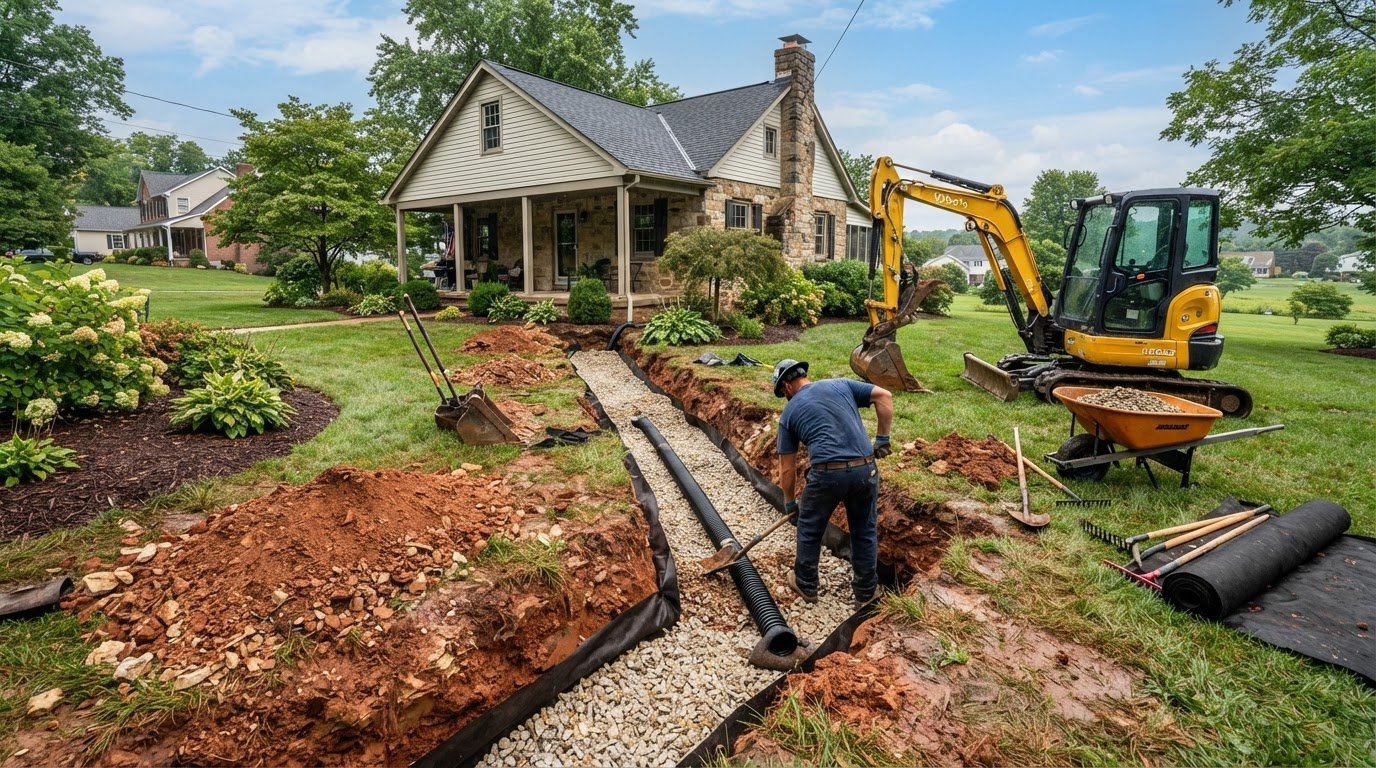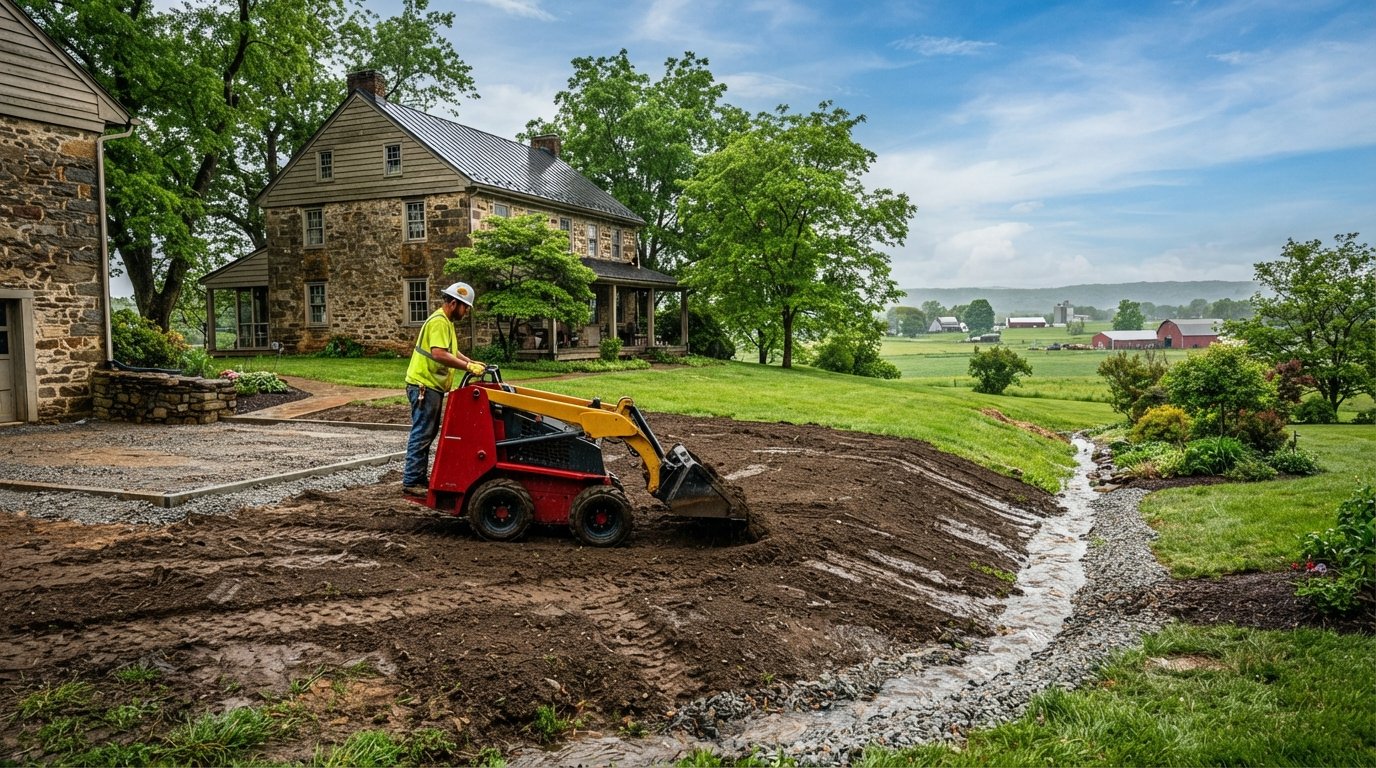
What if making your yard flatter sends water in the wrong direction? Effective grading isn’t about creating a level surface. It reshapes the ground so surface water flows away from your home and toward an appropriate area. If rain collects in low spots, runs toward the foundation, or leaves the lawn uneven and hard to use, yard grading services may help. But grading alone won’t solve every drainage problem.
The right solution depends on what’s causing the water to collect, how the land slopes, and whether the issue involves surface runoff or water that needs a separate drainage solution. Before proposing work, a contractor should assess the site and trace how water moves across it. That helps clarify what grading can correct and when additional drainage work may be worth considering.
In this guide, you’ll learn what yard grading does, which problems it can address, and what it can’t fix on its own. You’ll also find practical questions to ask before approving a project, so you can compare options for your property in Lancaster, Columbia, Mountville, or elsewhere in Lancaster County.
What Yard Grading Services Do for Lancaster County Properties
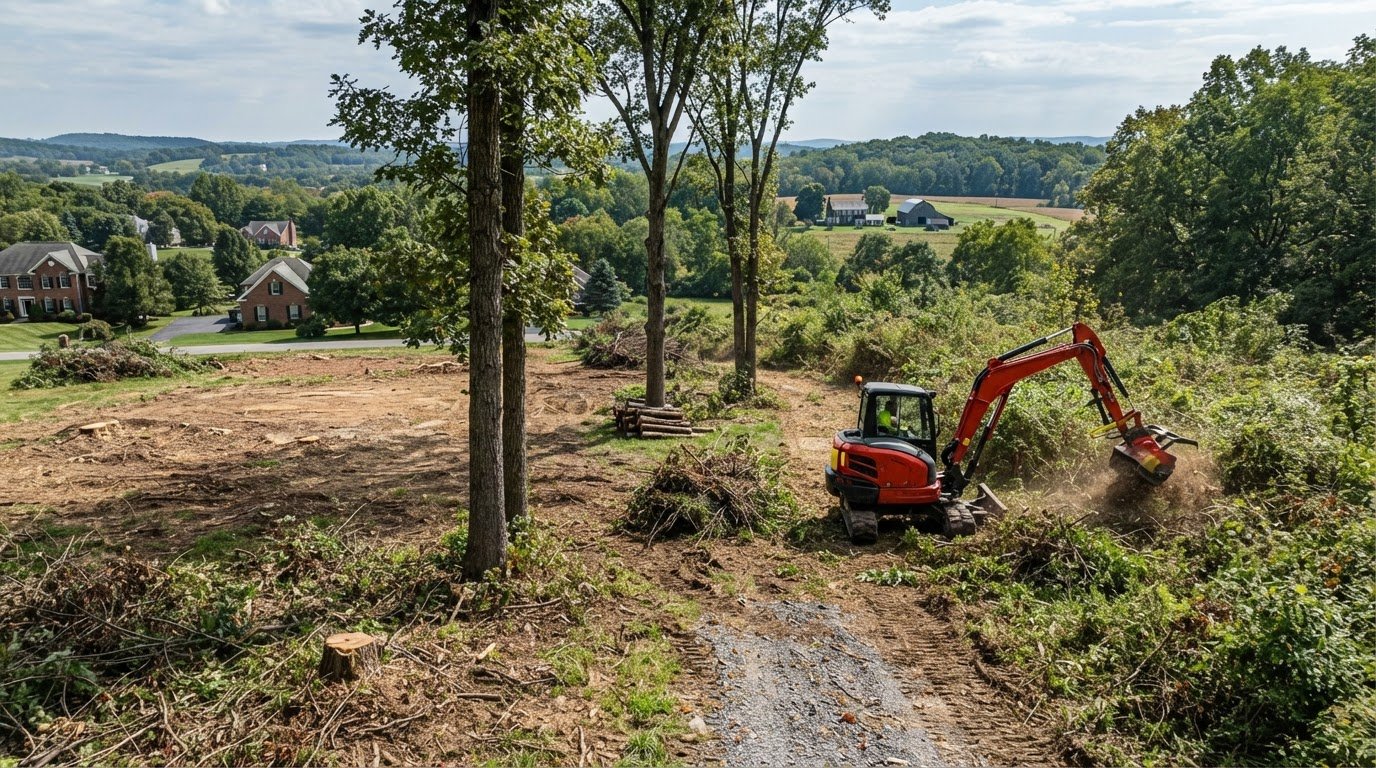
Yard grading reshapes the ground’s contours to influence where surface water flows and make outdoor areas more practical to use. The goal isn’t to flatten every rise and dip. A well-planned grade directs runoff while retaining contours that work for the property, such as a slope that already carries water away from a structure.
Pooling water, visible runoff paths, eroded soil, and awkward transitions between a lawn and a patio can all signal that the yard’s layout needs attention. But symptoms don’t reveal the cause on their own. Soil conditions, existing slopes, nearby structures, and the route water takes across the property all matter. An assessment helps determine whether grading is appropriate or whether another drainage measure should be considered.
What problems can professional yard grading address?
Low spots can hold water and leave muddy patches that interfere with walking, play, or routine lawn maintenance. Uneven ground can also make mowing and moving through the yard less convenient. If water appears to flow toward a house or another structure, don’t assume that adding soil in one area will fix it. The source and path of the water need careful assessment before selecting a solution.
Grading can redirect surface runoff, but persistent water problems may need drainage measures alongside it. Snappy Landscaping provides grading and drainage solutions for residential and commercial properties in Lancaster County, including Lancaster, Columbia, and Mountville. The right scope depends on the site, not just the visible low spot.
Grading versus leveling: what is the difference?
Grading shapes a yard’s elevation and slope to guide water; leveling makes a surface more even. For example, correcting a low area may involve reshaping the surrounding ground so runoff moves away from it, rather than filling the area and creating a new place for water to collect. The technical concept of Grading in civil engineering likewise centers on shaping land for a purpose.
Leveling can improve an uneven surface, but a uniformly flat yard may not drain as intended. Good yard grading services account for how each part of the property connects, including transitions around outdoor living areas. If trees are also part of your site-planning picture, you can review Snappy’s tree services separately from grading and drainage needs.
How a Yard Grading Project Is Assessed and Planned
A sound plan starts with the water, not the equipment. Before recommending yard grading services, a contractor should understand what happens on the property, where water collects, which direction it travels, and under what conditions the problem appears. Note whether pooling follows rain, persists afterward, or occurs in a particular season. Photos taken during or soon after wet weather can help show patterns that may be hard to see on a dry day.
The assessment then connects those observations to the site and your goals. You might want to reduce runoff near a structure, make a route across the yard easier to use, or prepare the area around an outdoor living space. The intended use matters: a play area, lawn, and patio have different practical needs. Be ready to explain which areas you want to use or maintain and what changes would make the property work better for you.
What should a contractor inspect before grading?
Look for visible high and low areas, runoff paths, signs of soil movement, and the condition of the ground. The assessment should also account for nearby structures and existing drainage features, which can affect where water can appropriately go. Patios, retaining walls, walkways, and other hardscapes shape how the yard connects and where changes in grade may be needed.
Snappy Landscaping works with properties in Lancaster County, including Lancaster, Columbia, and Mountville. That local service-area context doesn’t establish the soil or drainage conditions at any particular address. Those need to be evaluated on site.
What happens between the assessment and the work?
Site findings and your priorities inform the proposed scope. Before work is scheduled, clarify which areas are included, how crews will access them, what surfaces may need restoration, and whether grading should be coordinated with drainage or hardscaping work. If a patio is part of the plan, review how its placement and edges relate to the surrounding yard. Snappy’s patio installation information can help you consider that connection.
Ask the contractor to explain what the proposed work is intended to change, what it won’t address, and how the finished area will function. Avoid relying on a slope number without site-specific reasoning. The suitable grade depends on the property, nearby features, and intended water flow, so any figure should be supported by the assessment rather than assumed in advance.
In short, document the symptoms, inspect the site, agree on the goal, and define the scope before work begins. If you’re discussing a property in the Lancaster County area with Snappy Landscaping, use the assessment to clarify whether grading, drainage solutions, or related hardscaping best fits the conditions.
Yard Grading or Drainage Work: How to Compare the Options
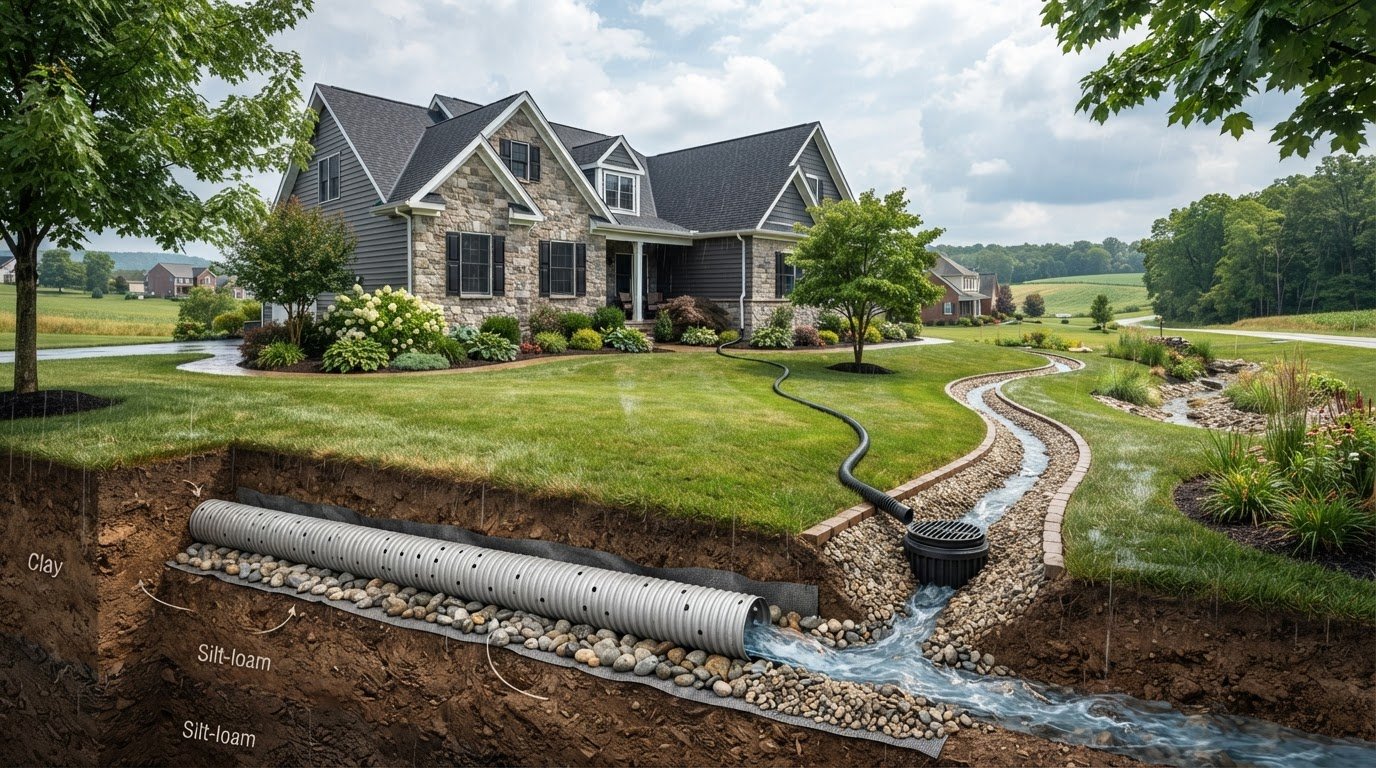
Grading and drainage both help manage water, but they address different parts of the problem. Grading reshapes the land’s surface contours. Drainage work uses a planned system to collect, move, or manage water that surface shaping alone may not control. The right choice depends on what the site assessment finds, including where the water comes from and how it travels.
| Approach | What it changes | May be considered when |
|---|---|---|
| Grading | Surface elevations and contours | Water follows an unwanted surface path or collects in a local low area |
| Drainage | How water is managed through a designed system | Runoff persists or water appears to have a pathway that recontouring may not correct |
| Combined work | Both surface shape and water-management features | The site findings suggest grading and drainage measures need to work together |
These are starting points, not diagnoses. Water can come from beyond the area you want graded or travel through a route that changing the surface won’t address. That’s why a contractor should assess the property before recommending yard grading services or drainage work.
When might grading alone be considered?
Grading alone may be considered when the assessed concern relates mainly to surface shape, such as a localized low area or a runoff path across the yard. Whether recontouring is suitable depends on the site’s elevations, the route water can take, and how you plan to use the space. It shouldn’t be presented as a guaranteed way to eliminate standing water or water intrusion, especially if another source or pathway is involved.
When might grading need drainage or hardscaping?
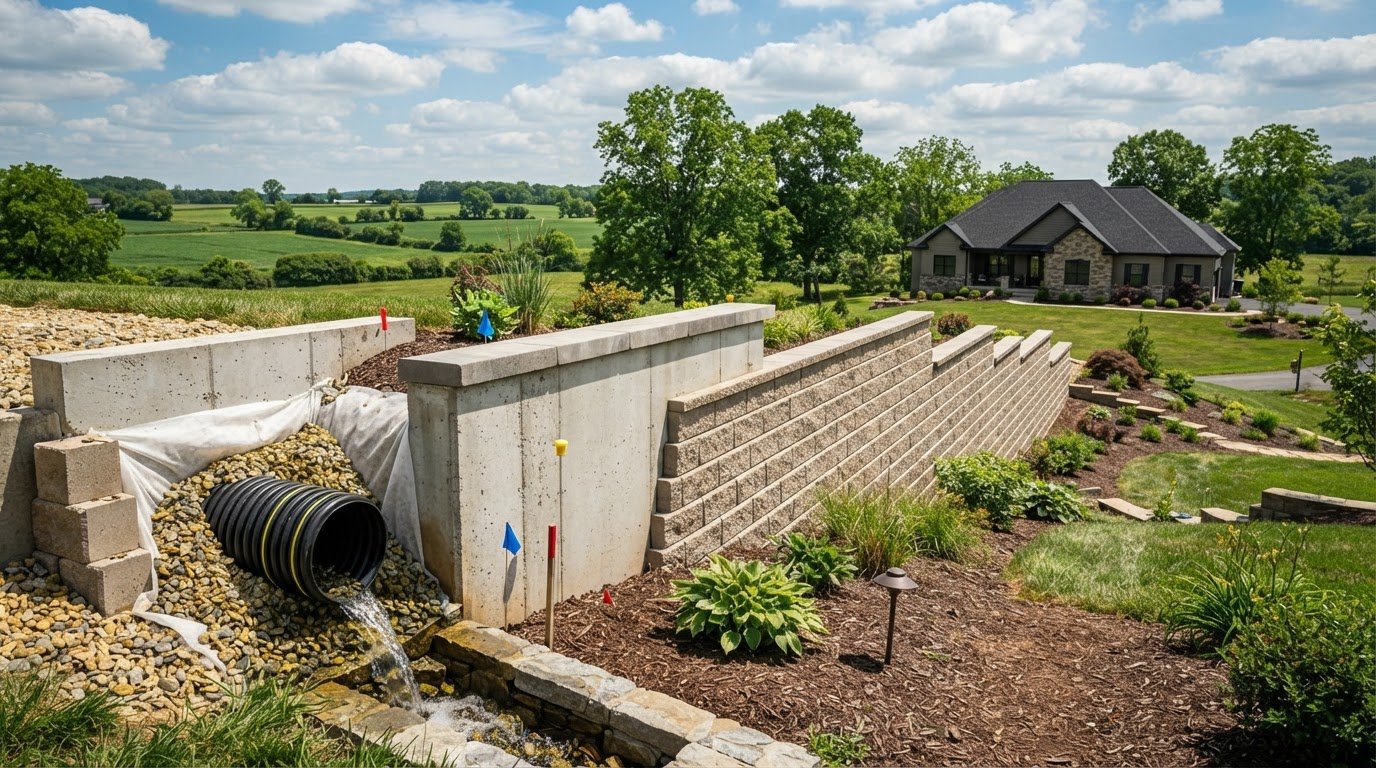
If water continues to collect or move through an area despite the surface layout, a drainage solution may be needed alongside grading. A retaining wall can also change the contours and affect how water moves around the property, so its placement and related drainage considerations should be planned together. Review retaining wall construction as part of that planning conversation.
Compare recommendations by asking what each part of the proposed work is meant to address. A clear plan should connect observed symptoms to site conditions, explain why the selected approach fits, and identify what it may not resolve. Snappy Landscaping provides grading and drainage solutions in Lancaster County, including Lancaster, Columbia, and Mountville. A site-specific discussion can help determine whether grading, drainage, or a combination is appropriate for your property.
How to Prepare for Yard Grading in Lancaster County
A little preparation can make a conversation about yard grading services more useful. Bring clear observations about the problem, the area you want to improve, and how you use the space. Existing plans or details from earlier outdoor projects can also help if they’re available, but they aren’t a substitute for an on-site assessment.
- Mark problem areas: Note where water collects, where it flows, and whether the issue appears during rain or remains afterward.
- Record the impact: Describe muddy or uneven areas, affected paths, and any concerns near structures, patios, or walls.
- Define how you use the yard: Identify the areas you want to walk, maintain, or use for outdoor activities.
- Gather helpful background: If you have property plans or information about past landscaping or drainage work, keep it available for discussion.
For examples of how grading can relate to patios, walkways, and other exterior improvements, browse Snappy Landscaping’s outdoor project examples.
Questions to ask before approving a grading plan
Ask what site observations support the recommendation and what specific outcome the work is intended to improve. Confirm whether drainage solutions, retaining walls, or other related work are included in the scope or would be considered separately. Also ask how existing landscaping and surfaces may be affected, what restoration is included, and how crews will access the work area.
Clear answers help you understand the proposed work before it begins. If a wall is part of the project or water is collecting near one, review this retaining wall installation guidance as a related consideration, not a replacement for site-specific planning.
Consider grading alongside property maintenance needs
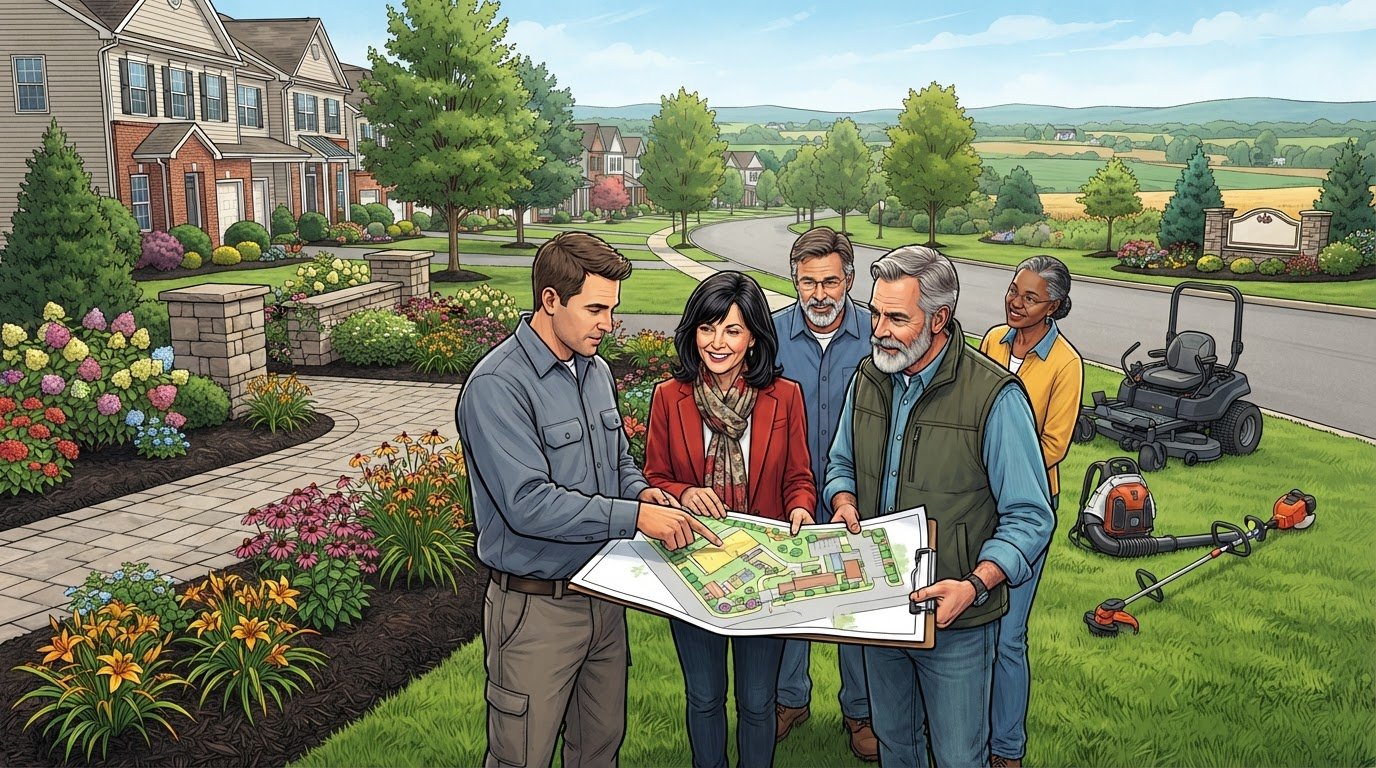
For property managers, coordinating site work with regular grounds care can help keep access and ongoing maintenance needs in view. Discuss how the affected areas will be used and maintained after the project, and whether the work should be coordinated with other planned improvements. Commercial property managers and HOA representatives can explore Snappy Landscaping’s commercial and HOA maintenance services when planning broader property needs.
Snappy Landscaping provides grading and drainage solutions for residential and commercial properties in Lancaster County, including Lancaster, Columbia, and Mountville. To discuss your site observations and project scope, contact Snappy Landscaping about your grading project.
Choosing Yard Grading Services in Lancaster County
Choose a contractor based on how clearly they connect the proposed work to your property’s conditions. A service label such as “grading” doesn’t explain whether the recommendation addresses the source of the problem, how surface water will move afterward, or whether drainage work may also be needed. Compare the assessment and intended outcome, not just the task name.
What to look for in a grading contractor
A useful recommendation should point to specific site observations and explain how they relate to your concern. If water collects near a structure, for example, ask what the assessment found about its source and route. The contractor should also explain how grading may coordinate with existing drainage features, nearby patios, walkways, or retaining walls.
Before approving the work, ask for clear written details so you know what’s included and what isn’t. Confirm:
- Which areas and grading work are part of the proposed scope.
- Whether drainage measures or hardscaping are included, separate, or not recommended.
- How the work is intended to improve the concern you described.
- What existing landscaping or surfaces may be affected and what restoration is expected.
These questions help distinguish a site-specific plan from a generic recommendation. They also make it easier to compare providers on the reasoning behind their yard grading services, rather than assuming similar descriptions mean the same project.
Discuss your property with Snappy Landscaping
Before starting a conversation, summarize what you’ve observed: where water gathers, where it appears to flow, when the problem occurs, and how you want to use the affected area. Mention any nearby structures, outdoor features, or previous work that may be relevant. You don’t need to diagnose the issue; clear observations give the contractor a helpful starting point.
Snappy Landscaping provides grading and drainage solutions, landscaping, and hardscaping for residential and commercial properties in Lancaster County, including Lancaster, Columbia, and Mountville. A discussion can help clarify whether the concern may involve grading, drainage, or related site work. Share your observations and ask about the appropriate project scope for your property.
Contact Snappy Landscaping about yard grading.
Choose a Clear Next Step for Your Yard
Effective yard grading is about guiding surface water, not simply flattening the ground. The right plan starts with understanding where water collects and how it moves, then matching the work to the site. Grading can reshape surface flow, while persistent or differently routed water may call for drainage measures as well.
As you compare yard grading services, look for a clear explanation of the site observations, the intended result, and what the proposed scope includes. That gives you a practical basis for deciding what makes sense for your property.
Snappy Landscaping lists grading and drainage solutions among its areas of expertise and serves residential and commercial properties in Lancaster County. Share what you’ve noticed and discuss which next steps may suit your site.
A well-considered plan can make your outdoor space easier to use and help bring greater order to how water moves across your property.
Frequently Asked Questions
What do yard grading services include?
Yard grading services reshape ground contours to guide surface water and improve how an outdoor area functions. The work may address uneven ground, low areas, or runoff paths, based on an assessment of the property and its goals. Grading may be considered alongside drainage solutions or hardscaping when site conditions call for it. Snappy Landscaping serves residential and commercial properties in Lancaster, Columbia, and Mountville.
Can yard grading fix drainage problems?
Grading can help with drainage problems caused mainly by the way surface water moves across the land, but it won’t correct every water issue. Water may have another source or follow a route that reshaping the surface can’t address. A site assessment helps determine whether grading may be suitable, whether a drainage solution is also needed, or whether the cause requires a different response.
How much do yard grading services cost?
The cost depends on the property and the proposed scope, so an on-site assessment is needed for a useful estimate. Factors to discuss include the area involved, the site conditions, access, and whether drainage or related hardscaping work is part of the project. Ask for a clear explanation of what the estimate includes and what may be separate. Snappy Landscaping can discuss project scope for properties in its Lancaster County service area.
How long does a yard grading project take?
Project duration depends on the size and conditions of the site and the work included. A focused area may have different requirements from a project that also involves drainage measures or hardscaping. Ask the contractor what work is planned, whether surface restoration is included, and what factors could affect the schedule. Without an assessment and agreed scope, a specific timeline wouldn’t be reliable.
Is yard grading necessary if water pools in my yard?
Not necessarily. Pooling is a sign to investigate, but it doesn’t prove that grading is the right fix. Note where the water collects, how it moves, and whether it remains after rain, then have the site assessed. If the cause relates to a low area or surface flow, grading may be considered. Persistent pooling may require drainage measures alongside or instead of recontouring.
Can I grade my yard myself?
Small surface adjustments may be manageable for some homeowners, but reshaping a yard to direct water requires care. A change in one area can affect runoff elsewhere, including near structures or outdoor features. Before attempting larger work, consider whether you can identify the water’s path and create a suitable result without shifting the problem. Check applicable local requirements for your property, and seek professional assessment if the cause is unclear.
What should I ask a yard grading contractor?
Ask what site observations support the recommendation, what outcome the work is intended to improve, and whether grading alone is appropriate. Clarify whether drainage solutions or hardscaping are included or separate. Also ask which areas are covered, how existing landscaping and surfaces may be affected, what restoration is expected, and how access will be handled. Clear answers help you compare proposals by scope and reasoning, not just by service name.